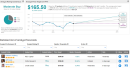
from Yahoo Finance https://ift.tt/3jNY0co
from Yahoo Finance https://ift.tt/3jNY0co
 Ross Norman, CEO of Metals Daily, joins Yahoo Finance’s Akiko Fujita to discuss gold prices hitting a new record Monday, along with his outlook on silver.
from Yahoo Finance https://ift.tt/30Q2aYp

If you’re looking for buy and hold options, then I think the tech sector would be a great place to start.
In this sector I believe there are a number of companies which have the potential to grow materially over the 2020s and beyond.
Three fantastic ASX tech shares that I feel are standout buys are listed below. Here’s why I like them:
I think Altium shares could smash the market over the next 10 years. This is because the electronic design software company has exposure to the fast-growing Internet of Things (IoT) and artificial intelligence (AI) markets. These markets are driving the proliferation of electronic devices, which in turn is driving strong demand for its software subscriptions. Combined with the benefits of scale and its other growing businesses, such as NEXUS and Octoport, I believe Altium is well-placed to deliver on its FY 2025 revenue target of US$500 million. This compares to Altium FY 2020’s expected revenue of ~US$189 million.
Another tech share to consider buying is Kogan. I believe the rapidly growing ecommerce company has the potential to grow materially over the next decade. This is thanks to the growing popularity of its website and the accelerating shift to online shopping. As of 2019, just ~10% of consumer spending was being made online. I expect this to grow significantly in the future. So with this tailwind in its sails and acquisitions in its sights, I think Kogan has a bright future ahead of it.
A third tech share that I would buy and hold is this donor management platform provider. Pushpay has been benefiting greatly from the shift to a cashless society. Gone are the days of churches passing around a bucket, now they can use Pushpay’s app to donate. Adoption of its platform has been increasing rapidly, leading to the company’s revenue and operating earnings growing at an explosive rate. The good news is that Pushpay still has a very long runway for growth. It is aiming to win a 50% share of the medium and large church market, which represents a US$1 billion revenue opportunity. This compares to the US$127.5 million operating revenue it recorded in FY 2020.
We hear it over and over from investors, “I wish I had bought Altium or Afterpay when they were first recommended by The Motley Fool. I’d be sitting on a gold mine!” And it’s true.
And while Altium and Afterpay have had a good run, we think these 5 other stocks are screaming buys. And you can buy them now for less than $5 a share!
*Extreme Opportunities returns as of June 5th 2020
More reading
James Mickleboro has no position in any of the stocks mentioned. The Motley Fool Australia’s parent company Motley Fool Holdings Inc. owns shares of and recommends Altium. The Motley Fool Australia’s parent company Motley Fool Holdings Inc. owns shares of Kogan.com ltd and PUSHPAY FPO NZX. The Motley Fool Australia has recommended Kogan.com ltd and PUSHPAY FPO NZX. We Fools may not all hold the same opinions, but we all believe that considering a diverse range of insights makes us better investors. The Motley Fool has a disclosure policy. This article contains general investment advice only (under AFSL 400691). Authorised by Scott Phillips.
The post 3 of the best ASX tech shares to buy and hold until 2030 appeared first on Motley Fool Australia.
from Motley Fool Australia https://ift.tt/3f6mVUX

The Newcrest Mining Limited (ASX: NCM) share price has been in the spotlight this week, and in a good way too. It’s only Tuesday, but already Newcrest shares are up around 5% this week, and 15.8% over the past month. Investors seem to be scrambling to get a hold of the ASX’s largest gold miner’s shares. Why? Well, as a gold miner, Newcrest is an obvious beneficiary of a higher gold price. And that’s exactly what we’ve seen in recent times. So is there still time to buy Newcrest shares?
Watching the gold price this week has been extraordinary, to say the least. Gold was trading for around US$1,820 per ounce just last week. But this week, the yellow metal has moved decisively higher and has broken through its previous all-time high of US$1,921 per ounce, going as high as US$1,977 over the last day or two.
As a gold miner, the Newcrest share price is somewhat leveraged to the price of gold. That’s because a gold miner has a relatively fixed cost of extracting an ounce of gold for sale. Thus, if the gold price rises, the miner’s profit will rise by a multiple of that rise.
Let’s look at Newcrest as an example. In its 2019 annual report, Newcrest told investors its average cost of extracting one ounce of gold was around US$738. When gold was asking US$1,820 per ounce, it gave Newcrest a profit of US$1,082 per ounce. But now that gold has risen 8.6% to US$1,977, Newcrest’s profit margins theoretically rise by 14.5% to US$1,239 per ounce.
Using this methodology, we can understand why Newcrest shares have been shooting through the roof recently.
Of all the ASX gold miners, Newcrest is my favourite. According to the 2019 annual report, the company has estimated gold reserves of approximately 54 million ounces, which implies the company can sustain its current production levels for at least another 20 years without new supplies coming online. And on current gold prices, these 54 million ounces have a theoretical value of US$106.76 billion (~A$150 billion). Even after the recent run in Newcrest shares, the company is valued at around A$30 billion. Not a bad deal, in my opinion!
Of course, it’s probably only advantageous to invest in Newcrest shares today if you think the gold price will either stay at its current levels or mover higher over the next few years. I happen to think there is a strong possibility this will occur, given the current state of the global economy and the levels of monetary easing that governments around the world are undertaking. But predicting commodity prices is a very difficult game, so keep that in mind if you’re considering an investment in Newcrest right now.
We hear it over and over from investors, “I wish I had bought Altium or Afterpay when they were first recommended by The Motley Fool. I’d be sitting on a gold mine!” And it’s true.
And while Altium and Afterpay have had a good run, we think these 5 other stocks are screaming buys. And you can buy them now for less than $5 a share!
*Extreme Opportunities returns as of June 5th 2020
More reading
Motley Fool contributor Sebastian Bowen owns shares of Newcrest Mining Limited. The Motley Fool Australia has no position in any of the stocks mentioned. We Fools may not all hold the same opinions, but we all believe that considering a diverse range of insights makes us better investors. The Motley Fool has a disclosure policy. This article contains general investment advice only (under AFSL 400691). Authorised by Scott Phillips.
The post Is the Newcrest share price a buy? appeared first on Motley Fool Australia.
from Motley Fool Australia https://ift.tt/30Tt4yz

The GUD Holdings Limited (ASX: GUD) share price was on form and charged higher on Tuesday following the release of its full year results.
The specialist products company’s shares rose 4% to end the day at $11.73.
For the 12 months ended June 30, GUD reported a 0.9% lift in revenue over the prior corresponding period to $438 million.
This comprised revenue of $330.7 million from its Automotive segment and $107.3 million from its Davey segment. The latter was the driver of growth in FY 2020, reporting a 3% increase year on year. Whereas Automotive revenue was largely flat on the prior year.
Things weren’t quite as positive for its earnings. On a reported basis, GUD posted a 15.4% decline in earnings before interest and tax (EBIT) to $74.3 million and a 22.1% reduction in net profit after tax to $43.7 million.
Management advised that this reflects $6.5 million of significant items. Approximately $4.9 million of these items were non‐cash and relate to implementing the Davey’s Product Cycle Plan and organisational restructuring plan. There was also an impairment to the Monarch brand, as well as restructuring costs associated with AA Gaskets ceasing manufacturing and relocating to the Ryco facility in Altona North.
On an underlying basis, its EBIT fell 9.9% to $80.7 million and its net profit after tax dropped 16.3% to $48.2 million.
The decline in its underlying earnings was largely due to the impact of the pandemic on demand following partial and total lockdowns. Reseller destocking also weighed on its operating leverage. And while cost savings were made from government COVID-19 subsidies, these were offset by higher operating costs under COVID‐19, second half factory load utilisation, and foreign exchange impacts.
This reduction in profitability ultimately led to the company slashing its final dividend by almost two-thirds from 31 cents per share to 12 cents per share.
Managing Director, Graeme Whickman, commented: “FY20 was certainly a year of two parts and the result demonstrated the relative resilience of the GUD businesses. After a solid first half, in February we began to see impacts from COVID‐19 at the supplier level. Pleasingly, we successfully navigated these first challenges, but from late March we saw revenue impacts from partial or full lock downs in Australia, New Zealand and Europe impact on underlying demand exacerbated by resellers reducing inventory levels as they sought to preserve their balance sheets.”
Its FY 2020 performance might have underwhelmed because of the pandemic, but its outlook for the year ahead was a lot more positive.
Management notes that Automotive sales in June and the first part of July are above the prior comparable period and show strong double‐digit demand growth.
Though, it does expect this demand to moderate as the year progresses and pent up demand reduces and the consequences of changes in government stimulus impact through FY 2021.
Management also spoke positively about the Davey segment. It notes that the potential recovery of export markets and a continuation of very early but encouraging demand in Australia, means it sees scope for unit and revenue growth in FY 2021.
Mr Whickman concluded: “We have recently seen encouraging revenue improvements but remain mindful that it may be assisted by pent up demand and government stimulus. The demand environment is too dynamic to provide reliable guidance with evolving government stimulus, social distancing and mobility restrictions.”
The company intends to provide a further update at its annual general meeting on 27 October 2020.
We hear it over and over from investors, “I wish I had bought Altium or Afterpay when they were first recommended by The Motley Fool. I’d be sitting on a gold mine!” And it’s true.
And while Altium and Afterpay have had a good run, we think these 5 other stocks are screaming buys. And you can buy them now for less than $5 a share!
*Extreme Opportunities returns as of June 5th 2020
More reading
Motley Fool contributor James Mickleboro has no position in any of the stocks mentioned. The Motley Fool Australia has no position in any of the stocks mentioned. We Fools may not all hold the same opinions, but we all believe that considering a diverse range of insights makes us better investors. The Motley Fool has a disclosure policy. This article contains general investment advice only (under AFSL 400691). Authorised by Scott Phillips.
The post GUD Holdings share price storms higher on FY 2020 result appeared first on Motley Fool Australia.
from Motley Fool Australia https://ift.tt/39wcEjM

The ALS Ltd (ASX: ALQ) share price is on a tear today. Again.
In today’s trading, the share price is up 5.4%, bringing the company’s market capitalisation to $3.87 billion.
Today’s gains follow a steady string of successes after the ALS share price hit a low of $4.64 on 24 March. At the current share price of $8.03, that represents a 73.1% gain in just over 4 months.
It’s worth noting that despite that meteoric rise, the share is still down 12.5% year-to-date. That’s due to the share price falling nearly 49% from 2 January until hitting its trough on 24 March.
I bring this up as an important risk management reminder. Remember, if a share falls by 50%, it needs to rise by 100% to recover its original price.
ALS — which stands for Australian Laboratory Services — has a long history in Australia, starting out as a chemical company way back in 1863.
These days, it has a global reach focusing on testing, inspection and certification in sectors that include pharmaceuticals, agriculture and construction. It’s also listed on the S&P/ASX 200 Index (ASX: XJO).
ALS investors likely have Morgan Stanley to thank for today’s 5.4% gain.
The broker resumed its overweight weighting, setting a price target of $8.80. That represents another 9.6% gain from the current price.
But beyond the welcome nod from the big-name broker, ALS looks to have made a smart move by refocusing a new effort on COVID-19 safety.
According to the company’s website, its ‘Safe by Choice’ platform allows customers to ‘reopen and continue to operate your business safely’. The new services ALS is providing include COVID-19 surface sampling and testing as well as facility hot spot mapping.
With the lethal virus sadly unlikely to fade away anytime soon, this pivot should continue to support the ALS share price growth in the months to come. This is certainly a share I recommend looking into.
When investing expert Scott Phillips has a stock tip, it can pay to listen. After all, the flagship Motley Fool Share Advisor newsletter he has run for more than eight years has provided thousands of paying members with stock picks that have doubled, tripled or even more.*
Scott just revealed what he believes are the five best ASX stocks for investors to buy right now. These stocks are trading at dirt-cheap prices and Scott thinks they are great buys right now.
*Returns as of June 30th
More reading
Motley Fool contributor Bernd Struben has no position in any of the stocks mentioned. The Motley Fool Australia has no position in any of the stocks mentioned. We Fools may not all hold the same opinions, but we all believe that considering a diverse range of insights makes us better investors. The Motley Fool has a disclosure policy. This article contains general investment advice only (under AFSL 400691). Authorised by Scott Phillips.
The post Why the ALS Ltd share price is up again today appeared first on Motley Fool Australia.
from Motley Fool Australia https://ift.tt/3gjJNBX
from Yahoo Finance https://ift.tt/302WxH8

There are some ASX shares that just seem unstoppable. I think they could be worth buying right now.
There are some shares that just keep growing and growing. I believe these three stocks could be long-term buys and it would be good to just ride the wave with them:
A2 Milk has been delivering strong result year after year ever since it listed. I don’t think that strong performance is going to go anywhere any time soon. A business that (operationally) performs well is probably going to keep going. The infant formula company is one to watch in my opinion.
The ASX share recently entered the ASX 50 thanks to its earnings and share price growth. In FY20 the company is expecting revenue in a range of NZ$1.7 billion to NZ$1.75 billion. FY20 fourth quarter sales may not be that strong due to pantry stocking in the FY20 third quarter, but I think the long-term is very promising. The earnings before interest, tax, depreciation and amortisation (EBITDA) margin target of 30% is a healthy mix of profit and investing for long-term growth in my opinion.
A2 Milk is building its distribution network in the US and its market share in China continues to grow.
At the current A2 Milk share price it’s trading at 30x FY22’s estimated earnings.
The electronic donation business is seeing enormous growth as people change to giving digitally due to the COVID-19 conditions that the world is facing. Large and medium US churches receive enormous amounts of annual donations. Pushpay wants to tap into that market. It’s aiming for annual revenue of US$1 billion from the US church sector.
Pushpay’s technology also offers its church client the ability to livestream to its congregations. That’s very useful for people who are staying away from in-person masses.
The ASX share is now expecting to at least double its earnings before interest, tax, depreciation, amortisation and foreign currency (EBITDAF) in FY21. There are few companies that are expecting that type of growth in these difficult times.
Over the longer-term, Pushpay could expand into new geographies or other charitable sectors.
At the current Pushpay share price it’s trading at 29x FY23’s estimated earnings.
City Chic is one of the most exciting ASX share retailers in my opinion. It’s a retailer of plus-size women’s apparel and accessories.
I really like that the company is trying to capitalise on the current difficult trading conditions by making opportunistic acquisitions in the US. The United States is a huge market, but COVID-19 is making it difficult for bricks and mortar retailers to stay afloat. City Chic sees an opportunity to just run those acquisition targets as online-only operations – this would bring costs down significantly.
Catherines is the latest target. This is brand is targeted at mature value-conscious women. It has been operating since 1960. It had online sales of US$67 million in the 12 months to April 2020. Other recent City Chic acquisitions include Avenue and Hips & Curves.
The ASX share recently carried out a $80 million institutional capital raising to fund the potential Catherines acquisition. It may also make other acquisitions with the money.
In FY20 City Chic saw sales growth of 31%. I think FY21 and beyond can see continued strong growth, particularly because the company has a good set up for ecommerce sales.
The balance sheet is in a good position (before completing the capital raising) with net cash of $3.9 million and a debt facility of $40 million which matures in March 2023.
At the current City Chic share price it’s trading at 23x FY22’s estimated earnings. It may also start paying a dividend in FY21 or FY22. But this depends on the business’ capital needs.
I think each of these ASX shares have been very impressive over the past couple of years. At the current prices I think Pushpay could be the best bet for unstoppable growth, but I really like the international growth potential of all three.
When investing expert Scott Phillips has a stock tip, it can pay to listen. After all, the flagship Motley Fool Share Advisor newsletter he has run for more than eight years has provided thousands of paying members with stock picks that have doubled, tripled or even more.*
Scott just revealed what he believes are the five best ASX stocks for investors to buy right now. These stocks are trading at dirt-cheap prices and Scott thinks they are great buys right now.
*Returns as of June 30th
More reading
Tristan Harrison has no position in any of the stocks mentioned. The Motley Fool Australia’s parent company Motley Fool Holdings Inc. owns shares of PUSHPAY FPO NZX. The Motley Fool Australia owns shares of A2 Milk. The Motley Fool Australia has recommended PUSHPAY FPO NZX. We Fools may not all hold the same opinions, but we all believe that considering a diverse range of insights makes us better investors. The Motley Fool has a disclosure policy. This article contains general investment advice only (under AFSL 400691). Authorised by Scott Phillips.
The post 3 unstoppable ASX shares to buy right now appeared first on Motley Fool Australia.
from Motley Fool Australia https://ift.tt/305wI9t

from Yahoo Finance https://ift.tt/30WaR3k

The coronavirus continues to spread across the world. COVID-19 cases continue to rise in Victoria and NSW. There are some ASX shares that could be a good defence against a coronavirus-induced market selloff.
I’m a bit cautious about some of the shares that saw strong revenue growth in the first few months of COVID-19, particularly ones like retail. People won’t need to buy stuff for another home office. The DIY projects have probably already been done. The economic stimulus payments are scheduled to reduce in the coming months.
Here are three of my ideas with the above in mind:
APA is the only ASX infrastructure share that I believe can continue to deliver reliable cashflow and distributions for investors during this period.
It owns a large gas pipeline network across the country and it delivers around half of the country’s natural gas supply. It also has investments in renewable energy generation as well as gas energy assets.
Despite COVID-19, the gas infrastructure business only saw a small hit to its earnings in FY20. That’s why it was able to achieve its distribution guidance of 50 cents per unit for FY20.
APA’s growing distribution is funded from the long-term growth of its cashflow. The more projects that come online for APA, the more cashflow that APA can generate and pass through to investors. Even through this coronavirus period.
The ASX share has grown its distribution every year for the past decade and a half. Based on the current APA share price, it offers a current yield of 4.4%. I think its operations will be largely unaffected even if there were to be a large second wave of COVID-19 cases.
Bubs could be one of the better ASX shares to protect against another coronavirus wave. Every household needs access to nutrition and I’m sure families would prefer to go for quality Australian items if their budget allows.
Bubs produces and sells infant formula as well as other similar items like products for adults plus baby food. The company also recently announced the launch of ‘Vita Bubs’ which is a vitamin and mineral supplement range.
I expect that there will continue to be resilient demand for Bubs’ infant formula during FY21 and beyond. In FY20 the company achieved gross revenue growth of 32% to $62 million with infant formula revenue climbing 69% over the year. In FY20, China direct sales increased by 37%. The company continues to see gross margin improvement each year. International growth and rising margins is a strong combination.
In FY21, excluding any residual COVID-19 adverse impacts, Bubs said it’s expecting to achieve profitability at the ‘normalised earnings before interest, tax, depreciation and amortisation (EBITDA)’ level. It also expects continued strong (revenue) growth in FY21.
The current Bubs share price of around $0.94 looks very attractive to me for the long-term.
Data centre business Nextdc is one of the limited number of ASX shares that’s seeing faster growth due to the coronavirus.
More businesses are moving to online IT infrastructure with the need for flexible working, and Nextdc is benefiting. It’s responsible for the design, construction and operation of Australia’s only network of tier IV facilities.
It’s winning plaudits for sustainability by using renewable energy sources and good operational efficiency. Its corporate operations have been certified as carbon neutral.
The company regularly reports of new contract wins. It recently announced another 4MW of customer commitments in NSW.
The shift to cloud infrastructure isn’t something that’s going to go back after COVID-19 is over. I think the adoption curve has been brought forward and that is good news for Nextdc. Though it came about from very difficult circumstances.
Nextdc is currently investing heavily in building data centres, so it’s not expecting to make big profits in the short-term. But it’s a long-term investment idea at the current Nextdc share price.
I think all three of these ASX shares can make good returns over the long-term whether there’s more waves of the coronavirus or not. At the current prices I’m most attracted to Bubs. I think it has great international growth potential over the longer-term.
When investing expert Scott Phillips has a stock tip, it can pay to listen. After all, the flagship Motley Fool Share Advisor newsletter he has run for more than eight years has provided thousands of paying members with stock picks that have doubled, tripled or even more.*
Scott just revealed what he believes are the five best ASX stocks for investors to buy right now. These stocks are trading at dirt-cheap prices and Scott thinks they are great buys right now.
*Returns as of June 30th
More reading
The post 3 coronavirus ASX shares to buy right now appeared first on Motley Fool Australia.
from Motley Fool Australia https://ift.tt/303l8Ma