
• Top brokers name 3 ASX shares to buy today

    Contented looking man leans back in his chair at his desk and smiles.

    Many of Australia’s top brokers have been busy adjusting their financial models and recommendations again. This has led to the release of a number of broker notes this week.

    Three ASX shares that brokers have named as buys this week are listed below. Here’s why their analysts are feeling bullish on them right now:

    BHP Group Ltd (ASX: BHP)

    According to a note out of Goldman Sachs, its analysts have retained their buy rating and $48.40 price target on this mining giant’s shares. The broker believes the Big Australian’s shares are attractively priced even though they trade at a premium to rival Rio Tinto Ltd (ASX: RIO). Goldman thinks this premium is justified due to its ongoing superior margins and operating performance, particularly in Pilbara iron ore where it maintains superior free cash flow per tonne compared to peers. In addition, the broker remains very positive on copper and met coal and likes the optionality of BHP’s US$20 billion+ copper pipeline. The BHP share price is trading at $43.41 today.

    Guzman Y Gomez Ltd (ASX: GYG)

    A note out of Morgans reveals that its analysts have initiated coverage on this quick service restaurant operator’s shares with an add rating and $30.80 price target. The broker is feeling positive about Guzman Y Gomez due to its strong long term growth potential and operating leverage. In respect to the former, the broker believes the company can achieve its aspirational target of 1,000 restaurants in Australia. This is by opening 30-40 restaurants each year. Though, it is worth noting that Guzman Y Gomez’s shares are trading at approximately 400x estimated FY 2025 earnings based on Morgans’ estimates. The Guzman Y Gomez share price is fetching $25.10 on Wednesday afternoon.

    Liontown Resources Ltd (ASX: LTR)

    Analysts at Bell Potter have retained their speculative buy rating and $1.85 price target on this lithium developer’s shares. This follows news that the company has secured funding through a five-year US$250 million convertible note to LG Energy Solution. The broker believes the funding is a sensible solution to remove the onerous terms associated with traditional bank debt. In light of this, it thinks the company is fully funded to free cash flow. Outside this news, Bell Potter is very positive on the 100% owned Kathleen Valley lithium project. It notes that it remains highly strategic with initial production imminent, a long mine life, and tier-one location. The Liontown share price is trading at 93 cents this afternoon.

    The post Top brokers name 3 ASX shares to buy today appeared first on The Motley Fool Australia.

    Should you invest $1,000 in Bhp Group right now?

    Before you buy Bhp Group shares, consider this:

    Motley Fool investing expert Scott Phillips just revealed what he believes are the 5 best stocks for investors to buy right now… and Bhp Group wasn’t one of them.

    The online investing service he’s run for over a decade, Motley Fool Share Advisor, has provided thousands of paying members with stock picks that have doubled, tripled or even more.*

    And right now, Scott thinks there are 5 stocks that may be better buys…

    See The 5 Stocks
    *Returns as of 24 June 2024

    More reading

    Motley Fool contributor James Mickleboro has no position in any of the stocks mentioned. The Motley Fool Australia’s parent company Motley Fool Holdings Inc. has positions in and has recommended Goldman Sachs Group. The Motley Fool Australia has no position in any of the stocks mentioned. The Motley Fool has a disclosure policy. This article contains general investment advice only (under AFSL 400691). Authorised by Scott Phillips.
  • Own NAB shares? Here’s how much you’re about to get paid in dividends

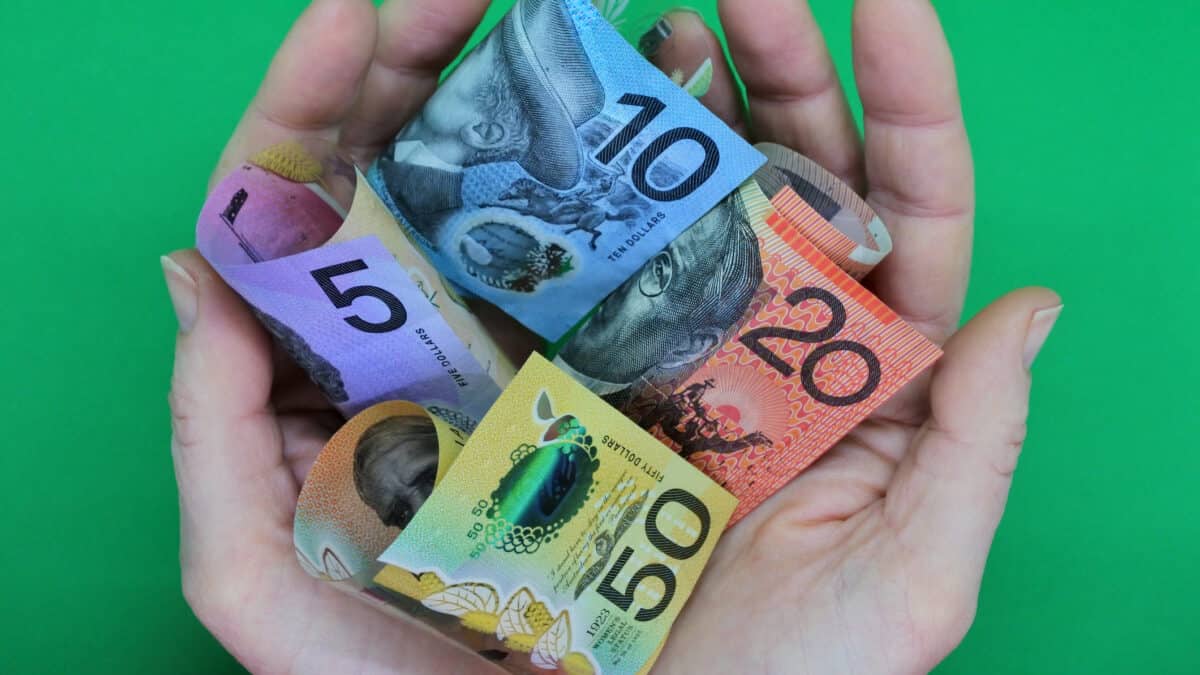
    Different Australian dollar notes in the palm of two hands, symbolising dividends.

    Investors who own ASX bank shares, like National Australia Bank Ltd (ASX: NAB), look forward to two dates on the financial calendar more than most. Bank stocks like NAB are well known for paying some of the largest, fattest, and most consistent dividends on the ASX.

    So it makes sense that bank shareholders would hold a special affinity for the day that they receive these fat, and usually fully franked, dividends.

    Well, luckily for NAB shareholders, today is one of the two days this year that they will receive a dividend payment.

    Back in May, we covered NAB’s latest earnings report, covering the half-year ended 31 March. As we went through at the time, these earnings were well-received, with NAB shares surging as a result. This surge was despite the bank reporting a 0.9% drop in operating income to $10.14 billion for the six months to 31 March. That was alongside a 12.8% decline in cash earnings to $3.55 billion.

    Despite these sobering metrics, NAB still announced an additional $1.5 billion share buyback program. As well as an increase to its interim dividend for 2024.

    How much is the latest NAB dividend worth?

    The bank revealed that its latest dividend would be worth 84 cents per share, fully franked. That’s a 1.3% rise over last year’s interim dividend, which was worth 83 cents per share. It’s also the same value as NAB’s last dividend. That was the final payment of 84 cents per share that we saw doled out back in December. Both of these payments came fully franked as well.

    As we warned back in May, the ex-dividend date for this latest NAB dividend was set for 7 May. So if you didn’t own NAB shares as of 6 May’s market close, you’ll miss out on this shareholder paycheque.

    But for eligible investors, the long wait for this dividend is finally over. Today is dividend payday. Yep, shareholders will be getting the proverbial cheque in the mail sometime this Wednesday. If someone owned 500 NAB shares right now (worth approximately $17,810 at current pricing), they can expect to receive $420 in dividend cash today.

    If shareholders instead selected the optional dividend reinvestment plan (DRP) by 9 May, they will receive additional NAB shares in lieu of the traditional cash payment.

    At the time of writing, NAB shares are down 0.17% at $35.63 each. At this pricing, NAB is currently trading on a dividend yield of 4.72%.

    The post Own NAB shares? Here’s how much you’re about to get paid in dividends appeared first on The Motley Fool Australia.

    Should you invest $1,000 in National Australia Bank Limited right now?

    Before you buy National Australia Bank Limited shares, consider this:

    Motley Fool investing expert Scott Phillips just revealed what he believes are the 5 best stocks for investors to buy right now… and National Australia Bank Limited wasn’t one of them.

    The online investing service he’s run for over a decade, Motley Fool Share Advisor, has provided thousands of paying members with stock picks that have doubled, tripled or even more.*

    And right now, Scott thinks there are 5 stocks that may be better buys…

    See The 5 Stocks
    *Returns as of 24 June 2024

    More reading

    Motley Fool contributor Sebastian Bowen has positions in National Australia Bank. The Motley Fool Australia’s parent company Motley Fool Holdings Inc. has no position in any of the stocks mentioned. The Motley Fool Australia has no position in any of the stocks mentioned. The Motley Fool has a disclosure policy. This article contains general investment advice only (under AFSL 400691). Authorised by Scott Phillips.
  • ASX 200 stock slips on $145 million impairment

    Engineer on a laptop.

    The S&P/ASX 200 Index (ASX: XJO) stock APA Group (ASX: APA) has dropped today after revealing a painful $145 million writedown. APA is currently down 0.69% at $7.90, while the ASX 200 is up 0.13%.

    APA is an energy infrastructure business that owns and operates a large network of gas pipelines around Australia. It also has energy generation assets including solar, wind and gas, plus electricity transmission assets.

    Impairment of APA’s Sydney ethane pipeline

    APA announced today that it expected to recognise a non-cash impairment of approximately $145 million, before tax, to the Moomba Sydney ethane pipeline (MSEP).

    This impairment would result in a full write-down of the MSEP’s current book/balance sheet value. APA intends to include this accounting charge in its financial statements for the year ended 30 June 2024, being FY24. However, the result is still subject to finalisation upon completion of the auditor’s review process.

    APA noted the impairment was “non-cash”, representing approximately 1% of its market capitalisation, and had no impact on its liquidity. It also affirmed there was no change to APA’s FY24 distribution guidance or its FY24 underlying earnings before interest, tax, depreciation and amortisation (EBITDA) guidance.

    The ASX 200 stock expects to pay an FY24 annual distribution of 56 cents per security and generate underlying EBITDA of between $1.87 billion and $1.91 billion.

    Why is the asset being impaired?

    The MSEP is a ‘single user’ pipeline, which was used to transport ethane to plastics manufacturer Qenos Pty Ltd. This company recently entered into voluntary administration and has announced that it does not expect to restart its manufacturing facility.

    APA noted that Qenos is the only likely customer with demand for ethane to be transported along the MSEP. The MSEP is the ASX 200 stock’s only asset that transports ethane and APA’s only long-distance single-user pipeline.

    Could the pipeline be used for something else?

    The energy infrastructure business said a range of potential alternative uses for the MSEP were being assessed, including the possible conversion of the asset to transport and store natural gas, to service the growing demand for capacity on APA’s east coast gas grid.

    However, APA warned it would take some time to fully assess the potential alternative uses of the MSEP.

    APA pointed out that accounting standards required an assessment of the asset’s carrying value to be finalised before completing the FY24 accounts. So, the company has taken a conservative approach and assumed the pipeline will not be utilised for the foreseeable future. Therefore, it expects to impair the asset’s full balance sheet value.

    APA share price snapshot

    Since the start of 2024, the APA share price has fallen 7.3%, and the ASX 200 has risen 1.5%.

    The post ASX 200 stock slips on $145 million impairment appeared first on The Motley Fool Australia.

    Should you invest $1,000 in Apa Group right now?

    Before you buy Apa Group shares, consider this:

    Motley Fool investing expert Scott Phillips just revealed what he believes are the 5 best stocks for investors to buy right now… and Apa Group wasn’t one of them.

    The online investing service he’s run for over a decade, Motley Fool Share Advisor, has provided thousands of paying members with stock picks that have doubled, tripled or even more.*

    And right now, Scott thinks there are 5 stocks that may be better buys…

    See The 5 Stocks
    *Returns as of 24 June 2024

    More reading

    Motley Fool contributor Tristan Harrison has no position in any of the stocks mentioned. The Motley Fool Australia’s parent company Motley Fool Holdings Inc. has no position in any of the stocks mentioned. The Motley Fool Australia has positions in and has recommended Apa Group. The Motley Fool has a disclosure policy. This article contains general investment advice only (under AFSL 400691). Authorised by Scott Phillips.

  • Why APA Group, Chalice Mining, Guzman Y Gomez, and Monadelphous shares are falling

    The S&P/ASX 200 Index (ASX: XJO) is back on form and edging higher on Wednesday. At the time of writing, the benchmark index is up 0.2% to 7,731.9 points.

    Four ASX shares that have failed to follow the market higher today are listed below. Here’s why they are falling:

    APA Group (ASX: APA)

    The APA Group share price is down 1% to $7.88. Investors have been selling this energy infrastructure company’s shares after it announced a non-cash impairment of approximately $145 million to the Moomba Sydney Ethane Pipeline (MSEP). The expected impairment would result in a full write down of the current book value of the MSEP. Management notes that the impairment is non-cash, represents approximately 1% of APA’s market capitalisation, and has no impact on liquidity. Furthermore, there is no change to its FY 2024 distribution or underlying EBITDA guidance.

    Chalice Mining Ltd (ASX: CHN)

    The Chalice Mining share price is down 11% to $1.34. This is quite a turnaround for the mineral exploration company’s shares. They were up as much as 8% this morning before sinking deep into the red. Investors were buying its shares after it announced a non-binding memorandum of understanding (MOU) with Mitsubishi Corporation. This MOU will see two parties work together with the intention of forming a potential strategic partnership to develop the 100%-owned Gonneville PGE-Nickel-Copper-Cobalt Project in Western Australia. However, given how MOUs are non-binding, investors don’t appear to see much value in the announcement at this stage.

    Guzman Y Gomez Ltd (ASX: GYG)

    The Guzman Y Gomez share price is down 1% to $25.25. Investors continue to sell down this quick service restaurant operator’s shares due to concerns over its sky-high valuation. Not even a bullish broker note out of Morgans has been enough to stop its shares from falling today. Morgans has initiated coverage on the company with an add rating and $30.00 price target.

    Monadelphous Group Ltd (ASX: MND)

    The Monadelphous share price is down 3% to $12.69. This appears to have been driven by a broker note out of Bell Potter this morning. According to the note, the broker has downgraded this mining services company’s shares to a hold rating (from buy) with a trimmed price target of $14.00 (from $15.40). Its analysts said: “We have adopted a conservative short-to-medium term outlook for EC division activity, reflecting a quietening major project development pipeline, with limited visibility on near-term contract awards.”

    The post Why APA Group, Chalice Mining, Guzman Y Gomez, and Monadelphous shares are falling appeared first on The Motley Fool Australia.

    Should you invest $1,000 in Apa Group right now?

    Before you buy Apa Group shares, consider this:

    Motley Fool investing expert Scott Phillips just revealed what he believes are the 5 best stocks for investors to buy right now… and Apa Group wasn’t one of them.

    The online investing service he’s run for over a decade, Motley Fool Share Advisor, has provided thousands of paying members with stock picks that have doubled, tripled or even more.*

    And right now, Scott thinks there are 5 stocks that may be better buys…

    See The 5 Stocks
    *Returns as of 24 June 2024

    More reading

    Motley Fool contributor James Mickleboro has no position in any of the stocks mentioned. The Motley Fool Australia’s parent company Motley Fool Holdings Inc. has no position in any of the stocks mentioned. The Motley Fool Australia has positions in and has recommended Apa Group. The Motley Fool has a disclosure policy. This article contains general investment advice only (under AFSL 400691). Authorised by Scott Phillips.

  • How ASX 200 retail shares just got a boost from ‘watchful shoppers’

    S&P/ASX 200 Index (ASX: XJO) retail shares got a late morning boost today, thanks to some thrifty Aussie shopping habits in May.

    This follows the 11:30 a.m. AEST release of the Australian Bureau of Statistics’ (ABS) retail sales data for May.

    In the minutes following the report’s release, the benchmark index gained 0.2%, with most ASX 200 retail shares joining the mini rally.

    Here’s what we know.

    Discounts driving sales growth

    According to the ABS, Australian retail turnover rose 0.6% in May. That’s a marked improvement from the 0.1% increase in April and the 0.4% decline in March.

    While that result is offering some tailwinds for ASX 200 retail shares today, investor reaction is likely muted as much of the growth was attributed to the big retailers’ sales events during the month.

    “Retail turnover was boosted this month by watchful shoppers taking advantage of early end-of-financial year promotions and sales events,” Robert Ewing, ABS head of business statistics, said.

    “Retail businesses continue to rely on discounting and sales events to stimulate discretionary spending, following restrained spending in recent months,” Ewing added.

    And while it’s good to see growth figures for May, the bigger picture is less rosy.

    “Despite the seasonally adjusted rise, underlying spending remains stagnant with retail turnover flat in trend terms. Compared to May 2023, trend is only up 1.5%,” Ewing said.

    Digging into the market segments for ASX 200 retail shares, clothing, footwear, and personal accessory retailing had the largest rise (up 1.6%) after falling in March and April.

    Household goods retailing increased by 1.1%, while sales at department stores decreased by 0.9%.

    “Many retailers started end-of-financial year sales early, offering larger discounts than usual and noted that shoppers remain price-sensitive in response to persistent cost-of-living pressures,” Ewing added.

    How are these ASX 200 retail shares tracking?

    Drilling down to a few specific ASX 200 retail shares, the Wesfarmers Ltd (ASX: WES) share price jumped 0.3% on the ABS sales data, though it has since given back those gains, currently at $64.12 a share.

    Wesfarmers subsidiaries include household names such as Bunnings Warehouse, Kmart Australia, Officeworks, and Priceline.

    Shares in furniture and electrical goods retailer Harvey Norman Holdings Ltd (ASX: HVN) gained 0.4% following the ABS release and are currently at $4.22.

    And ASX 200 home electronics retail share JB Hi-Fi Ltd (ASX: JBH) gained 0.7% following the sales data. At the time of writing, JB Hi-Fi is managing to hold onto those gains, currently at $61.22 a share.

    The post How ASX 200 retail shares just got a boost from ‘watchful shoppers’ appeared first on The Motley Fool Australia.

    Should you invest $1,000 in Harvey Norman Holdings Limited right now?

    Before you buy Harvey Norman Holdings Limited shares, consider this:

    Motley Fool investing expert Scott Phillips just revealed what he believes are the 5 best stocks for investors to buy right now… and Harvey Norman Holdings Limited wasn’t one of them.

    The online investing service he’s run for over a decade, Motley Fool Share Advisor, has provided thousands of paying members with stock picks that have doubled, tripled or even more.*

    And right now, Scott thinks there are 5 stocks that may be better buys…

    See The 5 Stocks
    *Returns as of 24 June 2024

    More reading

    Motley Fool contributor Bernd Struben has no position in any of the stocks mentioned. The Motley Fool Australia’s parent company Motley Fool Holdings Inc. has positions in and has recommended Wesfarmers. The Motley Fool Australia has positions in and has recommended Harvey Norman and Wesfarmers. The Motley Fool Australia has recommended Jb Hi-Fi. The Motley Fool has a disclosure policy. This article contains general investment advice only (under AFSL 400691). Authorised by Scott Phillips.

  • Why Cettire, Deterra Royalties, G8 Education, and Red Hill shares are pushing higher

    In afternoon trade, the S&P/ASX 200 Index (ASX: XJO) is on course to end its losing streak. At the time of writing, the benchmark index is up 0.3% to 7,738.8 points.

    Four ASX shares that are rising more than most today are listed below. Here’s why they are pushing higher:

    Cettire Ltd (ASX: CTT)

    The Cettire share price is up 11% to $1.35. This is despite there being no news out of the online luxury products retailer. However, it is worth noting that its shares have been on fire this week. Investors appears to have been buying stocks that were sold off in the last financial year. Nevertheless, Cettire’s shares remain down by over 55% since this time last year despite this week’s heroics. That weakness was driven by concerns over its business model and a sudden deterioration in its performance because of consumer spending headwinds.

    Deterra Royalties Ltd (ASX: DRR)

    The Deterra Royalties share price is up 1.5% to $4.08. This appears to have been driven by a broker note out of Goldman Sachs this morning. Its analysts have upgraded the mining royalties company to a buy rating with a $4.70 price target. This implies potential upside of 15% from current levels. The broker feels that a recent selloff has created a buying opportunity for investors.

    G8 Education Ltd (ASX: GEM)

    The G8 Education share price is up 3% to $1.22. This strong gain also appears to have been by a broker note this morning. According to a note out of Macquarie, its analysts have upgraded the childcare centre operator’s shares to an outperform rating with an improved price target of $1.35. Macquarie believes the company could be performing better than expected thanks to improving occupancy rates and lower wage increases.

    Red Hill Minerals Ltd (ASX: RHI)

    The Red Hill Minerals share price is up 11% to $7.34. This morning, this mining company announced a very large special dividend. Red Hill Minerals recently received $200 million from Mineral Resources Ltd (ASX: MIN) following the first shipment of ore from the Onslow Iron Project to China Baowu Steel Group. Its board has decided to return proceeds to shareholders through a special fully franked $1.50 per share dividend. Based on its current share price, this represents a 20% dividend yield. Its shares are scheduled to trade ex-dividend next week on 9 July. After which, the payment will be made to eligible shareholders later this month on 19 July.

    The post Why Cettire, Deterra Royalties, G8 Education, and Red Hill shares are pushing higher appeared first on The Motley Fool Australia.

    Should you invest $1,000 in Cettire Limited right now?

    Before you buy Cettire Limited shares, consider this:

    Motley Fool investing expert Scott Phillips just revealed what he believes are the 5 best stocks for investors to buy right now… and Cettire Limited wasn’t one of them.

    The online investing service he’s run for over a decade, Motley Fool Share Advisor, has provided thousands of paying members with stock picks that have doubled, tripled or even more.*

    And right now, Scott thinks there are 5 stocks that may be better buys…

    See The 5 Stocks
    *Returns as of 24 June 2024

    More reading

    Motley Fool contributor James Mickleboro has no position in any of the stocks mentioned. The Motley Fool Australia’s parent company Motley Fool Holdings Inc. has positions in and has recommended Goldman Sachs Group and Macquarie Group. The Motley Fool Australia has positions in and has recommended Macquarie Group. The Motley Fool Australia has recommended Cettire. The Motley Fool has a disclosure policy. This article contains general investment advice only (under AFSL 400691). Authorised by Scott Phillips.

  • I’d buy BHP shares to generate $1,000 of monthly passive income

    Three mining workers stand proudly in front of a mine smiling because the BHP share price is rising

    The BHP Group Ltd (ASX: BHP) share price dropped almost 4% over the past year, underperforming the S&P/ASX 200 Index (ASX: XJO) which rose by 6.8% during the same period.

    This underperformance extends over the longer term as well. Over the last five years, BHP shares have gained 5.5%, whereas the ASX 200 has increased by 14.6%.

    The primary reason for the share price decline is the drop in global commodity prices, particularly for BHP’s key metals: iron ore and copper.

    Iron ore prices fell from US$144 per tonne in January 2024 to below US$100 per tonne in April 2024 due to ongoing weakness in China’s property and industrial sectors. While prices have recovered somewhat, the current price is around US$108 per tonne, down 25% from its peak.

    Copper prices also took a breather after reaching near-record highs of US$10,890 per tonne in May 2024 and are now trading at US$9,483 per tonne.

    BHP shares offer a fully-franked dividend yield of 5.44% at the current share price. Considering the tax benefits from franking credits, this translates to generating an additional $1,000 of monthly passive income (before tax) by investing less than $180,000 today.

    Dividend history

    While BHP’s current dividend yield is attractive, its value hinges on the consistency of its dividend payments. Let’s review BHP’s dividend payment history.

    Dividend per share (AUD) Franking
    FY13 $1.20 100%
    FY14 $1.31 100%
    FY15 $1.69 100%
    FY16 $0.40 100%
    FY17 $1.06 100%
    FY18 $1.59 100%
    FY19 $1.92 100%
    FY20 $1.75 100%
    FY21 $4.03 100%
    FY22 $4.63 100%
    FY23 $2.61 100%
    TTM $2.35 100%

    Like any mining stock, BHP’s earnings are subject to commodity cycles, which can significantly impact its dividend payments. For instance, in FY16, the dividend per share dropped sharply from $1.69 to 40 cents and took three years to recover to its previous high.

    However, long-term shareholders who held onto its shares through the ups and downs of mining cycles have generally seen their dividends grow over time.

    All this time, BHP has offered 100% franking credits on its dividend payments, which is an added bonus for tax-conscious investors.

    Valuations

    No matter how high the dividend yield might be, it’s equally important to protect your invested capital. Watching the share price decline after purchasing is never a pleasant experience.

    Let’s examine BHP’s current valuations using FY25 estimates from S&P Capital IQ. At present, BHP shares are valued at:

    Note that the historical trading range excludes FY16 valuations, which appear to be outliers, with a P/E ratio as high as 53x and a P/B ratio of 8x.

    Compared to BHP’s usual trading ranges, some may argue that the current P/B ratio suggests a potential downside. Economic uncertainties always loom, so it’s crucial to consider the risks involved.

    But, all things considered, I can safely say that BHP’s valuation multiples are near or below their mid-points in terms of PER and PBR.

    Foolish takeaway

    For long-term dividend investors, I think BHP’s current share price offers a compelling opportunity. As a global leader in an essential industry with a consistent dividend history, BHP provides attractive dividend yields at reasonable valuation multiples.

    The post I’d buy BHP shares to generate $1,000 of monthly passive income appeared first on The Motley Fool Australia.

    Should you invest $1,000 in Bhp Group right now?

    Before you buy Bhp Group shares, consider this:

    Motley Fool investing expert Scott Phillips just revealed what he believes are the 5 best stocks for investors to buy right now… and Bhp Group wasn’t one of them.

    The online investing service he’s run for over a decade, Motley Fool Share Advisor, has provided thousands of paying members with stock picks that have doubled, tripled or even more.*

    And right now, Scott thinks there are 5 stocks that may be better buys…

    See The 5 Stocks
    *Returns as of 24 June 2024

    More reading

    Motley Fool contributor Kate Lee has no position in any of the stocks mentioned. The Motley Fool Australia’s parent company Motley Fool Holdings Inc. has no position in any of the stocks mentioned. The Motley Fool Australia has no position in any of the stocks mentioned. The Motley Fool has a disclosure policy. This article contains general investment advice only (under AFSL 400691). Authorised by Scott Phillips.

  • The career rise of Bob Iger — and how the Disney CEO spends his fortune

    bob iger
    Iger is believed to be richer than the Disney heir, Abigail Disney.

    • Bob Iger has been heading one of the world's largest entertainment companies for nearly two decades.
    • The House of Mouse boss stepped down as Disney CEO in February 2020 only to return in 2022.
    • Here's a look at his wealth, spending, and career, from a lowly position at ABC to Disney CEO.

    Bob Iger now has something money can't buy: the title of Honorary Knight.

    He was given the title Knight Commander of the Most Excellent Order of the British Empire in a ceremony led by Prince William.

    Perhaps most important on his résumé, though, is his tenure as the CEO of Disney.

    Iger started his entertainment career in 1974 as a studio supervisor at ABC and climbed up the show business ranks to lead one of the most powerful businesses in the world.

    Though he retired as CEO in 2020, Bob Iger returned to the role in a shocking shakeup two years later. Iger had stepped down as CEO in February 2020 but stayed on as executive chairman until December 2021, when he retired, albeit ultimately briefly.

    Iger has amassed a sizeable personal fortune across his 15 years and counting as CEO.

    Forbes reported in 2019 that Iger had a net worth of $690 million, which is thought to be higher than that of Disney heiress Abigail Disney, who said that year that she's worth about $120 million. Iger, meanwhile, received $31.6 million in total compensation in 2023, or 595 times what the median Disney employee makes.

    Here's what we know about Iger's life and career rise, including how he makes and spends his multimillion-dollar fortune:

    Iger was born Robert Allen Iger in Brooklyn, New York, and raised in the small town of Oceanside, New York.
    Bob Iger high school yearbook
    Circled is Bob Iger, who graduated from Oceanside High School in 1969.

    "I am very lucky," Iger told Laurene Powell Jobs at The Atlantic Festival in Washington in 2019. "I was a lower middle class kid or middle class. My father had manic depression so he had trouble holding a job. I started as a $150-a-week employee at ABC 45 years ago and rose up to be CEO of this company. It is a great story, but it is not necessarily because I was extraordinary."

    He attended Ithaca College where he graduated magna cum lade in 1973 with a degree in Television and Radio.
    bob iger walt disney company
    Iger is an alum of Ithaca College.

    At Ithaca College, Iger hosted a campus television show called "Campus Probe." He graduated originally wanting to be a news anchor and briefly worked as a local weatherman in Ithaca, New York.

    In 1974, Iger joined ABC, working in New York City. He wrote in his memoir "The Ride of a Lifetime" that he did "menial labor" for basically every show ABC produced out of Manhattan at the time.
    Bob Iger
    Iger got started at ABC through an unlikely connection.

    Iger wrote in his book that he got his first job at ABC because of his uncle, who was in the hospital for eye surgery. His uncle was in the room next to someone who claimed to be a top executive at ABC, who said he would give the younger Iger a job.

    Iger took the "top executive" up on his offer, though he quickly realized that the person was not a "top executive" but instead a lower-level one. Still, the person ran a small department at ABC known as Production Services and was able to secure Iger an interview with the department.

    At age 23, Iger was brought on as a "studio supervisor."

    But after a confrontation with his boss, Iger was almost fired and forced to look for a new job. Soon after, he moved over to a position at ABC Sports.
    ABC Walt Disney
    Iger moved to ABC Sports after a confrontation with a boss.

    Iger has said that one of his bosses accused Iger of spreading rumors about him, causing the young Iger to almost be fired.

    "He told me I wasn't promotable and I had two weeks to find another job somewhere in the company or I was gone," Iger recalled at the UCLA Awards Gala in 2013. "Fortunately, I was able to find another job in the company. They didn't think I wasn't promotable, I guess."

    He worked his way up the ABC Sports ladder, working closely with Roone Arledge, "a relentless perfectionist," who was the head of ABC Sports at the time.
    Bob Iger Roone Arledge
    Iger, right, credits Roone Arledge, left, with teaching him a mantra of "Innovate or die."

    Iger wrote in his book that Arledge was the person who taught him the mantra which would follow Iger for the rest of his life: "Innovate or die."

    Iger went on to become the vice president of ABC Sports.
    Bob Iger
    Iger climbed the ladder at ABC Sports to become vice president.

    ABC was later sold to Capital Cities Communications for $3.5 billion in a deal finalized in 1986.

    Shortly after, Tom Murphy and Dan Burke — the heads of Capital Cities/ABC — tapped Iger to become the head of ABC Entertainment, and Iger moved to Los Angeles.
    ABC Walt Disney
    Dan Burke (left) and Tom Murphy (right) wanted Iger to lead ABC Entertainment.

    Iger wrote in his memoir that the constant traveling put strain on his first marriage, to Kathleen Susan. Eventually, the two divorced. They have two daughters.

    While at the helm of ABC Entertainment, Iger was the one who took a chance and put David Lynch's "Twin Peaks" on air.
    Twin Peaks David Lynch
    Though "Twin Peaks" was cancelled after two seasons, Iger said taking a chance on it paid off in different ways.

    The critically-acclaimed series was cancelled after two seasons, but Iger wrote in his book that the risk he took putting it on television caught the attention of other famed directors such as Steven Spielberg and George Lucas. 

    Iger and Lucas then developed a show based on the Indiana Jones franchise, which was cancelled after two seasons. But, Iger wrote in his book, Lucas never forgot the risk Iger took on his show, and he remembered it years later when he decided to sell Lucasfilm to Disney.

    In 1993, Iger became president of ABC Network's Television Group.
    Bob Iger
    Iger succeeded Dan Burke as president.

     When Burke retired, Iger was tapped to replace him as president and COO of Capital Cities/ABC.


    In 1995, Iger married journalist Willow Bay who, at the time, was a stand-in weekend news anchor on Good Morning America, and was poised to take over for then-full time host Joan Lunden.
    Bob Iger Willow Bay
    Iger and Willow Bay married in 1995.

    Iger and Bay became engaged in 1995. But after Disney agreed to buy Capital Cities/ABC that same year, Iger had quick decisions to make.

    At that time, he wrote in his memoir, he had been commuting weekly to Los Angeles to meet his new Disney colleagues. He knew that after the acquisition was approved, he and Bay would not have much time to honeymoon. So, they quickly married later that same year.

    "Willow and I also knew we'd have no chance for a honeymoon once the deal closed," he wrote. "We radically shortened our engagement and got married in early October 1995."

    They are still married and have two children together.

    In 1996, The Walt Disney Company bought Capital Cities/ABC for $19 billion, and renamed it ABC, Inc.
    Michael Eisner ABC Disney Merger
    Then-chairman and CEO of Disney Michael Eisner (left) and then-chairman and CEO of Capital Cities/ABC Tom Murphy (right) shake hands after a joint news conference where the two announced the $19 billion merger of their entertainment and media companies.

    Iger wrote in his memoir that he heavily considered walking away from Disney at this point. But as part of the Disney-ABC merger, Iger agreed to run a media division at Disney for five years.

    In 1999, Iger became the president of Disney International, the business division overseeing Disney's global operations. A year later, he was tapped to become the COO of Disney, working directly under then-CEO Michael Eisner.
    Michael Eisner Bob Iger
    Eisner, right, was CEO from 1984 to 2005.

    Forbes reported that between 1994 and 1999, Eisner made $631 million. In the year 1997 alone, Eisner reportedly made more than $550 million. Over the years, Eisner invested his Disney money and became a billionaire by 2008 — perhaps predicting a financial path Iger may follow.

    In the early 2000s, tensions began to brew between Eisner and Disney heir Roy E. Disney. After Eisner stepped down, Iger became the CEO of the Walt Disney Company in 2005.
    Bob Iger
    Iger became CEO in 2005.

    Iger wrote in his book that, despite being the COO and thereby second in command behind Eisner, his promotion to CEO was not a guarantee. If anything, he wrote, many had associated him with the turbulence of Eisner's era and wanted an outsider for the job. Iger said he campaigned for months until he was officially named CEO in 2005

    Forbes reported in 2019 that in his first year as CEO, Iger made $22 million, a salary which did not include the stock options worth $2.9 million.

    One of Iger's first major moves as CEO was to rebuild Disney's relationship with Pixar. At the time, the relationship between Disney and Pixar was strained, and Iger felt the future of Disney Animation relied on repairing it.
    Bob Iger Edwin Catmull
    Edwin Catmull (left), former president of Walt Disney Animation Studios and Pixar Animation Studios, with Iger (right).

    Before he officially became the CEO of Disney, he called to inform Steve Jobs — who was the majority shareholder in Pixar — that he was being appointed CEO and shared his hope they could discuss working together in the future. From there, the two began to slowly work on repairing the fraught relationship between the two companies. 

    Iger wrote in his memoir that he felt Disney needed Pixar to help enter the future of animation. Pixar at the time was using technologies to produce content that had never been seen before, Iger wrote in his book.

    Iger wanted Disney to be in on it — not just as a distributor for the films, as their previous agreement had stated, but to actually own what Pixar was bringing to the table.

    In 2006, Disney announced that it would acquire Pixar for $7.4 billion, making Jobs, the majority shareholder in Pixar at the time, the majority shareholder in Disney.
    Steve Jobs Bob Iger
    Iger and Steve Jobs, right, were friends before Jobs passed in 2011.

    Iger wrote in his book that the two companies were able to come together after he reached out to Jobs to forge a friendship and address any issues between the two companies. 

    Iger and Jobs would go on to have a long friendship until Jobs passed away in 2011. A month after Jobs died, Iger joined the Apple board, where he remained until he stepped down in 2019 ahead of launching Disney+.

    In 2009, Iger led Disney's acquisition of Marvel for $4 billion. This gave Disney access to the Marvel comic book library, which was the beginning of the now multibillion-dollar, box office record-breaking Marvel Cinematic Universe.
    Bob Iger Lupita Nyong'o
    Iger and actress Lupita Nyong'o attend the premiere of Disney and Marvel's "Black Panther."

    Iger wrote that part of the reason Marvel CEO Isaac "Ike" Perlmutter was willing to sell the company was because Jobs called Perlmutter to "vouch for" Iger and praised how Iger had handled the Disney-Pixar merger.

    Still looking to help Disney expand into the future, in 2012, Iger led Disney's acquisition of Lucasfilm for $4.05 billion. This gave Disney control of not just the Star Wars franchise, but also the Indiana Jones franchise.
    George Lucas Bob Iger
    Iger said George Lucas, left, was initially hesitant on the deal.

    Iger said that he knew Lucas was nervous to sell Lucasfim to Disney — mostly because the "Star Wars" creator knew he would be selling his legacy along with it. But eventually, Lucas warmed up to the idea.

    Lucas enlisted Kathleen Kennedy to lead Lucasfilm right before the company was sold to Disney. The first Star Wars film made without Lucas was released a few years later, in 2015 — "The Force Awakens," directed by J.J. Abrams.

    The company's acquisition spree continued in 2018, when Disney agreed to buy 21st Century Fox. At the time, Fox was owned by billionaire Rupert Murdoch who, after the sale, became one of the largest shareholders in Disney.
    Murdoch family
    Rupert Murdoch with his sons Lachlan Murdoch (left) and James Murdoch (right).

    Forbes reported in 2019 that, if Murdoch were to cash in all stock available to him from the Disney deal, he'd own about $10.5 billion worth of Disney stock. In addition, Variety reported that collectively, the Murdoch family members were "the largest individual shareholders in Disney."

    Iger wrote in his memoir that Murdoch selling the company he had built from scratch was an indicator that the "disruption" threatening the entertainment industry was now inevitable. 

    "As [Rupert Murdoch] pondered the future of his company in such a disrupted world, he concluded the smartest thing to do was to sell and give his shareholders and his family a chance to convert its 21st Century Fox stock into Disney stock, believing we were better positioned to withstand the change and, combined, we'd be even stronger," Iger wrote in his book. 

    In March 2019, the merger between 21st Century Fox and Disney was completed, with a price tag of $71.3 billion.
    Bob Iger Peter Rice
    Peter Rice (L), former president of 21st Century Fox, and Iger (R).

    This move made Disney the second-largest media company in the world at the time, Forbes reported.

    That year, Iger was also named Time's businessperson of the year.
    Bob Iger
    Time in 2019 called Iger "unassailable."

    "In a year when the tide has shifted against Big Business, Big Media and Big Tech, Iger has transformed his enormous media company into a gargantuan media and tech business while ensuring that the Walt Disney Co.'s products remain widely beloved," Belinda Luscombe wrote in Time's profile of him. "But for now, for just this moment, Iger is unassailable. He's transformed his company from a stuffy media doyen into a sexy cultural force."

    In 2020, Iger — along with Seth MacFarlane and Cicely Tyson, among several others — was inducted into the Television Academy Hall of Fame.
    bob iger disney
    Iger is an honoree of the Television Academy Hall of Fame.

    Other inductees that year included the likes of Seth MacFarlane and Cicely Tyson.

    In February 2020, Disney announced that Iger would step down as CEO and assume the role of executive chairman until his contract expired on December 31, 2021.
    Bob Iger
    Iger stayed on as executive chairman after departing the CEO role.

    Iger was replaced by Bob Chapek, former chairman of Disney Parks, Experiences and Product. Iger would forgo his entire salary for the year, and Chapek would similarly take a 50% salary cut amid potential multibillion-dollar revenue losses due to the coronavirus pandemic, Business Insider's Ashley Rodriguez reported.

    After a short-lived retirement, Bob Iger returned to Disney.
    bob iger star wars d23
    Iger returned to the CEO role in 2022.

    In November 2022, Disney made the shocking announcement that Iger was back to lead the company for two years, during which he'd work with the board to find a successor.

    However, Disney's board in 2023 voted to extend his contract to the end of 2026.

    In 2019, he had a net worth of $690 million, per Forbes' estimates.
    bob iger
    Iger is believed to have a greater net worth than Abigail Disney, grand-niece of Walt Disney.

    Forbes reported at the time that Iger's net worth was actually higher than that of Abigail Disney, the Disney heiress, who said in 2019 that she was worth about $120 million.

    In March 2020, it was announced that Iger would forgo his salary for the year, as Disney dealt with presumed multibillion-dollar losses due to the coronavirus pandemic and subsequent shutdowns. His base salary was $3 million in the previous fiscal year and he made $47.5 million in total compensation.

    Iger is known among peers for being a very kind leader and has been praised by his contemporaries for the way he has handled the mergers of Pixar, Marvel, and Lucasfilm.
    bob iger mickey mouse
    Iger is well-liked by many peers.

    During his first stint as CEO, Iger grew Disney's profits 335% to $260 billion, Business Insider reported.

    Forbes also reports that under Iger, Disney created more than 70,000 new jobs. 

    "Literally, I have never heard one person say a bad thing about him and I have never seen him be mean," billionaire David Geffen told The New York Times in a profile on Iger. "To be honorable, decent, smart, successful, and a terrific guy is unusual anywhere. But it is most unusual in the entertainment business. He's in a category of one."

    Iger's own increasing fortune has paralleled the rise in Disney's value over the years he's been at the helm.
    Bob Iger Mickey Drew Angerer Getty final
    Disney heiress Abigail Disney has criticized Iger's high compensation before.

    Forbes reported that that Iger's fortune is split between his Disney shares "and cash or other investment from sales of Disney shares over the decades."

    According to Forbes, Iger was compensated $65.6 million in 2018, which was 1,424 times the average Disney employee's salary. He had been given another $26.3 million in stock after he successfully closed the Disney-Fox merger and for agreeing to extend his contract until 2021. His initial compensation in 2018 was $39.3 million (not including stock rewards).

    In April 2019, Abigail Disney publicly criticized Iger's high pay on Twitter and later wrote an op-ed in the Washington Post elaborating on her thoughts

    "I'm not arguing that Iger and others do not deserve bonuses. They do," Disney wrote. "They have led the company brilliantly. I am saying that the people who contribute to its success also deserve a share of the profits they have helped make happen."

    Most recently, Iger received $31.6 million in total compensation in 2023, or 595 times what the median Disney employee makes.

    As Iger is a very private person, not much is known about his spending.
    Bob Iger Willow Bay
    Iger and Bay purchased a home from actress Michelle Pfeiffer.

    He and his wife bought a home in Brentwood, California, in 2006 from actress Michelle Pfeiffer for about $19 million, the Orlando Sentinel reported that year.

    The home reportedly was 7,500 square feet and had five bedrooms, nine bathrooms, a guest house, a tennis court, and a pool. As of a 2018 interview with Vogue, Iger was still living in Brentwood with his wife and their two children.

    The Igers also previously owned an apartment on the Upper East Side of New York City. The property sold in 2018 for $18.75 million, Business Insider reported.
    Bob Iger apartment
    An interior shot of Iger's one-time Manhattan digs.

    The Igers' former home has a library, living room views of the Jacqueline Kennedy Onassis Reservoir in Central Park, and four bedrooms, including one master suite with two bathrooms and a walk-in closet.

    Iger spends time — and likely money — maintaining his mental and physical health, about which he's notoriously rigorous. He told The New York Times that he wakes up at 4:15 every morning and doesn't touch his phone until he's finished with his morning exercise routine.
    Bob Iger
    Iger follows a strict workout regimen.

    Iger has also said that he doesn't eat carbs unless it's pizza, recalling that during his high school years, he worked at his local Pizza Hut.

    Iger reportedly has multiple yachts.
    Disney CEO Bob Iger
    Iger is also into yachting.

    He has a 180-foot superyacht called Aquarius, which he wrote about in Vanity Fair in 2014.

    He's also having another built, expected to be 30 feet longer, according to The Wall Street Journal.

    When he's "off the clock," he travels. Iger is a regular attendee at the Allen & Company Sun Valley Conference in Sun Valley, Idaho. The media conference is a hub for entertainment and tech moguls.
    Willow Bay Bob Iger
    Iger and Bay at the 2014 Allen & Co. Sun Valley Conference.

    Variety reports that in 2019, Iger attended the conference along with Meta CEO Mark Zuckerberg, Shari Redstone, Airbnb CEO Brian Chesky, and even former Democratic presidential candidate John Hickenlooper.

    In 2019, Iger and his wife committed $1 million to launch the Iger-Bay Endowed Scholarship at Iger's alma mater, Ithaca College. The scholarship aims to boost diversity in the media industry.
    Bob Iger Willow Bay
    Iger and Bay created a scholarship in their names at his alma mater, Ithaca College.

    The scholarship was funded through the proceeds from Iger's memoir.

    Iger also spends some of his fortune on vacations. Beyond their business dealings related to Disney and Pixar, Iger was also close personal friends with Jobs and has said the two would vacation together in nearby resorts in Hawaii.
    steve jobs bob iger 2006
    Iger and Jobs were also friends outside of business.

    "We vacationed at adjacent Hawaiian hotels a few times and would meet and take long walks on the beach, talking about our wives and kids, about music, about Apple and Disney and the things we might still do together," he wrote in his book. "You don't expect to develop such close friendships late in life, but when I think back on my time as CEO — at the things I'm most grateful for and surprised by — my relationship with Steve is one of them."

    According to The Hollywood Reporter, Iger has been seen on billionaire David Geffen's yacht. In August 2017, Iger was seen on the yacht with Oprah Winfrey, Diane von Furstenberg, and Diane Sawyer.
    Bob Iger David Geffen
    Iger (left) with David Geffen (right).

    Geffen owns a megayacht, known to be a common hang-out spot for celebrities and fellow billionaires, including Amazon founder Jeff Bezos, during the summer months, as seen on his Instagram page.

    The yacht is worth $590 million, as previously reported by Business Insider.

    In his personal life, Iger has a set of A-list friends who have been known to rave about him. One of those friends is Winfrey, who has said that if Iger were to run for president, she would not just vote for him but eagerly campaign on his behalf.
    Bob Iger Oprah
    Oprah Winfrey has said Iger should run for president.

    "I'll tell you the truth, this is not really where I intended to be tonight," Winfrey said at the Centennial Awards, where Iger was being honored, in 2019. "I was hoping that by this time in early fall, I would be knocking on doors in Des Moines, wearing an 'Iger 2020' T-shirt. Because I really do believe that Bob Iger's guidance and decency is exactly what the country needs right now."

    Iger is also close to Jeffrey Katzenberg, cofounder of Dreamworks and former chairman of Walt Disney Studios.
    Bob Iger Jeffrey katzenberg
    Dreamworks cofounder Jeffrey Katzenberg, right, also tried to convince Iger to run for president.

    After Comcast bought Dreamworks in 2016 for $3.8 billion, Katzenberg's net worth rose to $900 million

    Iger and Katzenberg have been friends for years, and Katzenberg is among the group of people who tried to encourage the Disney CEO to run for president.

    "No matter how much I begged Bob," Katzenberg said while presenting the Simon Wiesenthal Center Humanitarian Award to Iger in 2019. "He just wasn't willing to run for president of the United States."

    In his memoir, Iger admitted that he once considered running for president, but ultimately decided against it.
    Bob Iger
    Iger considered but ultimately wasn't interested in pursuing the presidency.

    "I think the Democratic Party would brand me as just another rich guy who's out of touch with America who doesn't have any sense for what's good for the plight of the people," he told The New York Times in a 2019 profile.

    Despite many people — including some major Hollywood players — urging him to run for president in late 2019, Iger publicly remained firm that he had no plans to pursue a presidential campaign.

    Iger has also spent his free time involved in politics in the past. Shortly after Donald Trump was elected president, Iger joined Trump's Strategic and Policy Forum.
    Bob Iger
    Iger was a member of Trump's Strategic and Policy Forum.

    Trump's Strategic and Policy Forum was a business council created to hear the perspectives of different leaders on how to improve job growth in the US. 

    But Iger stepped down from the role in 2017 after Trump announced the US would withdraw from the Paris Climate Agreement, Variety reported.
    Bob Iger
    Iger resigned from the council after Trump withdrew the US from the Paris Agreement.

    Iger announced his resignation from the council in a tweet stating: "As a matter of principle, I've resigned from the President's Council over the #Paris Agreement withdrawal." 

    The council, which ultimately disbanded, also included JPMorgan Chase CEO Jamie Dimon, and Stephen A. Schwarzman, the cofounder of private equity firm Blackstone.

    In September 2019, however, Iger did outline what would have been the central themes of his campaign, had he decided to run.
    Bob Iger
    Iger has spoken about what he would've focused on in a hypothetical campaign for president.

    "America is gravely in need of optimism, of looking at the future and believing that so many things are going to be all right, or that we as a nation can attack some of the most critical problems of our day," Iger said at The Atlantic Festival in Washington in 2019. "And that could be the environment, that could be income disparity, that could be the technology's impact on the world from a disruption perspective. It could be the cost of education, availability of affordable housing, healthcare. You name it."

    Iger's 2020 plans to retire from Disney were derailed by the coronavirus pandemic.
    Bob Iger smiles off camera while wearing a suit in front of a black background.
    Disney CEO, Bob Iger originally announced plans to retire in 2020.

    In 2020, Iger announced his plans to retire at the end of his contract term, though the coronavirus pandemic derailed his plan. Disney's board extended Iger's term as chairman to the end of 2021. At the end of his term, Susan Arnold took his place as chairman.

    With a $3 million salary in 2019, plus a $21.8 million bonus, $10 million worth of stock awards, and $9.6 million worth of stock options, Iger was consistently one of Hollywood's highest-paid CEOs prior to his departure, Business Insider previously reported.

    As Disney's on-again-of-again CEO, Iger fended off challenges to his control of the company.
    nelson peltz/bob iger
    Billionaire Nelson Peltz, left, has lost his proxy battle against Disney and its CEO Bob Iger.

    Iger returned to Disney as the company's CEO following the ouster of his successor, Bob Chapek. His contract was originally set to expire in 2024, but Disney's board in 2023 voted to extend his contract to the end of 2026 — and increased his compensation package by several million dollars.

    Upon his return, Iger faced challenges to his control over the company, including from activist investor Nelson Peltz over two board seats. Iger ultimately prevailed. The proxy fight over the seats is estimated to have cost all parties about $70 million.

    Iger and Bay set their sights on purchasing the most valuable women's sports franchise in the world.
    Robert Iger Bob Iger Willow Bay
    Iger and Bay are in talks to purchase the Los Angeles women's soccer franchise Angel City FC.

    In the summer of 2024, Puck and Semafor reported that Iger and his wife were planning to purchase a controlling share of the Los Angeles women's soccer franchise Angel City FC — the most valuable women's sports team in the world.

    The proposed deal, with a pre-money valuation of $250 million, would see the pair replace Reddit cofounder Alexis Ohanian as the team's primary shareholder.

    Read the original article on Business Insider
  • Down 18% since listing, should you buy Guzman Y Gomez shares now?

    Young woman using computer laptop with hand on chin thinking about question, pensive expression.

    Guzman Y Gomez (ASX: GYG) shares are taking a tumble today.

    Shares in the Mexican fast-food restaurant chain closed up 2.7% at $25.50 yesterday. In late morning trade on Wednesday, shares have given back those gains and more, currently changing hands for $24.70, down 3.1%.

    For some context, the All Ordinaries Index (ASX: XAO) is up 0.3% at this same time.

    As you can see on that chart above, Guzman Y Gomez shares have had a tough time of it since their debut on the ASX on 20 June.

    Investors who were able to take part in the initial public offering (IPO) could have gotten in for $22.00 a share. For the rest of us, the fast-food stock opened on 20 June, trading at $30.00 per share. Shares hit an intraday high of $30.99 before ending the day back at $30.00.

    That handed IPO investors a tidy 36% one-day gain.

    Not bad.

    Now, IPO investors are still in the green.

    But with today’s losses factored in, the Guzman Y Gomez share price is down 17.7% from the opening price on its first day of trading on the ASX when most retail investors would have gotten a foot in.

    Following that sizeable retrace, should you buy the Mexican fast-food stock now?

    Are Guzman Y Gomez shares a buy?

    The biggest concern you’re likely to hear about Guzman Y Gomez shares is their sky-high valuation.

    Especially when compared to fast food rivals Collins Foods Ltd (ASX: CKF) and Domino’s Pizza Enterprises Ltd (ASX: DMP).

    The key to the company’s success at current valuations is to deliver on its ambitious growth plans.

    And it’s with this growth potential in mind that Morgans has placed an add rating on the stock with a $30.80 price target. That’s almost 25% above current levels.

    According to Morgans’ analyst Billy Boulton (quoted by The Australian Financial Review), “To justify the current share price of GYG (or, indeed, to see upside to it), you have to believe that the long-term growth story is not just possible, but likely.”

    Boulton added:

    We believe investors buying into GYG at current prices will be well rewarded over time as the business realises its very significant long-term growth potential and its earnings benefit from strong operating leverage.

    Guzman Y Gomez shares currently encompass 210 stores, with 185 in Australia. Morgans believes the company can eventually grow its Aussie footprint to 1,000 stores. If the broker has that right, early investors could indeed be amply rewarded.

    The post Down 18% since listing, should you buy Guzman Y Gomez shares now? appeared first on The Motley Fool Australia.

    Should you invest $1,000 in Guzman Y Gomez right now?

    Before you buy Guzman Y Gomez shares, consider this:

    Motley Fool investing expert Scott Phillips just revealed what he believes are the 5 best stocks for investors to buy right now… and Guzman Y Gomez wasn’t one of them.

    The online investing service he’s run for over a decade, Motley Fool Share Advisor, has provided thousands of paying members with stock picks that have doubled, tripled or even more.*

    And right now, Scott thinks there are 5 stocks that may be better buys…

    See The 5 Stocks
    *Returns as of 24 June 2024

    More reading

    Motley Fool contributor Bernd Struben has no position in any of the stocks mentioned. The Motley Fool Australia’s parent company Motley Fool Holdings Inc. has positions in and has recommended Domino’s Pizza Enterprises. The Motley Fool Australia has recommended Collins Foods and Domino’s Pizza Enterprises. The Motley Fool has a disclosure policy. This article contains general investment advice only (under AFSL 400691). Authorised by Scott Phillips.

  • Guess which ASX All Ords stock just received another $18 million investment from Rio Tinto

    A female miner wearing a high vis vest and hard hard smiles and holds a clipboard while inspecting a mine site with a colleague.

    Rio Tinto Ltd (ASX: RIO) has been busy investing funds into an ASX All Ords stock this week.

    Based on the mining giant’s investment, it seems to see a lot of promise in this company’s project in Africa.

    Which ASX All Ords stock?

    This morning, Sovereign Metals Ltd (ASX: SVM) revealed that Rio Tinto has exercised all its share options to increase its shareholding in the company to 19.76%.

    The miner exercised a total of 34,549,598 share options to acquire the same number of new fully paid ordinary shares at $0.535 per share. This results in proceeds of $18.5 million for the ASX All Ords stock.

    What now?

    Management believes Rio Tinto’s further investment represents another significant step towards unlocking a major new supply of low-CO2-footprint natural rutile and flake graphite.

    It will use the proceeds from Rio Tinto’s additional strategic investment to continue advancing its tier one Kasiya Rutile-Graphite Project in Malawi.

    This includes progressing the current optimisation study for Kasiya, which is focused on the development of a world-class mine that is capable of supplying critical minerals to the titanium pigment, titanium metal, and lithium-ion battery industries. After which, it will move to a definitive feasibility study.

    Under the investment agreement between the parties, Rio Tinto continues to provide assistance and advice on technical and marketing aspects of Kasiya.

    ‘One of the most significant critical minerals projects globally’

    The ASX All Ords stock’s chairman, Ben Stoikovich, was very pleased with the investment. He appears to see it as confirmation of the quality of the Kasiya project. Stoikovich said:

    Rio Tinto’s further investment in Sovereign reaffirms Kasiya’s position as one of the most significant critical minerals projects globally. With Rio Tinto’s wealth of experience as one of the world’s largest and most accomplished global mining companies, Kasiya is well positioned to potentially become a market leader in low-CO2-footprint natural rutile and graphite.

    Sovereign Metals’ managing director, Frank Eagar, adds:

    In collaboration with Rio Tinto, we have made significant progress in advancing Kasiya over the course of this year, including the successful launch of the pilot phase mining in May. We are excited about Rio Tinto’s further investment in Sovereign, which represents another significant step towards unlocking a major new supply of low-CO2-footprint natural rutile and flake graphite.

    Kasiya’s mineral resource estimate (MRE) is currently 1.8Bt at 1.0% rutile. This results in 17.9Mt tonnes of contained natural rutile and 24.4Mt of contained graphite. This makes it the largest in the world according to the company.

    The post Guess which ASX All Ords stock just received another $18 million investment from Rio Tinto appeared first on The Motley Fool Australia.

    Should you invest $1,000 in Rio Tinto Limited right now?

    Before you buy Rio Tinto Limited shares, consider this:

    Motley Fool investing expert Scott Phillips just revealed what he believes are the 5 best stocks for investors to buy right now… and Rio Tinto Limited wasn’t one of them.

    The online investing service he’s run for over a decade, Motley Fool Share Advisor, has provided thousands of paying members with stock picks that have doubled, tripled or even more.*

    And right now, Scott thinks there are 5 stocks that may be better buys…

    See The 5 Stocks
    *Returns as of 24 June 2024

    More reading

    Motley Fool contributor James Mickleboro has no position in any of the stocks mentioned. The Motley Fool Australia’s parent company Motley Fool Holdings Inc. has no position in any of the stocks mentioned. The Motley Fool Australia has no position in any of the stocks mentioned. The Motley Fool has a disclosure policy. This article contains general investment advice only (under AFSL 400691). Authorised by Scott Phillips.