• Russia missed probably its best opportunity to steamroll Ukraine, war analyst argues

    In this photo released by the Russian Defense Ministry Press Service on April 15, 2024, Russian soldiers participate in a military exercise somewhere in Russian-controlled Donetsk region, eastern Ukraine.
    In this photo released by the Russian Defense Ministry Press Service, Russian soldiers participate in a military exercise somewhere in Russian-controlled Donetsk region in eastern Ukraine.

    • Russia squandered a major opportunity to make battlefield gains, says strategist Mick Ryan.
    • Despite recent momentum, Russia's made little forward progress, and its gains have come at a high cost.
    • Ukraine's improving military posture and strategic prospects challenge Russia's attrition tactics.

    Russia missed out on an opportunity to steamroll Ukraine and secure notable battlefield gains, former Australian major general Mick Ryan said on Tuesday.

    "Russia has built strategic momentum with its assaults on Ukraine in the past six months. However, they have largely failed to exploit their opportunities," Ryan, a fellow at the Center for Strategic and International Studies, wrote on X. "Russia appears to have blown what might have been its last chance to strike a decisive blow against Ukraine in this war," he said.

    The former general said Russia missed an opportunity to make gains that emerged in late 2023 when Ukraine wrapped up its unsuccessful counteroffensive, running short on munitions and manpower.

    Ryan argued that "the Russians over the last six months have generally failed to capitalise on this convergence of opportunities."

    This situation, he said, "was probably Russia's best opportunity to make significant gains on the battlefield which it could then turn into significantly increased political and diplomatic pressure on Ukraine for peace negotiations."

    He pointed to Russia's limited progress, noting that the Russians have paid in hundreds of lives for each kilometer of territory captured. That's a "poor return on investment – in any war," Ryan said. And casualties have been on the rise.

    Russia has been largely using its troops in small, costly actions, a war of attrition strategy President Vladimir Putin openly discussed last month. Ryan said this tactic is counterproductive and prevents the Russians from actually building a bigger, better quality force, a "large force that might be able to undertake larger scale offensive operations."

    After visiting Ukraine earlier this year, Ryan predicted that Russia's efforts to influence Ukraine's supporters could be an issue, as it had already led some Americans to minimize Ukraine's critical situation and turn away from supporting US aid efforts.

    In his latest argument, he said that Russia's campaign has notably been unconvincing to Ukraine's most prominent backers.

    While Russia may have time to ramp up its offensive attacks, Ukraine is trying to improve its own military posture at a steady pace.

    "The question now is whether Ukraine, which seeks to liberate more of its territory occupied by Russia, can build all the different physical, moral and intellectual elements of offensive combat power to do better than Russia has either later this year or in 2025," Ryan concluded.
    Read the original article on Business Insider
  • 3 best-performing ASX 200 mining shares of FY24

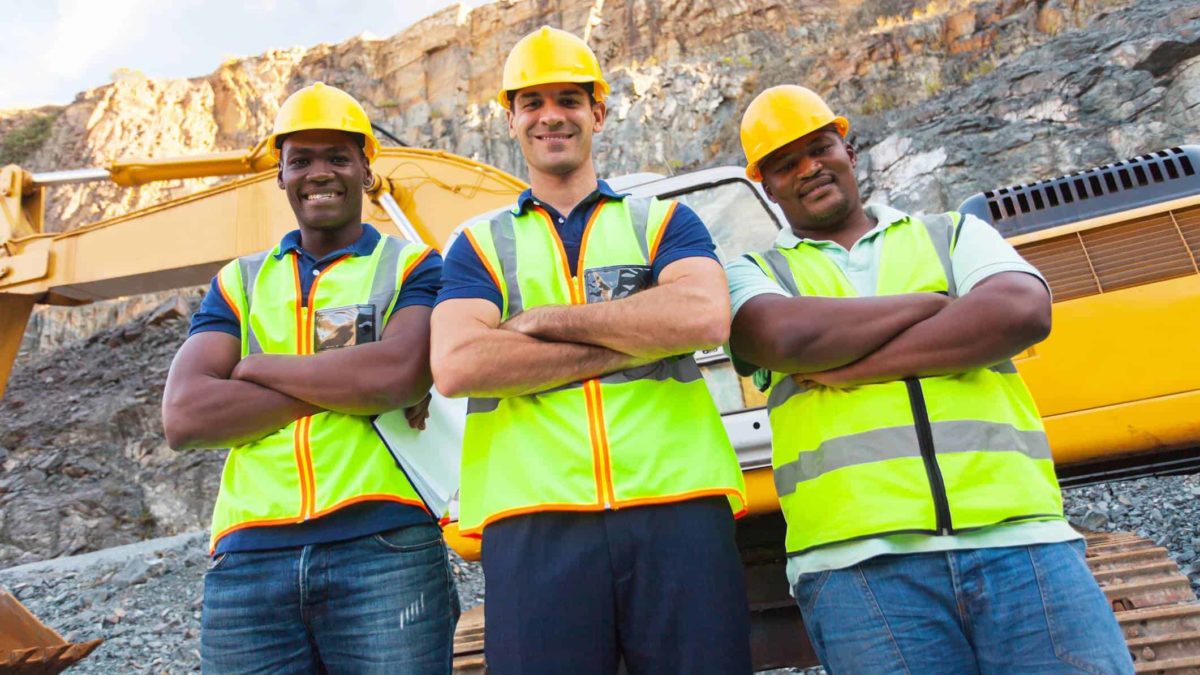
    Three satisfied miners with their arms crossed looking at the camera proudly

    The performance of ASX 200 mining shares in FY24 was mixed amid some commodity prices rising while others were volatile and fell (or absolutely tanked in the case of lithium).

    At the time of writing, silver is up 28% and gold is up 21% over the past 12 months, according to Trading Economics. Copper is up 16.5% and platinum is up 8%.

    On the flipside, lithium is down by more than 70% and iron ore is off 5%.

    So, perhaps it’s no surprise that the top three fastest-rising ASX 200 mining stocks are involved in one of the star commodities of FY24.

    And that’s gold.

    The gold price reached all-time record highs repeatedly throughout FY24. Last night, the market reset the peak price once again at about US$2,338 per ounce.

    The apparent peaking of interest rates around the world was one factor in the gold price’s rise over FY24.

    Another was global geopolitical tensions, which encouraged investors and central banks to take on extra exposure to this traditional safe-haven asset.

    3 best ASX 200 mining shares for price growth

    Data from S&P Global Market Intelligence shows these are the top three ASX 200 mining shares for FY24.

    Red 5 Limited (ASX: RED)

    Red 5 is a gold explorer and producer with assets in Western Australia’s Eastern Goldfields area. They include the Darlot Gold Mine and the King of the Hills project.

    Red 5 was the most outstanding of the ASX 200 mining shares for price growth in FY24. The Red 5 share price rose by 89.5% over FY24.

    There were two significant surges for the Red 5 share price in FY24.

    The first was in August after the company announced outstanding drilling results and the completion of 95% of the FY24 mine plan at the King of the Hills mine.

    The second run was sparked in February after Red 5 released its 1H FY24 results. The company reported significant lifts in gold production and a 77% bump in sales revenue. Its net profit after tax (NPAT) was $29 million compared to a loss of $28.5 million in 1H FY23.

    In other news, Red 5 announced a proposed merger with fellow ASX 200 gold producer Silver Lake Resources Ltd (ASX: SLR) in February.

    West African Resources Ltd (ASX: WAF)

    West African Resources has a 90% interest in the Sanbrado Gold Operations and Kiaka Gold Projects in West Africa. The Government of Burkina Faso owns the remaining 10% in both projects. The company also owns the Toega Gold Deposit, which is 14km away from Sanbrado.

    The West African Resources share price rose by 86.1% over FY24. The share price ramped up mostly in the second half of FY24 after the miner issued a resource, reserve and 10-year production update in February.

    The miner forecasts production of 4.03Moz of gold between 2024 and 2033. This was 415,000 ounces higher than the previous forecast. The mine plans extend to 2034 at Sanbrado and 2042 at Kiaka, assuming an average gold price of US$1,400 per ounce. It expects peak gold production in 2029.

    The company increased its mineral resources estimate by 181,000 ounces to 12.8Moz of gold and decreased its ore reserves estimate by 275,000 ounces to 6.1Moz of gold.

    Construction costs at Kiaka are on-budget, with first production expected in 3Q FY25. The company is fully funded via a US$265 million debt facility till that point.

    Emerald Resources NL (ASX: EMR)

    Emerald Resources owns projects in Cambodia and Australia. Its flagship mine, Okvau, is 100% owned and located 275km northeast of Phnom Penh.

    The Emerald Resources share price rose by 72.2% over FY24. It rose pretty steadily throughout the year.

    In the last production update issued in April, Emerald Resources reported gold production of 28,539 ounces. That was at the upper end of its guidance of 25,000 ounces to 30,000 ounces per quarter.

    The company reported sales of 28.5koz of gold in the March 2024 quarter at an average price of US$2,069 per ounce.

    In other news, the company completed its takeover of Bullseye Mining via compulsory acquisition last month.

    The post 3 best-performing ASX 200 mining shares of FY24 appeared first on The Motley Fool Australia.

    Should you invest $1,000 in Emerald Resources Nl right now?

    Before you buy Emerald Resources Nl shares, consider this:

    Motley Fool investing expert Scott Phillips just revealed what he believes are the 5 best stocks for investors to buy right now… and Emerald Resources Nl wasn’t one of them.

    The online investing service he’s run for over a decade, Motley Fool Share Advisor, has provided thousands of paying members with stock picks that have doubled, tripled or even more.*

    And right now, Scott thinks there are 5 stocks that may be better buys…

    See The 5 Stocks
    *Returns as of 24 June 2024

    More reading

    Motley Fool contributor Bronwyn Allen has no position in any of the stocks mentioned. The Motley Fool Australia’s parent company Motley Fool Holdings Inc. has no position in any of the stocks mentioned. The Motley Fool Australia has no position in any of the stocks mentioned. The Motley Fool has a disclosure policy. This article contains general investment advice only (under AFSL 400691). Authorised by Scott Phillips.

  • Greece’s plan for a 6-day workweek to boost productivity may not work

    White homes dot the mountainside of the Folegandros island overlooking the Aegan Sea
    Workers in Greece might have less time to enjoy the country's beauty if they're working more.

    • Greece is shifting to a six-day workweek in some industries to boost productivity.
    • The new 48-hour workweek counters global trends toward shorter ones for better productivity.
    • Critics argue longer hours may lead to burnout, despite higher pay for additional workdays.

    So long, siga siga.

    The Greek phrase meaning "slowly, slowly" refers to the relaxed pace of life in the country famous for its culture, history, and clear Mediterranean waters.

    It could be harder for some workers to embrace that philosophy as the country prepares to shift to a six-day workweek for some industries.

    The Greek government says the move to a 48-hour workweek, which is set to start Monday, could boost productivity amid a declining population and a dearth of skilled workers. The shift is notable because it runs counter to the companies and countries that are experimenting with a four-day workweek.

    Working longer hours can help people further refine their skills, but it can also lead to decreased productivity because of fatigue and burnout, research shows.

    The extra hours will come with a 40% jump in pay for Greek workers who add two hours to their day or take on an extra eight-hour workday. The change, which won approval in September, applies to workers in industries like agriculture, retail, and various service industries, as BI previously reported. It also applies to private businesses that operate 24 hours a day.

    Even with the bump in pay for the extra time, some union officials are decrying the shift.

    "It makes no sense whatsoever," Akis Sotiropoulos, from the civil servants' union Adedy, told The Guardian. "When almost every other civilized country is enacting a four-day week, Greece decides to go the other way."

    Doing more with less

    Experiments with the four-day workweek have often shown being on the job for less time makes workers more productive because they're better rested, more focused, and have more time to attend to needs that arise in their personal lives outside work.

    One study that examined manufacturing in the US found that when overtime increased by 10%, productivity dropped by 2% to 4%.

    Another review examined the output of more than 10,000 skilled workers at a large tech company in India working from home. When time on the clock went up — including a jump of 18% outside normal work hours — output slipped, and productivity dropped between 8% and 19%. The biggest culprit: more time spent communicating and coordinating and less time engaging in uninterrupted work.

    Research shows workers often benefit when they have time away from their jobs to recover.

    Having more free time can also boost gratitude among employees. Zachary Toth runs a small manufacturing company in Toronto. He previously told BI that he and his management colleagues began looking into a four-day workweek after seeing successful pilots in Japan and other countries.

    Toth didn't expect the extra time away from the factory would encourage workers to show up without being asked.

    "They just came in because they knew there was a project that had to be finished, and they didn't want productivity to fall. They wanted to make sure we keep doing the four-day workweek," he said.

    Toth, the owner and president of Metex Corporation, said productivity has increased "in every single way."

    Basis Technologies, an advertising software company, shifted its workweek to four and a half days after years of experiments with a four-day workweek and other approaches. For 2024, it settled on making Fridays a half day.

    Emily Barron, the company's executive vice president of talent and development, previously told BI that the company had been looking for ways to give workers more time to decompress while still meeting the business's needs. For now, the half-day approach is best, she said.

    "It really is intended for people to take a mental break, to get caught up, to, you know, go to that workout class that they couldn't get to at 7:30 in the morning," Barron said.

    The end of the 5-day week

    In Greece, the longer workweek is designed to address changing demographics, which the country's prime minister, Kyriakos Mitsotakis, has called a "ticking timebomb," according to the Guardian. Some 500,000 largely young and educated Greek citizens have left the country following a debt crisis that began more than a decade ago, the newspaper reported.

    The new rule is voluntary, but some critics say it will effectively mark the end of a five-day workweek.

    Aris Kazakos, an emeritus labor law professor at the Aristotle University of Thessaloniki, recently told Germany's DW news outlet that bosses can require workers to work a sixth day, and workers can't say no.

    The move to six days "will kill off the five-day workweek for good," he said.

    Read the original article on Business Insider
  • Russian submarines fought a torpedo duel in waters surrounded by NATO allies

    A black submarine sits in the water next to a dock. Sailors walk up a ramp to get into the submarine.
    Russian crew members get on board of the newly built "Novorossiysk" B-261 multipurpose diesel-electric submarine in Saint Petersburg.

    • Two Russian submarines engaged in a torpedo duel during a Baltic Sea training exercise last week.
    • The crews of the Novorossiysk and Dmitrov also trained to track enemies and evade enemy attacks.
    • The Baltic Sea has been described as a "NATO lake" since Sweden and Finland joined the alliance.

    Two Russian submarines recently fought a torpedo duel, conducting training that involved detecting enemies, evading attacks, and working combat maneuvers.

    The exercises took place in the Baltic Sea, waters sometimes referred to as a "NATO lake" due to its waters being surrounded by NATO allies since Sweden and Finland ascended into the alliance.

    The Kilo-class, diesel-electric submarines Novorossiysk and Dmitrov held a training duel involving torpedo fire, according to Russian state-run media TASS. The media outlet reported the training exercise on June 25, citing the Russian navy.

    In the Baltic Sea following the completion of anti-submarine warfare maneuvers, the submarine Novorossiysk engaged the Dmitrov with a training torpedo without a warhead, the navy said, per TASS.

    The submarine crews also conducted several other exercises focused on detecting and tracking adversary submarines, evasion, and combat training.

    The subs Novorossiysk and Dmitrov are representative of two of several variants of Russian Kilo-class submarines. The Novorossiysk, for instance, is a project 636.3 sub and can launch Kalibr cruise missiles. 636.3s are the most current Kilo-class subs being built. The Dmitrov, on the other hand, is a project 877 sub, one of the original variants built.

    Both subs are known for being relatively quiet, but the Novorossiysk and other project 636.3 subs are considered to be highly advanced and stealthy vessels. After wrapping up the torpedo training, the two Russian submarines went on to conduct other combat exercises in the Baltic Sea, Russian media said.

    Various NATO warships sail in columns in the blue water of the Baltic Sea.
    Ships from NATO navies sail in formation in the Baltic Sea during the exercise Baltic Operations 2023.

    The Baltic Sea area has seen geopolitical shifts since Russia invaded Ukraine two years ago and neighboring Finland and Sweden joined NATO.

    It has sometimes been referred to as a "NATO lake" considering that eight of the nine countries bordering it are now members of the alliance. Russia is the only exception. That's a stark difference from 1990, when only two Baltic Sea countries, Denmark and Germany, were NATO members.

    The "NATO lake" term has been debated and criticized as presumptuous, with some experts calling it a "fatal" mistake as the Baltic Sea can be traversed by any seafaring nation and remains an important strategic front for Russia.

    The Baltic Sea has become increasingly important for NATO's military presence, but Russia also sees the body of water as vital to its commercial shipping, oil exports, and trade from ports like St. Petersburg and Primorsk.

    The region is also home to increasing Russian anti-access/area denial capabilities, particularly in the Kaliningrad area. These capabilities include cruise missiles, surface-to-air missiles, and nuclear weapons, making the sea strategically important for both Moscow and NATO.

    Read the original article on Business Insider
  • Biden wanted the debate to give his campaign a boost. But after his poor performance, new polling shows Trump ahead.

    Joe Biden and Donald Trump
    President Joe Biden and former President Donald Trump remain locked in a competitive contest.

    • President Biden wanted to use the debate to change the dynamics of the 2024 race.
    • But his poor performance sent Democrats reeling and has opened him up to intraparty criticism.
    • In the latest USA Today/Suffolk University poll, Trump boasted a 41%-38% advantage over Biden.

    Weeks before the June presidential debate, the Biden campaign had sought to shake up the dynamics of the race, agreeing for the president to take the stage with former President Donald Trump.

    Biden's team wanted the debate to crystallize what they've long argued: that the president was well-equipped to serve in a second term and would be the more effective leader on the world stage.

    But the president's visible debate stumbles set his campaign back enormously in the eyes of top donors and even among some Democratic lawmakers, which in turn has so far deprived him a potential polling bounce that could have broken the deadlocked race.

    Instead, two major national surveys released after the election showed Biden lagging behind Trump.

    In a new USA Today/Suffolk University poll, Trump boasted a 41% to 38% lead over Biden among registered voters, still within the margin of error of ±3.1 percentage points.

    However, a USA Today/Suffolk poll released in May showed both candidates tied, 37% to 37%.

    In the latest survey, Independent candidate Robert F. Kennedy Jr. received the support of 8% of registered voters.

    While the race remains close overall, Biden is still far behind Trump when it comes to enthusiasm, per the new USA Today/Suffolk survey.

    Among Biden voters, 29% of respondents said they were "very excited" to vote for him, while 31% said they were "somewhat excited" to back him. A quarter (25%) of Biden voters said they were "not very excited" to support him.

    When it came to Trump voters, 59% of respondents said they were "very excited" to support him, while an additional 23% said they were "somewhat excited" to back his candidacy. Only 11% of Trump voters said they were "not very excited" about his 2024 campaign.

    The latest CNN poll, conducted across three days after the debate, showed Trump with a 49% to 43% lead over Biden.

    Despite Democratic frustration over Biden's performance, the results reflected no change from CNN's April survey.

    But there were some key nuggets in the latest CNN poll:

    • Vice President Kamala Harris runs more competitively with Trump than Biden in a potential matchup should the president exit the race. Trump has a narrow two-point lead (47% to 45%) over Harris among registered voters in such a scenario.
    • In a potential Harris-Trump matchup, the vice president wins 50% of female voters, compared to Biden's current 43% share against the former president.
    • California Gov. Gavin Newsom, Michigan Gov. Gretchen Whitmer, and US Transportation Secretary Pete Buttigieg — who have all been floated as potential Biden replacements — all trail Trump by single-digit margins in hypothetical matchups.
    Read the original article on Business Insider
  • Category 5 hurricane leaves Caribbean islands bare, flooded, and damaged

    Hurricane Beryl is tearing through the Caribbean after making history as the earliest Category 5 hurricane ever recorded in the Atlantic hurricane season.

    Read the original article on Business Insider
  • ‘House of the Dragon’ star Ewan Mitchell isn’t sure if Aemond has ‘mommy issues’

    aemond targaryen, shirtless, leaning softly against a woman as she cradles him. his hair is down and his eyepatch removed, and there's a placid expression on his face
    Aemond Targaryen (Ewan Mitchell) cuddles several times with a prostitute in "House of the Dragon."

    • Does Aemond Targaryen have mommy issues? Maybe. 
    • Ewan Mitchell says that Aemond found a "surrogate" in his very old, powerful dragon Vhagar.
    • Vhagar's power influences the way that Aemond acts, Mitchell said. 

    Warning: Minor spoilers ahead for "House of the Dragon" season two, episode three.

    "House of the Dragon" star Ewan Mitchell thinks that Aemond Targaryen probably just needs a little more affection from his mother.

    Aemond is the second son of Alicent Hightower and Viserys Targaryen, and the younger brother of ruling King Aegon II. Unlike his brother, who quite literally ran away from the throne and has spent much of his time as king threatening to fly out on the battlefield himself, Aemond is cool and calculating.

    In episodes two and three of "House of the Dragon" season two, Aemond seeks solace from a woman — the first he ever had sex with — in a brothel, chastely curling up with her and spilling out his worries. Though Aemond is fully naked, it's a raw, non-sexual kind of intimacy — one that suggests a kind of maternal love he's not getting elsewhere.

    Those scenes have made people online question whether Aemond has "mommy issues." And there's certainly no lost love between Alicent and Aemond: In the season two premiere, he says that his mother still blames him for starting the war by killing Lucerys, the son of his half-sister Rhaenyra.

    Business Insider spoke with Mitchell at the season two New York City premiere about Aemond's relationship with Alicent — and his dragon, Vhagar.

    "I don't know so much if he had mommy issues, or rather, he just wanted to be loved by his mom a little bit more," Mitchell told BI.

    "He felt despair, so he found a surrogate in Vhagar, so to speak an older lady, and kind of filled that void," he continued. "But is a dragon enough, or is there something else that could maybe help him? He needs help, he's a broken boy."

    Despite his own emotional turmoil, Aemond is still one of the most powerful war assets on the show. That's mostly because Vhaghar is very old, very big, and very powerful. Aemond claimed her after Laena Velaryon's death, instantly turning himself from a trod-upon, dragonless child into an immense, credible threat.

    Vhagar and Aemond's "power couple" status — Mitchell's words — affords the Targaryen prince a bit of freedom, according to the actor.

    "Aemond, he doesn't need to be evil. If he's hostile in a scene, it's not because he needs to be," Mitchell said. "It's because he wants to be, because he has that large dragon whose shadow looms so large. It changes the dynamic of the character, and the choices that you make as a performer."

    "House of the Dragon" season two airs Sundays at 9 p.m. ET on HBO and is streaming on Max.

    Read the original article on Business Insider
  • A simple test to see if someone is using dark psychology tricks on you during a date

    A woman looking at a man skeptically on a date
    • It can sometimes be hard to tell if someone is using a dark psychology trick on you.
    • Not all behaviors that look like love bombing or gaslighting necessarily are.
    • A therapist shared an easier way to spot manipulation without vigilantly looking for red flags.

    Whether you've dated a narcissist before or just heard other people's horror stories, it's natural to be on the lookout for manipulation.

    But figuring out whether a date uses dark psychology tricks is more nuanced than scanning their potential red flags.

    "Some of these so-called dark psychology tactics are, unfortunately, things that we all might unconsciously or unintentionally do in the course of being in a relationship," Annie Wright, a relational trauma therapist in Berkeley, California, told Business Insider.

    Instead of trying to suss out if your charming date is a dark empath, Wright said there is a healthier — and much simpler — way to tell if a romantic partner is shady.

    Red flags might be pink

    Judging someone's faults at face value might seem like a foolproof plan to avoid getting hurt, but Wright said it could close you off too much, as we all have imperfections and baggage.

    "Many of us are bringing poor relational patterns, our own attachment wounds into our dating relationships," she said. For example, insecure attachment styles can lead to negative behaviors such as clinginess or commitment issues.

    "We may take actions which look harmful, that have the impact of harm, but don't necessarily have the intent to harm," Wright said. While it doesn't excuse abuse, she said nuance is important to understand if a person's love bombing is actually driven by anxiety and not a need for control.

    Similarly, she said what can look like gaslighting can sometimes be a genuinely different recollection of the same event or conversation. That's why it's good to take therapy speak terms with a grain of salt and look deeper into your relationship dynamic.

    Watch their reaction

    Instead of maintaining a "rigid high bar" of a partner never making mistakes, Wright said the healthier approach is watching how the person reacts when you bring up an issue.

    If you feel like they're laying on the affection too thick and worry it's love bombing, you might say, "I've noticed that you always insist on paying for every date, and it's making me feel a bit uncomfortable."

    Then, observe what they do next. "A healthy, good-enough, and relational partner will acknowledge your feelings, acknowledge the impact they had on you — even if it wasn't the intent — and hopefully be willing to adjust their behavior," Wright said.

    She also noted the importance of consistency in an emotionally mature partner. "Respect for boundaries, willingness to repair after rupture, and willingness to respond relationally and considerately should be ongoing, not just a one-time adjustment," she said.

    Connect with your body

    Another great tell is your intuition and how your body reacts around a person. But Wright said trusting your gut isn't always so simple.

    Because her clients are often the children of emotionally immature parents, they might struggle to spot manipulation because they were raised to accept unhealthy behaviors as normal. As a result, they might choose partners who are noncommittal or reactive.

    Wright said there are two ways to get better at listening to your body. The first is to actively learn what a healthy relationship looks like, even if it seems contrary to what feels natural. You can do this by investing in more fulfilling friendships that make you feel safe.

    The other is to engage in somatic exercises and mindfulness so that you feel more connected to your body physically.

    When all else fails, our gut, our intuition, our spidey sense — whatever you want to call it — will let us know when something does not feel right," she said.

    Read the original article on Business Insider
  • Legendary iPhone designer Jony Ive opens up about what it was like working with Steve Jobs

    steve jobs jony ives 4x3
    Jony Ive and Steve Jobs worked closely together to usher in a new era for Apple.

    • Former Apple design chief Jony Ive reminisced about his time with creative partner Steve Jobs.
    • Ive said the pair instantly clicked when they met in 1997.
    • They remained close until Jobs' death in 2011.

    Former Apple design chief Jony Ive spent decades at the tech titan, but he said his best years were with late cofounder Steve Jobs.

    Ive was interviewed on the "Life in Seven Songs" podcast and spoke about how his upbringing shaped his creative mind leading up to his Apple tenure, where he was responsible for the look and feel of iPhones, iPads, AirPods, and Macbooks.

    Although Ive started at Apple in 1992 during the time when Jobs had stepped away from the company, he said that the creative spark was instant when the pair finally met five years later.

    "The time before Steve came back, I learned so much, but at that time of learning, it wasn't clear I was learning. All it was was painful," Ive said in the podcast interview, which was released Tuesday.

    But, those "very difficult years" were necessary for him to become the renowned designer he is today, according to Ive.

    "It's a feeling I think that we both had, which was just this remarkable click," he said.

    Steve Jobs
    Jony Ive was Apple's head of design during Jobs' second tenure at the company and led the development of the iPhone under the CEO.

    Ive described his time working with Jobs at Apple from 1997 to 2011 as "the most joyful and extraordinary 15 years of my life." Unlike his first few years without Jobs, he said that learning at Apple became clearer and more focused on "what we were creating" with Jobs at the helm.

    "Here was somebody who could almost without thought — and made it appear effortless — to describe really complex feelings and perceptions of ideas and opportunities," Ive said about Jobs.

    Jobs stepped down as CEO in 2011 and later died the same year, which Ive described as a "pretty comprehensive loss." Ive stayed on at Apple until 2019 when he left to pursue his own design firm.

    "I felt I lost somebody who epitomized, embodied a way of thinking about creating, a way of thinking about the importance of culture and people and society," Ive said.

    Still, Ive said he values the time they had together.

    "There's not a day that I'm not aware of him or aware of the loss," he said. "There's not a day where I'm not grateful for the time, you know, that we got together and for what I learned and what we discovered."

    Read the original article on Business Insider
  • Amazon really wants you to join the family this Prime Day

    Amazon worker moves boxes on Amazon Prime Day on July 11, 2023 in the East Village of New York City.
    Amazon has more ways than ever to lure you to sign up for Prime and other services this year.

    • Amazon Prime Day is scheduled for July 16 and 17, offering a variety of discounts for Prime members.
    • It's also about bringing shoppers deeper into its ecosystem — and not just for Prime memberships.
    • Amazon's offers include free months of its music, grocery subscription, and Kindle Unlimited.

    Amazon Prime Day is approaching, and as usual, the online retailer is offering a slew of specials for customers during the two-day shopping extravaganza.

    But Amazon doesn't just want you to buy discounted electronics or fashionable sneakers. It also wants you to sign up (and pay for) Amazon Prime at $14.99 a month — and possibly a whole host of other Amazon subscriptions.

    Already, 75% of US consumers are Prime members, according to data from Consumer Intelligence Research Partners. Amazon is still gunning to get the remaining quarter on board.

    Prime Day is "an opportunity to allow non-Prime members to peer over the shoulder of their friends and family, see those deals, and wonder if they should sign up," said Jeremy Bartlow, a partner and consumer expert at PA Consulting.

    "They use it as a massive volume booster, but also to start getting more and more scale each year with people who haven't jumped on the Prime bandwagon yet," Bartlow said.

    But that's just the gateway drug.

    Amazon's deals announced in the lead-up to Prime Day include access for members to three free months of delivery from the company's grocery operations, including Whole Foods and Amazon Fresh, for orders over $35 (the cost a month after the freebies run out is $9.99).

    Music fans can also get five months free of Amazon Music Unlimited (another $9.99 a month), three months of Kindle Unlimited ($11.99 a month, plus you need a Kindle e-reader, which retails for a minimum of $99.99), or three free months of Audible Premium Plus (plans start at $7.95 a month).

    Amazon is also offering steep discounts to Prime members on its own electronic devices. One version of its Ring video doorbell is on sale for $50, down from $100, while a 40-inch Fire TV is $170 — roughly one-third off its regular price.

    The strategy is all about getting customers to try new products in the Amazon world — and hopefully sticking with them by paying additional subscriptions on top of their Prime membership, Bartlow said.

    For example, "they sell their tablets so cheaply" to get people into Amazon's ecosystem. Plus, "many of them will have ads and a whole user interface that's optimized to push their digital content, which is very different than buying a tablet from another brand," he said. (The Amazon Fire HD 10 tablet is 46% off this Prime Day, down from $139.99 to $74.99.)

    Meantime, Amazon's Alexa-enabled devices and speakers might lead users to subscribe to Music Unlimited.

    For Amazon, those kinds of purchases are where the real money is.

    "We sell a lot of devices during our Prime Day events," CFO Brian Olsavsky said on an earnings call after Prime Day 2022. "We don't make money on the device. We make money on the use of the device."

    Developing a complete offering of devices and services has been the goal of several Big Tech companies for years.

    Apple has created an ecosystem primarily thanks to its iPhone, for example, though parts of its strategy prompted an antitrust lawsuit from the US Department of Justice earlier this year. Apple has pushed back against the accusations.

    Google and Microsoft are also vying for you to join their networks. All are adding AI features in an attempt to make experiences like shopping online easier.

    Other retailers have taken note of Amazon's strategy and joined in with their versions of Prime Day, though they haven't developed their own range of devices.

    Walmart, for example, has spent the last few years trying to sign up shoppers for Walmart+, its own paid membership.

    And in March, Target launched Target Circle 360, an annual membership that costs $99 and gives customers unlimited same-day deliveries.

    For those with a Prime subscription, Prime Day represents "the new Black Friday," Bartlow said. Just make sure to cancel your free trials if you don't enjoy them.

    Do you work for Amazon's retail business and have a story idea to share? Reach out to this reporter at abitter@businessinsider.com

    Read the original article on Business Insider