
• $20,000 invested in NextDC and these ASX shares 10 years ago is worth how much?

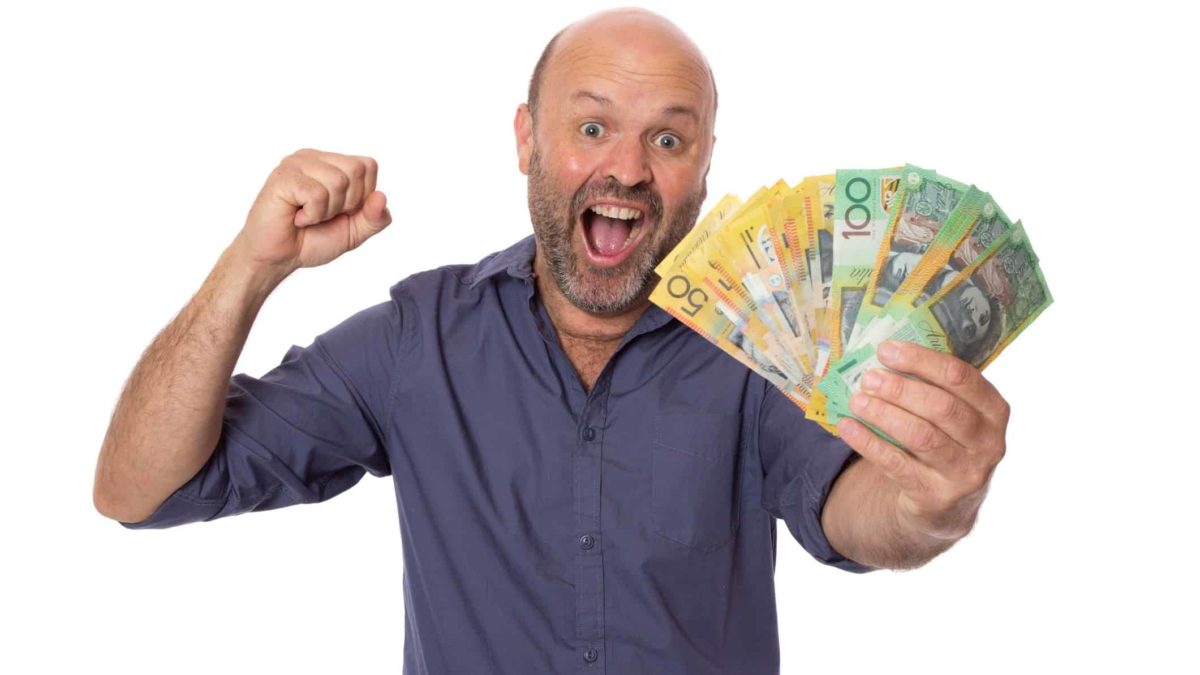
    Man holding a calculator with Australian dollar notes, symbolising dividends.

    I’m a fan of buy and hold investing and believe it is one of the best ways to grow your wealth.

    To demonstrate just how successful this investment strategy can be with ASX 200 shares, I often like to see how much a single $20,000 investment in certain ASX 200 shares 10 years ago would be worth today.

    Let’s see how investments in these shares have fared during the past decade:

    Jumbo Interactive Ltd (ASX: JIN)

    The first ASX share that we are going to look at is Jumbo Interactive. It is the online lottery ticket seller behind the Oz Lotteries platform. It also has a growing Powered by Jumbo software as a service platform. This side of the business is aiming to disrupt the global lottery market by making the shift online easier for lottery operators. Combined, these businesses have underpinned strong earnings growth over the last decade and even stronger returns for investors. In respect to the later, Jumbo’s shares have provided investors with an average total return of 32% per annum since 2014. This would have turned a $20,000 investment in its shares 10 years ago into a mouth-watering ~$320,000 today.

    Macquarie Group Ltd (ASX: MQG)

    Another ASX share that has beaten the market over the last decade is investment bank Macquarie. Thanks to the quality and diversity of its operations and its strong position in investment banking, Macquarie has delivered strong profit growth over the 10 years. This has led to its shares outperforming both the market and the big four banks by some distance. For example, since 2014, the bank’s shares have recorded an average total return of 15.5% per annum. This would have turned a $20,000 investment in Macquarie’s shares a decade ago into ~$85,000 today.

    NextDC Ltd (ASX: NXT)

    Finally, a third ASX share that has been a market-beater over the last 10 years has been data centre operator NextDC. Thanks to strong demand for capacity in its world-class centres due to the structural shift to the cloud (and now the artificial intelligence megatrend), NextDC’s revenue and operating earnings have been growing at a rapid rate. This has put a rocket under the company’s shares and underpinned some very strong returns since 2014. For example, over the last decade, NextDC’s shares have generated an average return of 26.5% per annum. This means that a $20,000 investment in the data centre operator’s shares 10 years ago would have grown to be worth ~$210,000 today.

    The post $20,000 invested in NextDC and these ASX shares 10 years ago is worth how much? appeared first on The Motley Fool Australia.

    Should you invest $1,000 in Jumbo Interactive Limited right now?

    Before you buy Jumbo Interactive Limited shares, consider this:

    Motley Fool investing expert Scott Phillips just revealed what he believes are the 5 best stocks for investors to buy right now… and Jumbo Interactive Limited wasn’t one of them.

    The online investing service he’s run for over a decade, Motley Fool Share Advisor, has provided thousands of paying members with stock picks that have doubled, tripled or even more.*

    And right now, Scott thinks there are 5 stocks that may be better buys…

    See The 5 Stocks
    *Returns as of 24 June 2024

    More reading

    Motley Fool contributor James Mickleboro has positions in Nextdc. The Motley Fool Australia’s parent company Motley Fool Holdings Inc. has positions in and has recommended Jumbo Interactive and Macquarie Group. The Motley Fool Australia has positions in and has recommended Macquarie Group. The Motley Fool Australia has recommended Jumbo Interactive. The Motley Fool has a disclosure policy. This article contains general investment advice only (under AFSL 400691). Authorised by Scott Phillips.


  • One of the most powerful men in entertainment just called OpenAI’s Sam Altman a ‘con man’ who can’t be trusted

    Side-by-side image of Endeavor CEO Ari Emanuel and OpenAI CEO Sam Altman
    Endeavor CEO Ari Emanuel criticized OpenAI co-founder Sam Altman, calling him a "con man" who can't be trusted with artificial intellgience.

    • Ari Emanuel, CEO of media conglomerate Endeavor, called for guardrails on artificial intelligence.
    • He said in an interview at the Aspen Ideas Festival that the technology will be necessary.
    • But he said OpenAI CEO Sam Altman can't be trusted and the government needs to step in. 

    Ari Emanuel, CEO of Endeavor, the sports and entertainment conglomerate, called OpenAI CEO Sam Altman a "con man" who can't be trusted with artificial intelligence.

    During the Aspen Ideas Festival on Friday, the media juggernaut was asked to share his thoughts on AI and the reassurances innovators such as Altman give about the technology.

    Emanuel first thought of Elon Musk, whom he called a "friend," and said that they disagree on many things but not on the risks of AI.

    "If he's nervous, then we should be nervous," Emanuel said. "And I do think there should be guardrails."

    On Altman, Emanuel was less kind.

    "As it relates to Sam Altman, I think he's — he's a con man." he said, criticizing how OpenAI began as a nonprofit, but Altman is "now making a lot of money."

    OpenAI has an unusual corporate structure known as a "capped-profit" company in which the for-profit arm is governed by a nonprofit. Altman doesn't directly hold equity in OpenAI.

    The purpose of the structure was to ensure that OpenAI pursued artificial general intelligence to benefit humanity before it prioritizes profits. In recent months, OpenAI's commitment to that mission has come under scrutiny.

    "I don't know why I would trust him," Emanuel said. "I don't know why we would trust these people."

    An OpenAI spokesperson did not immediately respond to a request for comment.

    Two days before Emanuel spoke at the festival, Altman and Airbnb CEO Brian Chesky were at the same event, saying that building AI responsibly will require society's input.

    "We need to learn how to make safe technology," Altman said. "We need to figure out how to build safe products, and that includes an ongoing dialogue with society."

    Emanuel said that people like Altman are likely very intelligent and that he doesn't want to stifle innovation; however, he doesn't trust that innovators have properly weighed the benefits of AI against the cons.

    "I thought about a whole host of stuff that's bad," he said. "So you're telling me you've done the calculation, and the good outweighs the bad. Really? I don't think so."

    The Endeavor CEO added that government regulation will be necessary as AI continues to develop.

    "I don't want to stifle innovation either cause I do think we need AI. But we have to have the rails around it," he said. "And I know a lot of people in Silicon Valley don't like the government coming in — and it's not like the government's performed great in that area given guardrails — but this is a pretty dynamic technology that needs really long thought about what can and can't happen."

    Read the original article on Business Insider
  • These were the best performing ASX 200 shares in June

    A woman with strawberry blonde hair has a huge smile on her face and fist pumps the air having seen good news on her phone.

    The S&P/ASX 200 Index (ASX: XJO) had a relatively decent time in June. During the month, the benchmark index rose by 0.85% to end the period at 7,767.5 points.

    While that was positive, a number of ASX 200 shares were able to smash the market with significantly stronger returns.

    Here are the best performing ASX 200 shares in June:

    Strike Energy Ltd (ASX: STX)

    The Strike Energy share price was far and away the best performer on the benchmark index with a 40% gain. This was driven partly by the release of an update on the Walyering-7 (W7) well within the Perth Basin. According to the release, W7 has intersected a high-quality conventional gas accumulation to the north-east of the currently producing Walyering gas field. In addition, the company announced plans to re-shape its South Erregulla project to a peaking power facility to firm renewable capacity in the Western Australian electricity market.

    Bapcor Ltd (ASX: BAP)

    The Bapcor share price was the next best performer with a gain of 21% in June. This was driven by news that the auto parts retailer received an unsolicited, indicative, conditional and non-binding takeover proposal from Bain Capital. Bapcor shareholders would receive $5.40 cash per share from the private equity giant. As things stand, the Bapcor board is still considering the offer. It has warned that “there is no guarantee that the Indicative Proposal put forward by Bain Capital will result in a binding offer or that any transaction will eventuate.”

    Pro Medicus Limited (ASX: PME)

    The Pro Medicus share price was on form again and rose 19.3% over the month. Investors have been buying this health imaging company’s shares since the announcement of five new contracts with a combined minimum contract value of $45 million at the end of May. Management advised that the contracts will be fully cloud deployed and are expected to be completed within the next six months. Goldman Sachs responded positively to the news. Its analysts reiterated their buy rating and lifted their price target on Pro Medicus’ shares to $136.00. Its shares have now surpassed this, hitting a record high of $144.34 on the final trading day of June.

    Healius Ltd (ASX: HLS)

    The Healius share price had a strong month and rose 18% over the period. Interestingly, this was despite the pathology services company downgrading its earnings guidance for FY 2024. It now expects underlying FY 2024 EBITDA of between $345 million to $350 million. Underlying EBIT is expected to be between $60 million and $65 million. However, it did report improving pathology volumes for the half year to date. This may have given sentiment a boost.

    The post These were the best performing ASX 200 shares in June appeared first on The Motley Fool Australia.

    Should you invest $1,000 in Bapcor Limited right now?

    Before you buy Bapcor Limited shares, consider this:

    Motley Fool investing expert Scott Phillips just revealed what he believes are the 5 best stocks for investors to buy right now… and Bapcor Limited wasn’t one of them.

    The online investing service he’s run for over a decade, Motley Fool Share Advisor, has provided thousands of paying members with stock picks that have doubled, tripled or even more.*

    And right now, Scott thinks there are 5 stocks that may be better buys…

    See The 5 Stocks
    *Returns as of 24 June 2024

    More reading

    Motley Fool contributor James Mickleboro has positions in Pro Medicus. The Motley Fool Australia’s parent company Motley Fool Holdings Inc. has positions in and has recommended Goldman Sachs Group and Pro Medicus. The Motley Fool Australia has recommended Bapcor and Pro Medicus. The Motley Fool has a disclosure policy. This article contains general investment advice only (under AFSL 400691). Authorised by Scott Phillips.
  • Brokers name 3 ASX dividend stocks to buy

    Middle age caucasian man smiling confident drinking coffee at home.

    With so many ASX dividend stocks to choose from, it can be hard to decide which ones to buy.

    The good news is that brokers have been busy doing the hard work for you and have picked out three stocks they rate as buys.

    Here’s what you need to know:

    Eagers Automotive Ltd (ASX: APE)

    The first ASX dividend stock that brokers have given the thumbs up to is Eagers Automotive. It is one of the largest automotive retail groups in the Australia and New Zealand region.

    Its shares have been hammered in 2024 and are down 27% year to date. While this is disappointing, analysts at Bell Potter think that patient investors should be snapping them up while they are down.

    The broker currently has a buy rating and $13.35 price target on its shares. This implies potential upside of 27% for investors over the next 12 months.

    In addition, Bell Potter is forecasting fully franked dividends of 64.5 cents per share in FY 2024 and then 73 cents per share in FY 2025. Based on its current share price of $10.52, this represents attractive dividend yields of 6.1% and 6.9%, respectively.

    Inghams Group Ltd (ASX: ING)

    Over at Morgans, its analysts think that Inghams could be a top ASX dividend stock to buy. It is Australia’s leading poultry producer and supplier.

    Much like Eagers Automotive, its shares have been underperforming in 2024 and are down 8% year to date. Morgans thinks this has created a buying opportunity and has described Inghams’ shares as “undervalued” at current levels. It has an add rating and $4.40 price target on its shares, which suggests that 22% upside is possible.

    Morgans is also expecting some great dividend yields in the near term. It is forecasting fully franked dividends of 22 cents per share in FY 2024 and then 23 cents per share in FY 2025. Based on the current Inghams share price of $3.62, this equates to dividend yields of 6.1% and 6.35%, respectively.

    Universal Store Holdings Ltd (ASX: UNI)

    A final ASX dividend stock that brokers think could be a buy for income investors is youth fashion retailer Universal Store.

    Last month, Bell Potter put a buy rating and $6.15 price target on its shares. This implies potential upside of 24% from current levels.

    As for income, the broker is forecasting fully franked dividends per share of 24 cents in FY 2024 and then 31 cents in FY 2025. Based on its current share price of $4.97, this will mean yields of 4.8% and 6.2%, respectively.

    The post Brokers name 3 ASX dividend stocks to buy appeared first on The Motley Fool Australia.

    Should you invest $1,000 in Eagers Automotive Ltd right now?

    Before you buy Eagers Automotive Ltd shares, consider this:

    Motley Fool investing expert Scott Phillips just revealed what he believes are the 5 best stocks for investors to buy right now… and Eagers Automotive Ltd wasn’t one of them.

    The online investing service he’s run for over a decade, Motley Fool Share Advisor, has provided thousands of paying members with stock picks that have doubled, tripled or even more.*

    And right now, Scott thinks there are 5 stocks that may be better buys…

    See The 5 Stocks
    *Returns as of 24 June 2024

    More reading

    Motley Fool contributor James Mickleboro has positions in Universal Store. The Motley Fool Australia’s parent company Motley Fool Holdings Inc. has no position in any of the stocks mentioned. The Motley Fool Australia has recommended Eagers Automotive Ltd. The Motley Fool has a disclosure policy. This article contains general investment advice only (under AFSL 400691). Authorised by Scott Phillips.

  • $7,000 in savings? Here’s how I’d try to turn that into a $2,500 monthly passive income

    Happy man holding Australian dollar notes, representing dividends.

    The share market is a great place to generate a passive income.

    That’s because most ASX 200 stocks will share a portion of their profits with their loyal shareholders twice a year in the form of dividends.

    This means you can sit back with your feet and let these companies do the hard work for you, while pocketing your share of the profits every six months.

    In light of this, if I had $7,000 in a savings account and no plans for these funds, I would consider putting them to work in the share market.

    However, much like a bank account, you are not going to start generating material passive income immediately with this investment. But if you are patient, your savings could compound into something larger and turn the share market into your own personal ATM.

    Generating passive income from ASX 200 stocks

    Historically, share markets have generated an average return of 10% per annum. Some years are stronger, some years are weaker. But on average, 10% is what it has delivered.

    And while past performance is not a guarantee of future returns, I think it is reasonable to base our assumptions on the share market performing in line with historical averages.

    With that in mind, let’s see what that $7,000 could turn into with ASX 200 stocks.

    Long term returns

    If you only wish to invest that $7,000 into the share market and make no further contributions, then you would be looking at growing your portfolio to the following (based on a 10% annual return):

    • 10 years: $18,000
    • 20 years: $47,000
    • 30 years: $122,00
    • 40 years: $315,000

    What about passive income? I hear you ask. Well, if you are able to build a portfolio that averages a 6% dividend yield, the amounts above would generate the following in annual dividend income:

    • 10 years: $1,080
    • 20 years: $2,820
    • 30 years: $7,320
    • 40 years: $18,900

    Clearly, to really make meaningful passive income you’re going to have to leave your $7,000 to compound for a substantial amount of time. By the 40-year mark, you would be pulling in the equivalent of approximately $1,500 in monthly passive income.

    Building a time machine

    If we had a time machine and could jump forward in time, we would be able to scoop up all that passive income.

    But until they are invented, investors may have to do the next best thing. If you can contribute to your investment each year, then you could build your wealth quicker and grow your passive income.

    Here’s what would happen to a $7,000 investment into ASX 200 stocks each year instead of just once with a 10% per annum return:

    • 10 years: $141,000
    • 20 years: $488,000
    • 30 years: $1.39 million
    • 40 years: $3.7 million

    Now let’s see what annual passive income a portfolio that averages a 6% dividend yield would generate from these amounts:

    • 10 years: $8,460
    • 20 years: $29,280
    • 30 years: $83,000
    • 40 years: $222,000

    Based on the above, it is conceivable that you could have around $2,500 of monthly passive income from your ASX 200 stocks in 20 years if you are able to invest $7,000 into the market each year.

    Food for thought.

    The post $7,000 in savings? Here’s how I’d try to turn that into a $2,500 monthly passive income appeared first on The Motley Fool Australia.

    Should you invest $1,000 in S&P/ASX 200 right now?

    Before you buy S&P/ASX 200 shares, consider this:

    Motley Fool investing expert Scott Phillips just revealed what he believes are the 5 best stocks for investors to buy right now… and S&P/ASX 200 wasn’t one of them.

    The online investing service he’s run for over a decade, Motley Fool Share Advisor, has provided thousands of paying members with stock picks that have doubled, tripled or even more.*

    And right now, Scott thinks there are 5 stocks that may be better buys…

    See The 5 Stocks
    *Returns as of 24 June 2024

    More reading

    Motley Fool contributor James Mickleboro has no position in any of the stocks mentioned. The Motley Fool Australia’s parent company Motley Fool Holdings Inc. has no position in any of the stocks mentioned. The Motley Fool Australia has no position in any of the stocks mentioned. The Motley Fool has a disclosure policy. This article contains general investment advice only (under AFSL 400691). Authorised by Scott Phillips.

  • Is it too late to buy Macquarie shares at a two-year high?

    A businessman looking at his digital tablet or strategy planning in hotel conference lobby. He is happy at achieving financial goals.

    Macquarie Group Ltd (ASX: MQG) shares closed the week 0.43% higher at $204.69 apiece on Friday after touching a high of $207.57 in early trade.

    This marks a two-year high for the banking giant, which has rallied in a two-wave move off November 2023 lows of $158 per share.

    But is it too late to invest? Here’s what the experts are saying about Macquarie shares.

    Macquarie shares show potential for growth

    Despite a recent dip in operating profits, Macquarie’s diversified business model continues to impress analysts.

    Morgan Stanley, for instance, sees a promising outlook for Macquarie shares, noting the bank’s involvement in high-growth sectors like mergers and acquisitions, alternative assets, and private credit.

    Analyst Andrei Stadnik predicts 22% earnings growth for FY 2025, driven by a robust market for capital raising and diversified revenue streams.

    At its full-year FY 2024 results in May, Macquarie reported a 32% year-over-year decline in earnings per share (EPS) to $9.17. However, the bank still achieved a 13% return on equity (ROE), outperforming the industry’s five-year average of 11%, and distributed a dividend of $6.40 per share.

    With a projected EPS of $11.18 for FY 2025, Morgan Stanley has set a buy rating on Macquarie shares, setting a price target of $215, a potential $10 per share upside from the current price.

    Despite this, the consensus view on Macquarie shares is a hold, according to CommSec. Six analysts rate it a buy, versus six hold and two sell ratings.

    Competitive advantage could drive Macquarie shares

    Macquarie differentiates itself from other Australian banks through its extensive services in investment, asset management, commodities, and infrastructure.

    As I’ve noted in the past, this broad exposure could provide more recession-proof earnings compared to banks that rely solely on net interest margins (NIMs) and insurance.

    The bank’s price-to-earnings (P/E) ratio stands at 22 times, suggesting that investors are paying $22 for every $1 of earnings, which excludes dividends.

    In return for that price, investors receive a 4.5% earnings yield and 3.15% dividend yield at the time of writing, for a total shareholder yield of 7.65% in owning Macquarie shares today.

    Macquarie’s strategic investments

    Macquarie’s real estate arm is also capitalising on the booming land lease sector in Australia, investing in a new platform to develop, own, and operate land lease housing communities.

    This move is part of the $2.85 billion raised for its second opportunistic real estate fund, targeting sectors benefiting from demographic trends such as housing shortages and an ageing population.

    The bank “will be setting up [its] own platform and is comfortable with the development risk”, its head of asset management real estate in Australia told The Australian Financial Review. There’s no saying what this means for Macquarie shares just yet, but I think it is worth taking note of.

    The broader ASX 200 bank shares context

    Macquarie shares aren’t the only ASX 200 bank stocks in focus, as many have experienced significant growth over the past six months. For instance, Commonwealth Bank of Australia (ASX: CBA) also recently hit a record high, while National Australia Bank Ltd (ASX: NAB) and Bendigo and Adelaide Bank Ltd (ASX: BEN) reached multi-year peaks.

    Despite this, according to my colleague Bron, Goldman Sachs notes that ASX 200 bank shares’ valuations are “skewed to the downside” due to compressed NIMs and reduced non-interest income.

    Foolish takeaway

    The outlook on Macquarie shares remains optimistic. Many experts are positive, given its market position, diversified revenue streams, and strategic investments.

    With a potential 10% upside and a strong earnings growth forecast from Morgan Stanley, it may not be too late to invest in Macquarie shares at their current high.

    However, past performance is no guarantee of future results, and analyst opinions are just that — opinions. As always, it’s wise to conduct your own due diligence.

    The post Is it too late to buy Macquarie shares at a two-year high? appeared first on The Motley Fool Australia.

    Should you invest $1,000 in Macquarie Group Limited right now?

    Before you buy Macquarie Group Limited shares, consider this:

    Motley Fool investing expert Scott Phillips just revealed what he believes are the 5 best stocks for investors to buy right now… and Macquarie Group Limited wasn’t one of them.

    The online investing service he’s run for over a decade, Motley Fool Share Advisor, has provided thousands of paying members with stock picks that have doubled, tripled or even more.*

    And right now, Scott thinks there are 5 stocks that may be better buys…

    See The 5 Stocks
    *Returns as of 24 June 2024

    More reading

    Motley Fool contributor Zach Bristow has no position in any of the stocks mentioned. The Motley Fool Australia’s parent company Motley Fool Holdings Inc. has positions in and has recommended Macquarie Group. The Motley Fool Australia has positions in and has recommended Macquarie Group. The Motley Fool has a disclosure policy. This article contains general investment advice only (under AFSL 400691). Authorised by Scott Phillips.

  • A frozen wolf discovered in Siberia turned out to be 44,000 years old. It’s so well-preserved that scientists are checking its gut for ancient viruses.

    mummified wolf on a white table surrounded by people in protective white coveralls and masks and gloves
    Locals discovered this mummified wolf in the thawing permafrost in Siberia.

    • Researchers are studying a 44,000-year-old mummified wolf found in the permafrost in Russia.
    • The wolf may tell scientists what its lifestyle and diet were like during the Pleistocene era.
    • Researchers hope to learn more about ancient bacteria and how the wolf is related to modern animals.

    This wolf looks pretty good for its age, considering it's 44,000 years old.

    In 2021, residents of Yakutia in eastern Russia found the wolf in thick permafrost — soil that normally remains frozen year-round, but in many places has begun to thaw as average global temperatures rise.

    Now, researchers at North-Eastern Federal University in Yakutsk, Russia, are studying the mummified remains to learn more about the animal.

    The frozen conditions helped mummify and perfectly preserve the Pleistocene predator. Its teeth and much of its fur are still intact, as are some of its organs.

    mummified wolf on a table close up of its head with matted fur and complete teeth bared with someone wearing protective gear and gloves writing a note beside it
    The wolf is impeccably intact, with teeth and fur.

    "It's shocking, actually," Robert Losey, an anthropologist at the University of Alberta who wasn't involved in the research, told Business Insider.

    "It's the only complete adult Pleistocene wolf that's ever been found, so that in itself is really remarkable and completely unique," he added.

    There's a lot to learn from such a well-preserved ancient animal, including its genetics, lifestyle, diet, and even what kind of ancient bacteria and viruses it had.

    "Living bacteria can survive for thousands of years, which are a kind of witnesses of those ancient times," Artemy Goncharov, a researcher at the Institute of Experimental Medicine, said in a translated statement.

    The wolf's stomach may hold its last meal and much more

    people in protective white coveralls and masks and gloves hold open the stomach of a mummified animal while one reaches long tweezers inside
    Scientists are investigating the wolf's stomach for signs of its last meal and ancient microbes.

    This 44,000-year-old wolf likely belongs to an extinct species and was probably larger than modern wolves, Losey said. Studying the animal's genome will help reveal where it fits into the canine family tree.

    After examining one of its teeth, the scientists believe the wolf was an adult male. It probably hunted in a flat, cold environment full of mammoths, wooly rhinoceroses, extinct horses, bison, and reindeer.

    Remains of some of those animals might even be left in the wolf's gut. Researchers took samples of its stomach and digestive tract to learn more and are awaiting results.

    The researchers may also be able to tease out what functions ancient microbes performed in the wolf's gut, and whether it had parasites, Losey said. If any of the microorganisms are unknown to science, they could play a role in the development of future medicines, the researchers said in the statement.

    This discovery is just part of a larger collaboration to study other ancient animals, including fossil hares, a horse, and a bear. The researchers previously studied a wolf head from the Pleistocene era and have another wolf fossil awaiting dissection.

    Ancient animals and infectious agents are thawing

    illustration of an anthrax virus
    Scientists have seen traces of other viruses in permafrost.

    As the world's permafrost thaws due to rising global temperatures, more ancient creatures like this are re-emerging. In the Yukon, for example, paleontologists are still fawning over an impeccably preserved baby mammoth discovered in 2022.

    Not everything in the permafrost is so harmless, though.

    In 2016, thawing in Siberia's Yamal Peninsula released anthrax from a once-frozen reindeer carcass, causing an outbreak that infected 36 people and killed one child.

    Researchers fear that other pathogens may slumber in the tundra, with the thaw of a warming world slowly creeping toward them.

    Last year, researcher Jean-Michel Claverie announced that he had revived a 48,000-year-old virus they found in the Siberian permafrost. It could still infect single-celled amoebas.

    "We view these amoeba-infecting viruses as surrogates for all other possible viruses that might be in permafrost," Claverie told CNN at the time. "We see the traces of many, many, many other viruses. So we know they are there. We don't know for sure that they are still alive."

    Any ancient viruses or bacteria in the guts of the Yakutia wolf could help researchers better understand the microbes hiding inside permafrost creatures.

    Read the original article on Business Insider
  • Summer camps aren’t accessible for my autistic child. I still want him to experience the fun of camp.

    Mom posing with her autistic son
    The author's son is autistic, and there are no summer camps that can accommodate him.

    • Specialized camps are too expensive and not local to us.
    • I  can't find summer camps with needed accommodations like toileting assistance and 1:1 support.
    • I've had bad experiences with childcare facilities, but I still want my child to experience camp. 

    My autistic son is almost 6 years old, which I thought would mean he would finally have more options for summer camp. What I didn't foresee was that he wouldn't fit into any of them, despite the fact that he is in an Individualized Education Plan (IEP) at school. The one local program that exists doesn't offer toileting assistance, which he requires.

    He needs someone to alert him of his toileting needs, as well as help with clothing. His communication style includes echolalia, meaning he repeats back what he hears as confirmation or as a way of making a point. For example, he might reply "hungry" if you ask if he is hungry, but won't clarify what he wants until you give him options to repeat in confirmation. Another example would be when he sings a potty song instead of directly stating he needs to use the bathroom.

    There's no summer camp for him

    I understand that having one-on-one support for a summer camp is a lot to ask, but there aren't any alternatives to the standard local offerings. There is no drop-off sensory camp or even an option for me to attend as a helper (he is too old for any that involve parent participation). In the past, I've had bad experiences with childcare facilities that promised this kind of support but were unable to accommodate him.

    Those bad experiences led to an official diagnosis and enrollment in an IEP. As part of that program, he's entitled to attend an Extended School Year (ESY), which is one month of half-school days, to continue his progress. In the program, he does activities in short increments and expands his communication skills through different approaches.

    ESY isn't the same thing as summer camp, though. ESY is meant to maintain the school year structure, avoiding a fresh start next year. I want him to have the most fun possible during the summer, and I know he would thoroughly enjoy anything involving music, water, or outdoor activities. If the short incremental approach could be used in a movement or music summer program, he would do well.

    He loves playing with other kids

    He might not be able to follow the rules of a game, but he loves running around trying to participate when neighborhood kids are playing basketball or soccer. Instructions can be a challenge, but he can move along to any song and find so much joy in music. But finding an affordable program that offers the fun of soccer or dance with the type of accessibility he needs seems impossible.

    There are a few overnight camps far away from us, but they are designed for older kids and are very expensive. The ones that do exist only offer a 1:1 scenario for a limited number of campers, and the rates are very expensive. On average, the cost ranges from $2,000 to $4,00 for five days. Even if I could afford this option, he can not stay overnight without my assistance.

    I asked other parents of his classmates and his teacher for suggestions, but no one had any ideas. I don't have the exact number of neurodivergent kids in the area, but I know that the schools are doing a lot more to support parents during the school year than they did when I was a kid. What I don't understand is why that support doesn't extend to other kid activities locally.

    So once again, I will cobble together the most entertaining summer I can manage with the help of the community pool and local library. Hopefully, there will be more options next year.

    Read the original article on Business Insider
  • 18 celebrities who came from nothing

    Leonardo DiCaprio.
    Leonardo DiCaprio.

    • Many celebrities had a tough beginning financially. 
    • They worked hard to get where they are today and have spoken about their struggles.
    • Here we look at 18 celebrities who went from rags to riches.

    It's hard not to get jealous of the fabulous lives celebrities lead.

    They've got the fame, they've got the looks, and they've got the fortune. They never have to worry about looming rent or bills. Instead, they jet off in private planes to their favorite exotic locations to play on their yachts. 

    Despite the millions they may have now, many of the richest celebrities grew up with nothing.

    Their rags-to-riches stories prove that with hard work, persistence, talent, and a lot of luck, you really can end up in a better place than where you started. 

    Check out these "started from the bottom" stories about 18 of your favorite celebrities.

    This article was originally published in March 2017. Amy Daire contributed to a previous version of this story.

    Oprah Winfrey is worth billions, but before her big break things were difficult.
    oprah winfrey
    Oprah Winfrey.

    The billionaire media mogul had a rougher start than most. She grew up wearing potato sacks because her family couldn't afford clothing, was shuffled between family members living in boarding houses and on rural farms, and had to deal with both sexual abuse and teen pregnancy.

    She fled those terrible conditions to move in with her dad in Tennessee, where she became a model student and a popular peer. The rest is history. 

    "I know what it means to be poor," she said in a 2013 video clip from "MAKERS." "I know what it feels like to be abandoned. I know what it feels like to not be wanted. I know what it feels like to not be loved … and yet have inside yourself a yearning, a passion, a desire, a hope for something better."

    Despite her rocky start, her hopes and dreams turned into reality. Now she's one of the richest people in the world and has everything you could ever dream of owning.

    Oscar-winning actor Leonardo DiCaprio wasn't always rich.
    leonardo dicaprio
    Leonardo DiCaprio.

    He's been in countless memorable movies, but before he started spending big bucks on yachts and celeb-filled vacations, he was just trying to make sure his parents could make ends meet. 

    His family grew up in the rougher parts of East Hollywood, where his mother worked as a secretary and his father sold comic books underground. Neither made much money. 

    "Money was always on my mind when I was growing up," he said to Telegraph magazine in an interview in 2016. "So I was always wondering how we were going to afford this and that. Acting seemed to be a shortcut out of the mess."

    DiCaprio became a superstar when he starred in "Titanic" in 1997, the highest-grossing movie ever at the time. He finally won a best actor Oscar for "The Revenant" in 2016.

    Demi Moore left the trailer park and is now worth millions.
    demi moore
    Demi Moore.

    The self-proclaimed "trailer park kid" moved from place to place with her alcoholic parents throughout her entire childhood. She dropped out of school and moved out of the home she said was abusive at 16.

    She worked as a debt collector and model before landing a supporting role in 1981's "Choices" and making all the risks worth it. 

    "We weren't dirt poor, but we didn't have a lot of money," she explained to The Guardian during an interview in 2007. "I entered this career having no background or connection to acting. I had so little I had nothing to lose and everything to gain by taking the risk."

    Hilary Swank caught her biggest break in "Boys Don't Cry." Almost 25 years later, she's well out of the poverty she grew up in.
    hilary swank
    Hilary Swank at the 2018 Sundance Film Festival.

    Swank also starred in "Million Dollar Baby" and "Freedom Writers," films that surely helped her rise to the big bucks, but before her name was ever in lights she was living in a trailer park just like Moore. When her mother lost her job, the two of them moved to California and lived out of a car

    The two-time Oscar-winning actor has been very open about her childhood and was even criticized for romanticizing poverty. Her second Academy Award acceptance speech might have contributed to those harsh opinions.  

    "I don't know what I did in this life to deserve this. I'm just a girl from a trailer park who had a dream," she said on stage in 2001. "I never thought this would ever happen."

    Nicki Minaj always wanted to make enough money to support her mother. She can now.
    nicki minaj
    Nicki Minaj.

    The rapper and singer has stepped it up from her earlier lifestyle. She grew up in a turbulent home with a drug-addicted father who would sell their things for drug money and set their house on fire with her mom still inside. 

    "When I first came to America," she said to Rolling Stone in 2010, "I would go in my room and kneel down at the foot of my bed and pray that god would make me rich so that I could take care of my mother."

    She's got more than enough money and power to do that now, thanks in part to the fact that she worked hard and stayed out of trouble herself. 

    "At one point you had to sell a few kilos to be considered a credible rapper," she also said in the interview. "But now it's like Drake and I are embracing the fact that we went to school, we love acting, we love theater, and that's OK — and it's especially good for the Black community to know that's OK, that's embraced."

    Minaj has paid her wealth forward, too. In 2017, she revealed that she'd been donating money and infrastructure equipment to a rural village in India for years.

    It didn't take long for Justin Bieber to go from a struggling teenager to rich and famous.
    justin bieber
    Justin Bieber.

    The 30-year-old stepped onto the scene in 2009 with his hit "One Time." Just before it was released, he was living in Canada with his single mother, who wasn't exactly making the money that Bieber is used to these days. 

    "I remember being poor and being teased by other kids," he said in an interview with Clique TV in 2015. "I remember sitting in restaurants with my mother and she'd make me order water instead of soda. I remember so badly wanting to order a soda. And I also remember that when I got my first big paycheck, I was so glad to be able to use that money to take care of my mother."

    Mariah Carey's millions came from loads of hard work.
    mariah carey
    Mariah Carey.

    Before the singer had hits like "Without You," "We Belong Together," and "Touch My Body" she was waiting tables. 

    "I moved to Manhattan alone as a teenage girl. It was an exciting time for me, even though I had nothing," she said on her show "Mariah's World." "I lived, like, on a mattress on the floor. I was writing my songs and being a horrible waitress. My demo tape ended up at Sony and they signed it away."

    Since then, she's reportedly earned millions off of "All I Want For Christmas Is You" alone.

    Jennifer Lopez wasn't always a pop megastar.
    Jennifer Lopez
    Jennifer Lopez.

    There was a time when Jennifer Lopez was just Jenny from the block. She grew up in the Bronx, walking around with holes in her shoes

    Once she decided to drop out of college and pursue singing, she even became homeless for a while. She told Extra in 2013 that she spent those days couch surfing in dance studios.

    "I was like, 'Can I sleep here when everyone goes on home … on the couch?'" she said. "Now that I think back on it, and thinking about being 18 and one of my kids being 18 and doing that, I would've had a heart attack."

    Mark Wahlberg's wealth didn't come as easily as some might expect.
    Mark Wahlberg
    Mark Wahlberg.

    Before he broke out as Marky Mark and started getting cast in Hollywood blockbusters, Wahlberg was getting into trouble in Boston. 

    The actor came from a broken home and spent his teenage years dealing drugs, feeding his cocaine addiction, and getting into fights. One of those fights landed him in jail for attempted murder. 

    "As soon as I began that life of crime, there was always a voice in my head telling me I was going to end up in jail," Wahlberg wrote to a judge in documents obtained by The Daily Beast in 2017. "Three of my brothers had done time. My sister went to prison so many times I lost count. Finally I was there, locked up with the kind of guys I'd always wanted to be like. Now I'd earned my stripes and I was just like them, and I realized it wasn't what I wanted at all. I'd ended up in the worst place I could possibly imagine and I never wanted to go back. First of all, I had to learn to stay on the straight and narrow."

    Since then he's turned his life around and is now one of the biggest movie stars in the world.

    Jim Carrey made $20 million per film at his peak, but he was actually homeless at an earlier point in his life.
    Jim carrey
    Jim Carrey.

    When Carrey was just 12, his father lost his job, leaving the four kids and their stay-at-home mom in quite a tight squeeze.

    "My father lost his job when he was 51 and that was the real 'wow,' the kick in the guts," he said to James Lipton on "Inside The Actor's Studio." "We lived in a van for a while, and we worked all together as security guards and janitors."

    Carrey worked in a factory after school to help out, but his days of doing dirty work are long gone.

    He reportedly made $20 million per movie in the 1990s, and is now recognized around the world as one of the most talented comedians of all time.

    Jay Z is hip-hop's first billionaire, but his beginnings were much more humble.
    Shawn Carter attends the Los Angeles Premiere of "The Harder They Fall" at Shrine Auditorium and Expo Hall on October 13, 2021 in Los Angeles, California.
    Jay-Z.

    Beyoncé's husband grew up in the projects in Brooklyn, where the hope of becoming a billionaire was just a pipe dream. He spent his high school years selling drugs, something many of his peers were also doing at the time. 

    "We were living in a tough situation, but my mother managed; she juggled. Sometimes we'd pay the light bill, sometimes we paid the phone, sometimes the gas went off," he explained to Vanity Fair in an in-depth interview in 2013. "We weren't starving—we were eating, we were okay. But it was things like you didn't want to be embarrassed when you went to school; you didn't want to have dirty sneakers or wear the same clothes over again. And crack was everywhere — it was inescapable."

    He ended up walking away from it all to focus solely on music, which he was juggling with dealing at the time.

    Leighton Meester has millions, but after hearing her backstory, you'll be even more amazed.
    Leighton Meester
    Leighton Meester.

    Meester didn't have a lot of experience to go off of for her role as the queen bee on "Gossip Girl." The first few years of her life were far from glamorous.

    The actress was born in a prison while her mother was serving time for smuggling drugs. Meester spent her childhood in Florida with her grandmother until her mom got out and the two reunited.

    When she was 10, they moved to New York so that Meester could model and then packed up again four years later to head to Los Angeles where she started auditioning for roles and taking acting classes.

    "I couldn't relate to kid stuff. 'Jimmy doesn't like me!' Who cares? I was worried we didn't have gas money or food. Those were my concerns," she said in an interview with Marie Claire in 2012.

    Chris Pratt lived in a van before he was famous.
    chris pratt
    Chris Pratt.

    Before he was the star of "Guardians of the Galaxy" and "Jurassic World" franchises, Pratt was a college dropout who lived out of a van in Hawaii.

    Pratt said he was pretty fortunate. As he describes it, he lived a life of low ambition rather than misfortune.

    "We just drank and smoked weed and worked minimal hours, 15 to 20 hours per week, just enough to cover gas, food and fishing supplies," he told The Independent in 2014. "You know, it was a charming time."

    Sarah Jessica Parker has millions, but she grew up with much, much less.
    sarah jessica parker
    Sarah Jessica Parker.

    The "Sex and the City" star's family grew up on Roosevelt Island in New York so that the kids could pick up theater gigs, but Parker and her siblings saw very little of those earnings. Instead of being placed in a trust for her when she was older, it went to the family's bills.

    ''I remember being poor. There was no great way to hide it," she said while discussing money with "The New York Times" in 2000. "We didn't have electricity sometimes. We didn't have Christmases sometimes, or we didn't have birthdays sometimes, or the bill collectors came, or the phone company would call and say, 'We're shutting your phones off.'"


    Jane Seymour was "penniless" before taking "Dr. Quinn, Medicine Woman," which changed her life.
    Jane Seymour
    Jane Seymour.

    Jane Seymour has been everything from a Bond girl to an aggressive cougar in "The Wedding Crashers," but there was a time when she was dead broke. Then "Dr. Quinn, Medicine Woman" came along.

    "I was literally penniless, homeless, owing more money than you can imagine without knowing it to two banks and the FDIC," she recalled to Business Insider in 2024. "I had called my agent the day before the shoot of this thing and said, 'Please, I will do anything. I need to put food on the table if I can find one job, for my children.' It's that bad."

    Her agent got to work and landed her the role by the next morning. Originally supposed to be just a TV "Movie of the Week," once made into a series "Dr. Quinn" went on to run for six seasons through the 1990s and air in over 100 countries.

    Seymour went from homeless to a household name in the '90s.

    "People are still watching it everywhere," she told BI. "In fact, I'm now starting to watch it because I was too busy making it to watch it then."

    Walton Goggins had only $300 when he first came to Los Angeles; he has a lot more than that now.
    Walton Goggins Matt Winkelmeyer Getty
    Walton Goggins.

    Goggins came to LA from Georgia when he was 19. Though he knew he could make it as an actor, he also knew right away it wasn't going to be easy, so he got to work.

    "I had $300 in my pocket. I had enough to last a month. And the first morning I was in LA I had a job at a health club," he told BI in 2024.

    "I did that until I decided I was going to start my own business, and I started a valet parking company," he continued. "I had that for a couple of years. I sold cowboy boots. I became a personal trainer. But along with all of that I was very fortunate to start working as an actor straight away. But I'm conservative, fiscally speaking, so I continued to keep working side jobs and structured my life in a way that I had a job that allowed me to walk away whenever an opportunity to act came up."

    Finally, Goggins was making enough as an actor that he could finally stop doing the side jobs. Since then he's entertained us on TV series like "The Shield," "The Righteous Gemstones," and "Fallout," and movies like "The Hateful Eight."

    Jon Hamm went from having only $5 in his pocket at the start of his career to making $250,000 per episode on "Mad Men."
    Jon Hamm in a tudedo
    Jon Hamm.

    Hamm is another actor who had a rough start.

    Things got so bad for the "Fargo" star that in the early days of his career, he had only $5 to his name and owed his landlord nearly a year's rent.

    "At a certain point, I had owed my landlord here in LA about seven or eight months' worth of back rent that I somehow talked her into being fine with," Hamm said in an interview as part of The Hollywood Reporter's drama actor Emmy roundtable in 2024. "Like, 'Yeah, I'll get it to you eventually. Of course I'm good for it.'"

    Hamm found acclaim as ad man Don Draper in the hit series "Mad Men," which began airing in 2007. By the time its 7 season run was through, he won an Emmy and was earning $250,000 per episode.

    Glen Powell almost went broke waiting for his big break to happen with "Top Gun: Maverick."
    Glen Powell in a blue jacket
    Glen Powell.

    Good things happen to those who wait, and that's certainly the case with Glen Powell.

    After years of trying to make it in the business, he finally landed a role opposite Tom Cruise in "Top Gun: Maverick," the decades-in-the-making sequel to Cruise's 1980s classic, "Top Gun."

    The problem was the pandemic. It kept pushing the release date of the movie. And Powell was running out of money.

    "I'd never made any significant amount of money on a movie, including 'Top Gun,' and I was depleting a bank account to a point where my accountant was like, 'This pandemic cannot last much longer,'" Powell told The Hollywood Reporter in 2024.

    "Tom was already Tom; I was waiting for my life to change," he said.

    Then the movie finally came out and made over $1 billion. Powell's life did change. He followed that up with the hit rom-com "Anyone but You" and the upcoming "Twisters."

    We're pretty certain Powell is okay with money at the current moment.

    Read the original article on Business Insider
  • SCOTUS seems determined to dismantle the administrative state. It will make regulating major industries tougher.

    US Supreme Court Justice John Roberts
    US Supreme Court Justice John Roberts wrote the majority opinion in the decision that overturned Chevron and in the SEC v. Jarkesy decision.

    • SCOTUS limited federal agencies' regulatory powers with two recent rulings. 
    • One legal expert said the high court is clearly "hellbent" on dismantling the administrative state.
    • Because of the rulings, the regulation of essentially all major industries will be tougher. 

    In two separate rulings over the last 48 hours, the conservative majority of the United States Supreme Court overturned a 40-year-old precedent that has been long attacked by the right — and has stripped out some of the Securities and Exchange Commission's financial-fraud enforcement capabilities.

    Justice Elena Kagan, in her dissent to the Friday decision to strike down the legal precedent known as the "Chevron deference," called the Friday ruling "yet another example of the Court's resolve to roll back agency authority, despite congressional direction to the contrary."

    Legal experts and regulation advocates told Business Insider they largely agreed, with one law professor saying that the nation's highest court is clearly "hellbent on dismantling the entire regulatory apparatus put in place over the course of the 20th century."

    "These rulings make it impossible for the agencies that Congress itself created to respond quickly and efficiently to newly emerging problems," said Robert Hockett, a Cornell University professor of law and finance.

    Thanks to the recent SCOTUS rulings, the regulation of essentially all major industries, ranging from environmental protection to finance and public health, will be much tougher and could result in a more overburdened court system.

    Before Friday's ruling, if the Environmental Protection Agency, for example, identified an oil company practice that unduly risked an oil spill, it would first issue a cease-and-desist letter. The oil company might then claim that the EPA has the facts wrong or lacks the regulatory authority to address the practice, Hockett said.

    Then, according to Hockett, the case would be heard by an administrative court. If the oil company disagreed with that administrative judge's ruling, it could appeal and ultimately land in a court — but wouldn't do so if it couldn't point to an obvious error by the administrative law judge, Hockett said.

    Now, under the ruling, the case would go right to a federal court.

    "No ALJ [Administrative Law Judge]. Straight to federal court. Court with overloaded docket scheduled hearing to the year 2035. Oil spills everywhere and renders North America uninhabitable in the meantime while we wait," Hockett said, offering an extreme example.

    "The upshot of this is that all of the country's largest business firms in all of its major industries will go effectively unregulated or de-facto unregulated because Congress and the courts will not be able to keep up with the pace of change in our economy," said Hockett.

    The legal expert likened the matter to a "robber baron's dream."

    "These two rulings largely amputate the two most important arms that our regulatory agencies use every day in overseeing our industrial economy," Hockett said.

    In overturning the Chevron doctrine in a 6-3 decision, the high court has hamstrung federal agencies' regulatory powers.

    The doctrine, established in the 1984 Supreme Court case Chevron USA v. Natural Resources Defense Council, called for courts to defer to federal agencies' interpretations of ambiguous federal laws and statutes. It has been repeatedly used by the federal government in a wide range of cases.

    Chief Justice John Roberts, in his opinion, wrote that the Chevron doctrine "proved to be fundamentally misguided."

    "Perhaps most fundamentally, Chevron's presumption is misguided because agencies have no special competence in resolving statutory ambiguities. Courts do," Roberts wrote.

    The chief justice continued, "Courts must exercise their independent judgment in deciding whether an agency has acted within its statutory authority."

    The overturning of the Chevron precedent and Thursday's SEC v. Jarkesy decision both involve cuts in the regulatory powers of federal agencies, "which means reductions in the power of the executive branch of government and an increase in the power of the judicial branch," said Jonathan Siegel, a professor of law at George Washington University.

    As a result, over the long term, Siegel said, "It will be more difficult for the government to enforce many statutes, and therefore, there will be more violations."

    "Particularly in terms of businesses, they decide what to do based not only on what's legal and what's illegal, but what is the likelihood that they will actually suffer a penalty if they do something illegal," he said.

    Siegel explained that the decision in SEC v. Jarkesy has the "potential to affect innumerable agency proceedings."

    Up until Thursday, the SEC had two ways of pursuing fraud cases. It could sue in federal court, or it could bring an "administrative proceeding" in its own in-house court, where it appoints its own judges and the cases have no juries.

    Roberts wrote in the decision that the latter method violated the Seventh Amendment of the US Constitution, which protects the right to a jury trial.

    "It's certainly the case that the court and some individual justices even more strongly have expressed distaste for the amount of power administrative agencies have, and several decisions that the court has come down within the last few years have the effect of reducing that power and increasing the power of courts," Siegel said.

    Rachel Weintraub, the executive director of the regulation advocacy group Coalition for Sensible Safeguards, said that the common thread between the two decisions "is that it is the manifestation of a conservative quest to minimize the role of the federal government."

    "The public expects government to do certain things. It expects the government to ensure that roads are safe and toasters don't explode, and that the water coming from our faucet doesn't cause our families harm, and that there are protections in workplaces, and that our marketplaces are fair, and that there will be consequences if entities scam us," Weintraub said.

    These factors, said Weintraub, "could be at stake if judges replace agency expertise with their own positions."

    Jesse Panuccio, who served as US acting associate attorney general in the Trump administration, was less alarmed by the recent SCOTUS decisions, saying "agencies still have vast delegations of power."

    Panuccio told Business Insider he represents private parties who are in lawsuits against the government, and he believes it's important that there are three branches of government "with interdependent functions."

    Panuccio said that he supported the decisions and called them "important checks on administrative power."

    There is never an "even playing field" between the government and a private party — and having a ruling like this in place is the way to ensure parties are in front of a neutral judge, he said.

    "And I think we have gone too far, no matter who the president is, the executive branch wields more power than I think the Constitution really envisions," he said. "And these opinions are important."

    Read the original article on Business Insider