• Down 25% in a month: Are Mineral Resources shares dirt cheap?

    Mineral Resources Ltd (ASX: MIN) shares have been sold off in recent weeks.

    So much so, the mining and mining services company’s shares are down 25% since this time last month.

    This leaves the Mineral Resources share price trading within sight of a 52-week low and some distance away from recent highs.

    While this is disappointing for shareholders, is it a buying opportunity for the rest of us?

    One leading broker appears to believe it could be and is tipping big returns for investors over the next 12 months.

    Are Mineral Resources shares dirt cheap?

    According to a note out of Bell Potter, its analysts have reaffirmed their buy rating and $84.00 price target on the company’s shares.

    Based on its current share price of $56.06, this implies potential upside of approximately 50% for investors over the next 12 months.

    To put that into context, a $10,000 investment would turn into approximately $15,000 if Bell Potter is on the money with its recommendation.

    Why is the broker still bullish?

    Bell Potter continues to rate the company very highly due partly to the diverse nature of its operations. It commented:

    Based in Western Australia (WA), Mineral Resources is a mining services company, which holds a portfolio of mining operations and development projects spanning a wide range of business activities. MIN’s services business encompasses construction, mining, crushing, processing, and haulage, as well as a range of other services. MIN operates two Iron Ore export businesses in WA, the Yilgarn Hub, and the Utah Point Hub, with combined capacity of ~20Mtpa. MIN holds direct interests in two lithium mines (Mount Marion and Wodgina) in WA. MIN’s lithium business is one focus of its expansion efforts, in response to increasing demand for lithium products.

    The broker also highlights its strong production growth outlook as a reason to buy. It said:

    In contrast to its peers, MIN completes everything from engineering, to construction, to all aspects of operations in-house. Our Buy view is underpinned by MIN’s earnings diversification, strong insider ownership, clearly articulated strategies, expertise in contracting and internal growth options at Onslow as well as potential lithium expansions including into downstream. All up, MIN offers diversified exposure to steady income streams from the contracting business and market-driven commodity exposure coupled with earnings derived from both lithium and iron ore.

    Overall, Bell Potter appears to believe that this makes Mineral Resources shares worth considering after recent weakness.

    The post Down 25% in a month: Are Mineral Resources shares dirt cheap? appeared first on The Motley Fool Australia.

    Should you invest $1,000 in Mineral Resources Limited right now?

    Before you buy Mineral Resources Limited shares, consider this:

    Motley Fool investing expert Scott Phillips just revealed what he believes are the 5 best stocks for investors to buy right now… and Mineral Resources Limited wasn’t one of them.

    The online investing service he’s run for over a decade, Motley Fool Share Advisor, has provided thousands of paying members with stock picks that have doubled, tripled or even more.*

    And right now, Scott thinks there are 5 stocks that may be better buys…

    See The 5 Stocks
    *Returns as of 24 June 2024

    More reading

    Motley Fool contributor James Mickleboro has no position in any of the stocks mentioned. The Motley Fool Australia’s parent company Motley Fool Holdings Inc. has no position in any of the stocks mentioned. The Motley Fool Australia has no position in any of the stocks mentioned. The Motley Fool has a disclosure policy. This article contains general investment advice only (under AFSL 400691). Authorised by Scott Phillips.

  • Last chance to secure the latest Vanguard US Total Market Shares Index ETF dividend

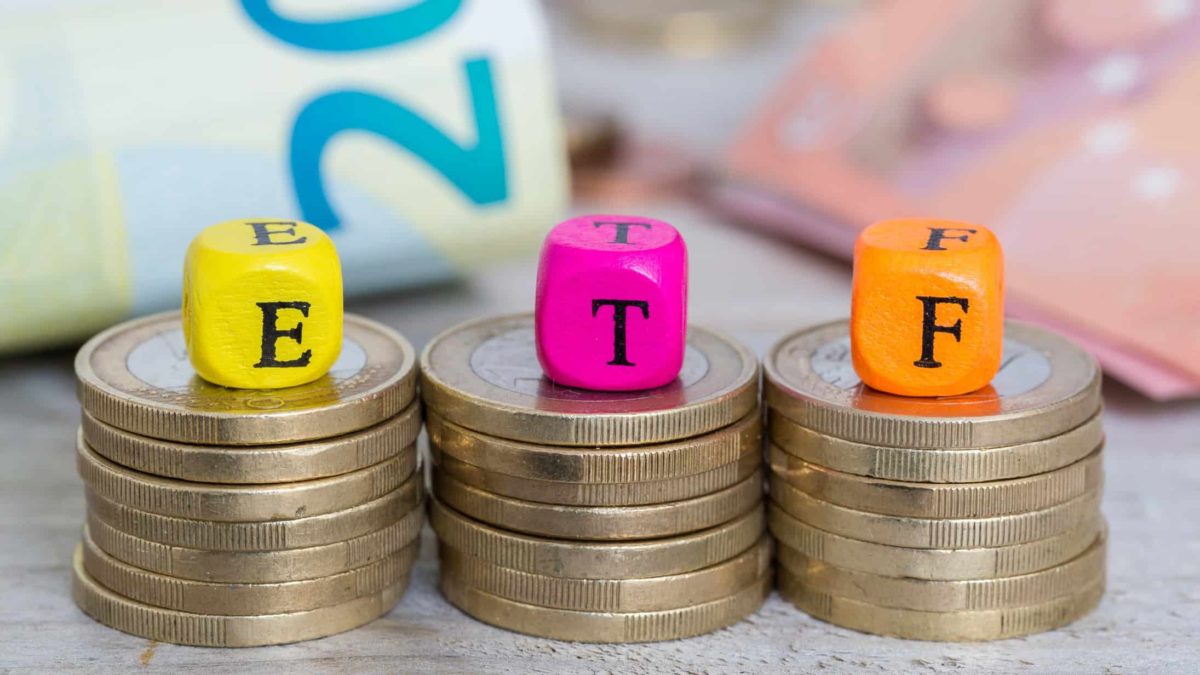
    ETF written on cubes sitting on piles of coins.

    The final distribution (or dividend) amount that investors in the Vanguard US Total Market Shares Index ETF (ASX: VTS) will receive was announced today.

    The ASX VTS exchange-traded fund (ETF) will pay investors 95.19 US cents per ETF unit held on 26 July.

    Based on today’s exchange rate, that equates to about 143.06 cents per ETF unit held.

    If you want to receive the distribution, you better hurry.

    Here’s what to do if you want the next ASX VTS dividend

    The Vanguard US Total Market Shares Index ETF goes ex-dividend tomorrow.

    That means you only have today to buy the ETF and become entitled to the next payout.

    The record date is 1 July.

    Vanguard will convert the distribution amount into Australian currency at the going rate on 22 July.

    What is the ASX VTS?

    The ASX VTS gives Australian investors exposure to the entire US share market of about 3,719 companies.

    It does so by seeking to mirror the performance of the CRSP US Total Market Index (NASDAQ: CRSPTM1) before fees.

    This means ASX investors gain exposure to lots of the world’s best companies in a single trade.

    They include the Magnificent Seven stocks, which are Microsoft, Apple, Nvidia, Alphabet, Amazon, Meta Platforms, and Tesla.

    Investors also gain access to other leading stocks.

    They include Warren Buffett’s Berkshire Hathaway and GLP-1 medicine maker Eli Lilly And Co (NYSE: LLY), which is tipped to become the world’s first trillion-dollar healthcare stock soon.

    The index also includes many small-caps and micro-caps, which can deliver higher growth (but involve more risk).

    The ETF is comprised of 32% technology stocks, 14% consumer discretionary stocks, 13% industrials, 12% healthcare shares, 11% financial shares, and small exposures to other sectors.

    The ASX VTS is also exposed to the US currency as there is no hedging to the Australian dollar.

    The ASX VTS is one of the top 10 cheapest ETFs on the market in terms of fees. Its management expense ratio (MER) is just 0.03%.

    According to Vanguard, the ASX VTS currently has a price-to-earnings (P/E) ratio of 25.11x and a price-to-book (P/B) ratio of 4.08x.

    It has a return on equity (ROE) of 24.03% and pays a 1.34% dividend yield.

    25% growth over the past year

    The ASX VTS has had a magnificent year in terms of share price growth.

    It’s up 25.96% compared to an 8.29% gain for the S&P/ASX 200 Index (ASX: XJO).

    ETFs are a great way to achieve instant stock diversification for your portfolio. The ASX VTS also provides geographical diversification due to its US focus.

    The post Last chance to secure the latest Vanguard US Total Market Shares Index ETF dividend appeared first on The Motley Fool Australia.

    Should you invest $1,000 in Vanguard Us Total Market Shares Index Etf right now?

    Before you buy Vanguard Us Total Market Shares Index Etf shares, consider this:

    Motley Fool investing expert Scott Phillips just revealed what he believes are the 5 best stocks for investors to buy right now… and Vanguard Us Total Market Shares Index Etf wasn’t one of them.

    The online investing service he’s run for over a decade, Motley Fool Share Advisor, has provided thousands of paying members with stock picks that have doubled, tripled or even more.*

    And right now, Scott thinks there are 5 stocks that may be better buys…

    See The 5 Stocks
    *Returns as of 24 June 2024

    More reading

    Randi Zuckerberg, a former director of market development and spokeswoman for Facebook and sister to Meta Platforms CEO Mark Zuckerberg, is a member of The Motley Fool’s board of directors. John Mackey, former CEO of Whole Foods Market, an Amazon subsidiary, is a member of The Motley Fool’s board of directors. Suzanne Frey, an executive at Alphabet, is a member of The Motley Fool’s board of directors. Motley Fool contributor Bronwyn Allen has positions in Vanguard Us Total Market Shares Index ETF. The Motley Fool Australia’s parent company Motley Fool Holdings Inc. has positions in and has recommended Alphabet, Amazon, Apple, Berkshire Hathaway, Meta Platforms, Microsoft, Nvidia, and Tesla. The Motley Fool Australia’s parent company Motley Fool Holdings Inc. has recommended the following options: long January 2026 $395 calls on Microsoft and short January 2026 $405 calls on Microsoft. The Motley Fool Australia has recommended Alphabet, Amazon, Apple, Berkshire Hathaway, Meta Platforms, Microsoft, and Nvidia. The Motley Fool has a disclosure policy. This article contains general investment advice only (under AFSL 400691). Authorised by Scott Phillips.

  • Qantas share price drops 3% amid Qatar rumours

    It’s looking like another rough day is in store for the S&P/ASX 200 Index (ASX: XJO) and most ASX 200 shares this Thursday. At the time of writing, the ASX 200 has gone backwards by a painful 1.02%, leaving the index at just above 7,700 points. But let’s talk about what’s happening with the Qantas Airways Limited (ASX: QAN) share price today.

    Qantas shares are also having a day to forget. The ASX 200 airline stock closed at $5.88 a share yesterday afternoon. But this morning, those same shares opened at $5.80 before sinking as low as $5.71 this morning. That was a loss worth a steep 2.9% at the time.

    Since then, the Qantas share price has recovered and is now sitting at $5.84 a share. That’s down 0.6% for the day thus far.

    This wild day for the Qantas share price comes amid some potentially big news for the ASX travel sector this Thursday.

    Virgin reportedly in talks with Qatar Airways

    As reported by the Australian Financial Review (AFR) today, Qantas’ arch-rival Virgin Australia may be potentially welcoming a significant new investor to its ranks. According to the report, Virgin is “negotiating” with the state-owned Qatar Airways for Qatar to buy up a stake in Virgin, perhaps up to 20% of the airline.

    Virgin is currently owned by private equity group Bain Capital after the airline was taken off the ASX back in 2020 due to financial pressures resulting from the pandemic. Bain has reportedly been looking for avenues to offload Virgin, including an ASX re-listing and negotiations with Singapore Airlines. But nothing has come to fruition yet.

    Qatar Airways already has a somewhat rocky relationship with Australia. Last year, it was embroiled in a saga with Qantas after the Federal Government refused Qatar’s request to allow more flights into Australia. Qantas supported the government’s decision. However, some in the industry argued that the decision benefitted Qantas’ market share in Australia at the expense of customer choice.

    It’s not too surprising to see the Qantas share price react negatively to this news regarding Virgin though. Virgin has long been Qantas’ main rival on Australian soil (or airspace). As such, it’s not hard to see why investors are seeing a negative outcome for Qantas from Virgin receiving support from a large player like Qatar. A large player which also happens to be backed by the cashed-up Qatari state.

    Qantas share price snapshot

    Despite today’s negative share price moves, Qantas has had a fairly successful 2024 so far. At current pricing, this ASX 200 airline is up 9.5% year to date.

    However, the company remains down by around 2.3% over the past 12 months. It also remains down by just over 12.4% from its last 52-week high that we saw in July last year.

    At the current Qantas share price, this ASX 200 airline has a market capitalisation of $9.58 billion.

    The post Qantas share price drops 3% amid Qatar rumours appeared first on The Motley Fool Australia.

    Should you invest $1,000 in Qantas Airways Limited right now?

    Before you buy Qantas Airways Limited shares, consider this:

    Motley Fool investing expert Scott Phillips just revealed what he believes are the 5 best stocks for investors to buy right now… and Qantas Airways Limited wasn’t one of them.

    The online investing service he’s run for over a decade, Motley Fool Share Advisor, has provided thousands of paying members with stock picks that have doubled, tripled or even more.*

    And right now, Scott thinks there are 5 stocks that may be better buys…

    See The 5 Stocks
    *Returns as of 24 June 2024

    More reading

    Motley Fool contributor Sebastian Bowen has no position in any of the stocks mentioned. The Motley Fool Australia’s parent company Motley Fool Holdings Inc. has no position in any of the stocks mentioned. The Motley Fool Australia has no position in any of the stocks mentioned. The Motley Fool has a disclosure policy. This article contains general investment advice only (under AFSL 400691). Authorised by Scott Phillips.

  • Why APA Group, Immutep, NAB, and Immutep shares are sinking

    In afternoon trade, the S&P/ASX 200 Index (ASX: XJO) is on course to record a disappointing decline. At the time of writing, the benchmark index is down 1% to 7,704.4 points.

    Four ASX shares that are falling more than most today are listed below. Here’s why they are sinking:

    APA Group (ASX: APA)

    The APA Group share price is down 4.5% to $7.95. This decline has been driven by the energy infrastructure company’s shares going ex-dividend this morning. When this happens, it means the rights to an upcoming dividend are settled and new buyers won’t be entitled to receive it. Last week, APA Group announced a final distribution of 29.5 cents per share for the six months ending 30 June 2024. This brought its distributions for the 2024 financial year to 56 cents per share. Eligible shareholders will have to wait a little time before they receive this final distribution. The company is planning to make its payment on 18 September.

    Immutep Ltd (ASX: IMM)

    The Immutep share price is down 22% to 34 cents. Investors have been selling this clinical-stage biotechnology company’s shares following the release of topline results from the TACTI-003 Phase IIb Trial. That trial is evaluating eftilagimod alfa (efti) in combination with anti-PD-1 therapy Keytruda (pembrolizumab) as first-line treatment of recurrent/metastatic head and neck squamous cell carcinoma patients (1L HNSCC). While positive results were delivered, Immutep elected to not include a p-value with its trial results. This decision seems to have left investors believing that the results were not actually statistically significant and have been selling off its shares today.

    National Australia Bank Ltd (ASX: NAB)

    The National Australia Bank share price is down 1.5% to $35.77. This is despite there being no news out of the banking giant today. However, it is worth noting that most bank stocks are tumbling today in response to yesterday’s hotter than expected inflation reading. Investors appear concerned that the Reserve Bank of Australia will be forced to increase interest rates, which could hurt borrowers and cause a spike in bad debts.

    Transurban Group (ASX: TCL)

    The Transurban share price is down 3.5% to $12.22. This has also been driven by the toll road operator’s shares going ex-dividend this morning. Last week, Transurban announced a final distribution of 32 cents per share for the six months ending 30 June 2024. Eligible shareholders can look forward to receiving this dividend on 13 August. Alternatively, the company’s distribution reinvestment plan is operational for this distribution.

    The post Why APA Group, Immutep, NAB, and Immutep shares are sinking appeared first on The Motley Fool Australia.

    Should you invest $1,000 in Apa Group right now?

    Before you buy Apa Group shares, consider this:

    Motley Fool investing expert Scott Phillips just revealed what he believes are the 5 best stocks for investors to buy right now… and Apa Group wasn’t one of them.

    The online investing service he’s run for over a decade, Motley Fool Share Advisor, has provided thousands of paying members with stock picks that have doubled, tripled or even more.*

    And right now, Scott thinks there are 5 stocks that may be better buys…

    See The 5 Stocks
    *Returns as of 24 June 2024

    More reading

    Motley Fool contributor James Mickleboro has no position in any of the stocks mentioned. The Motley Fool Australia’s parent company Motley Fool Holdings Inc. has positions in and has recommended Transurban Group. The Motley Fool Australia has positions in and has recommended Apa Group. The Motley Fool has a disclosure policy. This article contains general investment advice only (under AFSL 400691). Authorised by Scott Phillips.

  • Amazon is trying to defend its kingdom against cheap Chinese rivals, and it thinks it has a plan

    A general view outside an Amazon UK Services Ltd Warehouse at Leeds Distribution Park in Leeds, United Kingdom.
    Amazon's market capitalization passed $2 trillion for the first time on Wednesday, joining the ranks of other tech colossuses like Microsoft and Apple.

    • Temu and Shein have been giving Amazon a run for their money with their ultra-low prices.
    • But Amazon might just have a plan to fend them off — starting its own discount section.
    • The Seattle-based giant is looking to ship a range of unbranded items directly from China to the US.

    You know what they say, "If you can't beat them, you join them."

    That appears to be the gist of Amazon's new plan to fend off its Chinese rivals, Temu and Shein.

    The Seattle-based e-commerce giant plans to start a new discount section on its website, The Information reported on Wednesday, citing slides the company had shown to Chinese sellers.

    According to the outlet, Amazon wants to ship a range of unbranded items directly from China to the US. Customers can expect to receive their orders within nine to 11 days.

    Chinese sellers were told in a recent closed-door meeting with Amazon that the new marketplace will start accepting products this fall, per The Information.

    The move is widely seen as a response to the increased competition it's facing from Temu and Shein, which have lured customers with their ultra-low prices and aggressive marketing campaigns.

    "We are always exploring new ways to work with our selling partners to delight our customers with more selection, lower prices, and greater convenience," a spokesperson for Amazon told The Information.

    Temu and Shein did not immediately respond to requests for comment from BI sent outside regular business hours.

    To be sure, winning customers through competitive pricing has long been a part of Amazon's playbook.

    In 2009, Amazon launched its own private-label business, AmazonBasics. The company started by selling electronics like batteries and power cords at a lower price point before expanding its efforts into other product segments like pet food and clothing.

    The strategy might be even more relevant today, given how American consumers may be becoming more prudent with their spending.

    In April, Amazon CFO Brian Olsavsky told journalists that the company noticed that its customers were "buying a lot more consumables and everyday essentials," which tend to be cheaper.

    "Customers in the US are being very thoughtful about their spend," Olsavsky said. "They look for deals, they trade down and look for lower ASP (average sale price) products."

    And unlike most companies, which could find themselves bleeding cash when they try to wage a price war, Amazon might just have the heft to survive the bloodbath.

    On Wednesday, the company's market capitalization surpassed $2 trillion for the first time, joining the ranks of other tech colossuses like Microsoft and Apple.

    Read the original article on Business Insider
  • This ASX All Ords energy stock just crashed 46%! What happened?

    a close up of a man with wide open eyes and wide open mouth holding his head and reacting in shock and surprise to some share market ews.

    The All Ordinaries Index (ASX: XAO) is down 0.9% in early afternoon trade today, and it’s certainly not getting any help from ASX All Ords energy stock Melbana Energy Ltd (ASX: MAY).

    Shares in the oil and gas company closed yesterday trading for 6.1 cents. Morning trade started well for the stock, with shares reaching 6.3 cents apiece, up 3.3%.

    Then the company released an intraday update on its appraisal well Alameda-3. And investors sent the ASX All Ords stock crashing.

    At the time of writing, shares are swapping hands for 3.3 cents each, down a painful 45.9%.

    Here’s what’s happening.

    Why did the ASX All Ords stock just crash?

    Melbana Energy holds a 30% interest in and is the operator of Block 9 PSC. The oil project is located onshore in Cuba, where the Alameda-3 well is situated.

    Flow testing of the Alameda reservoir kicked off at the beginning of this week. Today, the ASX All Ords stock is under heavy pressure after management reported that, consistent with Melbana’s recent results from the deeper Marti reservoir, drill string fluids were unable to be recovered during the flow testing.

    While no uncontaminated oil samples were obtained, Melbana said that oil samples were recovered on reverse circulation of the DST string. Those have been sent for lab analysis.

    Management noted that the inability of the well to flow does not fit with previous observations and expectations.

    They added that the latest failure is consistent with the similar recent failure of the deeper Marti reservoir to flow hydrocarbons to surface. That’s despite both reservoirs demonstrating an ability to do so in the Alameda-1 exploration well.

    Commenting on the disappointing results that are seeing the ASX All Ords stock under heavy selling pressure today, Melbana Energy CEO Andrew Purcell said, “Both the Marti and Alameda reservoirs have previously shown the presence of freely moveable hydrocarbons that flowed to surface unassisted.”

    Purcell continued:

    That both reservoirs should now fail to do so when the appraisal well trajectory is minimally offset to the original exploration well means studies need to focus on the new data that has been acquired and the limited drilling parameters that have changed.

    We will incorporate local and international expert advice as to how to remedy such reservoir responses into the newly acquired data to help focus our studies.

    Looking to the months ahead, he added, “Our immediate plan is to work on the steps required to export production from the Amistad reservoir this year and to develop more appraisal wells in the Amistad reservoir thereafter.”

    With today’s intraday losses factored in, the ASX All Ords energy stock is down 63% over 12 months.

    The post This ASX All Ords energy stock just crashed 46%! What happened? appeared first on The Motley Fool Australia.

    Should you invest $1,000 in Melbana Energy right now?

    Before you buy Melbana Energy shares, consider this:

    Motley Fool investing expert Scott Phillips just revealed what he believes are the 5 best stocks for investors to buy right now… and Melbana Energy wasn’t one of them.

    The online investing service he’s run for over a decade, Motley Fool Share Advisor, has provided thousands of paying members with stock picks that have doubled, tripled or even more.*

    And right now, Scott thinks there are 5 stocks that may be better buys…

    See The 5 Stocks
    *Returns as of 24 June 2024

    More reading

    Motley Fool contributor Bernd Struben has no position in any of the stocks mentioned. The Motley Fool Australia’s parent company Motley Fool Holdings Inc. has no position in any of the stocks mentioned. The Motley Fool Australia has no position in any of the stocks mentioned. The Motley Fool has a disclosure policy. This article contains general investment advice only (under AFSL 400691). Authorised by Scott Phillips.

  • Why Arcadium Lithium, Baby Bunting, Cettire, and Qualitas shares are racing higher

    The S&P/ASX 200 Index (ASX: XJO) is having a tough time on Thursday. In afternoon trade, the benchmark index is down 1% to 7,706.8 points.

    Four ASX shares that are not letting that hold them back are listed below. Here’s why they are rising:

    Arcadium Lithium (ASX: LTM)

    The Arcadium Lithium share price is up 3% to $5.13. Investors have been piling into Arcadium Lithium and other ASX lithium stocks again today. This is despite there being no news out of the company and in the face of a bearish broker note out of Citi warning that lithium prices are going to sink further. It’s possible that short sellers have decided to close positions and are buying back shares today.

    Baby Bunting Group Ltd (ASX: BBN)

    The Baby Bunting share price is up 20% to $1.48. This has been driven by the release of a trading update from the baby products retailer this morning. According to the release, Baby Bunting’s performance has improved markedly since the end of April. It advised that total sales from 1 May 2024 to 24 June 2024 were up 1% over the prior corresponding period. This compares to a 7.7% decline in sales during January to April. This improvement reflects the benefits of recently introduced new product assortments, a renewed focus on new customer acquisition, the introduction of a refreshed promotional engagement, and a proactive branding and go-to-market campaign.

    Cettire Ltd (ASX: CTT)

    The Cettire share price is up 6% to $1.12. Investors appear to believe that the online luxury products retailer’s shares have been oversold this week following the release of a disappointing trading update. Even after today’s gain, Cettire’s shares are still down approximately 50% since this time last week. Bell Potter sees this as a buying opportunity. In response to the update, the broker has reaffirmed its buy rating with a reduced price target of $2.60.

    Qualitas Ltd (ASX: QAL)

    The Qualitas share price is up 4.5% to $2.35. This morning, this alternative real estate investment manager announced the commitment of up to $300 million from a wholly owned subsidiary of the Abu Dhabi Investment Authority (ADIA) for the existing QDCI platform. This represents ADIA’s third commitment to QDCI and brings the total committed capital to A$1.67 billion since its initial investment in August 2022. Group Managing Director and Co-Founder, Andrew Schwartz, said: “QDCI has performed well since inception and the pipeline continues to grow. This latest increase in commitment from ADIA demonstrates the depth of opportunities within the Australian CRE private credit market and further evidences Qualitas’ ability to attract, retain and grow our institutional investor base – a key differentiator in the current environment.”

    The post Why Arcadium Lithium, Baby Bunting, Cettire, and Qualitas shares are racing higher appeared first on The Motley Fool Australia.

    Should you invest $1,000 in Baby Bunting Group Limited right now?

    Before you buy Baby Bunting Group Limited shares, consider this:

    Motley Fool investing expert Scott Phillips just revealed what he believes are the 5 best stocks for investors to buy right now… and Baby Bunting Group Limited wasn’t one of them.

    The online investing service he’s run for over a decade, Motley Fool Share Advisor, has provided thousands of paying members with stock picks that have doubled, tripled or even more.*

    And right now, Scott thinks there are 5 stocks that may be better buys…

    See The 5 Stocks
    *Returns as of 24 June 2024

    More reading

    Citigroup is an advertising partner of The Ascent, a Motley Fool company. Motley Fool contributor James Mickleboro owns Arcadium Lithium shares. The Motley Fool Australia’s parent company Motley Fool Holdings Inc. has no position in any of the stocks mentioned. The Motley Fool Australia has recommended Cettire. The Motley Fool has a disclosure policy. This article contains general investment advice only (under AFSL 400691). Authorised by Scott Phillips.

  • Should you pounce on ResMed shares at around $28?

    Senior woman using cpap machine to stop choking and snoring from obstructive sleep apnoea with bokeh and morning light background.

    ResMed Inc (ASX: RMD) shares are currently 2.13% higher at $28.24, significantly outpacing the market today.

    The S&P/ASX 200 Index (ASX: XJO) is down 1.15% as the market continues to process yesterday’s inflation upside surprise.

    This time last week, ResMed shares were trading about 12.5% higher at $31.75 apiece.

    They took a tumble on Monday following news of a United States medical study showing GLP-1 medicines directly reduced the rate of obstructive sleep apnoea (OSA) in patients with obesity.

    ResMed’s products treat sleep apnoea.

    The ASX 200 healthcare stock closed at $27.74 on Monday. Since then, it seems ASX investors are taking the opportunity to buy the dip.

    Are they doing the right thing?

    Here’s what top broker Citi thinks.

    Should you buy the dip on ResMed shares?

    Top broker Citi reacted to the US study by cutting its rating on ResMed shares to neutral.

    The broker also slashed its 12-month share price target from $36 per share to $30 per share.

    Given ResMed is currently trading at $28.24, the potential upside is limited to only 6% over the next year.

    Citi analyst Mathieu Chevrier said the study by global pharmaceutical giant Eli Lilly And Co (NYSE: LLY) “indicates that GLP-1 are a viable treatment option for the 70 per cent of OSA patients that are obese”.

    Chevrier estimates that if half of those patients went into OSA remission, that could mean a 35% fall in the total addressable market (TAM) for continuous positive airway pressure (CPAP) machines.

    ResMed sells CPAP machines.

    Based on the study, Citi assumes a 15% fall in TAM for OSA from FY26 to FY28.

    As such, it has cut its forecast revenue growth for ResMed. The forecast was cut from 6% to 4% for FY26 and from 4% to 3% for FY25. Citi held its forecast steady at 2% for FY26.

    The study sought to measure the impact of Eli Lilly’s GLP-1 drug, Tirzepatide, on people with obesity and OSA.

    Tirzepatide is the key ingredient in Mounjaro (prescribed for diabetes) and Zepbound (prescribed for obesity).

    These drugs compete with alternative GLP-1s, Ozempic and Wegovy, which are made with semaglutide.

    Eli Lilly reported that OSA remission was achieved in 52% of patients in the study.

    Last year, ResMed CEO Mick Farrell sought to reassure investors that the OSA market was enormous, regardless of the impact of GLP-1 drugs.

    He said even with GLP-1 medicines factored in, the TAM for OSA would be 1.2 billion by 2050.

    ResMed currently has 22.5 million customers using its OSA products.

    The post Should you pounce on ResMed shares at around $28? appeared first on The Motley Fool Australia.

    Should you invest $1,000 in Resmed Inc. right now?

    Before you buy Resmed Inc. shares, consider this:

    Motley Fool investing expert Scott Phillips just revealed what he believes are the 5 best stocks for investors to buy right now… and Resmed Inc. wasn’t one of them.

    The online investing service he’s run for over a decade, Motley Fool Share Advisor, has provided thousands of paying members with stock picks that have doubled, tripled or even more.*

    And right now, Scott thinks there are 5 stocks that may be better buys…

    See The 5 Stocks
    *Returns as of 24 June 2024

    More reading

    Citigroup is an advertising partner of The Ascent, a Motley Fool company. Motley Fool contributor Bronwyn Allen has no position in any of the stocks mentioned. The Motley Fool Australia’s parent company Motley Fool Holdings Inc. has positions in and has recommended ResMed. The Motley Fool Australia has positions in and has recommended ResMed. The Motley Fool has a disclosure policy. This article contains general investment advice only (under AFSL 400691). Authorised by Scott Phillips.

  • The International Space Station is getting the scrap, and Elon Musk’s SpaceX is being paid close to $1 billion to do the honors

    The International Space Station (ISS) photographed by Expedition 56 crew members from a Soyuz spacecraft after undocking, October 4, 2018.
    The International Space Station (ISS).

    • SpaceX has been chosen to drag the International Space Station out of orbit.
    • NASA will give Musk's space exploration company $843 million for the mission. 
    • The project will take place after the ISS is retired in 2030. 

    NASA has tasked Elon Musk's SpaceX with building a vehicle powerful enough to pull the International Space Station (ISS) out of orbit.

    SpaceX will be given $843 million to build the structure before the ISS reaches the end of its operational life in 2030, NASA said in a statement on Wednesday.

    "NASA announced SpaceX has been selected to develop and deliver the U.S. Deorbit Vehicle that will provide the capability to deorbit the space station and ensure avoidance of risk to populated areas," per the statement.

    The vehicle will attach itself to the ISS and pull it out of its path, which is about 250 miles above Earth's surface.

    NASA started asking for proposals from aerospace companies for the US Deorbit Vehicle (USDV) in September, asking for price quotes.

    Upon securing the contract, SpaceX responded to the news on X, saying: "SpaceX is honored to be entrusted by @NASA to support this critical mission."

    https://platform.twitter.com/widgets.js

    As the ISS is decommissioned, NASA intends to transition into smaller, privately owned space stations closer to the Earth's surface, or in Low Earth Orbit.

    "U.S. industry is developing these commercial destinations to begin operations in the late 2020s for both government and private-sector customers," NASA's website states.

    The ISS, launched in 1998, is a 925,000-pound structure that measures 357 feet end-to-end, almost the length of a football field.

    It has been managed by five space agencies since its launch: NASA, CSA (Canadian Space Agency), ESA (European Space Agency), JAXA (Japan Aerospace Exploration Agency), and Russia's State Space Corporation Roscosmos.

    The statement said that the US, Canada, Japan, and participating countries of the ESA have remained committed to operating the ISS until it retires in 2030. Russia has committed to maintaining operations until at least 2028.

    The structure has much to show for its years in operation, having supported 3,300 experiments that could not have been possible on Earth, per NASA's statement on Wednesday.

    SpaceX has been NASA's commercial partners for years. It was one of the two American companies NASA tapped in 2014 to explore commercial space transport.

    SpaceX and NASA didn't immediately respond to a request for comment from Business Insider, made outside normal working hours.

    Read the original article on Business Insider
  • Should investors worry about the outlook for ASX 200 lithium shares in FY25?

    A young man in a blue suit sits on his desk cross-legged with his phone in his hand looking slightly crazed.

    FY24 has been a tough year for S&P/ASX 200 Index (ASX: XJO) lithium shares. While it’s good to be hopeful about the future when it comes to investing, some analysts are pessimistic about where the lithium price is headed next.

    There are a few lithium stocks to monitor within the ASX 200, such as Pilbara Minerals Ltd (ASX: PLS), IGO Ltd (ASX: IGO), Arcadium Lithium CDI (ASX: LTM), Liontown Resources Ltd (ASX: LTR) and Mineral Resources Ltd (ASX: MIN).

    Demand for lithium may increase over the longer term because of electric vehicles and other types of batteries, but rising supply is also having an effect.  

    Let’s look at what one broker thinks is in store for the lithium price in FY25.

    Rising inventory to hurt lithium prices?

    According to reporting by the Australian Financial Review, the broker Citi thinks the lithium price could drop as much as 20% in the next few months because inventories are increasing at a “dramatic pace”. Indeed, the broker is so pessimistic that it suggests investors short the commodity, according to the AFR.

    Citi estimates that there is an oversupply in the physical market, with inventory increasing by around 70,000 tonnes since the start of 2024.

    At the current lithium price, Citi suggested some mines could be closed and there could be some “industry rationalisation” which could eventually help with the “extremely large surpluses”. The Citi global head of commodities of research, Max Layton, said:

    This high and rising low-shelf-life chemical inventories should see lithium prices fall another 15 to 20 per cent to $US10,000 a tonne.

    A low-price environment over the next three to six months would force supply curtailments, driving physical markets to rebalance.

    Albemarle, the world’s biggest lithium miner, said it wouldn’t make new investments in lithium plants at the current lithium price. However, Albemarle is still optimistic about the long term because of the future demand, which is expected to come from electric vehicles.  

    Citi is “very bearish” on lithium and said that demand growth for lithium has halved in 2024 compared to 2023, putting the market in surplus by around 7% of total consumption, which isn’t helpful for ASX 200 lithium shares.

    The broker has decreased its expectations of shorter-term global electric vehicle sales due to higher interest rates, limited charging infrastructure, and limited product options.

    Layton said:

    Lithium consumption is expected to accelerate from 2025 onwards once the current negative EV sentiment fades.

    Foolish takeaway

    With that backdrop in mind, the outlook is clouded for ASX 200 lithium shares. FY25 could be tricky for the sector if the lithium price fell further. However, commodity prices are notoriously difficult to forecast, so it’s possible that things could turn out better than what Citi is predicting. Time will tell whether Citi is right to be pessimistic.

    The post Should investors worry about the outlook for ASX 200 lithium shares in FY25? appeared first on The Motley Fool Australia.

    Wondering where you should invest $1,000 right now?

    When investing expert Scott Phillips has a stock tip, it can pay to listen. After all, the flagship Motley Fool Share Advisor newsletter he has run for over ten years has provided thousands of paying members with stock picks that have doubled, tripled or even more.*

    Scott just revealed what he believes could be the ‘five best ASX stocks’ for investors to buy right now. We believe these stocks are trading at attractive prices and Scott thinks they could be great buys right now…

    See The 5 Stocks
    *Returns as of 24 June 2024

    More reading

    Citigroup is an advertising partner of The Ascent, a Motley Fool company. Motley Fool contributor Tristan Harrison has no position in any of the stocks mentioned. The Motley Fool Australia’s parent company Motley Fool Holdings Inc. has no position in any of the stocks mentioned. The Motley Fool Australia has no position in any of the stocks mentioned. The Motley Fool has a disclosure policy. This article contains general investment advice only (under AFSL 400691). Authorised by Scott Phillips.