• An embattled oil tycoon is selling a mansion in Singapore for $32 million. It’s one of the city’s status-symbol houses that business leaders covet.

    A screengrab from Google Maps Street View depicting the GCB at 1 K Tanglin Hill in Singapore
    A screen grab from Google Maps Street View depicting a Good Class Bungalow belonging to former oil tycoon Lim Oon Kuin, better known as OK Lim, in Tanglin Hill, Singapore. In land-scarce Singapore, Good Class Bungalows, or GCBs, are rare and incredibly expensive.

    • An oil tycoon convicted of cheating and instigating forgery is selling his mansion in Singapore for $32 million.
    • In land-scarce Singapore, Good Class Bungalows — mansions on private land — are a trophy among the ultrawealthy.
    • TikTok CEO Shou Zi Chew and billionaire James Dyson are among the elite who own GCBs in Singapore.

    A former oil tycoon convicted of cheating and instigating forgery is selling his mansion in Singapore for $43 million Singapore dollars, or $32 million.

    Lim Oon Kuin, the founder of the collapsed oil firm Hin Leong Trading, is putting his Good Class Bungalow in Tanglin Hill, one of the city's wealthy enclaves, for sale.

    A home on private property is incredibly rare in the land-scarce city — which spans a mere 274 square miles. The largest and most expensive type of landed home available in Singapore is known as a Good Class Bungalow, or GCB.

    There are only an estimated 2,800 GCBs in Singapore. According to the Urban Land Authority, a GCB requires a minimum plot size of 15,070 square feet and is found only in designated prime residential areas.

    A Tanglin Hill GCB belonging to former oil tycoon Lim Oon Kuin, better known as OK Lim, is for sale for 43 million Singapore dollars.
    The GCB is a two-story detached house with five bedrooms, a garden, and a swimming pool.

    The property is a two-story detached house with five bedrooms, a garden, and a swimming pool, per a press release from Knight Frank Singapore, which is handling the sale.

    Lim, 81, was convicted last month of three criminal charges of cheating and forgery, per local paper The Straits Times. His sentencing is scheduled for October 3. Lim's lawyers did not respond to Business Insider's request for comment.

    Two charges against Lim involved cheating HSBC, while the third involved instigating one of his Hin Leong employees to forge a document, per The Business Times. The charges involved a total of $111.7 million.

    Lim Oon Kuin, also known as O.K. Lim, the founder of collapsed oil trading firm Hin Leong Trading Pte Ltd, arrives at the State Courts, in Singapore
    Lim arrived at the State Courts in Singapore in a wheelchair on April 30.

    Lim faces another 127 charges, which were stood down and will be dealt with later, per The Straits Times. Prosecutors alleged that 16 banks in Singapore suffered $291.9 million in actual monetary losses out of $2.7 billion in loans that Lim duped them into extending to Hin Leong.

    According to Bloomberg, Hin Leong was "one of Asia's biggest suppliers of diesel and shipping fuel" at its peak.

    This is the third GCB that Lim has put on the market.

    In 2021, he sold one GCB in October 2021 for SG$33.39 million, and another GCB in November 2023 for slightly under SG$26.5 million.

    "There has been quite a bit of market buzz about GCBs of late, and for good reason. On top of offering substantial capital appreciation, these prized assets' prime location and access to lifestyle options reinforce their desirability," Mary Sai, Knight Frank's executive director for capital markets, said in the press release.

    Some prominent business leaders who have bought GCBs in Singapore in the past include TikTok CEO Shou Zi Chew and billionaire James Dyson.

    In April, Bloomberg reported that tech billionaire Forrest Li's wife filed an option to buy a GCB for SG$42.5 million.

    According to CBRE's luxury residential report, 23 GCB transactions worth SG$777.32 million were recorded in 2023, down from 47 transactions worth SG$1.365 billion in 2022.


    Read the original article on Business Insider
  • CBA shares hit another new high! Too late to buy?

    A woman in a bright yellow jumper looks happily at her yellow piggy bank representing bank dividends and in particular the CBA dividend

    Commonwealth Bank of Australia (ASX: CBA) shares ripped to yet another all-time high within the first half hour of trading on Tuesday. CBA shares reached $128.68, up 1.48% on Friday’s close of $126.80.

    Despite many brokers declaring CBA shares overvalued, with the ASX 200 bank shares now among the most expensive bank stocks in the world, there seems to be no end in sight to CBA’s rise.

    Let’s canvas some expert views on the situation.

    Is it too late to buy CBA shares?

    Views are mixed but there is a leaning toward the sell side on CBA shares today.

    Of the 17 analysts covering CBA on the bank’s own trading platform, seven give the stock a strong sell rating. One gives it a moderate sell rating, six say it’s a hold, and three say it’s a moderate buy.

    One of the most bearish on CBA is top broker Goldman Sachs.

    The broker says CBA shares “are in uncharted valuation territory” based on the premium they usually trade at in relation to their return on equity (ROE) forecast.

    Goldman has a sell rating on CBA. It expects the share price to fall to $82.61 within 12 months, a massive 36% decline from today’s new record high.

    The latest broker to weigh in on CBA shares is Braden Gardiner from Tradethestructure.

    Gardiner rates CBA a hold and explains on The Bull:

    Shares in Australia’s biggest bank continue to perform – and beyond some people’s expectations.

    In my view, the outlook for the latest rally is linked to the performance of S&P/ASX 200.

    Any tightening in CBA revenue growth could lead to selling pressure. Traders may want to consider locking in some gains if the share price falls below $116.

    CBA shares are up 12.4% in the year to date, while the S&P/ASX 200 Index (ASX: XJO) is up 2.15%.

    Another top broker, UBS, also expects the CBA share price to fall from here. This broker has a 12-month share price target of $105. This implies a fall of 18% from here.

    Some experts are even shorting the stock!

    Philip King, CIO at Regal Funds Management, is shorting CBA. That means he’s put money on the price falling from here.

    King says that historically, growth in earnings per share (EPS) has been a key driver of the CBA share price. However, over the past 10 years, he says the EPS growth rate has stalled.

    He says CBA is “one of the most expensive banks in the world and could derate over the next 10 years if EPS falls as we expect it will.”

    According to the latest ASIC short position report, 1.56% of CBA stock is held short. This is an extremely small percentage.

    It’s also interesting to note that the short position was higher at 1.66% six months ago. Perhaps this implies that, given CBA’s relentless rise, not as many brokers share King’s expectations of a price drop.

    Is CBA about to become the ASX 200’s most valuable stock?

    CBA shares may be on their way to overtaking BHP Group Ltd (ASX: BHP) as the ASX 200’s biggest stock.

    At the time of writing, BHP shares are trading at $42.70, up 0.64%. This gives the mining giant a market capitalisation of $216.55 billion. At today’s record high, CBA had a market cap of $215.36 billion.

    CBA is not the only bank stock riding high right now. All of the ASX 200 bank shares, bar Bank of Queensland Ltd (ASX: BOQ), have hit new multi-year highs in 2024.

    Talk of interest rate cuts late last year set off an extraordinary run for ASX 200 bank shares, as shown here.

    The post CBA shares hit another new high! Too late to buy? appeared first on The Motley Fool Australia.

    Should you invest $1,000 in Commonwealth Bank Of Australia right now?

    Before you buy Commonwealth Bank Of Australia shares, consider this:

    Motley Fool investing expert Scott Phillips just revealed what he believes are the 5 best stocks for investors to buy right now… and Commonwealth Bank Of Australia wasn’t one of them.

    The online investing service he’s run for over a decade, Motley Fool Share Advisor, has provided thousands of paying members with stock picks that have doubled, tripled or even more.*

    And right now, Scott thinks there are 5 stocks that may be better buys…

    See The 5 Stocks
    *Returns as of 24 June 2024

    More reading

    Motley Fool contributor Bronwyn Allen has positions in BHP Group and Commonwealth Bank Of Australia. The Motley Fool Australia’s parent company Motley Fool Holdings Inc. has positions in and has recommended Goldman Sachs Group. The Motley Fool Australia has no position in any of the stocks mentioned. The Motley Fool has a disclosure policy. This article contains general investment advice only (under AFSL 400691). Authorised by Scott Phillips.

  • Why these 3 ASX 200 shares just gained significant broker upgrades

    Three S&P/ASX 200 Index (ASX: XJO) shares just scored significant upgrades from leading brokers.

    All three operate in different market sectors.

    And the brokers expect all three to post share price gains over the year ahead.

    Here’s why.

    (Broker data courtesy of The Australian.)

    Three ASX 200 shares with improved outlooks

    The first ASX 200 share getting a broker upgrade is wholesale food, liquor and hardware distributor Metcash Ltd (ASX: MTS).

    Metcash shares are up 0.4% in morning trade, changing hands for $3.71 apiece. That leaves the Metcash share price down 1% over 12 months. Metcash shares also trade on a fully franked trailing dividend yield of 5.9%.

    Evans & Partners sees some modest gains ahead for Metcash investors. The broker raised the ASX 200 share to a neutral rating with a $3.93 price target.

    This follows yesterday’s release of the company’s full-year results for the 12 months ending 30 April.

    Highlights included a 0.7% year on year increase in revenue to $15.9 billion. But profits slipped, with underlying profit after tax down 8.2% from the prior year to $282.3 million. This saw the final Metcash dividend cut by 23% to 8.5 cents a share.

    Which brings us to the second ASX 200 share getting a broker upgrade, Origin Energy Ltd (ASX: ORG).

    Shares in the energy provider are up 1.0% at time of writing, trading for $10.77. That sees the Origin Energy share price up more than 27% in 12 months. Origin shares also trade on a fully franked trailing dividend yield of 4.4%.

    Citi sees some significant upside from current levels. The broker rated Origin shares as a new buy with a price target of $12.00. That’s more than 11% above this morning’s share price.

    Rounding off the list of ASX 200 shares gaining a significant broker upgrade is engineering and mining services company Monadelphous Group Ltd (ASX: MND).

    Monadelphous shares are up 0.7% in morning trade today, changing hands for $13.41 apiece. That sees the Monadelphous share price up 17% in 12 months. The stock also trades on a fully franked trailing dividend yield of 3.8%.

    Argonaut Securities forecasts more gains ahead for the company. The broker raised Monadelphous to a buy rating with a $14.45 price target. That represents a potential upside of almost 8% from current levels.

    As always, before investing your hard-earned money into any ASX 200 shares or smaller stocks, be sure to do your own research first. Or simply reach out for some expert advice.

    The post Why these 3 ASX 200 shares just gained significant broker upgrades appeared first on The Motley Fool Australia.

    Should you invest $1,000 in Monadelphous Group Limited right now?

    Before you buy Monadelphous Group Limited shares, consider this:

    Motley Fool investing expert Scott Phillips just revealed what he believes are the 5 best stocks for investors to buy right now… and Monadelphous Group Limited wasn’t one of them.

    The online investing service he’s run for over a decade, Motley Fool Share Advisor, has provided thousands of paying members with stock picks that have doubled, tripled or even more.*

    And right now, Scott thinks there are 5 stocks that may be better buys…

    See The 5 Stocks
    *Returns as of 24 June 2024

    More reading

    Citigroup is an advertising partner of The Ascent, a Motley Fool company. Motley Fool contributor Bernd Struben has no position in any of the stocks mentioned. The Motley Fool Australia’s parent company Motley Fool Holdings Inc. has no position in any of the stocks mentioned. The Motley Fool Australia has recommended Metcash. The Motley Fool has a disclosure policy. This article contains general investment advice only (under AFSL 400691). Authorised by Scott Phillips.

  • Are ASX real estate shares building towards a better FY25?

    Real estate agent and client exploring property.

    The last two years have been a volatile time for ASX real estate shares. The question is, where to from here? The outlook for FY25 is uncertain.

    Property is one of the most important sectors in the Australian economy, with how much value there is across the commercial and residential sectors.

    There are a lot of different ASX shares related to property, including Goodman Group (ASX: GMG), REA Group Ltd (ASX: REA), Scentre Group (ASX: SCG), Stockland Corporation Ltd (ASX: SGP), Vicinity Centres (ASX: VCX), GPT Group (ASX: GPT), Mirvac Group (ASX: MGR), Dexus (ASX: DXS), Charter Hall Group (ASX: CHC), Brickworks Limited (ASX: BKW) and National Storage REIT (ASX: NSR).

    Let’s look at what may affect the different areas of the property market.

    Interest rates

    The cost of debt is a key factor for property because it affects the amount of debt investors can take on and their repayments.

    We can’t know what the Reserve Bank of Australia is going to do, but it remains focused on bringing down inflation in Australia. In its latest monthly decision, the RBA said the following:

    Inflation is easing but has been doing so more slowly than previously expected and it remains high. The Board expects that it will be some time yet before inflation is sustainably in the target range. While recent data have been mixed, they have reinforced the need to remain vigilant to upside risks to inflation. The path of interest rates that will best ensure that inflation returns to target in a reasonable timeframe remains uncertain and the Board is not ruling anything in or out.

    The Board will rely upon the data and the evolving assessment of risks. In doing so, it will continue to pay close attention to developments in the global economy, trends in domestic demand, and the outlook for inflation and the labour market. The Board remains resolute in its determination to return inflation to target and will do what is necessary to achieve that outcome.

    It seems likely that interest rates will stay high during FY25, and depending on how strong inflation is, a rate rise could occur in the next few months of 2024. This is a strong headwind for ASX real estate shares in FY25.

    Solid residential market?

    Property builders and real estate portals rely on buyer demand for their sections of the market.

    Some capital cities, such as Perth, Adelaide, and Brisbane, have seen strong price growth, whereas others (particularly Melbourne) are experiencing challenging conditions amid higher property taxes.

    Mortgage arrears are rising, though listings have increased in Melbourne and Sydney, which is helping REA Group’s realestate.com.au business. In its latest quarterly update, REA Group said:

    Australia’s residential property market remains strong, particularly in the Melbourne and Sydney markets. Supply is benefiting from property prices rising to record levels and increased investor selling in some markets, while demand continues to be supported by strong fundamentals including low unemployment and high levels of immigration.

    Australia’s population growth may continue to help this segment.

    Mixed REIT performance

    The commercial property sector has various segments, the main ones being industrial, office, and shopping centres. I think the commercial real estate investment trust (REIT) ASX real estate shares may see varied performance in FY25.

    Industrial property is seeing strong demand as companies onshore more of their supply chain in limited capital city locations, as reported by Centuria Industrial REIT (ASX: CIP). Strong rental growth could continue in this sector during FY25.

    Office buildings, particularly in Melbourne and Sydney, face uncertainty and lower tenant demand amid the COVID work-from-home shift. Dexus recently revealed a double-digit percentage decrease in the value of the office buildings in its portfolio. Depending on interest rate developments, there could be more office pain in FY25.

    The largely resilient Australian economy is ensuring that households are collectively still spending money at shops, which is helping the shopping centre REITs. Scentre said in the three months to 31 March 2024, its tenants achieved $6.5 billion in sales, up 2.4% year over year. Time will tell if retail can continue to perform in FY25.

    FY25 could be a very interesting year for ASX real estate shares, but it may not be close to the best-performing sector.

    The post Are ASX real estate shares building towards a better FY25? appeared first on The Motley Fool Australia.

    Should you invest $1,000 in Brickworks Limited right now?

    Before you buy Brickworks Limited shares, consider this:

    Motley Fool investing expert Scott Phillips just revealed what he believes are the 5 best stocks for investors to buy right now… and Brickworks Limited wasn’t one of them.

    The online investing service he’s run for over a decade, Motley Fool Share Advisor, has provided thousands of paying members with stock picks that have doubled, tripled or even more.*

    And right now, Scott thinks there are 5 stocks that may be better buys…

    See The 5 Stocks
    *Returns as of 24 June 2024

    More reading

    Motley Fool contributor Tristan Harrison has positions in Brickworks. The Motley Fool Australia’s parent company Motley Fool Holdings Inc. has positions in and has recommended Brickworks, Goodman Group, and REA Group. The Motley Fool Australia has positions in and has recommended Brickworks. The Motley Fool Australia has recommended Goodman Group and REA Group. The Motley Fool has a disclosure policy. This article contains general investment advice only (under AFSL 400691). Authorised by Scott Phillips.

  • Want gold exposure? Goldman Sachs says this ASX 200 gold stock is a buy

    With many analysts expecting the gold price to remain elevated in the coming years, having some exposure to the gold sector could be a good idea for a portfolio.

    But which ASX 200 gold stock should investors consider buying right now? Let’s take a look and see what analysts at Goldman Sachs are recommending.

    Which ASX 200 gold stock is a buy?

    Goldman Sachs has recently made site visits to the Northparkes and Cowal gold operations of Evolution Mining Ltd (ASX: EVN) and was pleased with what it saw.

    According to the note, the broker believes the site visits have given it improved clarity in respect to the ASX 200 gold stock’s medium-term outlook. It explains:

    We see the improved clarity on the medium-term outlook across both assets and the broader portfolio lessening the risk of significant capex increases/production softness relative to expectations vs. peers, and reducing uncertainty. The timing of major capex later this decade across Northparkes, Cowal, and Ernest Henry is not seen as a risk, where assets largely fund their own capital requirements (GSe net cash by FY27).

    What sort of returns are possible?

    The note reveals that Goldman Sachs sees a lot of value in Evolution Mining’s shares.

    In response to the site visits, its analysts have reaffirmed their buy rating with a reduced price target of $4.00.

    Based on the current Evolution Mining share price of $3.48, this implies potential upside of 15% for this ASX 200 gold stock over the next 12 months. It commented:

    Our Northparkes valuation increases on deferred capital, offset by a reduction in our Cowal valuation on increased medium-term capex vs. our prior expectations. However, on aggregate with the recent quarter to date production update (and carry over impacts into FY25) our FY24/25/26E EPS is +1%/-20%/-36%, in part on increased non-cash inventory charges (particularly at Cowal).

    The broker then highlights that the company’s shares are trading at an attractive level based on its long term gold price forecasts. Goldman also notes its strong free cash flow yields in comparison to peers. It adds:

    On our LT gold price of US$1,800/oz, EVN is trading on ~1.1x NAV (on our medium-term Red Lake production remaining below original FY24 guidance), or pricing ~US$1,825/oz gold, broadly in line with peers (average ~1.1x NAV and ~US$1,800/oz), though near-term FCF yields of c. 10% in FY25/26E remain attractive vs. peers at c. 0-10% on average.

    The post Want gold exposure? Goldman Sachs says this ASX 200 gold stock is a buy appeared first on The Motley Fool Australia.

    Should you invest $1,000 in Evolution Mining Limited right now?

    Before you buy Evolution Mining Limited shares, consider this:

    Motley Fool investing expert Scott Phillips just revealed what he believes are the 5 best stocks for investors to buy right now… and Evolution Mining Limited wasn’t one of them.

    The online investing service he’s run for over a decade, Motley Fool Share Advisor, has provided thousands of paying members with stock picks that have doubled, tripled or even more.*

    And right now, Scott thinks there are 5 stocks that may be better buys…

    See The 5 Stocks
    *Returns as of 24 June 2024

    More reading

    Motley Fool contributor James Mickleboro has no position in any of the stocks mentioned. The Motley Fool Australia’s parent company Motley Fool Holdings Inc. has positions in and has recommended Goldman Sachs Group. The Motley Fool Australia has no position in any of the stocks mentioned. The Motley Fool has a disclosure policy. This article contains general investment advice only (under AFSL 400691). Authorised by Scott Phillips.

  • Qantas shares lift amid new investment in next-generation aircraft

    A jet plane takes off representing the qantas share price rising on the ASX this week

    Qantas Airways Ltd (ASX: QAN) shares are flying in the green today.

    Shares in the S&P/ASX 200 Index (ASX: XJO) airline stock closed flat yesterday, trading for $6.06. In morning trade on Tuesday, shares are swapping hands for $6.08, up 0.3%.

    For some context, the ASX 200 is up 0.8% at this same time.

    Now, here’s how Qantas aims to improve its regional network.

    ASX 200 airline spreading its regional wings

    Qantas shares are marching higher today after the company reported it is investing in 14 new DeHavilland Dash 8 turboprop aircraft (Q400) for its regional QantasLink routes.

    Qantas said that 19 of its smaller Q200 and Q300 turboprop aircraft will gradually be phased out of its regional fleet.

    The first new Q400 is scheduled to take to the air by the end of calendar year 2024.

    Regional passengers will be pleased to find the new planes are 30% faster than the Q200 and Q300 aircraft they’ll eventually replace.

    This investment will bring the number of Q400 aircraft in the fleet to 45.

    Among the potential benefits for Qantas shares, management said the new Q400 aircraft will help improve operational reliability. And the consolidation of three sub-fleets into a single fleet of turboprops is expected to lower maintenance and operating costs for QantasLink.

    Once the fleet changes are completed, there will be no material change to QantasLink’s overall turboprop capacity.

    What did management say?

    Commenting on the new investments that could help support Qantas shares longer-term, CEO Vanessa Hudson said, “As the national carrier, we are proud of the role we have played for more than 100 years keeping regional communities connected, and this investment ensures there will be ongoing reliable air services across many parts of regional Australia.”

    Hudson added:

    QantasLink turboprops carry more than 3.5 million customers to more than 50 destinations around regional Australia every year, and these next-generation aircraft allow us to improve the travel experience with a faster and more comfortable experience…

    We know sustainable travel is important for our customers. These additional Q400s allow us to provide certainty to the regions over the next decade while we work with aircraft manufacturers and other suppliers on electric or battery powered aircraft that are the right size and range for our network.

    Qantas regional turboprop aircraft investment comes as the ASX 200 airline progresses with its broader jet fleet renewal program. QantasLink’s third Airbus A220 aircraft is expected to be delivered in the next few weeks.

    How have Qantas shares been tracking?

    A strong run higher commencing in early March sees Qantas shares up 13% in 2024. Shares are up 1% over the past 12 months.

    The post Qantas shares lift amid new investment in next-generation aircraft appeared first on The Motley Fool Australia.

    Should you invest $1,000 in Qantas Airways Limited right now?

    Before you buy Qantas Airways Limited shares, consider this:

    Motley Fool investing expert Scott Phillips just revealed what he believes are the 5 best stocks for investors to buy right now… and Qantas Airways Limited wasn’t one of them.

    The online investing service he’s run for over a decade, Motley Fool Share Advisor, has provided thousands of paying members with stock picks that have doubled, tripled or even more.*

    And right now, Scott thinks there are 5 stocks that may be better buys…

    See The 5 Stocks
    *Returns as of 24 June 2024

    More reading

    Motley Fool contributor Bernd Struben has no position in any of the stocks mentioned. The Motley Fool Australia’s parent company Motley Fool Holdings Inc. has no position in any of the stocks mentioned. The Motley Fool Australia has no position in any of the stocks mentioned. The Motley Fool has a disclosure policy. This article contains general investment advice only (under AFSL 400691). Authorised by Scott Phillips.

  • Paladin Energy shares sink on $1.25b uranium acquisition news

    Paladin Energy Ltd (ASX: PDN) shares have returned from their trading half on Tuesday and are sinking.

    At the time of writing, the uranium producer’s shares are down over 7% to $12.26.

    Why are Paladin Energy shares sinking?

    Investors have been selling the company’s shares today after it announced an agreement to acquire Fission Uranium Corp. (TSX: FCU). It’s possible that some investors think the company is overpaying and are hitting the sell button today.

    According to the release, the two parties have entered into a definitive arrangement agreement that will see Paladin Energy acquire 100% of Fission Uranium for 0.1076 shares for each Fission share.

    The offer consideration represents an implied value of C$1.30 (A$1.43) per share. This equates to a 25.8% premium to its last close price and values the Canadian uranium miner at C$1.14 billion (A$1.25 billion).

    Following the unanimous recommendation by its special committee of independent directors, Fission Uranium’s board of directors recommends that its shareholders vote in favour of the transaction.

    Cantor Fitzgerald has provided an opinion to the special committee to the effect that the offer consideration is fair, from a financial point of view to the Fission shareholders.

    Why is it acquiring Fission Uranium?

    Paladin Energy’s CEO, Ian Purdy, believes that the acquisition is a natural fit for its portfolio. He said:

    The acquisition of Fission, along with the successful restart of our Langer Heinrich Mine, is another step in our strategy to diversify and grow into a global uranium leader across the top uranium mining jurisdictions of Canada, Namibia and Australia. Fission is a natural fit for our portfolio with the shallow high-grade PLS project located in Canada’s Athabasca Basin. The addition of PLS creates a leading Canadian development hub alongside Paladin’s Michelin project, with exploration upside across all Canadian properties.

    Purdy notes that the combination of the two companies will create one of the world’s largest pure-play uranium companies. He adds:

    Both sets of shareholders are expected to benefit from the increased scale of the enlarged company, with a combined Mineral Resource representing one of the largest amongst pure-play uranium companies globally and a substantially increased international capital markets exposure. The Transaction also de-risks the development of PLS for Fission shareholders, underpinned by LHM production and Paladin’s leading offtake contract book. Paladin will bring the required investment to PLS in order to advance it towards production.

    The transaction is targeted to close in the September 2024 quarter. This is subject to satisfaction of all conditions under the agreement.

    The post Paladin Energy shares sink on $1.25b uranium acquisition news appeared first on The Motley Fool Australia.

    Should you invest $1,000 in Paladin Energy Limited right now?

    Before you buy Paladin Energy Limited shares, consider this:

    Motley Fool investing expert Scott Phillips just revealed what he believes are the 5 best stocks for investors to buy right now… and Paladin Energy Limited wasn’t one of them.

    The online investing service he’s run for over a decade, Motley Fool Share Advisor, has provided thousands of paying members with stock picks that have doubled, tripled or even more.*

    And right now, Scott thinks there are 5 stocks that may be better buys…

    See The 5 Stocks
    *Returns as of 24 June 2024

    More reading

    Motley Fool contributor James Mickleboro has no position in any of the stocks mentioned. The Motley Fool Australia’s parent company Motley Fool Holdings Inc. has no position in any of the stocks mentioned. The Motley Fool Australia has no position in any of the stocks mentioned. The Motley Fool has a disclosure policy. This article contains general investment advice only (under AFSL 400691). Authorised by Scott Phillips.

  • ASX 200 stock jumps 10% on strong FY24 results

    Collins Foods Ltd (ASX: CKF) shares are soaring on Tuesday morning.

    At the time of writing, the ASX 200 stock is up 10% to $10.30.

    This follows the release of the KFC restaurant operator’s FY 2024 results.

    ASX 200 stock jumps on FY 2024 results

    • Revenue from continuing operations up 10.4% to $1,488.9 million
    • Underlying EBITDA from continuing operations up 12% to $229.8 million
    • Underlying net profit after tax from continuing operations up 15.6% to $60 million
    • Fully franked final dividend of 15.5 cents per share

    What happened in FY 2024?

    For the 12 months ended 28 April, Collins Foods reported a 10.4% increase in revenue from continuing operations to $1,488.9 million. Continuing operations exclude Sizzler Asia.

    Management advised that this was driven by growth across all business units. KFC Europe was the star of the show, reporting a 26.1% increase in revenue to $313.5 million. This was supported by an 11.7% lift in Taco Bell revenue to $54.4 million and a solid 6.6% increase in KFC Australia revenue to $1,121 million.

    The ASX 200 stock’s underlying EBITDA from continuing operations grew at a slightly quicker rate of 12% to $229.8 million. This reflects its strong sales growth, operational efficiencies, and cost control.

    Once again, it was the KFC Europe business that was the standout. It reported a 29.6% increase in underlying EBITDA to $42.5 million. Whereas KFC Australia’s underlying EBITDA rose 9.8% to $221.4 million and Taco Bell posted an underwhelming $0.7 million loss.

    Though, the latter was an improvement from a $1.5 million loss a year earlier. Management notes that Taco Bell developments remain temporarily paused while it optimises its current network of 27 restaurants in suburban metro geographies.

    In light of the above, a fully franked final dividend of 15.5 cents per share was declared. This brings its total FY 2024 dividends to 28 cents per share, which is up 3.7% year on year.

    Management commentary

    Collins Foods’ interim CEO and managing director, Kevin Perkins, was pleased with the results. He said:

    Collins Foods maintained its growth momentum, delivering record revenue and positive same store sales across all business units. Growth was driven by our growing footprint with 17 net new restaurants added across the Group, increased adoption of digital channels, new product innovation, and value-led initiatives. Profitability also improved over the year, benefiting from sales growth, greater operational efficiency and cost control.

    Our solid FY24 performance is even more impressive given the challenging macro environment. While the QSR sector is one of the most resilient, it is not immune to the ongoing cost-of-living pressures facing consumers. As expected, trading conditions were softer in the second half given the dual impacts of inflation across all input lines and weaker consumer sentiment. We continue to manage our business for the long-term, prioritising brand health by ensuring value across the menu to retain consumer trust.

    Outlook

    The ASX 200 stock’s growth has moderated since the end of FY 2024.

    Management notes that this reflects “the continuation of a weaker consumer environment in Australia and Europe, as well as the lapping of strong growth in the prior year.”

    During the first seven weeks of FY 2025, KFC Australia’s total sales increased 1.5%, KFC Europe sales are down 0.1%, and Taco Bell sales are up 0.6%.

    Perkins commented:

    Significant cost-of-living and inflationary pressures are expected to remain for much of the year ahead, impacting sales growth and we expect margin pressure across the Group.

    Current conditions remain challenging, however, they have not dampened our enthusiasm for growth. We’re continuing to grow our KFC network with Australian expansion in FY25 expected to be a little ahead of our development agreement commitment, and a number of new restaurants are planned for the Netherlands. We’re also exploring and evaluating M&A opportunities for KFC in existing markets as well as complementary new geographies.

    The post ASX 200 stock jumps 10% on strong FY24 results appeared first on The Motley Fool Australia.

    Should you invest $1,000 in Collins Foods Limited right now?

    Before you buy Collins Foods Limited shares, consider this:

    Motley Fool investing expert Scott Phillips just revealed what he believes are the 5 best stocks for investors to buy right now… and Collins Foods Limited wasn’t one of them.

    The online investing service he’s run for over a decade, Motley Fool Share Advisor, has provided thousands of paying members with stock picks that have doubled, tripled or even more.*

    And right now, Scott thinks there are 5 stocks that may be better buys…

    See The 5 Stocks
    *Returns as of 24 June 2024

    More reading

    Motley Fool contributor James Mickleboro has positions in Collins Foods. The Motley Fool Australia’s parent company Motley Fool Holdings Inc. has no position in any of the stocks mentioned. The Motley Fool Australia has recommended Collins Foods. The Motley Fool has a disclosure policy. This article contains general investment advice only (under AFSL 400691). Authorised by Scott Phillips.

  • What is the average return of the Vanguard Australian Shares Index ETF (VAS)?

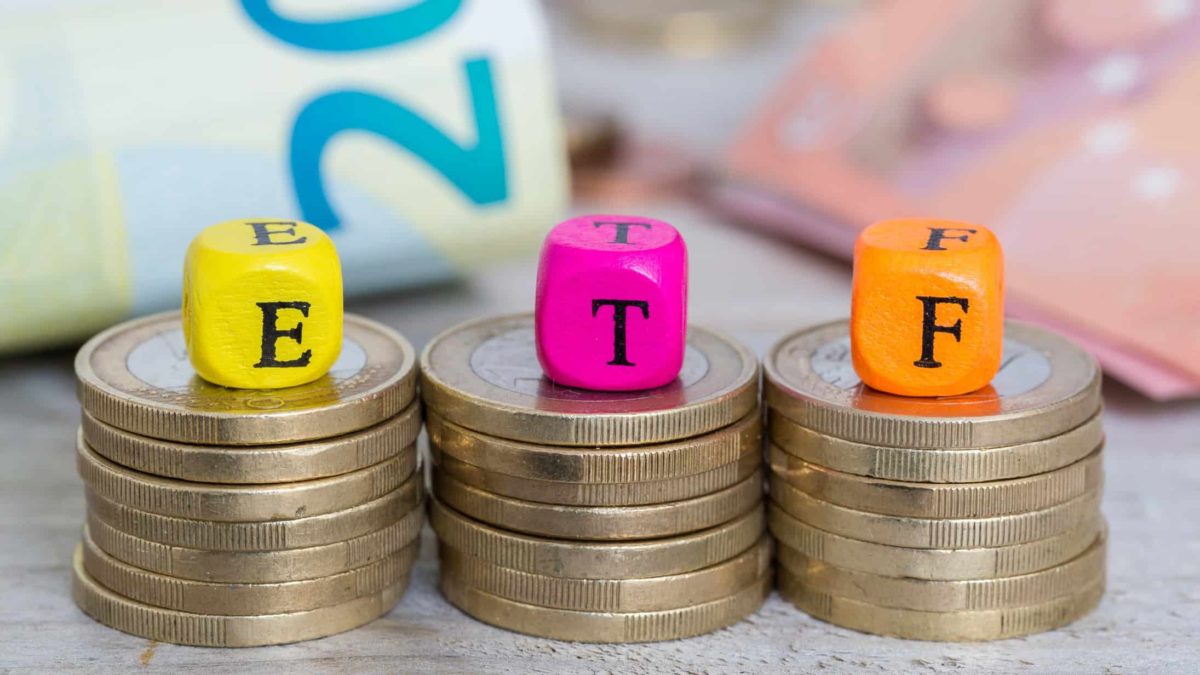
    ETF written on cubes sitting on piles of coins.

    The Vanguard Australian Shares Index ETF (ASX: VAS) is a very popular exchange-traded fund (ETF) on the ASX, with $15 billion in funds under management (FUM). But being large is one thing, how it has performed is a completely different matter.

    Vanguard aims to provide investors with access to share markets at a very low cost. The investors are the owners of Vanguard itself, and the provider shares its profit with investors by keeping the fees as low as possible.

    ETFs can be an effective way to invest and help diversify against risks. On Vanguard’s website, it says:

    Rather than trying to pick the winning investment each year, spreading your investments across a wide variety of assets will help reduce the risk of loss. Investors who are well diversified tend to enjoy a smoother investment ride over the long term.

    Let’s look at how good the VAS ETF returns have been.

    Adequate long-term returns

    Every month, Vanguard informs investors how the Vanguard Australian Shares Index ETF has performed over time.

    As of 31 May 2024, the VAS ETF has delivered an average net return of:

    • 8.98% per annum since its inception in May 2009
    • 7.72% per annum over the prior decade
    • 7.81% per annum over the last five years
    • 6.54% per annum over the last three years

    These are not bad returns, but not Earth-shattering either.

    It’s interesting to note that in each time period I mentioned, the distribution element of the return from the ASX ETF made up most of the net return, highlighting that dividends are an important part of ASX returns.

    In the last 12 months, the VAS ETF has delivered a net return of 12.81% thanks to the rise in the S&P/ASX 300 Index (ASX: XKO).

    What is the VAS ETF invested in?

    The performance of the underlying holdings decides the returns of an ETF.

    Unsurprisingly, ASX financial shares (29.7%) and ASX mining shares (22.7%) still make up more than half of the ASX ETF’s total portfolio.

    The top ten positions in the portfolio are some of Australia’s strongest businesses:

    Consider other ASX ETFs for additional diversification

    The ASX only makes up a very small percentage of the global share market, so it could be wise to diversify with other ETFs that provide exposure to international stocks.  

    For example, the Vanguard MSCI International Shares Index ETF (ASX: VGS) invests in more than 1,300 businesses in ‘developed’ countries worldwide. Since its inception in November 2014, the VGS ETF has delivered an average annual return of 12.8% thanks to its exposure to numerous growing businesses. This sort of investment could work well if mixed with the VAS ETF.

    The post What is the average return of the Vanguard Australian Shares Index ETF (VAS)? appeared first on The Motley Fool Australia.

    Should you invest $1,000 in Vanguard Australian Shares Index Etf right now?

    Before you buy Vanguard Australian Shares Index Etf shares, consider this:

    Motley Fool investing expert Scott Phillips just revealed what he believes are the 5 best stocks for investors to buy right now… and Vanguard Australian Shares Index Etf wasn’t one of them.

    The online investing service he’s run for over a decade, Motley Fool Share Advisor, has provided thousands of paying members with stock picks that have doubled, tripled or even more.*

    And right now, Scott thinks there are 5 stocks that may be better buys…

    See The 5 Stocks
    *Returns as of 24 June 2024

    More reading

    Motley Fool contributor Tristan Harrison has no position in any of the stocks mentioned. The Motley Fool Australia’s parent company Motley Fool Holdings Inc. has positions in and has recommended CSL, Goodman Group, Macquarie Group, and Wesfarmers. The Motley Fool Australia has positions in and has recommended Macquarie Group and Wesfarmers. The Motley Fool Australia has recommended CSL, Goodman Group, and Vanguard Msci Index International Shares ETF. The Motley Fool has a disclosure policy. This article contains general investment advice only (under AFSL 400691). Authorised by Scott Phillips.

  • An expat couple retired at 50. Now, they split their time between continents and pursue hobbies like a second career.

    Ruth Ang
    Ruth Ang and her partner after a cycling session.

    • Ruth Ang and Luc Maurice retired early by investing in real estate for passive income.
    • Originally from Singapore and Canada, they built their careers in Shanghai before retiring.
    • They now manage their finances with mutual funds and split time between Phuket and Canada.

    Ruth Ang was 30 when she met her now-partner Luc Maurice on a plane from Phuket to Bangkok.

    Ang is originally from Singapore, and Maurice is from Canada, but after about a year of long-distance dating, they decided to start living together in China in their early 30s.

    They grew their careers in Shanghai — advertising for Ang and IT consulting for Maurice — but slowly realized they wanted more freedom with their time.

    "I had a strong calling that I need my time back," Ang told Business Insider. "In order for me to do that, I must have a cushion or a comfort."

    So, for the next decade and a half, the two built their nest egg.

    "We live hard and play so hard. So the money has to work just as hard," Ang said about passive income that could help them leave the corporate world early.

    Their solution was real estate.

    The couple retired in 2016, when Ang was 48, and her partner was 50. Today, they split their time between Phuket and Canada, pursuing a variety of hobbies.

    Investing strategy

    For Ang, investing looked different at each stage of her life.

    In her 20s, she left Singapore to pursue a career in a bigger market. She moved to China, then London, and New York with the idea of "investing" in herself and building a strong résumé.

    Ruth Ang
    Ruth Ang is from Singapore but lived around the world before settling in Thailand.

    Having a strong portfolio meant that she was earning six figures in her late 30s and 40s, which gave her and Maurice, who was also making six figures, a solid base to start buying properties without mortgages.

    "I never had debts," she said.

    She said that they were careful never to buy properties that their salaries could not cover, which could lead to real estate becoming a liability instead of an asset.

    The couple bought, renovated, and sold five properties in China and South Africa over a decade. It helped them hit their Financial Independence Retire Early or "FIRE number" — the amount of money that made them feel comfortable to retire.

    They quit their jobs in 2016 and moved from Shanghai to Phuket, Thailand.

    Seven years into retirement, in 2022, they left their real estate strategy for a new one.

    "As we get older, we don't want to go and spend a lot of time fixing up homes," Ang said. "We decided to be even more liquid" and put the money they made from their properties toward mutual funds.

    Budget split

    Ang and Maurice split their finances in a simple way.

    They allocate about 40% of their annual budget to expenses in their home base, Phuket. The rest is spent on travel, to Canada and other destinations.

    The couple spends October to March in Phuket, then they head to South Africa or Europe in April, when Thailand heats up. They usually spend June to October in Quebec, Canada.

    Ang said that not having children has also made hitting their financial independence goals easier.

    Serious hobbies

    Nine years into retirement, Ang said that the days still pass by quickly and they don't get bored.

    "Truthfully the angst is increasing: Feeling how fast time flies by and we only have achieved that much, traveled that much, explored that much," she said.

    This is because both of them pursue hobbies like a "second career."

    "A hobby I take up quite intensely is actually literature — both reading and research." She is also considering taking up writing.

    Maurice focuses on sports.

    Luc TK on a cycling trip in Thailand.
    Luc TK on a cycling trip in Thailand.

    "Luc spends a minimum 20 hours a week following an Ironman coaching program in Phuket. They train a full year, slowing down May to July," Ang said. He also participates in competitive ocean swims.

    They both enjoy golf, and they've played in southern Spain, South Africa, and the western US.

    Their recent non-golf trips include a trip to Turin, Italy and a safari in South Africa. They are spending the summer this year in Quebec.

    Are you part of the FIRE community in Asia or Europe? If you've got a story to share, get in touch with this reporter: shubhangigoel@businessinsider.com

    Read the original article on Business Insider