• If you speed in Austria, the government can now confiscate your car and sell it

    Cars drive just before the Brenner Pass over the Europabrücke bridge towards Italy.
    Cars drive just before the Brenner Pass over the Europabrücke bridge towards Italy.

    • Traffic deaths have spiked in certain places around the world in recent years. 
    • Austria is trying to do something about it, recently passing a law to deter 'super speeders.'
    • European countries tend to have stricter traffic rules and, as a result, safer roads.

    The Austrian government is cracking down on "super speeders" on its roads in an effort to boost safety.

    A new law allows the government to confiscate — and even sell — the vehicles of those who drive 60 kilometers per hour (about 37 mph) or more over the speed limit.

    Like the US, Austria has seen a recent uptick in road deaths. But roads are far safer in the European nation than in the US, which has far deadlier roads than other rich countries. The US has seen road deaths spike recently — in 2021, traffic fatalities hit a 16-year high, and in 2023, deaths were 13.6% higher than in 2019.

    Austria's director general of transportation, Vera Hofbauer, told Bloomberg News that the new law hasn't been on the books for long enough to measure its impact, but it's already being felt. Just hours after the law went into effect, the government confiscated the car of a super speeder, she said.

    Austria experienced 4.1 road deaths for every 100,000 people in 2022. Hofbauer argued that "drastic measures" must be taken to stop drivers who "are using their car like a weapon."

    Austrian officials aren't alone in cracking down on dangerous driving. A slew of European countries have implemented the world's strictest road safety regulations. In several countries, speeding tickets are calculated based on the driver's income, so the wealthier the driver is, the steeper the fine.

    In Switzerland, speeding tickets have been calculated based on both income and wealth since 2007, when voters decided to crack down on wealthy speeders. One driver was fined more than $1 million in 2010 for driving his Mercedes sports car about 180 mph in a 75 mph zone.

    Last year in Finland, a multimillionaire was slapped with a €121,000 ticket — about $130,000 — for going about 18 miles per hour above the speed limit in a 50 kph (31 mph) zone.

    The European Union is also cracking down. In 2022, the European Commission mandated that beginning in 2024, all new cars have technology that alerts drivers when they exceed the speed limit. The measure is predicted to cut road deaths by 20%.

    The laws seem to be working: countries that have imposed the strictest road rules also have the safest roads. Switzerland has about 2.6 road deaths per 100,000 people each year — among the lowest in the world — and its fatalities have fallen faster than the EU average over the last decade. By comparison, the US road death rate was 12.8 per 100,000 in 2022.

    "Sometimes you have to try measures which sound strange at first, and which create new legal questions that you must answer," Hofbauer told Bloomberg. "But I think we should try everything we can to reduce crashes."

    Read the original article on Business Insider
  • Why these 5 ASX ETFs could be quality options for investors

    ETF written with a blue digital background.

    Are you looking to make some changes to your portfolio? If you are, then it could be worth checking out exchange traded funds (ETFs). But which ones could be buys?

    Five highly rated ASX ETFs to consider buying right now are listed below. Here’s what you need to know about them:

    BetaShares Global Cybersecurity ETF (ASX: HACK)

    The first ASX ETF for investors to consider buying is the BetaShares Global Cybersecurity ETF. This ETF provides investors with access to the cybersecurity sector, which has been tipped to grow strongly over the coming decades as cybercrime becomes even more prevalent. This bodes well for the companies included in the fund, such as Accenture and Palo Alto Networks.

    Betashares Global Quality Leaders ETF (ASX: QLTY)

    A second ASX ETF to look at is the Betashares Global Quality Leaders ETF. It could be another good option for investors and was recommended by the fund manager’s chief economist, David Bassanese, last year. This ETF is focused on approximately 150 global companies that rank highly on four quality metrics. This ensures that you are buying a slice of the very best companies that the world has to offer.

    Betashares Global Uranium ETF (ASX: URNM)

    Another ASX ETF for investors to look at is the Betashares Global Uranium ETF. This ETF aims to track the performance of an index that provides exposure to a portfolio of leading companies in the global uranium industry. These companies look well-placed for growth over the next decade thanks to strong demand for uranium for use in nuclear power and weak supply of the chemical element. Among its holdings are locally listed uranium shares Boss Energy Ltd (ASX: BOE) and Paladin Energy Ltd (ASX: PDN).

    VanEck Vectors Video Gaming and eSports ETF (ASX: ESPO)

    A fourth ASX ETF for investors to consider buying is the VanEck Vectors Video Gaming and eSports ETF. It gives investors access to the leading players in a global video game market estimated to comprise almost 3 billion active gamers and growing. Among its largest holdings are game developers such as Electronic Arts, Roblox, and Take-Two.

    Vanguard MSCI Index International Shares ETF (ASX: VGS)

    A final ASX ETF that could be a great option for investors is the Vanguard MSCI Index International Shares ETF. This ETF provides investors with access to approximately 1,500 of the world’s largest listed companies from major developed countries. Vanguard highlights that this gives investors low-cost exposure to a broadly diversified range of stocks that allow them to participate in the long-term growth potential of international economies. Among its holdings are companies from countries including the US, Japan, UK, France, Canada, and the Netherlands.

    The post Why these 5 ASX ETFs could be quality options for investors appeared first on The Motley Fool Australia.

    Wondering where you should invest $1,000 right now?

    When investing expert Scott Phillips has a stock tip, it can pay to listen. After all, the flagship Motley Fool Share Advisor newsletter he has run for over ten years has provided thousands of paying members with stock picks that have doubled, tripled or even more.*

    Scott just revealed what he believes could be the ‘five best ASX stocks’ for investors to buy right now. We believe these stocks are trading at attractive prices and Scott thinks they could be great buys right now…

    See The 5 Stocks
    *Returns as of 5 May 2024

    More reading

    Motley Fool contributor James Mickleboro has no position in any of the stocks mentioned. The Motley Fool Australia’s parent company Motley Fool Holdings Inc. has positions in and has recommended Accenture Plc, BetaShares Global Cybersecurity ETF, Palo Alto Networks, Roblox, and Take-Two Interactive Software. The Motley Fool Australia’s parent company Motley Fool Holdings Inc. has recommended Electronic Arts and has recommended the following options: long January 2025 $290 calls on Accenture Plc and short January 2025 $310 calls on Accenture Plc. The Motley Fool Australia has positions in and has recommended BetaShares Global Cybersecurity ETF. The Motley Fool Australia has recommended Betashares Global Uranium Etf and Vanguard Msci Index International Shares ETF. The Motley Fool has a disclosure policy. This article contains general investment advice only (under AFSL 400691). Authorised by Scott Phillips.

  • Congress weighs adding women to the US military draft

    us woman in military
    Amid US military recruiting challenges, Congress is debating whether to require some US women to register for the draft.

    • Congress is debating reforms to the military draft system.
    • A Senate proposal — if it became law — would force some women to register for the draft. 
    • US military recruitment fell short by 41,000 recruits in 2023, reflecting ongoing challenges.

    The US military is having a harder time getting Americans to join the armed forces, so Congress is weighing some options — including making women eligible for the draft.

    On June 14, the House of Representatives passed an annual defense policy bill that contained a bipartisan proposal to expand the maximum age of the draft — which the US last used in 1973 to bring men into the armed forces during the Vietnam War era — from 25 to 26. Currently, most US men between the ages of 18 and 25 are required to register with the Selective Service.

    The same day, the Senate approved a bill that — if it became law— would force women to register for the draft.

    The House and Senate proposals have little chance of becoming law, in part because some Republicans aren't on board, The New York Times reported. But as the US military continues to face recruitment challenges — and geopolitical risks persist across the globe — Congress could continue to weigh reforms to the US draft system, in addition to other changes that could boost the number of active service members.

    In 2023, the US military collectively fell short of its recruiting goals by roughly 41,000 recruits. A Pew Research poll conducted in January found that 43% of US adults between the ages of 18 and 29 had a positive view of the US military.

    The congressional debate about whether women should be included in the draft dates back to at least 2020, when a group of military experts recommended that Congress enact this measure. The debate comes as the US military has taken some steps over the past decade to improve equality in the armed forces. As of 2016, women have been able to hold every military position.

    Not everyone in Congress is on board with the proposal to include women in the draft.

    "We need to get reality back in check here," Missouri Sen. Josh Hawley, a Republican, said on Fox News. "There shouldn't be women in the draft. They shouldn't be forced to serve if they don't want to."

    Read the original article on Business Insider
  • Why this ASX mining stock just got a huge broker upgrade

    A mining employee in a white hard hat cheers with fists pumped as the Hot Chili share price rises higher today

    WA1 Resources Ltd (ASX: WA1) shares were on fire on Wednesday.

    The ASX mining stock rocketed 27% to $20.69.

    This latest gain means that the niobium explorer’s shares are up 283% since this time last year.

    But if you thought the gains were over, think again. That’s because analysts at Bell Potter have just put out a very bullish broker note.

    What’s going on with this ASX mining stock?

    Investors were scrambling to buy the ASX mining stock yesterday following the release of results from its initial metallurgical testwork program on niobium mineralisation at the Luni deposit of the 100% owned West Arunta Project.

    As you might have guessed from the share price reaction, the program delivered strong results. It produced high-grade niobium concentrates with low impurities and at industry-comparable recovery rates through a practical two stage flotation regime.

    WA1 Resources’ managing director, Paul Savich, commented:

    We consider this an excellent outcome towards unlocking the significant inherent strategic value of Luni. Flotation of niobium minerals is widely recognised as the key challenge to developing a conventional process flowsheet for a niobium deposit.

    Broker response

    Bell Potter was very pleased with the news and described it as a major de-risking event. It commented:

    WA1 have passed a significant de-risking hurdle in confirming that niobium minerals from its Luni project can be concentrated via a two-stage floatation circuit with recoveries and concentrate grades in-line with dominant global producers.

    This is important for two reasons; 1) niobium recovery is difficult, with typically low recoveries (as low as 30%) making most projects uneconomic and 2) we held the view that recoveries through to an end product would range between 40-45%. The fact they have exceeded that in a first pass is positive, with pathways for optimisation (eg introducing magnetic separation) providing a material value uplift.

    Big returns still possible

    In response, the broker has reaffirmed its speculative buy rating and upgraded its price target by almost 59% to $28.00 (from $17.65). Based on its current share price, this implies potential upside of 35% for this ASX mining stock over the next 12 months.

    Bell Potter concludes:

    We increase our valuation for WA1 to $28.00/sh (previously $17.65/sh) and maintain Our Speculative Buy recommendation. Our valuation for WA1 is based on a notional development scenario (NDS) for the Luni prospect. We then apply a 40% risk discount to account for the early stage of the project.

    We see the potential for Luni to be a globally significant niobium project, capable of generating on average A$514m in annual EBITDA. Using Lynas (LYC, Buy TP $7.55/sh) as a comp, which trades on a 10.9x EV/EBITDA multiple, yields an enterprise value of A$5.6bn for WA1.

    The post Why this ASX mining stock just got a huge broker upgrade appeared first on The Motley Fool Australia.

    Wondering where you should invest $1,000 right now?

    When investing expert Scott Phillips has a stock tip, it can pay to listen. After all, the flagship Motley Fool Share Advisor newsletter he has run for over ten years has provided thousands of paying members with stock picks that have doubled, tripled or even more.*

    Scott just revealed what he believes could be the ‘five best ASX stocks’ for investors to buy right now. We believe these stocks are trading at attractive prices and Scott thinks they could be great buys right now…

    See The 5 Stocks
    *Returns as of 5 May 2024

    More reading

    Motley Fool contributor James Mickleboro has no position in any of the stocks mentioned. The Motley Fool Australia’s parent company Motley Fool Holdings Inc. has no position in any of the stocks mentioned. The Motley Fool Australia has no position in any of the stocks mentioned. The Motley Fool has a disclosure policy. This article contains general investment advice only (under AFSL 400691). Authorised by Scott Phillips.

  • Is Nvidia stock going to $200 in the wake of its 10-for-1 stock split?

    A beautiful ocean vista is shown with a woman whose back is to the camera holding her arms up in triumph as she stands at the top of a rock feeling thrilled that ASX 200 shares are reaching multi-year high prices today

    This article was originally published on Fool.com. All figures quoted in US dollars unless otherwise stated.

    It’s impossible to ignore the effect artificial intelligence (AI) has had on the technology landscape over the past year or so, and Nvidia (NASDAQ: NVDA) has been the standard bearer. The company’s chips are at the heart of the AI revolution, providing the computational horsepower that makes it all possible. This, in turn, has sent the stock soaring, up 215% over the past year. These gains led to Nvidia’s high-profile 10-for-1 stock split, which was completed just last week.

    After the stock’s epic run to a $3 trillion market cap, Wall Street is reevaluating Nvidia’s future prospects. There’s a new price target from one analyst that should be of particular interest to shareholders.

     Next stop: $5 trillion?

    Rosenblatt Securities analyst Hans Mosesmann reiterated his buy rating on Nvidia stock and increased his price to $200. That represents potential upside for investors of 53% compared to Monday’s closing price, and would push Nvidia’s market cap within striking distance of $5 trillion. One aspect of Nvidia’s business that’s being overlooked by investors is the software side. “The real narrative lies in the software that complements all the hardware goodness,” the analyst wrote.

    He went on to suggest that demand for software will increase over the course of “the next decade in terms of overall sales mix.”

    I think the analyst hit the nail on the head. Nvidia’s edge lies not only in the hardware but also in the associated software that helps provide peak performance. Cathie Wood of Ark Invest estimates that the total addressable market for AI software could be worth $13 trillion by 2030, helping illustrate the magnitude of the opportunity ahead.

    Furthermore, Nvidia will begin shipping its next-generation Blackwell processors later this year, which will cement the company’s increasing lead in the AI chip space.

    Nvidia’s stock is currently selling for 51 times forward earnings. While that’s a premium valuation, it’s an attractive price for a stock that has generated gains of 27,450% over the past 10 years.

    There’s a long runway ahead, which is why Nvidia stock is a buy.

    This article was originally published on Fool.com. All figures quoted in US dollars unless otherwise stated.

    The post Is Nvidia stock going to $200 in the wake of its 10-for-1 stock split? appeared first on The Motley Fool Australia.

    Wondering where you should invest $1,000 right now?

    When investing expert Scott Phillips has a stock tip, it can pay to listen. After all, the flagship Motley Fool Share Advisor newsletter he has run for over ten years has provided thousands of paying members with stock picks that have doubled, tripled or even more.*

    Scott just revealed what he believes could be the ‘five best ASX stocks’ for investors to buy right now. We believe these stocks are trading at attractive prices and Scott thinks they could be great buys right now…

    See The 5 Stocks *Returns as of 5 May 2024

    More reading

    The Motley Fool Australia’s parent company Motley Fool Holdings Inc. has positions in and has recommended Nvidia. Danny Vena has positions in Nvidia. The Motley Fool Australia has recommended Nvidia. The Motley Fool has a disclosure policy. This article contains general investment advice only (under AFSL 400691). Authorised by Scott Phillips.

  • A top VC predicts the industry is heading for a massive and enduring contraction

    Scott Stanford, ACME Capital's cofounder.
    Scott Stanford, ACME Capital's cofounder, believes major changes are coming for the VC industry.

    • The venture capital industry could face a big contraction in the near future.
    • Thats's according to Scott Stanford, cofounder and partner at ACME Capital, an early-stage VC firm.
    • Half of today's VC firms will shutter in the next decade, he told BI.

    It's no secret: Venture capitalists are hurting.

    A slowdown in VC deal activity, which started in late 2022, has continued into the first quarter of this year, accounting and advisory firm EisnerAmper wrote in an analysis published on June 16.

    You've heard this story before: inflation, interest rate uncertainty, and low M&A volume are having chilling effects on the investing environment.

    Venture capital has cyclical fluctuations, but Scott Stanford, a cofounder and partner at ACME Capital, an early-stage VC firm, thinks something more meaningful is underway.

    "It's not crazy to think half the VC firms that were actively investing in the last decade will be sidelined and eventually collapse," he wrote in an email to BI.

    The first wave will die off in the next five years. Ten years from now, the damage will be evident, he said.

    Some simple back-of-the-napkin math paints a grim picture.

    In a chart compiled by Stanford and shared with BI, by 1990, there were 300 VC firms overseeing $17 billion in assets. Over the last two decades, those numbers went through the roof. Now, there are 3,000 VC firms overseeing $1.2 trillion.

    By contrast, the increase in exits is modest at best. By 1990, VC-backed IPOs totaled $12.7 billion. By 2021, that increased to $60.1 billion. And it's a similar story with VC-backed M&A deals.

    The venture industry got ahead of itself, in other words: The proliferation of firms and the money they're managing is not supported by the financial value they're creating.

    "As the venture capital industry matured over the past several decades, euphoric momentum investors, not technologists, drove the creation of funds and the deployment of capital, blind to the nuances and challenges of timing innovation cycles," Stanford and ACME cofounder Hany Nada told investors in a recent letter shared with BI.

    "Just as investors mistime specific investments or funds, the venture industry as a whole got as much as a decade or two ahead of reality, leading to an overcrowded, overcapitalized, and overvalued market," they added.

    VC backers have other options

    Other factors will serve to cull the herd in VC, per Stanford.

    Limited partners (LPs), or investors who put money into venture firms, have other options thanks to higher interest rates, Stanford added. Low-risk investments like investing in Treasury bonds, for one example, are commanding a decent return.

    Tech, meanwhile, is "no longer an elusive sprite commanding irrational M&A premiums or IPO exuberance," Stanford said.

    Once upon a time, a startup claiming they were a tech company somewhere in their pitch deck might command a billion-dollar valuation. That era is long gone.

    Finally, AI isn't necessarily the next panacea, Stanford said.

    The jury is out on whether it spawns the next generation of unicorns — when leaders like OpenAI are providing the tech openly, and anyone can use it to spin up decent products.

    All told, in this environment, investors without deep expertise, powerful networks, or mega-funds to deploy will be hard-pressed to raise money and build enduring franchises, Stanford said.

    "A VC without capital is like a tennis player without a racquet," he said. "They can give interviews and make headlines but they aren't invited on the court."

    The ACME Capital team.
    The ACME Capital team.

    VCs will have to take risks again

    Stanford believes today's challenges will give way to a new — or, rather, an old — era of VC investing.

    Tons of startups that went to market in the last handful of years had a similar strategy: Backed with millions in funding, they launched an app that was slightly better than someone else's.

    In the past, you could get away with making social features, apps, and incrementally better software in this fashion, Stanford said.

    Nowadays, incumbents can do all that themselves.

    So, investors that survive the contraction will have to back companies that are actually inventing things and therefore come with a sizable risk profile.

    When those companies get it right, they generate outsized returns. When they get it wrong, they go to zero.

    Maybe these VCs can be part of what Stanford describes as a renaissance of technology, "where systems work for us versus us working for them," he and Nada wrote to LPs.

    Read the original article on Business Insider
  • Katy Perry worked with Dr. Luke on her new album, despite Kesha’s allegations of sexual abuse

    katy perry dr luke
    Dr. Luke, Katy Perry, and Cirkut attend the 2014 Grammys.

    • Katy Perry worked with Dr. Luke to create her new album, a label source confirmed to Rolling Stone.
    • Dr. Luke coproduced many of Perry's early hits, but they haven't collaborated since 2013.
    • In 2014, Kesha sued Dr. Luke for sexual abuse. They reached a settlement last year.

    Katy Perry has teamed up with Dr. Luke to create her forthcoming album, reconnecting with the embattled pop producer for the first time in a decade.

    Perry launched her new era on Monday by announcing the album's lead single, "Woman's World." After sharing a snippet on TikTok, rumored song credits began circulating on social media, which listed Dr. Luke as a producer.

    Rolling Stone confirmed his reunion with Perry on Wednesday, citing a source from Perry's label, Capitol Records.

    https://platform.twitter.com/widgets.js

    "Katy knew exactly the album she wanted to make and put together the team to make it happen," the source said. "And that includes previous collaborators including Luke, Stargate, Max Martin, and Sarah Hudson."

    Dr. Luke, born Lukasz Gottwald, coproduced many of Perry's early hits, including diamond-certified tracks like "California Gurls," "Roar," and "Dark Horse."

    However, Perry seemed to sever ties with Gottwald after she released "Prism," her third album with Capitol, in 2013.

    The following year, Perry's former friend and fellow pop star Kesha filed a lawsuit against Gottwald, her former mentor, alleging a decadelong period of sexual, physical, and emotional abuse. Kesha said Gottwald had drugged her, raped her, and subjected her to psychological torment while she was signed to his label, Kemosabe Records, causing her to starve herself. "I tried to and almost killed myself in the process," she told The New York Times.

    Gottwald denied all of Kesha's claims and countersued for defamation.

    Over the course of their lengthy court battle, Perry's name was dragged into the mix. Texts between Kesha and Lady Gaga revealed that Kesha had called Perry "mean" and believed that she, too, had been "raped by the same man," meaning Gottwald. Perry testified that this wasn't true. She also said she felt "pressured" to support Kesha amid the legal battle, but preferred to stay out of it.

    Meanwhile, Perry released her fourth album with Capitol, "Witness," in 2017 and her fifth, "Smile," in 2020. Neither included production credits from Gottwald.

    In 2021, unsealed court records showed that Gottwald asked to testify about losing business opportunities as a result of Kesha's accusations — namely, high-profile pop collaborations worth about $46 million in lost income. He estimated that $11.65 million of that sum would've come from working with Perry specifically.

    Kesha and Gottwald reached an undisclosed settlement last year, though Kesha has never walked back her allegations.

    In fact, Kesha seemed to react to Perry's announcement on Monday, posting a message on X that simply reads, "lol."

    But Perry's rollout of "Woman's World" has been met with far more explicit backlash from fans.

    Despite Gottwald's lost revenue estimates, he has found steady work with pop stars since Kesha's allegations went public, producing multiple top-10 hits like Doja Cat's "Say So," Latto's "Big Energy," and Nicki Minaj's "Super Freaky Girl." Still, many of Perry's followers were shocked to learn of their collaboration, flooding social media with disappointed and angry messages.

    https://platform.twitter.com/widgets.js

    A representative for Perry did not immediately respond to a request for comment from Business Insider.

    Read the original article on Business Insider
  • Own Woodside shares? Here’s how much your company paid in Aussie taxes in 2023

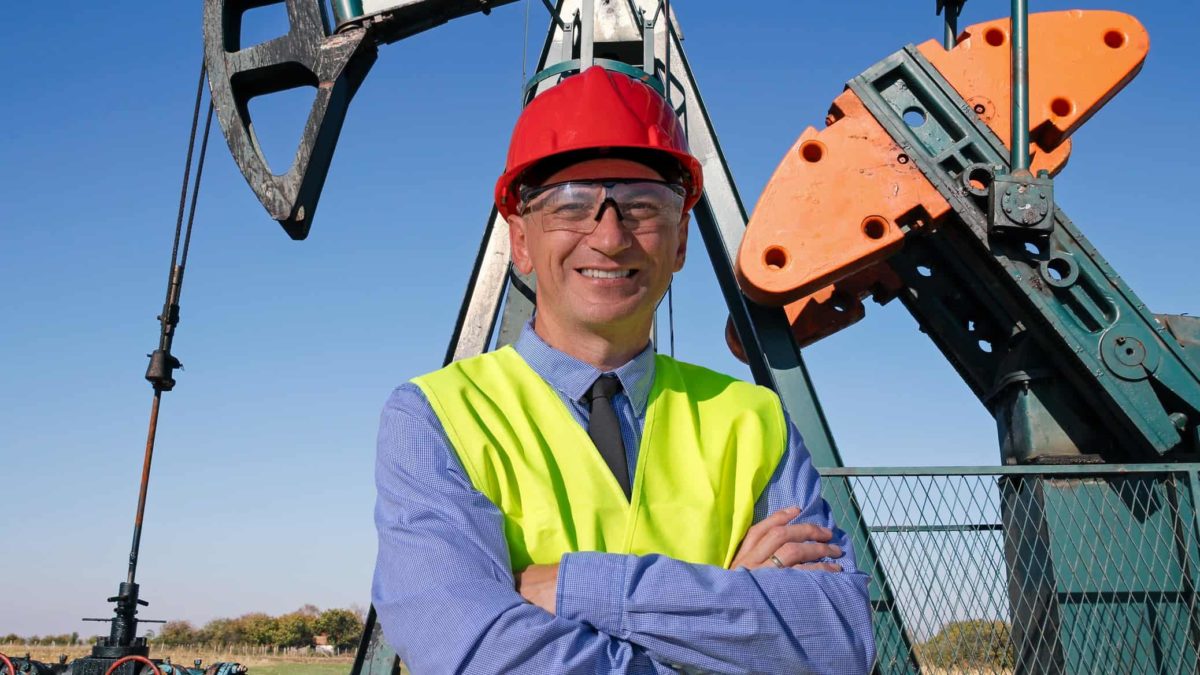
    An oil refinery worker stands in front of an oil rig with his arms crossed and a smile on his face as the Woodside share price climbs today

    Owners of Woodside Energy Group Ltd (ASX: WDS) shares may like to know how much their company has contributed to Australia’s finances.

    As a major commodity business, Woodside is obliged to pay taxes and royalties to state and national governments. Woodside chief financial officer Graham Tiver had this to say:

    We are steadfast in our belief that governments and local communities should receive a fair return for the finite resources we extract. A balanced appreciation of this protects energy security and local jobs, as well as encouraging the future investment required to support the energy transition.

    We believe in paying tax where value is created and applying arm’s length principles to our international related party dealings. We do not support the use of artificial arrangements or the transfer of value to low tax or so-called tax haven jurisdictions.

    Australian government payments

    Woodside’s total payments to governments around the world totalled US$3.7 billion in 2023, which was a record for Woodside. This was mostly driven by “earlier commodity price highs”, which also helped propel the Woodside share price above $38.

    The ASX oil and gas share is one of the largest taxpayers in Australia. This is where its headquarters and the majority of its core producing assets are located.

    In Australia, it paid a total of US$3.25 billion to governments. Of that total, Woodside paid $2.91 billion to the Australian Taxation Office, and $325 million was paid in royalties, split between the WA state government and the federal government. It also paid $12 million in various fees to different Australian departments and authorities.

    Woodside noted the company expected its growth projects to “support energy security and prosperity for decades to come”. For example, the energy share expects its Scarborough energy project in Western Australia to generate “tens of billions of dollars in Australian taxes and thousands of local jobs”.

    Payments to other countries

    The rest of the world received close to US$500 million in payments from Woodside.

    The company paid the United States US$350.3 million, Trinidad and Tobago US$135.5 million, and Mexico US$3.6 million. Canada received US$0.4 million, and Timor-Leste US$0.3 million.

    Woodside share price snapshot

    Since the start of 2024, the Woodside share price has fallen by 13.29%. The S&P/ASX 200 Index (ASX: XJO) has lifted almost 2% in 2024 so far, meaning the company has significantly underperformed the index.

    The post Own Woodside shares? Here’s how much your company paid in Aussie taxes in 2023 appeared first on The Motley Fool Australia.

    Wondering where you should invest $1,000 right now?

    When investing expert Scott Phillips has a stock tip, it can pay to listen. After all, the flagship Motley Fool Share Advisor newsletter he has run for over ten years has provided thousands of paying members with stock picks that have doubled, tripled or even more.*

    Scott just revealed what he believes could be the ‘five best ASX stocks’ for investors to buy right now. We believe these stocks are trading at attractive prices and Scott thinks they could be great buys right now…

    See The 5 Stocks
    *Returns as of 5 May 2024

    More reading

    Motley Fool contributor Tristan Harrison has no position in any of the stocks mentioned. The Motley Fool Australia’s parent company Motley Fool Holdings Inc. has no position in any of the stocks mentioned. The Motley Fool Australia has no position in any of the stocks mentioned. The Motley Fool has a disclosure policy. This article contains general investment advice only (under AFSL 400691). Authorised by Scott Phillips.

  • 3 excellent ASX dividend shares to buy now

    There are plenty of ASX dividend shares out there for investors to choose from, but which ones could be in the buy zone right now?

    Three that analysts have recently named as buys are listed below. Here’s what they are saying about them and the dividend yields they are forecasting in the near term:

    Endeavour Group Ltd (ASX: EDV)

    Goldman Sachs thinks that Endeavour Group could be a great ASX dividend share to buy. It is the leading company in alcohol retail and the owner of BWS and Dan Murphy’s.

    The broker likes its market leadership position and the defensive nature of the alcohol retail market.

    As for dividends, Goldman is forecasting fully franked dividends of approximately 22 cents per share in both FY 2024 and FY 2025. Based on the current Endeavour share price of $5.08, this will mean dividend yields of 4.3% for both years.

    Another positive is that the broker sees plenty of upside for its shares at current levels. It currently has a buy rating and $6.20 price target on them.

    Inghams Group Ltd (ASX: ING)

    Analysts at Morgans think that Inghams could be an ASX dividend share to buy. It is Australia’s leading poultry producer and supplier.

    The broker is feeling bullish on the company due to its market leadership position, favourable consumer trends, and valuation. It has described Ingham’s shares as “undervalued” at current levels.

    Morgans is also expecting some good dividend yields in the near term. It is forecasting fully franked dividends of 22 cents per share in FY 2024 and then 23 cents per share in FY 2025. Based on the current Inghams share price of $3.55, this equates to dividend yields of 6.2% and 6.5%, respectively.

    Morgans has an add rating and $4.40 price target on its shares.

    Suncorp Group Ltd (ASX: SUN)

    Over at Goldman Sachs, its analysts also think that Suncorp could be a top ASX dividend share to buy. It is one of Australia’s largest insurance companies.

    Goldman believes that Suncorp is well-placed to benefit from tailwinds in the general insurance market.

    The broker expects this to support the payment of fully franked dividends per share of 78 cents in FY 2024 and then 83 cents in FY 2025. Based on the current Suncorp share price of $16.51, this will mean dividend yields of 4.7% and 5%, respectively.

    Goldman has a buy rating and $17.54 price target on the company’s shares.

    The post 3 excellent ASX dividend shares to buy now appeared first on The Motley Fool Australia.

    Wondering where you should invest $1,000 right now?

    When investing expert Scott Phillips has a stock tip, it can pay to listen. After all, the flagship Motley Fool Share Advisor newsletter he has run for over ten years has provided thousands of paying members with stock picks that have doubled, tripled or even more.*

    Scott just revealed what he believes could be the ‘five best ASX stocks’ for investors to buy right now. We believe these stocks are trading at attractive prices and Scott thinks they could be great buys right now…

    See The 5 Stocks
    *Returns as of 5 May 2024

    More reading

    Motley Fool contributor James Mickleboro has positions in Endeavour Group. The Motley Fool Australia’s parent company Motley Fool Holdings Inc. has positions in and has recommended Goldman Sachs Group. The Motley Fool Australia has no position in any of the stocks mentioned. The Motley Fool has a disclosure policy. This article contains general investment advice only (under AFSL 400691). Authorised by Scott Phillips.

  • Bull market buys: 1 magnificent ASX stock to own for the long run

    two doctors smile as they sit together at a desk looking at a patient's Xray.

    I agree that Pro Medicus Ltd (ASX: PME) shares are expensive, trading at a triple-digit earning multiple.

    In an ideal world of investing, we all want to find high-quality companies trading at cheap multiples. But with so many eyes on the same pool of companies, it’s often easier said than done.

    If I had to choose between a cheap, mediocre company and a great growth company trading at high valuation multiples, I’d always go for the latter.

    As Charlie Munger — the late business partner of Warren Buffett — said, it’s far better to buy a wonderful company at a fair price than a fair company at a wonderful price.

    Investing in these high-quality companies can pay off in the long run, even if it means paying a premium today.

    Excellent business model

    Pro Medicus provides advanced medical imaging software and services globally, especially doing well in the United States.

    When you visit a doctor for issues like bone fractures or persistent headaches, there’s a good chance you’ll need medical imaging for an accurate diagnosis. Post-pandemic medical imaging has swiftly transitioned to digital methods, eliminating the need to carry physical X-ray or ultrasound films.

    This digital shift enhances efficiency and accessibility, underscoring the importance of companies like Pro Medicus in modern healthcare.

    Pro Medicus generates revenue from subscription fees as well as a small fee charged per each medical imaging done on its platform. To be specific, the revenue is based on a software-as-a-service model using transaction minimums. And there’s further upside as client examination volumes grow over time. This is a great scalability.

    In 1H FY24, its revenue grew 30% to $74.1 million, with an operating margin of 66%. Its net profit after tax was up 33% to $36.3 million.

    The company is debt-free due to its strong operating cash flows and requires little capital investment to operate.

    It ticks other investment considerations like a high insider ownership of approximately 52% and a high return on investment of 50%.

    Expensive, for now

    The Pro Medicus shares aren’t cheap however you cut it. Using estimates by S&P Capital IQ, the shares are trading at:

    • Price-to-earnings (P/E) multiple of 175x on FY24 earnings estimates
    • P/E ratio of 134x on FY25 earnings estimates
    • P/E ratio of 105x on FY26 earnings estimates
    • Enterprise value to revenue multiple of 67x on FY25 estimates
    • Free cash flow yield of 0.5%
    • Dividend yield of 0.26%

    But as you might have noticed, these earnings multiples rapidly reduce as we go out by a year. This is because of its healthy earnings growth.

    Should we wait for a better entry point?

    The Pro Medicus share price has nearly doubled in the past year, currently trading at $134.5. This might make you wonder if it’s better to wait for the share price to weaken before investing.

    I’m not completely against this idea, as events like another pandemic or economic downturns can impact the share market. The trouble is that it’s impossible to predict when they might happen, so they often surprise the market.

    Rather than waiting for the ideal moment, starting with a small investment now and gradually increasing it could be more beneficial in the long run, as any current price changes might appear minor in hindsight.

    The post Bull market buys: 1 magnificent ASX stock to own for the long run appeared first on The Motley Fool Australia.

    Wondering where you should invest $1,000 right now?

    When investing expert Scott Phillips has a stock tip, it can pay to listen. After all, the flagship Motley Fool Share Advisor newsletter he has run for over ten years has provided thousands of paying members with stock picks that have doubled, tripled or even more.*

    Scott just revealed what he believes could be the ‘five best ASX stocks’ for investors to buy right now. We believe these stocks are trading at attractive prices and Scott thinks they could be great buys right now…

    See The 5 Stocks
    *Returns as of 5 May 2024

    More reading

    Motley Fool contributor Kate Lee has no position in any of the stocks mentioned. The Motley Fool Australia’s parent company Motley Fool Holdings Inc. has positions in and has recommended Pro Medicus. The Motley Fool Australia has recommended Pro Medicus. The Motley Fool has a disclosure policy. This article contains general investment advice only (under AFSL 400691). Authorised by Scott Phillips.