
Tag: Stock pick

  • How to make $50,000 of passive income from ASX shares like CBA

    A woman wearing glasses and a black top smiles broadly as she stares at a money yarn full of coins.

    Commonwealth Bank of Australia (ASX: CBA) has long been one of the first names investors think about when it comes to ASX dividends.

    It is large, profitable, widely held, and has a long history of paying fully franked dividends.

    But how much would someone need invested in ASX shares like CBA to make $50,000 a year in passive income?

    Let’s take a look.

    Start with the income target

    A $50,000 annual passive income target works out to about $4,165 per month.

    That is a sizeable amount of money. It could help cover living costs, mortgage repayments, rent, insurance, holidays, or retirement spending.

    The amount needed to generate that income depends on one key number: the dividend yield.

    If a portfolio of ASX dividend shares produced an average yield of 3%, an investor would need around $1.67 million to generate $50,000 a year.

    At a 4% yield, the required portfolio falls to $1.25 million.

    At 5%, it would be $1 million, and at 6%, the portfolio would need to be around $833,000.

    That shows how the dividend yield can make a big difference.

    Why not just chase the highest yield?

    It is tempting to look at those numbers and aim for the highest dividend yield possible.

    But that can be a dangerous strategy.

    A very high yield can sometimes be a sign that the market expects the dividend to fall. After all, if it were guaranteed, investors would be piling all their money in, driving the share price higher and narrowing the yield on offer.

    A share yielding 8% today is not much help if the dividend is cut heavily next year.

    That is why shares like CBA often remain popular with income investors. The yield may not always be the highest on the ASX, but investors are also paying for scale, profitability, franking credits, and a long record of returning cash to shareholders.

    Building around CBA shares

    CBA shares could be part of a passive income portfolio, but they probably should not be the whole portfolio.

    Even a high-quality bank is still exposed to the housing market, credit growth, bad debts, interest margins, regulation, and the broader economy.

    A better approach could be to combine bank dividends with other types of income shares.

    That might include infrastructure shares such as Transurban Group (ASX: TCL), energy infrastructure through APA Group (ASX: APA), supermarkets such as Woolworths Group Ltd (ASX: WOW), or property income through listed real estate investment trusts like HomeCo Daily Needs REIT (ASX: HDN).

    This gives the income stream more ways to hold up if one sector has a difficult year.

    The real goal

    Making $50,000 a year from ASX dividends is possible, but it usually requires a sizeable portfolio and a sensible balance between yield and quality.

    A portfolio yielding 4% would need about $1.25 million. A portfolio yielding 5% would need about $1 million.

    Those numbers may look large, but they show the value of starting early and letting compounding do more of the work.

    For example, investing $1,000 a month into ASX shares and earning an average 10% annual return (not guaranteed but a fair target) would turn into approximately $1.25 million after 25 years.

    Shares like CBA can play an important role in that journey, but the best passive income portfolios are usually built on more than one dividend payer.

    The post How to make $50,000 of passive income from ASX shares like CBA appeared first on The Motley Fool Australia.

    Should you invest $1,000 in Apa Group right now?

    Before you buy Apa Group shares, consider this:

    Motley Fool investing expert Scott Phillips just revealed what he believes are the 5 best stocks for investors to buy right now… and Apa Group wasn’t one of them.

    The online investing service he’s run for over a decade, Motley Fool Share Advisor, has provided thousands of paying members with stock picks that have doubled, tripled or even more.*

    And right now, Scott thinks there are 5 stocks that may be better buys…

    * Returns as of 16 June 2026

    .custom-cta-button p {
    margin-bottom: 0 !important;
    }

    More reading

    Motley Fool contributor James Mickleboro has positions in Woolworths Group. The Motley Fool Australia’s parent company Motley Fool Holdings Inc. has positions in and has recommended Transurban Group. The Motley Fool Australia has positions in and has recommended Apa Group and Transurban Group. The Motley Fool Australia has recommended HomeCo Daily Needs REIT. The Motley Fool has a disclosure policy. This article contains general investment advice only (under AFSL 400691). Authorised by Scott Phillips.


  • How much superannuation do I need to retire comfortably at age 64?

    A happy couple looking at an iPad.

    Are you planning to retire at age 64? If so, do you know if you have enough superannuation to fund the comfortable lifestyle that you want?

    After all, at this age, retirement is very possible. At age 64, you’ve already passed the preservation age of 60. You’re also only one year from the average retirement age, and three years from potentially receiving the Age Pension payment.

    Let’s break down what a comfortable retirement looks like. Then dive into what it might cost you to retire comfortably at age 64. Then you can figure out if your super is on track.

    Here’s what a comfortable retirement looks like

    In Australia, retirement is generally split into two categories: a modest retirement and a comfortable one. 

    According to the Association of Superannuation Funds of Australia (ASFA), a comfortable retirement is defined as one that enables retirees to maintain a good standard of living well beyond the Age Pension. 

    It budgets for expenses including top-tier private health insurance, regular leisure activities and the occasional meal. It allocates funds for home repairs or renovations, and perhaps even an annual holiday.

    Meanwhile, a modest retirement is defined as being able to cover expenses just slightly above the full Centrelink Age Pension provisions from age 67. 

    How much will it cost me?

    In order to retire comfortably at age 67, ASFA estimates that you’ll need to allocate around $55,923 per year if you’re a single Australian living alone. A couple living together will need $78,566 per year.

    These figures also assume you’ll receive a part Age Pension. They also assume you own your home in full, and that you’ll be able to create and stick to your financial goal. 

    In order to fund this type of comfortable retirement, ASFA calculates that single Australians will need around $630,000 in their superannuation. Meanwhile, couples will need around $730,000.

    Obviously, the catch is, if you’re planning to retire three years earlier at age 64, these figures don’t quite work. You’ll need to allocate extra savings to fund those three extra years.

    Ok, so how much do I need in my superannuation at age 64 to retire comfortably?

    I’ve done the math for you, using ASFA’s figures, to work out what you should aim to have in your superannuation by age 64.

    Singles should aim to have closer to $727,000 in their superannuation and couples closer to $1.02 million at age 64.

    Remember also, these figures assume you won’t need to pay mortgage or rent bills in retirement. So if you don’t own your home outright, you’ll also need to factor in these costs too.

    The post How much superannuation do I need to retire comfortably at age 64? appeared first on The Motley Fool Australia.

    Wondering where you should invest $1,000 right now?

    When investing expert Scott Phillips has a stock tip, it can pay to listen. After all, the flagship Motley Fool Share Advisor newsletter he has run for over ten years has provided thousands of paying members with stock picks that have doubled, tripled or even more.*

    Scott just revealed what he believes could be the ‘five best ASX stocks’ for investors to buy right now. We believe these stocks are trading at attractive prices and Scott thinks they could be great buys right now…

    * Returns as of 16 June 2026

    .custom-cta-button p {
    margin-bottom: 0 !important;
    }

    More reading

    Motley Fool contributor Samantha Menzies has no position in any of the stocks mentioned. The Motley Fool Australia’s parent company Motley Fool Holdings Inc. has no position in any of the stocks mentioned. The Motley Fool Australia has no position in any of the stocks mentioned. The Motley Fool has a disclosure policy. This article contains general investment advice only (under AFSL 400691). Authorised by Scott Phillips.
  • What’s the average Australian superannuation balance at ages 60 and 65?

    A mature aged couple dance together in their kitchen while they are preparing food in a joyful scene.

    Five years can pass surprisingly quickly, but between the ages of 60 and 65 they can completely reshape a person’s retirement position.

    At 60, many Australians are still working, receiving employer contributions, and giving their investments more time to grow. By 65, retirement may have already begun, or at least moved from a distant plan to an immediate financial decision.

    So, how much superannuation does the average Australian have at these two important ages?

    The average superannuation balance at 60

    The available superannuation data from Rest Super is reported in five-year age groups rather than for individual birthdays, which means an exact figure for age 60 needs to be estimated from the surrounding averages.

    Based on the latest figures, the average Australian woman is likely to have around $285,000 in super at age 60, while the average Australian man may have approximately $365,000.

    Those balances are substantial, although they do not necessarily mean someone is ready to retire immediately. A person stopping work at 60 may need to fund seven years before becoming eligible for the Age Pension, placing much greater pressure on their savings than retiring later.

    This makes age 60 an important financial checkpoint. There may still be time to make additional contributions, review investment settings, reduce unnecessary fees, and reconsider whether retirement should happen all at once or gradually.

    The average super balance at 65

    By age 65, the average balance is likely to have grown meaningfully.

    Data suggests the average is approximately $361,000 for women and $427,000 for men.

    This increase reflects another five years of employer contributions, potential investment returns, and the fact that many Australians earn some of their highest incomes during the final stage of their careers.

    How do these balances compare with retirement targets?

    The Association of Superannuation Funds of Australia (ASFA) estimates that a homeowner needs around $630,000 at retirement to support a comfortable lifestyle as a single person. A couple needs approximately $730,000 combined.

    On that basis, an average single 60-year-old or 65-year-old may remain below the comfortable benchmark, although the eventual Age Pension, home ownership, other savings, and personal spending needs can all change the outcome.

    The picture can be considerably better for couples. Two people retiring at 65 with balances close to the averages could have more than $700,000 combined, placing them around the current comfortable retirement target.

    This is one reason superannuation balances should probably not be judged in isolation. Housing costs, relationship status, retirement timing, and expected spending can matter just as much as the number shown on an account statement.

    Is it enough?

    The movement between ages 60 and 65 shows that superannuation can still make meaningful progress late in a working life.

    Continuing to work for several more years does more than provide another salary. It allows further contributions, gives investments more time to compound, and reduces the number of years that retirement savings need to support.

    The average balance at 60 is approximately $285,000 for women and $365,000 for men, rising to around $361,000 and $427,000, respectively, by age 65.

    Those numbers offer a valuable point of comparison, but the more important question is whether your balance can support your own retirement plans. The average can show where other Australians are sitting, but only a personal budget can reveal whether you are genuinely ready to stop working.

    The post What’s the average Australian superannuation balance at ages 60 and 65? appeared first on The Motley Fool Australia.

    Wondering where you should invest $1,000 right now?

    When investing expert Scott Phillips has a stock tip, it can pay to listen. After all, the flagship Motley Fool Share Advisor newsletter he has run for over ten years has provided thousands of paying members with stock picks that have doubled, tripled or even more.*

    Scott just revealed what he believes could be the ‘five best ASX stocks’ for investors to buy right now. We believe these stocks are trading at attractive prices and Scott thinks they could be great buys right now…

    * Returns as of 16 June 2026

    .custom-cta-button p {
    margin-bottom: 0 !important;
    }

    More reading

    Motley Fool contributor James Mickleboro has no position in any of the stocks mentioned. The Motley Fool Australia’s parent company Motley Fool Holdings Inc. has no position in any of the stocks mentioned. The Motley Fool Australia has no position in any of the stocks mentioned. The Motley Fool has a disclosure policy. This article contains general investment advice only (under AFSL 400691). Authorised by Scott Phillips.

  • The ASX ETF market is set for a record year – Here are the best performers so far in 2026

    ETF written on wooden blocks with a magnifying glass.

    A new report from Betashares has provided a snapshot of what is set to be a record-breaking year for ASX ETFs. 

    According to the report, the Australian ETF industry closed the financial year at a record $372 billion in funds under management, with $400 billion now firmly in sight. 

    Net flows of $30 billion for the half matched the entirety of 2024, while AI-driven tech exposures led performance.

    Market insights 

    According to the report, global equity markets rallied through the first half of 2026, powered by evidence that AI capital expenditure is starting to convert into profit. 

    Microsoft, OpenAI, and Anthropic all reported AI revenue run rates up more than 100% year on year, while Nvidia and the major memory makers, Samsung, SK Hynix, and Micron, were the clearest beneficiaries of the compute build-out. 

    Asian semiconductor markets captured this directly, with North Asian chipmakers driving the MSCI Emerging Markets Index to the strongest returns of any major market, even as an Iran-triggered oil spike and a US$1.5 trillion software sell-off tested the rally’s nerve during the half. 

    Domestically, the S&P/ASX 200 Index (ASX: XJO) managed just 2.4% over the same six months, the weakest of the major developed markets. 

    Three RBA rate hikes in the half pushed inflation and unemployment back into focus, rewarding income and value over growth. 

    Materials carried the bulk of the market’s earnings growth, benefiting from elevated iron ore and gold prices and from critical mineral demand driven by the AI rollout. 

    The May budget’s proposed removal of the CGT discount added further uncertainty for households already absorbing higher borrowing costs, and the combination has weighed on consumer sentiment through the half. 

    Performance – Half Year 2026

    The Betashares Australian ETF Review revealed that the half-year performance was led by semiconductors, with AI-related hardware demand driving standout returns over the period. 

    South Korea’s technology-heavy market also featured prominently, alongside broader Asian technology exposure, reinforcing a theme of innovation-driven outperformance. 

    Hydrogen and clean energy themes made a strong showing, pointing to renewed appetite for energy transition plays. 

    Crude oil rounded out the top five, with prices driven sharply higher by the Middle East conflict and resulting disruptions to the Strait of Hormuz, a key global oil transit route.

    Top 5 performing funds for the half year to June 2026: 

    • Global X Semiconductor ETF (ASX: SEMI) rose almost 102%
    • iShares MSCI South Korea ETF (ASX: IKO) climbed 94%
    • Global X Hydrogen ETF (ASX: HGEN) rose 70% 
    • Betashares Capital – Asia Technology Tigers ETF (ASX: ASIA) increased by 59%
    • BetaShares Crude Oil Index ETF – Currency Hedged (Synthetic) (ASX: OOO) rose over 44%

    The post The ASX ETF market is set for a record year – Here are the best performers so far in 2026 appeared first on The Motley Fool Australia.

    Should you invest $1,000 in Global X Semiconductor ETF right now?

    Before you buy Global X Semiconductor ETF shares, consider this:

    Motley Fool investing expert Scott Phillips just revealed what he believes are the 5 best stocks for investors to buy right now… and Global X Semiconductor ETF wasn’t one of them.

    The online investing service he’s run for over a decade, Motley Fool Share Advisor, has provided thousands of paying members with stock picks that have doubled, tripled or even more.*

    And right now, Scott thinks there are 5 stocks that may be better buys…

    * Returns as of 16 June 2026

    .custom-cta-button p {
    margin-bottom: 0 !important;
    }

    More reading

    Motley Fool contributor Aaron Bell has positions in Betashares Capital – Asia Technology Tigers Etf. The Motley Fool Australia’s parent company Motley Fool Holdings Inc. has positions in and has recommended Micron Technology, Microsoft, and Nvidia. The Motley Fool Australia has recommended Microsoft and Nvidia. The Motley Fool has a disclosure policy. This article contains general investment advice only (under AFSL 400691). Authorised by Scott Phillips.
  • Should you buy, hold, or sell Wesfarmers shares?

    A young woman uses a laptop and calculator while working from home.

    Wesfarmers Ltd (ASX: WES) is the kind of ASX share that can be hard to judge.

    The business quality is obvious. The price is the harder part.

    So, should investors buy, hold, or sell Wesfarmers shares today?

    Why selling feels too harsh

    I would find it difficult to call Wesfarmers a sell.

    This is one of the strongest long-term operators on the ASX, and I think that still counts for a lot.

    Bunnings remains one of the best retail businesses in Australia. It has strong customer trust, a dominant market position, and a role in home improvement that is hard for rivals to replicate at scale.

    Kmart is also a much better business than it was many years ago. Its value focus has made it highly relevant at a time when households are watching spending more carefully.

    I also like that Wesfarmers keeps looking for ways to make the group stronger. Health, data, digital initiatives, OnePass, and other growth options may not transform the business overnight, but they give the company more ways to deepen customer relationships and reinvest over time.

    That is the part of Wesfarmers I find most appealing. It is not just a collection of retail brands. It is a management culture that has demonstrated a long-term ability to improve assets, make disciplined decisions, and allocate capital to better opportunities.

    Why buying aggressively is harder

    The issue is valuation. Wesfarmers shares are trading at around $91.67 at the time of writing, which is close to the upper end of their yearly range of $70.80 to $95.18.

    According to CommSec consensus estimates, Wesfarmers is expected to generate earnings per share of $2.55 in FY26 and $2.74 in FY27.

    That puts the stock on a price-to-earnings (P/E) ratio of around 36 times FY26 earnings and 33.5 times FY27 earnings.

    I can justify a premium for Wesfarmers. I have much more trouble justifying any price.

    At this level, investors are paying upfront for a lot of future success. That can work if Bunnings stays strong, Kmart keeps performing, the health division improves, and newer digital initiatives add value.

    But the starting point is important for future returns. When a high-quality company is priced this fully, even a good business can deliver more modest shareholder returns if earnings growth is only steady rather than exceptional.

    The forecast dividend yield also does not make the valuation look cheap. CommSec estimates dividends per share of $2.16 in FY26 and $2.33 in FY27, implying forward yields of around 2.4% and 2.5%.

    That income is attractive enough, but it is not the reason I would own Wesfarmers.

    My verdict

    My verdict is hold. If I already owned Wesfarmers shares, I would be happy to keep them. The company has too many strengths for me to want to step away just because the valuation looks full.

    For new money, I would be more patient. I could understand buying a small amount now for a long-term position, especially for investors who like building into quality companies over time.

    But I would prefer to buy more meaningfully during a pullback.

    Foolish Takeaway

    Wesfarmers remains one of the ASX businesses I would trust to keep improving over the long term.

    The company has strong brands, experienced management, and several areas where it can keep reinvesting for growth.

    The share price already reflects a lot of that quality. That is why I would hold Wesfarmers shares today. I would keep it high on my long-term watchlist, stay patient, and look for a better chance to buy more when the market offers one.

    The post Should you buy, hold, or sell Wesfarmers shares? appeared first on The Motley Fool Australia.

    Should you invest $1,000 in Wesfarmers right now?

    Before you buy Wesfarmers shares, consider this:

    Motley Fool investing expert Scott Phillips just revealed what he believes are the 5 best stocks for investors to buy right now… and Wesfarmers wasn’t one of them.

    The online investing service he’s run for over a decade, Motley Fool Share Advisor, has provided thousands of paying members with stock picks that have doubled, tripled or even more.*

    And right now, Scott thinks there are 5 stocks that may be better buys…

    * Returns as of 16 June 2026

    .custom-cta-button p {
    margin-bottom: 0 !important;
    }

    More reading

    Motley Fool contributor Grace Alvino has positions in Wesfarmers. The Motley Fool Australia’s parent company Motley Fool Holdings Inc. has positions in and has recommended Wesfarmers. The Motley Fool Australia has recommended Wesfarmers. The Motley Fool has a disclosure policy. This article contains general investment advice only (under AFSL 400691). Authorised by Scott Phillips.

  • Does Macquarie rate BHP shares a buy, hold or sell right now?

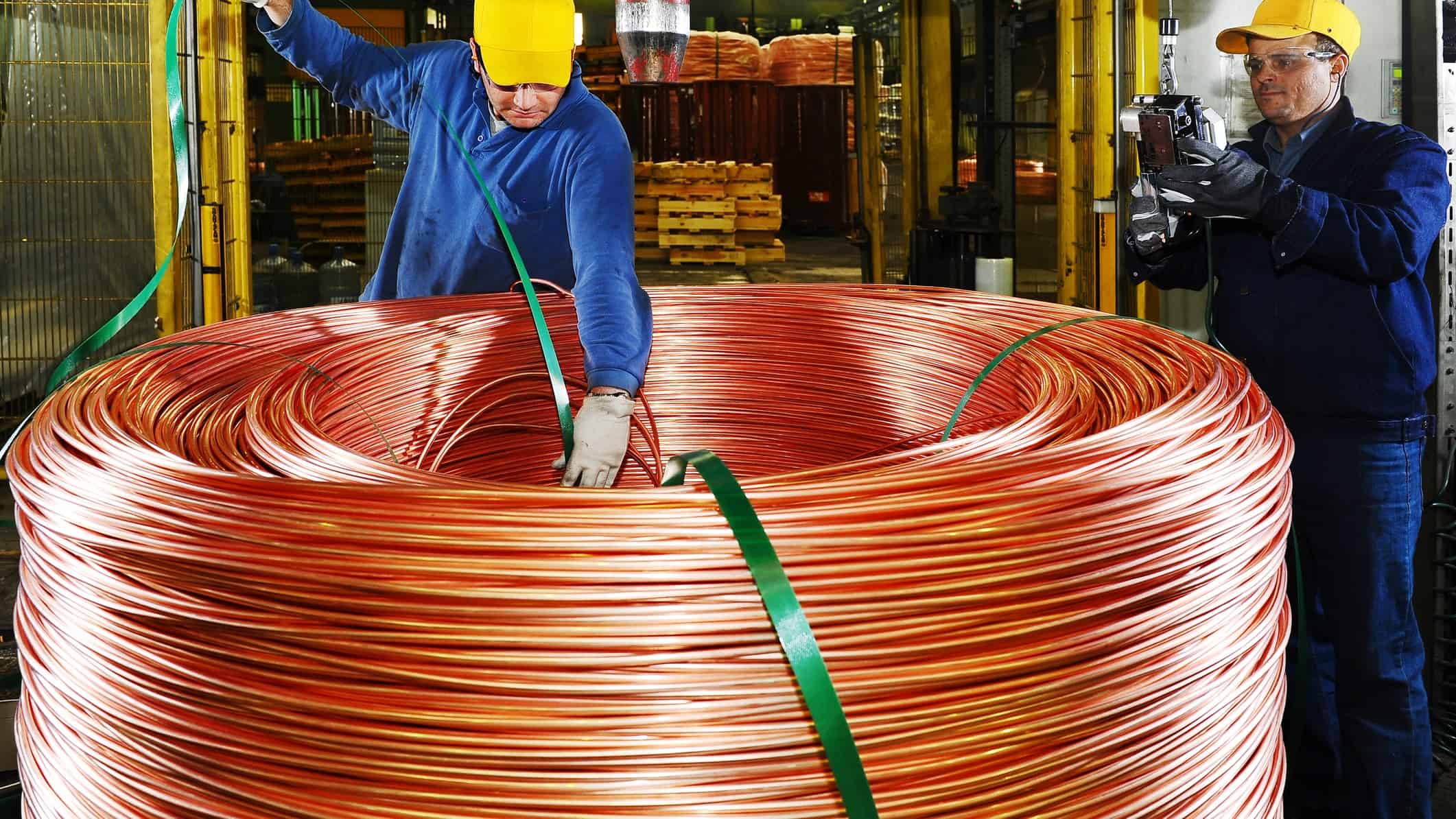
    Two workers working with a large copper coil in a factory.

    BHP Group Ltd (ASX: BHP) released its operational review for the past financial year this week, and it’s fair to say reaction from analysts has been muted, with the company guiding to a drop in copper production this year.

    Are BHP shares fully priced at the moment?

    BHP shares are up slightly more than 50% for the past 12 months, so given that strong result, it begs the question, do they have further to run?

    The team at Macquarie have run the ruler over the company and come up with a neutral recommendation on the stock, and a share price target we’ll get to shortly.

    First, let’s look at what BHP reported this week.

    Solid operational results

    The company said in a statement to the ASX that it had delivered record iron ore production over the year to the end of June, up 1% to 264.7 million tonnes.

    Copper, however, was 3% lower than the previous year at 1.95 million tonnes.

    BHP Chief Executive Officer Brandon Craig said it was a solid result.

    He added:

    For the second consecutive year, we produced around 2 Mt of copper and delivered record iron ore production, demonstrating the power of a disciplined operating system and world-class assets. We achieved this against a backdrop of stronger realised prices for both copper and iron ore, with copper prices around 35 per cent higher than a year ago. Cost control was particularly strong, with every asset expected to be within unit cost guidance despite headwinds from inflation, higher diesel prices and global supply chain disruptions.

    While Mr Craig said the company had several growth projects underway, BHP is actually guiding to lower copper output this year, with a forecast of 1,650,000 to 1,800,000 tonnes of copper.

    Iron ore is expected to stay largely flat at 260 to 272 million tonnes.

    Copper output has been impacted by a conveyor belt failure at the Carrapateena mine, impacting output at the company’s South Australian operations for up to eight weeks.

    Let’s see what the analysts think

    The Macquarie team said in their note to clients that much of BHP’s value proposition was built on copper growth, and that South Australia was a key part of that.

    They applauded the company’s record iron result however, in what they said had been a tough year.

    But Macquarie said with the risk of strikes looming and significant maintenance work scheduled, they expected it to be a “holding year” for the division.

    Macquarie has a 12-month price target of $55 on BHP shares compared to $59.14 at the time of writing. They are also predicting the dividend yield to stay steady on 3.4%.

    The post Does Macquarie rate BHP shares a buy, hold or sell right now? appeared first on The Motley Fool Australia.

    Should you invest $1,000 in BHP Group right now?

    Before you buy BHP Group shares, consider this:

    Motley Fool investing expert Scott Phillips just revealed what he believes are the 5 best stocks for investors to buy right now… and BHP Group wasn’t one of them.

    The online investing service he’s run for over a decade, Motley Fool Share Advisor, has provided thousands of paying members with stock picks that have doubled, tripled or even more.*

    And right now, Scott thinks there are 5 stocks that may be better buys…

    * Returns as of 16 June 2026

    .custom-cta-button p {
    margin-bottom: 0 !important;
    }

    More reading

    Motley Fool contributor Cameron England has no position in any of the stocks mentioned. The Motley Fool Australia’s parent company Motley Fool Holdings Inc. has positions in and has recommended Macquarie Group. The Motley Fool Australia has recommended BHP Group and Macquarie Group. The Motley Fool has a disclosure policy. This article contains general investment advice only (under AFSL 400691). Authorised by Scott Phillips.

  • How I would build an ASX portfolio with just 3 investments

    A man in his office leans back in his chair with his hands behind his head looking out his window at the city.

    A portfolio does not need dozens of holdings to cover a lot of ground.

    With three carefully chosen investments, I think an investor could gain exposure to global growth, dependable infrastructure, and a business with substantial room to expand.

    The key is giving each holding a clear job.

    Start with global quality

    I would make VanEck MSCI International Quality ETF (ASX: QUAL) the largest holding.

    This exchange-traded fund (ETF) provides exposure to international companies selected using measures such as profitability, balance sheet strength, and earnings stability.

    I like that approach because the global share market contains thousands of businesses, but they are not all equally attractive. A quality filter can direct more of the portfolio towards companies that have already shown an ability to generate strong returns without relying heavily on debt.

    These businesses may sell software, medicines, consumer products, industrial equipment, or financial services. What connects them is the financial strength that can support continued investment through changing economic conditions.

    International shares also give Australian investors access to industries and business models that are less prominent on the ASX.

    I would expect this holding to do most of the long-term compounding.

    Add dependable infrastructure

    The second investment would be APA Group (ASX: APA).

    APA owns and operates energy infrastructure, including pipelines and other assets that help move and store energy around Australia.

    I think infrastructure can bring a different rhythm to a portfolio. Demand is linked to essential services, while many assets are supported by long-term agreements or regulated arrangements.

    APA also pays dividends, which could provide some income while the wider portfolio continues growing.

    The energy system is changing, and APA will need to invest carefully as Australia moves towards a different mix of generation and storage. Debt, interest rates, regulation, and project returns all deserve attention.

    Even so, I like the idea of owning assets that remain deeply connected to how homes and businesses receive energy.

    Include a long-term growth share

    The final investment would be Xero Ltd (ASX: XRO).

    Xero has developed accounting software that sits close to the daily financial activity of small businesses. Customers can use the platform for invoicing, payroll, payments, reporting, tax, and cash flow management.

    That position gives Xero room to become more valuable to each customer over time.

    The company can add services, improve automation, and use data to help business owners make better decisions. Its opportunity in the United States also leaves plenty of space for expansion if execution remains strong.

    Xero shares can be volatile, and investors are often asked to pay a high valuation for future growth. I would therefore keep the allocation smaller than the global ETF holding.

    For a long investment horizon, I think the company has the potential to become a much larger financial platform.

    How I would split the money

    I would put around 50% of the portfolio into the QUAL ETF, 25% into APA Group, and 25% into Xero shares.

    That split would place most of the money in a diversified global holding while still leaving enough exposure to income and company-specific growth.

    The exact percentages could change with an investor’s age, income needs, and tolerance for volatility. Someone closer to retirement may prefer a larger infrastructure allocation, while a younger investor may lean further towards growth.

    Foolish Takeaway

    A three-investment portfolio places more responsibility on every holding, so I would choose each one carefully and resist the temptation to keep adding shares without a clear reason.

    This structure would give me access to established global businesses, essential Australian assets, and a company still building towards a much larger opportunity.

    It would remain simple enough to follow, while offering several ways for wealth to grow over the years ahead.

    The post How I would build an ASX portfolio with just 3 investments appeared first on The Motley Fool Australia.

    Should you invest $1,000 in Apa Group right now?

    Before you buy Apa Group shares, consider this:

    Motley Fool investing expert Scott Phillips just revealed what he believes are the 5 best stocks for investors to buy right now… and Apa Group wasn’t one of them.

    The online investing service he’s run for over a decade, Motley Fool Share Advisor, has provided thousands of paying members with stock picks that have doubled, tripled or even more.*

    And right now, Scott thinks there are 5 stocks that may be better buys…

    * Returns as of 16 June 2026

    .custom-cta-button p {
    margin-bottom: 0 !important;
    }

    More reading

    Motley Fool contributor Grace Alvino has no position in any of the stocks mentioned. The Motley Fool Australia’s parent company Motley Fool Holdings Inc. has positions in and has recommended Xero. The Motley Fool Australia has positions in and has recommended Apa Group and Xero. The Motley Fool has a disclosure policy. This article contains general investment advice only (under AFSL 400691). Authorised by Scott Phillips.

  • Here are the top 10 ASX 200 shares today

    Five young people sit in a row having fun and interacting with their mobile phones.

    It was a bit of a sour end to the trading week for the S&P/ASX 200 Index (ASX: XJO) and many ASX shares this Friday. After a bumpy trading week that saw the markets swing from gains to losses, investors ended up siding with the pessimists over today’s session.

    After keeping to red territory all day, the ASX 200 ended up closing 0.5% lower. That leaves the index at 8,796.7 points as we head into the weekend.

    This rough day for the Australian markets followed a similar session on Wall Street overnight.

    The Dow Jones Industrial Average Index (DJX: .DJI) was not in a good mood, dropping 0.2% lower.

    The tech-heavy Nasdaq Composite Index (NASDAQ: .IXIC) was punished even harder, falling a nasty 1.47%.

    But let’s return to the local boards now and take a closer look at what was happening with the various ASX sectors this Friday.

    Winners and losers

    No one should be surprised to see that there were more losers than winners today.

    Leading said losers were gold stocks. The All Ordinaries Gold Index (ASX: XGD) was slammed this session, crashing 4.95%.

    Broader mining shares were also slammed, with the S&P/ASX 200 Materials Index (ASX: XMJ) tanking 2.91%.

    Tech stocks sank hard as well. The S&P/ASX 200 Information Technology Index (ASX: XIJ) cratered 1.6%.

    Next on the red list were healthcare shares, illustrated by the S&P/ASX 200 Healthcare Index (ASX: XHJ)’s 0.34% dive.

    Our final losers this Friday were financial stocks. The S&P/ASX 200 Financials Index (ASX: XFJ) lifted 0.1% by the closing bell.

    Let’s turn to the green sectors now. It was utilities shares that fronted the pack, with the S&P/ASX 200 Utilities Index (ASX: XUJ) surging up 1.77%.

    Energy stocks ran hot, too. The S&P/ASX 200 Energy Index (ASX: XEJ) soared 1.66% higher this Friday.

    Communications shares were also in demand, as you can see from the S&P/ASX 200 Communication Services Index (ASX: XTJ)’s 1.62% lift.

    Consumer staples stocks weren’t left out either. The S&P/ASX 200 Consumer Staples Index (ASX: XSJ) bounced up 1.06% today.

    Real estate investment trusts (REITs) came next, with the S&P/ASX 200 A-REIT Index (ASX: XPJ) seeing its value spike 1.02%.

    After REITs, we had industrial shares. The S&P/ASX 200 Industrials Index (ASX: XNJ) enjoyed a 0.65% improvement this session.

    Last and least, consumer discretionary stocks just stuck the landing, evidenced by the S&P/ASX 200 Consumer Discretionary Index (ASX: XDJ)’s 0.48% jump.

    Top 10 ASX 200 shares countdown

    Today’s top stock was once again the financial services company AMP Ltd (ASX: AMP). AMP shares rocketed another 6.32% today to close at $2.02 each.

    This seems to be a continuation of the goodwill we saw yesterday following the earnings update that was released.

    Here’s the rest of today’s best: 

    ASX-listed company Share price Price change
    AMP Ltd (ASX: AMP) $2.02 6.32%
    Brambles Ltd (ASX: BXB) $19.44 3.46%
    Woodside Energy Group Ltd (ASX: WDS) $30.46 3.29%
    Coles Group Ltd (ASX: COL) $23.21 2.88%
    Amcor plc (ASX: AMC) $63.77 2.84%
    Telstra Group Ltd (ASX: TLS) $5.04 2.65%
    Bega Cheese Ltd (ASX: BGA) $6.10 2.52%
    Domino’s Pizza Enterprises Ltd (ASX: DMP) $17.62 2.50%
    Ingenia Communities Ltd (ASX: INA) $4.29 2.39%
    Generation Development Group Ltd (ASX: GDG) $3.56 2.30%

    Enjoy the weekend!

    Our top 10 shares countdown is a recurring end-of-day summary that shows which companies made big moves on the day. Check in at Fool.com.au after the weekday market closes to see which stocks make the countdown.

    The post Here are the top 10 ASX 200 shares today appeared first on The Motley Fool Australia.

    Should you invest $1,000 in Amp right now?

    Before you buy Amp shares, consider this:

    Motley Fool investing expert Scott Phillips just revealed what he believes are the 5 best stocks for investors to buy right now… and Amp wasn’t one of them.

    The online investing service he’s run for over a decade, Motley Fool Share Advisor, has provided thousands of paying members with stock picks that have doubled, tripled or even more.*

    And right now, Scott thinks there are 5 stocks that may be better buys…

    * Returns as of 16 June 2026

    .custom-cta-button p {
    margin-bottom: 0 !important;
    }

    More reading

    Motley Fool contributor Sebastian Bowen has no position in any of the stocks mentioned. The Motley Fool Australia’s parent company Motley Fool Holdings Inc. has positions in and has recommended Domino’s Pizza Enterprises. The Motley Fool Australia has positions in and has recommended Amcor Plc and Telstra Group. The Motley Fool Australia has recommended Domino’s Pizza Enterprises and Generation Development Group. The Motley Fool has a disclosure policy. This article contains general investment advice only (under AFSL 400691). Authorised by Scott Phillips.

  • Buying ASX ETFs? Watch out for this red flag

    A business woman looks unhappy while she flies a red flag at her laptop.

    Investing in exchange-traded funds (ETFs) seems to grow more popular on the ASX with each passing year. ASX investors seem to love buying ASX ETFs, likely for their simple, hands-off nature and cheap market access, which they are well known for.

    The ASX’s most popular ETFs, such as the Vanguard Australian Shares Index ETF (ASX: VAS), seem to increase their assets under management like clockwork every month. And the number of smaller, thematic ETFs has exploded in recent years. These days, you can pretty much find any ETF you can think of on the ASX.

    This trend, in my view, is largely a happy one. ETFs can give ASX investors cheap access to industries and markets that were previously unavailable (or available but prohibitively expensive) to Australian investors. Australians who might have never taken the plunge of buying individual ASX shares are happy to part with their dollars when offered cheap, market-wide index funds that can simply be put into the proverbial bottom drawer and never touched again.

    However, ETF investing is not without its potential risks and downsides. Today, I’m going to discuss what I consider the biggest red flag for ASX investors to watch out for when considering an ETF investment.

    A big red flag when buying ASX ETFs

    Any ASX ETF can theoretically find a happy place in an investor’s portfolio. Provided it aligns with their goals and risk tolerances, of course. However, I think there is one factor that should be assessed above all else when analysing your next ETF investment. That factor is the fee that the ETF will charge you.

    All ASX ETFs charge their investors an annual fee for their services. That’s fair enough. After all, ETFs need to be maintained, their portfolios kept in line, their dividends distributed, and their investors kept informed. That doesn’t come free.

    But although all ETFs are equal when it comes to imposing these fees, some are more equal than others. It is this fee that ASX ETF investors need to be discerning about.

    Fees on ASX ETFs are wide-ranging. Some of the cheapest on the market go for under 0.05% per annum. That’s $5 a year for every $10,000 invested. Others are as high as 1%, or even greater.

    Whether an ETF charges a fee of 0.05%, 0.5%, or 1% might not sound like a matter of great importance. But it is if you value your cash. Sure, that kind of difference isn’t enough to make a meaningful difference to one’s returns over a year or two. But it certainly starts to add up over five, ten, or 20 years.

    When paying 1% can cost you a fortune

    Just as returns from investments compound, so too do the lost potential returns of money that is eaten up by these fees. To illustrate, let’s assume one investor puts $100,000 into one ETF that is fee-free. Another investor puts the same amount into a fund that asks 1% per annum. If both ETFs return an average of 10% over 20 years, our 1% fund will turn that $100,000 into just over $600,000. But our fee-free fund will yield almost $730,300.

    Yep, that 1% difference is worth more than $130,000 over two decades.

    As such, all ASX investors who are thinking about buying an ASX ETF need to consider how much dead money their fund will take from them. A high fee, particularly one over 1% per annum, is, in my view, one of the biggest red flags an ETF can wave at us as investors. Ignore it at your money’s peril.

    The post Buying ASX ETFs? Watch out for this red flag appeared first on The Motley Fool Australia.

    Should you invest $1,000 in Vanguard Australian Shares Index ETF right now?

    Before you buy Vanguard Australian Shares Index ETF shares, consider this:

    Motley Fool investing expert Scott Phillips just revealed what he believes are the 5 best stocks for investors to buy right now… and Vanguard Australian Shares Index ETF wasn’t one of them.

    The online investing service he’s run for over a decade, Motley Fool Share Advisor, has provided thousands of paying members with stock picks that have doubled, tripled or even more.*

    And right now, Scott thinks there are 5 stocks that may be better buys…

    * Returns as of 16 June 2026

    .custom-cta-button p {
    margin-bottom: 0 !important;
    }

    More reading

    Motley Fool contributor Sebastian Bowen has positions in Vanguard Australian Shares Index ETF. The Motley Fool Australia’s parent company Motley Fool Holdings Inc. has no position in any of the stocks mentioned. The Motley Fool Australia has no position in any of the stocks mentioned. The Motley Fool has a disclosure policy. This article contains general investment advice only (under AFSL 400691). Authorised by Scott Phillips.

  • This ASX gold stock could jump by 45% brokers say

    A young African mine worker is standing with a smile in front of a large haul dump truck wearing his personal protective wear.

    Shares in Ora Banda Mining Ltd (ASX: OBM) have appreciated by more than 56% over the past 12 months but at least two brokers believe the stock still has a way to run.

    The analyst teams at both Macquarie and UBS have bullish share price targets on the company which we’ll get to shortly.

    Firstly let’s look at why they’ve recently published research reports on the company.

    Strong fourth quarter production meets guidance

    Ora Banda earlier this week published its quarterly production report which showed the company produced a record 39,552 ounces of gold during the June quarter to meet its full year guidance target.

    The company said it had closing cash at the end of the quarter of $267.7 million with total available liquidity of $468 million including an undrawn $200 million debt facility.

    The company had also during the quarter launched its “Drive to 300” initiative which is a multi-year target to increase production to 300,000 ounces of gold per year.

    Ora Banda Managing Director Luke Creagh said of the result:

    Another transformational year for Ora Banda is a credit to the exceptional work of our teams who achieved records across nearly every metric as well as set ting up the Company to deliver outstanding value creation with the launch of our ‘DRIVE to 300’ Project. Our organic growth strategy continues to gain momentum, with material increases in Resources and Reserves, and operating cashflows continuing to strengthen the balance sheet . The business has more than $468 million of liquidity to fund capital projects as we target a doubling of production and a step-change down in unit costs by FY29.

    Ora Banda’s production guidance for the current year is 125,000-140,000 ounces of gold at an all-in sustaining cost of $3400-$3600. Last year’s production result was 140,949 ounces.

    The company added:

    Production is expected to be weighted towards the first half of FY27, with production supplemented by third-party processing through to October 2026 . Post October, the Company will commence building ore stockpiles ahead of commissioning of the new processing facility.

    Ora Banda intends to spend $425 million in growth capital this year.                                                                                                           

    Brokers this this ASX gold stock is going cheap

    UBS said it had lowered its price target on the company due to higher capital expenditure and lower estimated earnings.

    The broker’s price target for Ora Banda shares is now $1.45, down from $1.60, compared to the current price of $1.

    Macquarie’s price target on the shares is $1.30.

    The broker said:

    OBM is firmly in its growth phase growing production from 141koz in FY26 to >300koz in FY29 by using its balance sheet (liquidity of A$468m) and internal cash flows to fund it.

    The post This ASX gold stock could jump by 45% brokers say appeared first on The Motley Fool Australia.

    Should you invest $1,000 in Ora Banda Mining right now?

    Before you buy Ora Banda Mining shares, consider this:

    Motley Fool investing expert Scott Phillips just revealed what he believes are the 5 best stocks for investors to buy right now… and Ora Banda Mining wasn’t one of them.

    The online investing service he’s run for over a decade, Motley Fool Share Advisor, has provided thousands of paying members with stock picks that have doubled, tripled or even more.*

    And right now, Scott thinks there are 5 stocks that may be better buys…

    * Returns as of 16 June 2026

    .custom-cta-button p {
    margin-bottom: 0 !important;
    }

    More reading

    Motley Fool contributor Cameron England has no position in any of the stocks mentioned. The Motley Fool Australia’s parent company Motley Fool Holdings Inc. has positions in and has recommended Macquarie Group. The Motley Fool Australia has recommended Macquarie Group. The Motley Fool has a disclosure policy. This article contains general investment advice only (under AFSL 400691). Authorised by Scott Phillips.