
Tag: Stock pick

  • Is this ASX share the best way to play the AI demand growth?

    Robot hand and human hand touching the same space on a digital screen, symbolising artificial intelligence.

    The ASX share Nexgen Energy (Canada) CDI (ASX: NXG) may well be one of the best ways to benefit from the strong growth of AI. It’s the owner of a large uranium deposit in Canada, which could be a great profit generator.

    It’s one of the picks inside the L1 Long Short Fund Ltd (ASX: LSF) portfolio, which is a listed investment company (LIC) that targets ASX shares and international shares. The LIC likes to invest in ASX mining shares – it’s very willing to do so when they seem attractively priced.

    Attractive project

    L1 recently noted that NexGen is preparing to develop the world’s largest undeveloped uranium deposit called Arrow, which is located in Saskatchewan, Canada.

    The fund manager said that Arrow will be a new major strategic Western source of uranium to address the “looming market deficit”.

    L1 highlighted that the ASX energy share received final regulatory approvals in March 2026. The company is preparing to commence full-scale project construction, with an estimated four-year construction timeline.

    How much money could this project generate?

    The fund manager believes that once the project is completed, Arrow has the potential to generate around C$2.8 billion of operating profit (EBITDA) annually, assuming a uranium price of US$80 per pound, which is below the current uranium price. In the three months to June 2026, the uranium price increased by 1.5%.

    L1 suggested that the ASX share is a “highly compelling proposition given NexGen’s current market cap” of approximately C$8.8 billion. That suggests it’s trading at around 3 times the future potential operating profit.

    I think the project could generate stronger profits than expected because AI demand is growing, and therefore additional power generation is needed to plug the gap. Nuclear could be a key part of the equation globally, alongside renewable energy, as coal is slowly phased out around the world.

    What do other experts think of the NexGen share price?

    According to CMC Invest, there have been three analyst ratings on the business within the last three months, with all of those being a buy.

    The average price target of those three ratings is $21.07, suggesting a possible rise of around 60% from where it is today. The ASX share looks much better value after falling more than 20% since early June 2026.

    The Arrow projection completion is still a while away, but the company could be a compelling buy at the current level. But there are other ASX shares that could also be compelling investments today.

    The post Is this ASX share the best way to play the AI demand growth? appeared first on The Motley Fool Australia.

    Should you invest $1,000 in NexGen Energy right now?

    Before you buy NexGen Energy shares, consider this:

    Motley Fool investing expert Scott Phillips just revealed what he believes are the 5 best stocks for investors to buy right now… and NexGen Energy wasn’t one of them.

    The online investing service he’s run for over a decade, Motley Fool Share Advisor, has provided thousands of paying members with stock picks that have doubled, tripled or even more.*

    And right now, Scott thinks there are 5 stocks that may be better buys…

    * Returns as of 16 June 2026

    .custom-cta-button p {
    margin-bottom: 0 !important;
    }

    More reading

    Motley Fool contributor Tristan Harrison has positions in L1 Long Short Fund. The Motley Fool Australia’s parent company Motley Fool Holdings Inc. has no position in any of the stocks mentioned. The Motley Fool Australia has no position in any of the stocks mentioned. The Motley Fool has a disclosure policy. This article contains general investment advice only (under AFSL 400691). Authorised by Scott Phillips.

  • What is Morgan’s updated view on Rio Tinto and BHP shares?

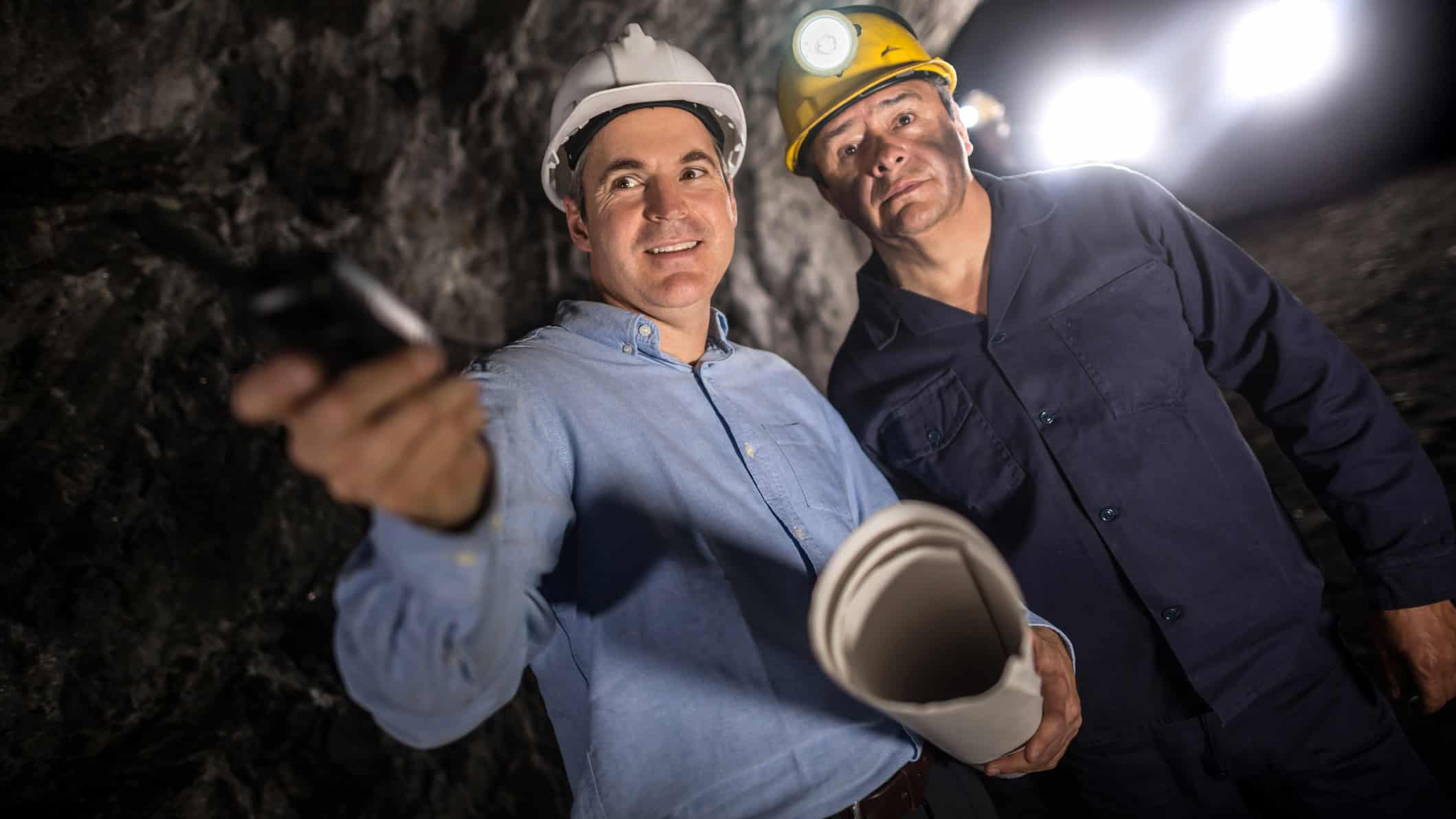
    Engineer at an underground mine and talking to a miner.

    It has been a strong year thus far for Australia’s two largest blue-chip materials stocks Rio Tinto Ltd (ASX: RIO) and BHP Group Ltd (ASX: BHP). 

    Year to date, Rio Tinto and BHP shares are up 9% and 25% respectively. 

    For comparison, the S&P/ASX 200 Index (ASX: XJO) is up just 0.8% in the same period. 

    Why are Rio Tinto and BHP shares soaring?

    These shares have risen strongly this year because investors have become more optimistic about the mining sector. 

    Higher prices for key commodities such as copper and resilient iron ore prices, driven by growing demand from AI infrastructure, data centres, electrification and renewable energy projects, have boosted earnings expectations. 

    Both companies have also delivered solid production results and attracted investors looking for large, financially strong businesses with reliable dividends, helping push their share prices higher.

    What is Morgan’s updated view on BHP shares?

    At the end of last week, the team at Morgans provided fresh outlooks on both Rio Tinto and BHP shares. 

    Looking at BHP shares, the broker said the mining giant ended FY26 on a good note, with an operational result largely in line with consensus and a touch ahead of our estimates in places. 

    Normally a source of volatility, BHP’s coal operations posted decent consensus beats at both BMA and NSWEC. FY27 guidance appears steady relative to our existing estimates, although consensus appears high for group copper. Best-in-breed global diversified miner in what remains a healthy upcycle for resources. We maintain our HOLD rating and A$60.20 target price.

    Rio Tinto remains posts healthy Q2

    Looking at Rio Tinto shares, Morgans said the company posted a healthy Q2 where it matters. 

    Pilbara shipments beat consensus (+2%), while Morgans said it sees the headline Simandou miss (-68% vs consensus) as a net positive: a slower Simandou ramp supports iron ore benchmarks, and each US$10/t on the benchmark is worth ~US$2.5bn of annual EBITDA to RIO’s far larger Pilbara business. 

    The sting in the tail was Kennecott, with a late June converting furnace breach requiring a ~75-day full rebuild, hitting H2 refined copper and gold output (total copper including saleable matte unchanged). Copper C1 guidance halved to US30-50c/lb, on strong by-prod prices, a material margin tailwind into the H2 result. Trading back close to where we see fair value, RIO remains one of the highest quality global exposures to a sector enjoying a multi-year upcycle (albeit not without its volatility). We maintain our HOLD rating, A$163.00 TP (was A$165.00).

    From last week’s closing price of $160.95, the updated price target is just 1.2% above current levels. 

    The post What is Morgan’s updated view on Rio Tinto and BHP shares? appeared first on The Motley Fool Australia.

    Should you invest $1,000 in BHP Group right now?

    Before you buy BHP Group shares, consider this:

    Motley Fool investing expert Scott Phillips just revealed what he believes are the 5 best stocks for investors to buy right now… and BHP Group wasn’t one of them.

    The online investing service he’s run for over a decade, Motley Fool Share Advisor, has provided thousands of paying members with stock picks that have doubled, tripled or even more.*

    And right now, Scott thinks there are 5 stocks that may be better buys…

    * Returns as of 16 June 2026

    .custom-cta-button p {
    margin-bottom: 0 !important;
    }

    More reading

    Motley Fool contributor Aaron Bell has positions in BHP Group. The Motley Fool Australia’s parent company Motley Fool Holdings Inc. has no position in any of the stocks mentioned. The Motley Fool Australia has recommended BHP Group. The Motley Fool has a disclosure policy. This article contains general investment advice only (under AFSL 400691). Authorised by Scott Phillips.

  • 5 things to watch on the ASX 200 on Monday

    A happy male investor turns around on his chair to look at a friend while a laptop runs on his desk showing share price movements

    On Friday, the S&P/ASX 200 Index (ASX: XJO) finished a relatively flat week in the red. The benchmark index fell 0.5% to 8,796.7 points.

    Will the market be able to bounce back from this on Monday? Here are five things to watch:

    ASX 200 expected to rise

    The Australian share market looks set for a good start to the week despite a poor session on Wall Street on Friday. According to the latest SPI futures, the ASX 200 is expected to open the day 55 points or 0.6% higher. In the United States, the Dow Jones fell 0.75%, the S&P 500 dropped 1%, and the Nasdaq sank 1.4%.

    Oil prices jump

    ASX 200 energy shares Santos Ltd (ASX: STO) and Woodside Energy Group Ltd (ASX: WDS) could have a strong start to the week after oil prices jumped on Friday night. According to Bloomberg, the WTI crude oil price was up 4.5% to US$81.49 a barrel and the Brent crude oil price was up 4.6% to US$88.10 a barrel. Traders were bidding oil prices higher in response to an escalation in US-Iran tensions.

    Buy WiseTech shares

    WiseTech Global Ltd (ASX: WTC) shares are seriously undervalued according to analysts at Bell Potter. This morning, the broker has retained its buy rating and $71.75 price target on the logistics software provider’s shares. It commented: “We believe the stock looks value on an FY27 EV/EBITDA multiple of c.15x and is trading at an excessively large discount to the Technology One multiple of c.27x. We note WiseTech has higher forecast earnings growth than Technology One over the next few years given the expected margin recovery post the e2open acquisition.”

    Gold price rises

    It could be a decent start to the week for ASX 200 gold shares Newmont Corporation (ASX: NEM) and Northern Star Resources Ltd (ASX: NST) after the gold price rose on Friday night. According to CNBC, the gold futures price was up 0.65% to US$4,018.8 an ounce. This couldn’t stop the gold price from recording a weekly decline on increased US interest rate bets.

    Hold BHP shares

    Morgans thinks that BHP Group Ltd (ASX: BHP) shares are around fair value right now. In response to its quarterly update, the broker has retained its hold rating and $60.20 price target on the mining giant’s shares. It said: “A good end to FY26 for BHP, with an operational result largely in line with consensus and a touch ahead of our estimates in places. […] Best-in-breed global diversified miner in what remains a healthy upcycle for resources. We maintain our HOLD rating and A$60.20 target price.”

    The post 5 things to watch on the ASX 200 on Monday appeared first on The Motley Fool Australia.

    Should you invest $1,000 in BHP Group right now?

    Before you buy BHP Group shares, consider this:

    Motley Fool investing expert Scott Phillips just revealed what he believes are the 5 best stocks for investors to buy right now… and BHP Group wasn’t one of them.

    The online investing service he’s run for over a decade, Motley Fool Share Advisor, has provided thousands of paying members with stock picks that have doubled, tripled or even more.*

    And right now, Scott thinks there are 5 stocks that may be better buys…

    * Returns as of 16 June 2026

    .custom-cta-button p {
    margin-bottom: 0 !important;
    }

    More reading

    Motley Fool contributor James Mickleboro has positions in WiseTech Global and Woodside Energy Group Ltd. The Motley Fool Australia’s parent company Motley Fool Holdings Inc. has positions in and has recommended WiseTech Global. The Motley Fool Australia has positions in and has recommended WiseTech Global. The Motley Fool Australia has recommended BHP Group. The Motley Fool has a disclosure policy. This article contains general investment advice only (under AFSL 400691). Authorised by Scott Phillips.

  • Experts say these ASX 200 shares have great potential

    Buy and sell written on a white cube.

    A wide range of S&P/ASX 200 Index (ASX: XJO) shares can deliver good returns, and even outperformance, if investors buy at the right price.

    Cyclical stocks can deliver great investments if we buy at the weak point of the cycle. Be greedy when others are fearful, as the saying goes.

    The investment team in charge of listed investment company (LIC) L1 Long Short Fund Ltd (ASX: LSF) have a great knack for picking out undervalued stocks that have a relatively low price-earnings (P/E) ratio. Its portfolio has returned an average of 16.9% per year over the prior five years, showing its stock-picking prowess.

    We’re going to look at these ASX 200 shares that could be compelling businesses to own.

    Qantas Airways Ltd (ASX: QAN)

    L1 noted that the Qantas share price rose 27% in the three months to June 2026 following an approximate 50% decline in jet fuel prices after the easing of Middle East tensions, though fuel costs were still around 20% above pre-war levels.

    The fund manager also noted that oil refining margins remain Qantas’ key residual headwind, which is still roughly double the pre-war level.

    L1 highlighted that during an investor trip to the Airbus factory in Toulouse (France), management reiterated the $400 million operating profit (EBIT) opportunity from Project Sunrise ahead of the planned Sydney to London route service launch, which is scheduled for October 2027.

    The fund manager said that overall, while the Middle East conflict has created near-term earnings volatility, it sees Qantas’ strong underlying competitive positioning and medium-term outlook as unchanged.

    James Hardie Industries plc (ASX: JHX)

    James Hardie is one of the largest building products ASX 200 shares. L1 noted that the James Hardie share price rose 46% in the three months to June 2026, amid easing Middle East tensions and management’s constructive FY27 outlook.

    That positive outlook included a pathway to return the core North American fibre cement business to volume growth, despite a subdued US housing market.

    L1 expects volume recovery to be supported by: normalisation of channel inventory after the 2025 destocking period; improved execution in repair and remodel; smaller-builder channels; the trim-over installation method; competitor exits; and continued material conversion from vinyl and wood.

    In the fund manager’s view, the market is still applying a discounted multiple to the ASX 200 share to reflect recent execution, governance, and housing-cycle concerns. As those issues are addressed, L1 believes there is scope for both earnings growth and recovery in the P/E ratio multiple over time.

    Goodman Group (ASX: GMG)

    The final ASX 200 share in this article is industrial property developer and owner Goodman Group.

    The Goodman share price rose 22% in the three months to June 2026, during a growing investor focus on its expanding data centre opportunity and the scarcity value of its powered land bank.

    L1 said that the business has advanced its data centre strategy with the announcement of a 50:50 joint venture with DataBank for a 32MW co-location facility in Los Angeles. Its update also reaffirmed its FY26 operating earnings per security (EPS) guidance of growth of “at least 9%” and flagged work in progress (WIP) growth from $14.5 billion to around $18 billion by June.

    Overall, the outlook for these ASX 200 shares looks positive, though they’re not the only shares I’d want to look at.

    The post Experts say these ASX 200 shares have great potential appeared first on The Motley Fool Australia.

    Should you invest $1,000 in Qantas Airways right now?

    Before you buy Qantas Airways shares, consider this:

    Motley Fool investing expert Scott Phillips just revealed what he believes are the 5 best stocks for investors to buy right now… and Qantas Airways wasn’t one of them.

    The online investing service he’s run for over a decade, Motley Fool Share Advisor, has provided thousands of paying members with stock picks that have doubled, tripled or even more.*

    And right now, Scott thinks there are 5 stocks that may be better buys…

    * Returns as of 16 June 2026

    .custom-cta-button p {
    margin-bottom: 0 !important;
    }

    More reading

    Motley Fool contributor Tristan Harrison has positions in L1 Long Short Fund. The Motley Fool Australia’s parent company Motley Fool Holdings Inc. has positions in and has recommended Goodman Group. The Motley Fool Australia has recommended Goodman Group. The Motley Fool has a disclosure policy. This article contains general investment advice only (under AFSL 400691). Authorised by Scott Phillips.

  • Should I target high growth or balanced strategies for my superannuation?

    Superannuation written on a jar with Australian dollar notes.

    One of the biggest decisions you can make about your superannuation is the investment option you choose.

    Most funds offer a menu.

    Two of the most popular are “balanced” and “high growth.” The choice sounds arbitrary, but over the decades, making the right choice can be worth a fortune.

    Let’s compare them.

    How the two options differ

    A balanced option spreads your money across shares, property, bonds, and cash.

    A balanced portfolio typically holds around 60% to 76% in growth assets, while the rest sits in more defensive assets.

    A high growth option tilts far harder towards shares and often holds 85% or more in growth assets.

    That means bigger swings, but higher expected returns over time.

    What the returns tell us about your superannuation

    History gives us a useful guide.

    Over the 10 years to 30 June 2026, AustralianSuper’s balanced option returned an average of 8.47% a year.

    Its high growth option returned 9.64% a year over the same period.

    That difference may look small, but it is anything but.

    On a large balance compounded over decades, roughly one extra percent a year adds up to serious money.

    However, the trade-off is volatility.

    High growth options fall harder when markets wobble, and if investors panic and switch at the bottom, they lock in the loss.

    Discipline is the price of those higher returns.

    Which option suits you?

    The answer depends on your time horizon. If retirement is 20 years away, you can usually ride out the bumps, and as such, high growth may suit you.

    If you are close to retirement, a steep fall could hurt.

    A more balanced mix may help you sleep at night. Many people shift towards safer assets as they near retirement.

    On top of that, your risk tolerance matters just as much as your age. The best strategy is the one you can actually stick with.

    Three ASX funds that lean growth

    Some investors also hold ASX-listed funds directly, inside or alongside their superannuation. Three growth-tilted ETFs stand out.

    The Vanguard Australian Shares Index ETF (ASX: VAS) tracks the biggest ASX companies, and the iShares Core S&P/ASX 200 ETF (ASX: IOZ) offers similar broad local exposure. By contrast, the BetaShares Nasdaq 100 ETF (ASX: NDQ) adds global technology heavyweights.

    Together, they show what a growth tilt can look like. Just remember that more growth means more volatility.

    Foolish Takeaway for your superannuation

    There is no single right answer for your superannuation.

    High growth has historically delivered more over the long run. Balanced offers a smoother ride.

    Match the option to your timeline and your temperament. Then leave it alone and let compounding do the work.

    The post Should I target high growth or balanced strategies for my superannuation? appeared first on The Motley Fool Australia.

    Should you invest $1,000 in iShares Core S&p/asx 200 ETF right now?

    Before you buy iShares Core S&p/asx 200 ETF shares, consider this:

    Motley Fool investing expert Scott Phillips just revealed what he believes are the 5 best stocks for investors to buy right now… and iShares Core S&p/asx 200 ETF wasn’t one of them.

    The online investing service he’s run for over a decade, Motley Fool Share Advisor, has provided thousands of paying members with stock picks that have doubled, tripled or even more.*

    And right now, Scott thinks there are 5 stocks that may be better buys…

    * Returns as of 16 June 2026

    .custom-cta-button p {
    margin-bottom: 0 !important;
    }

    More reading

    Motley Fool contributor Mark Verhoeven has no position in any of the stocks mentioned. The Motley Fool Australia’s parent company Motley Fool Holdings Inc. has positions in and has recommended BetaShares Nasdaq 100 ETF. The Motley Fool Australia has positions in and has recommended BetaShares Nasdaq 100 ETF. The Motley Fool has a disclosure policy. This article contains general investment advice only (under AFSL 400691). Authorised by Scott Phillips.

  • How much is needed in superannuation to target a $100,000 annual passive income?

    Woman with $50 notes in her hand thinking, symbolising dividends.

    Superannuation is a very effective tool for Australian investors to generate returns at a lower tax rate.

    Pleasingly, superannuation has a lower tax rate than many individuals, trusts and companies. The way that superannuation works, and the nature of how we access the money, means it’s very easy to invest for the long term inside the super system.

    In my view, being paid passive income is one of the best elements of owning shares. Receiving money into our bank account every year for no effort sounds good to me.

    How does superannuation play into passive income? Investors lose less of the passive income payments to tax.

    Superannuation looks comparatively much more appealing because if a full-time working Aussie receives passive income in their own name, they could lose a third (or more) of that passive income to tax, significantly reducing the effectiveness of the passive income return.

    In my opinion, superannuation is therefore a more appealing place to invest because of the lower tax rate in the accumulation phase of life, compared to an individual’s tax rate if they’re a full-time earner.

    In retirement, a person’s superannuation tax rate could be 0%. You can’t get any better than that.

    Of course, each Australia’s tax position is different, so I’ll just look at targeting a particular income goal from here and ignore the tax rates.

    How much is needed in superannuation for $100,000 of annual passive income?

    Receiving $100,000 in dividends each year sounds excellent to me. I’m definitely a long way from that target, but I’d love to receive that much in dividends each year.

    Australians need to consider what types of investments they want to own and what size dividend yield comes with those investments.

    I think ASX shares are the best choice for passive income. The attached franking credits are an excellent bonus.

    How much is needed to earn $100,000 annually depends on the dividend yield of the portfolio.

    For example, a portfolio with a 6% dividend yield would require $1.67 million. Meanwhile, a 4% dividend yield would require a $2.5 million portfolio.

    As you can see, different dividend yields require different-sized portfolios to reach the target. Therefore, the numbers are heavily influenced by what ASX shares superannuation investors choose.

    The types of ASX dividend shares I’d buy

    There are various options on the ASX that can provide good yields to investors. Aussies could choose quality companies, real estate investment trusts (REITs) or listed investment companies (LICs).

    Some of my favourite ideas for dividend growth and a solid starting yield include Wesfarmers Ltd (ASX: WES), Telstra Group Ltd (ASX: TLS), Universal Store Holdings Ltd (ASX: UNI), Lovisa Holdings Ltd (ASX: LOV), Medibank Private Ltd (ASX: MPL), Propel Funeral Partners Ltd (ASX: PFP) and Washington H. Soul Pattinson and Co. Ltd (ASX: SOL).

    On the commercial property side of things, I like names such as Rural Funds Group (ASX: RFF), Dexus Industria REIT (ASX: DXI), Centuria Industrial REIT (ASX: CIP) and Charter Hall Long WALE REIT (ASX: CLW).

    Finally, the LICs that I really like include MFF Capital Investments Ltd (ASX: MFF), L1 Long Short Fund Ltd (ASX: LSF), Future Generation Global Ltd (ASX: FGG) and Future Generation Australia Ltd (ASX: FGX).

    These aren’t the only attractive ASX dividend shares for superannuation investors, but I think they’re an excellent starting point.

    The post How much is needed in superannuation to target a $100,000 annual passive income? appeared first on The Motley Fool Australia.

    Should you invest $1,000 in Telstra Group right now?

    Before you buy Telstra Group shares, consider this:

    Motley Fool investing expert Scott Phillips just revealed what he believes are the 5 best stocks for investors to buy right now… and Telstra Group wasn’t one of them.

    The online investing service he’s run for over a decade, Motley Fool Share Advisor, has provided thousands of paying members with stock picks that have doubled, tripled or even more.*

    And right now, Scott thinks there are 5 stocks that may be better buys…

    * Returns as of 16 June 2026

    .custom-cta-button p {
    margin-bottom: 0 !important;
    }

    More reading

    Motley Fool contributor Tristan Harrison has positions in Future Generation Australia, Future Generation Global, L1 Long Short Fund, Mff Capital Investments, Propel Funeral Partners, Rural Funds Group, and Washington H. Soul Pattinson and Company Limited. The Motley Fool Australia’s parent company Motley Fool Holdings Inc. has positions in and has recommended Lovisa, Washington H. Soul Pattinson and Company Limited, and Wesfarmers. The Motley Fool Australia has positions in and has recommended Mff Capital Investments, Rural Funds Group, Telstra Group, and Washington H. Soul Pattinson and Company Limited. The Motley Fool Australia has recommended Lovisa, Universal Store, and Wesfarmers. The Motley Fool has a disclosure policy. This article contains general investment advice only (under AFSL 400691). Authorised by Scott Phillips.

  • $1,000 buys 584 shares in an incredibly reliable ASX dividend stock

    $100 Australian notes on top of each other.

    There are very few ASX dividend stocks I’d view as a more reliable option for passive income than Future Generation Global Ltd (ASX: FGG).

    When I think about which businesses I’d want to own for dividends, I’d want to choose names that can provide both a good dividend yield and a rising payout.

    If an investor wants passive income, then they’ll probably be looking for a good yield upfront. But, growth of the payout is also important to help offset inflation and hopefully provide steadily rising dividends to make our bank accounts increasingly well-off.

    Future Generation Global is a listed investment company (LIC) that offers numerous positives. Let’s look at the positives and why I’d buy it with $1,000 (or more).

    Philanthropic efforts

    The business is not like many other ASX dividend stocks. It’s a LIC which provides investors exposure to a portfolio of funds of different fund managers.

    All of those fund managers work for free so that Future Generation Global can donate 1% of its net assets each year to charities focused on youth mental health.

    Some of the charities that are supported by Future Generation Global include BackTrack, Bighart, Life4Life, Mind Blank, Prevention United, Project Rockit, Reachout, Smiling Mind and Youth Opportunities.

    I think it’s a really great set-up for both investors and the charity contributions.

    Diversification

    Future Generation Global can provide investors with excellent diversification because it’s invested in the funds of 15 different fund managers.

    There are more than 3,700 different underlying shares in the ASX dividend stock’s portfolio, so Future Generation Global actually offers enormous diversification across North America, the UK, Europe, Asia and so on.

    Its money is spread across a number of fund managers including Antipodes, Yarra Capital Management, Munro, WCM Investment Management, GCQ, Ellerston Capital, Vinva, Langdon, Plato and Paradice.

    Dividend yield

    The ASX dividend stock recently announced its FY26 interim dividend for shareholders – 4.2 cents per share and provided guidance that the final dividend per share for FY26 will be another 4.2 cents per share.

    That brings the potential FY26 annual payout to 8.4 cents per share. At the current Future Generation Global share price, that translates into a possible grossed-up dividend yield of 7%, including franking credits, at the time of writing.

    That would generate around $70 of grossed-up dividend income with a $1,000 investment for FY26 by buying 584 shares.

    That’s more appealing to me than a term deposit, particularly when it’s combined with its rising dividend.

    Rising payouts

    Future Generation Global has increased its annual payout each year since FY19, so investors have already had several years of dividend growth. It also has a profit reserve of 66.4 cents per share, which suggests it can fund close to eight years of dividends based on the FY26 dividend level.

    Pleasingly, the guidance the business has provided for FY26 translates into year-over-year growth of 5%. That’s a solid rate of growth, in my opinion.

    But, it’s not the only ASX share I’d buy with $1,000. There are a few other compelling opportunities.

    The post $1,000 buys 584 shares in an incredibly reliable ASX dividend stock appeared first on The Motley Fool Australia.

    Should you invest $1,000 in Future Generation Global right now?

    Before you buy Future Generation Global shares, consider this:

    Motley Fool investing expert Scott Phillips just revealed what he believes are the 5 best stocks for investors to buy right now… and Future Generation Global wasn’t one of them.

    The online investing service he’s run for over a decade, Motley Fool Share Advisor, has provided thousands of paying members with stock picks that have doubled, tripled or even more.*

    And right now, Scott thinks there are 5 stocks that may be better buys…

    * Returns as of 16 June 2026

    .custom-cta-button p {
    margin-bottom: 0 !important;
    }

    More reading

    Motley Fool contributor Tristan Harrison has positions in Future Generation Global. The Motley Fool Australia’s parent company Motley Fool Holdings Inc. has no position in any of the stocks mentioned. The Motley Fool Australia has no position in any of the stocks mentioned. The Motley Fool has a disclosure policy. This article contains general investment advice only (under AFSL 400691). Authorised by Scott Phillips.

  • Top brokers name 3 ASX shares to buy next week

    Broker written in white with a man drawing a yellow underline.

    It was a busy week for Australia’s top brokers. This has led to a number of broker notes being released. 

    Three broker buy ratings that you might want to know more about are summarised below. Here’s why brokers think these ASX shares are in the buy zone:

    Coles Group Ltd (ASX: COL)

    According to a note out of Macquarie, its analysts have retained their outperform rating and $25.10 price target on this supermarket giant’s shares. This follows news that the company has walked away from a potential $4 billion deal to buy Petbarn’s owner Greencross. Coles revealed that it has ceased talks with private equity firm TPG Capital over the potential buyout of the pets and vets business. Macquarie believes the news removes an overhang. Though, it concedes that the market may still price lingering questions on strategy given the share price performance around the news. Overall, the broker believes the long-term strategy in the Supermarkets business remains intact and continues to see growth opportunities from increased private label penetration and retail media. The Coles share price ended the week at $23.21.

    Harvey Norman Holdings Ltd (ASX: HVN)

    A note out of Bell Potter reveals that its analysts have retained their buy rating on this retail giant’s shares with a reduced price target of $6.00. While the broker suspects that FY 2027 could be a tough year for retailers like Harvey Norman, it feels this is more than priced in. Bell Potter highlights that Harvey Norman’s shares are trading on a 1-year forward P/E ratio of ~13x, which it believes is attractive. In addition, it continues to see mid-longer term growth catalysts. This includes new store-driven growth in international retailing (UK, Malaysia, Croatia), the refit program in Australia, and the expansion of brand partnerships in the mid- premium end of the whitegoods market. Bell Potter also sees opportunities to grow its real estate portfolio as Australia’s single largest owner in large format retail with a global portfolio of ~$4.6 billion. The Harvey Norman share price was fetching $4.78 at Friday’s close.

    ResMed Inc. (ASX: RMD)

    Analysts at Morgans have retained their buy rating on this sleep disorder-focused medical device company’s shares with a slightly trimmed price target of $40.97. According to the note, Morgans believes the divestment of the MatrixCare business for US$490 million crystallises a disappointing financial outcome (ResMed paid US$750 million in 2018). However, strategically, the broker believes the transaction makes sense. It notes that it simplifies the portfolio and retains Brightree and MEDIFOX DAN, while exiting a lower-growth, non-core software business. In addition, net proceeds will largely be returned to shareholders via an accelerated share repurchase, which it believes should substantially offset earnings dilution from both the MatrixCare disposal and the recently completed Noctrix acquisition. As a result, it remains positive and continues to see lots of value on offer here. The ResMed share price ended the week at $28.75.

    The post Top brokers name 3 ASX shares to buy next week appeared first on The Motley Fool Australia.

    Should you invest $1,000 in Coles Group right now?

    Before you buy Coles Group shares, consider this:

    Motley Fool investing expert Scott Phillips just revealed what he believes are the 5 best stocks for investors to buy right now… and Coles Group wasn’t one of them.

    The online investing service he’s run for over a decade, Motley Fool Share Advisor, has provided thousands of paying members with stock picks that have doubled, tripled or even more.*

    And right now, Scott thinks there are 5 stocks that may be better buys…

    * Returns as of 16 June 2026

    .custom-cta-button p {
    margin-bottom: 0 !important;
    }

    More reading

    Motley Fool contributor James Mickleboro has positions in ResMed. The Motley Fool Australia’s parent company Motley Fool Holdings Inc. has positions in and has recommended Macquarie Group and ResMed. The Motley Fool Australia has positions in and has recommended Harvey Norman and ResMed. The Motley Fool Australia has recommended Macquarie Group. The Motley Fool has a disclosure policy. This article contains general investment advice only (under AFSL 400691). Authorised by Scott Phillips.

  • 3 super ASX ETFs to buy and hold until 2046

    Man looking at an ETF diagram.

    When investing for the long term, the next few months are far less important. 

    What is important is whether your investments give you exposure to companies, industries, and regions that could still be relevant in a decade or two.

    With that in mind, here are three top ASX exchange traded funds (ETFs) that could be worth buying and holding for the long term.

    Betashares Nasdaq 100 ETF (ASX: NDQ)

    The Betashares Nasdaq 100 ETF gives investors exposure to some of the world’s best growth companies.

    This fund owns 100 of the largest non-financial companies listed on the Nasdaq exchange. Examples include Nvidia (NASDAQ: NVDA) and Apple (NASDAQ: AAPL).

    What makes this fund attractive over a 20-year period is the way its holdings sit close to the big profit pools of the digital economy.

    Artificial intelligence, cloud computing, chips, software, digital advertising, ecommerce, streaming, and consumer technology are not short-term market themes. They are areas where huge amounts of spending, talent, and innovation are likely to keep flowing.

    Some companies in the fund will lose momentum over time. Others may become even more important. That is the advantage of using an ETF. Investors can own the broader ecosystem rather than trying to guess exactly which company will dominate in 2046.

    Betashares Asia Technology Tigers ETF (ASX: ASIA)

    The Betashares Asia Technology Tigers ETF offers a different lens on technology.

    Many investors look at tech through a US market lens, but Asia is central to the global digital economy. It is home to major businesses involved in semiconductors, memory chips, hardware, ecommerce, online platforms, gaming, and digital services.

    Examples of holdings include SK Hynix (NASDAQ: SKHY) and Taiwan Semiconductor Manufacturing (NYSE: TSM).

    This fund is not a low-risk option. It is concentrated in one region and one sector, and investors need to be comfortable with volatility, currency movements, and geopolitical risk.

    But the long-term case is still compelling. Asia is where a large part of the world’s digital infrastructure is built, and it is also home to enormous consumer markets that continue to move online.

    By 2046, the region’s technology leaders could be playing an even larger role in global markets.

    VanEck Morningstar International Wide Moat ETF (ASX: GOAT)

    The VanEck Morningstar International Wide Moat ETF gives investors a more selective way to own global shares.

    This fund looks for international companies that are considered to have strong competitive advantages and are trading at attractive valuations.

    That makes it different from a standard global ETF. Rather than just owning the largest companies in the market, this ASX ETF is trying to identify businesses with qualities that can protect profits over time. That could include strong brands, cost advantages, intellectual property, network effects, or high switching costs.

    Examples of its holdings include Novo Nordisk (NYSE: NVO) and Nike (NYSE: NKE).

    The fund’s role in a long-term portfolio is discipline. It gives investors exposure to global businesses, but with a filter that looks beyond popularity and market size.

    Over a long period, that combination of competitive strength and valuation awareness could be valuable as market leadership changes and investors move between different sectors, countries, and themes.

    The post 3 super ASX ETFs to buy and hold until 2046 appeared first on The Motley Fool Australia.

    Should you invest $1,000 in Betashares Capital – Asia Technology Tigers Etf right now?

    Before you buy Betashares Capital – Asia Technology Tigers Etf shares, consider this:

    Motley Fool investing expert Scott Phillips just revealed what he believes are the 5 best stocks for investors to buy right now… and Betashares Capital – Asia Technology Tigers Etf wasn’t one of them.

    The online investing service he’s run for over a decade, Motley Fool Share Advisor, has provided thousands of paying members with stock picks that have doubled, tripled or even more.*

    And right now, Scott thinks there are 5 stocks that may be better buys…

    * Returns as of 16 June 2026

    .custom-cta-button p {
    margin-bottom: 0 !important;
    }

    More reading

    Motley Fool contributor James Mickleboro has positions in BetaShares Nasdaq 100 ETF, Betashares Capital – Asia Technology Tigers Etf, and Nike. The Motley Fool Australia’s parent company Motley Fool Holdings Inc. has positions in and has recommended Apple, BetaShares Nasdaq 100 ETF, Nike, Novo Nordisk, Nvidia, and Taiwan Semiconductor Manufacturing. The Motley Fool Australia has positions in and has recommended BetaShares Nasdaq 100 ETF. The Motley Fool Australia has recommended Apple, Nike, Nvidia, and VanEck Morningstar International Wide Moat ETF. The Motley Fool has a disclosure policy. This article contains general investment advice only (under AFSL 400691). Authorised by Scott Phillips.

  • Average superannuation balance for 55-year-olds in Australia. How does yours compare?

    Man holding a calculator with Australian dollar notes, symbolising dividends.

    At age 55, you’re on the home stretch before retirement, so it’s important to know if your superannuation balance is on track.

    At this age, you’re just five years from reaching your preservation age. This is when you can access your superannuation balance if you’ve stopped working.

    You’re also around 10 years from the average retirement age in Australia.

    The clock is ticking, so do you know how much is in your superannuation? And how does it compare to others the same age as you?

    Here’s a breakdown of what the average Aussie has in their super at age 55, and also what you should have at this age to retire comfortably when the time comes. Because unfortunately, the two numbers aren’t the same.

    Average superannuation balance at age 55

    There isn’t an exact figure for the average superannuation balance at age 55, but the Association of Superannuation Funds of Australia (ASFA) has a good guideline.

    ASFA’s data shows that at age 55 to 59, the average Australian male has around $319,743 in superannuation. The average female in the same age bracket has approximately $242,945.

    So, how does your balance compare to the average Aussie the same age?

    How does this compare to what I actually need in my super to retire comfortably?

    That’s the catch. 

    Even if you’re on track with the rest of the population, you still might not have enough to fund a comfortable retirement when the time comes.

    In order to retire comfortably, ASFA estimates that it’ll cost single Australians around $55,923 per year. It’ll cost couples living together closer to $78,566 per year in total.

    These figures also assume you’ll start your retirement at age 67. It also assumes that you’ll receive a part Age Pension around this time and that you own your home outright.

    In order to fund this type of comfortable retirement, ASFA calculates that single Australians will need around $630,000 in their superannuation at age 67. Meanwhile, couples will need around $730,000 combined at the same age.

    How do I know if I’m on track at age 55?

    ASFA has a nifty tool to help calculate what you should have in your superannuation at age 55 in order to reach the balance you need by age 67.

    It shows that, at this age, Australians should have close to $399,000 in their superannuation in order to reach their goal.

    Of course, if you’re planning to retire a little earlier than 67, or you think you’ll need to pay mortgage repayments or rental fees in your retirement years you’ll need to account for these costs on top of this estimate. 

    You can see that, at an average $319,743 for men or $242,945 for women, many Australians are already falling behind.

    Good news! It’s never too late to boost your superannuation balance

    At age 55, you’re still several years away from retirement, so there’s still time left for your superannuation to catch up.

    The easy way to boost your balance at this age is to make extra contributions however you can. Individuals can make concessional (before-tax) super contributions, such as salary sacrificing, which are taxed at a reduced rate. You can also make after-tax payments within your annual limits. 

    You’ll also want to check that your fund is performing well and that the risk profile of your portfolio suits your own. 

    Then you can let compound growth do the rest of the heavy lifting. 

    The post Average superannuation balance for 55-year-olds in Australia. How does yours compare? appeared first on The Motley Fool Australia.

    Wondering where you should invest $1,000 right now?

    When investing expert Scott Phillips has a stock tip, it can pay to listen. After all, the flagship Motley Fool Share Advisor newsletter he has run for over ten years has provided thousands of paying members with stock picks that have doubled, tripled or even more.*

    Scott just revealed what he believes could be the ‘five best ASX stocks’ for investors to buy right now. We believe these stocks are trading at attractive prices and Scott thinks they could be great buys right now…

    * Returns as of 16 June 2026

    .custom-cta-button p {
    margin-bottom: 0 !important;
    }

    More reading

    Motley Fool contributor Samantha Menzies has no position in any of the stocks mentioned. The Motley Fool Australia’s parent company Motley Fool Holdings Inc. has no position in any of the stocks mentioned. The Motley Fool Australia has no position in any of the stocks mentioned. The Motley Fool has a disclosure policy. This article contains general investment advice only (under AFSL 400691). Authorised by Scott Phillips.