
Author: openjargon

  • Buy these ASX 200 dividend stocks in June for an income boost

    Middle age caucasian man smiling confident drinking coffee at home.

    There are lots of dividend stocks to choose from on the local share market.

    In fact, there’s so much choice, it can often be hard to decide which ones to buy over others.

    To narrow things down, I have picked out three dividend options that analysts have recently named as buys and tipped to offer good dividend yields.

    Here’s what you need to know about these ASX 200 dividend stocks:

    Aurizon Holdings Ltd (ASX: AZJ)

    Aurizon could be an ASX 200 dividend stock to buy right now. Across a network spanning thousands of kilometres, it transports commodities, including mining, agricultural, industrial and retail products for a diverse range of customers across Australia.

    Ord Minnett thinks it would be a great option for investors. Particularly given its belief that Aurizon could be in a position to boost its dividend nicely next year.

    The broker is forecasting partially franked dividends of 18.6 cents per share in FY 2024 and then 24.4 cents per share in FY 2025. Based on the current Aurizon share price of $3.72, this will mean dividend yields of 5% and 6.5%, respectively.

    Ord Minnett has an accumulate rating and $4.70 price target on its shares.

    Charter Hall Retail REIT (ASX: CQR)

    Another ASX 200 dividend stock that could be a good option for income investors is the Charter Hall Retail REIT.

    It is a property company with a focus on supermarket anchored neighbourhood and sub-regional shopping centre markets.

    Citi rates the company highly due partly to its inflation-linked rental increases. It is expecting this to underpin some big dividend yields in the near term.

    The broker is forecasting dividends of 28 cents per share in both FY 2024 and FY 2025. Based on the current Charter Hall Retail REIT share price of $3.34, this will mean very large yields of 8.4%.

    Citi has a buy rating and $4.00 price target on its shares.

    QBE Insurance Group Ltd (ASX: QBE)

    Another ASX 200 dividend stock that could be a buy is insurance giant QBE.

    Morgans is very positive on the company. This is due to the strong rate increases that are still flowing through its insurance book and further cost-out benefits. It also highlights that its shares look relatively inexpensive at current levels.

    As for income, the broker expects dividends per share of ~99 cents in FY 2024 and then ~108 cents in FY 2025. Based on the current QBE share price of $18.08, this will mean yields of 5.5% and 6%, respectively.

    Morgans has an add rating and $20.00 price target on the insurance giant’s shares.

    The post Buy these ASX 200 dividend stocks in June for an income boost appeared first on The Motley Fool Australia.

    Should you invest $1,000 in Aurizon Holdings Limited right now?

    Before you buy Aurizon Holdings Limited shares, consider this:

    Motley Fool investing expert Scott Phillips just revealed what he believes are the 5 best stocks for investors to buy right now… and Aurizon Holdings Limited wasn’t one of them.

    The online investing service he’s run for over a decade, Motley Fool Share Advisor, has provided thousands of paying members with stock picks that have doubled, tripled or even more.*

    And right now, Scott thinks there are 5 stocks that may be better buys…

    See The 5 Stocks
    *Returns as of 5 May 2024

    More reading

    Citigroup is an advertising partner of The Ascent, a Motley Fool company. Motley Fool contributor James Mickleboro has no position in any of the stocks mentioned. The Motley Fool Australia’s parent company Motley Fool Holdings Inc. has no position in any of the stocks mentioned. The Motley Fool Australia has recommended Aurizon. The Motley Fool has a disclosure policy. This article contains general investment advice only (under AFSL 400691). Authorised by Scott Phillips.


  • Tesla’s ex-AI chief says it makes perfect sense for Elon Musk to divert Nvidia chips from Tesla to X

    Tesla CEO Elon Musk.
    Tesla CEO Elon Musk.

    • Elon Musk has been criticized for his decision to redirect Tesla's Nvidia chips to X. 
    • But Tesla's former head of AI infrastructure, Tim Zaman has come forward to defend Musk's decision. 
    • Zaman said that most wouldn't understand the "practicalities" of such a "crazy military operation."

    Diverting Tesla's AI chips to X made sense given the logistics that come with assembling a supercomputer, the automaker's former head of AI infrastructure said on Tuesday.

    "The practicalities of building a supercomputer are insane once you get down to it," Tim Zaman wrote in an X post.

    "Lets assume you have a datacenter location and ordered GPUs," he added. "Just taking delivery of thousands of GPUs is a crazy military operation, even before any racking, stacking and cabling or bringup."

    Prior to joining Tesla in 2019, Zaman had spent three years working for Nvidia as an AI infrastructure systems software engineer, per his LinkedIn profile. He left Tesla to join Google's DeepMind as a software engineer last year.

    "True," Musk replied.

    Zaman weighed in on the issue after a CNBC report on the same day said that Tesla CEO Elon Musk had rerouted $500 million worth of Nvidia chips to his social media platform.

    Musk confirmed CNBC's report on Tuesday but said the move was made because "Tesla had no place to send the Nvidia chips to turn them on."

    "They would have just sat in a warehouse," Musk wrote in an X post.

    Musk's decision to redirect the highly coveted AI chips has highlighted his companies' increasingly competing interests.

    The mercurial billionaire's sprawling business empire spans multiple industries, whether it be making rockets with SpaceX or drilling tunnels with The Boring Company.

    In January, Musk said that he was "uncomfortable growing Tesla to be a leader in AI & robotics without having ~25% voting control." Under Musk, the EV giant has been working hard to realize its ambitions of building self-driving cars and sentient humanoid robots.

    Tesla, however, isn't the only Musk-owned company that has set its sights on conquering the AI industry.

    On May 26, Musk revealed that his AI startup, xAI, raised $6 billion for their Series B funding round. The latest fundraising round has bolstered xAI's total valuation to $24 billion, making it the second-most valuable AI company behind Sam Altman's OpenAI.

    But money isn't the only issue AI players like Musk and Altman have to contend with. Companies hoping to make a splash in the highly competitive field need to acquire Nvidia's coveted AI chips, which, unfortunately, are in short supply.

    This has become a problem — even for Nvidia. In February, Nvidia's CEO Jensen Huang said in an earnings call that the company was trying its best to distribute chips fairly.

    "Why allocate something when the data center's not ready? Nothing is more difficult than to have anything sit around," Huang said.

    "At the core of it, we want to allocate fairly, avoiding waste and looking for opportunities to connect partners and end users," Huang added.

    Read the original article on Business Insider
  • A baby boomer who saved over $2 million for retirement explains what he thinks he did right to make the system work for him

    retired couple relaxing in the backyard
    Mark (not pictured) is enjoying a comfortable retirement.

    • Mark, 65, amassed over $2 million in retirement savings by maximizing his 401(k) contributions.
    • He benefited from steady employment, low living costs, and delaying parenthood.
    • Mark advises saving early, leveraging Roth accounts, and maintaining consistent contributions.

    For many people at or near retirement age, the outlook is dire.

    One in five older Americans have no retirement savings, Social Security doesn't feel like much of a guarantee, and the pension era is over.

    While the widespread shift over the last five decades to 401(k)s for retirement savings has meant some Americans can't afford the burden of being primarily responsible for their retirement finances, others have been able to work the system to their advantage.

    Mark, 65, is one of them.

    Mark — whose last name is known to Business Insider but withheld for privacy purposes — retired three years ago at age 62. Throughout his nearly 40-year-long career in geology, he was able to sock away over $2 million for his retirement, even after putting multiple kids through college.

    "You just leave it alone, and you look up 40 years later, and it's a really nice number," he said.

    The first company he worked for in the 1980s had a pension plan, which quickly transitioned to a 401(k) in the first year he was there. He read some articles on how to maximize the new benefit, and, from that point forward, he said he just essentially maxed it out. He heard the advice that you should aggressively save into a 401(k), and so that's what he did. Then, he said, he just left it there and tried not to worry about it.

    "Every once in a while when there was a downturn in the market, it was a little alarming, but whether I was a procrastinator or whatever the thing was, I didn't move the money. I just left it in the same stuff," Mark said.

    Mark is the embodiment of what happens when retirement saving does what it's supposed to do. He also was able to have everything fall into place: He said he's been very blessed not to have any long stints of unemployment and to earn enough that he was always able to max out his 401(k). He lived in low cost of living areas, and didn't have kids right away — meaning he was able to accrue some savings before embarking on parenthood.

    "When it's all said and done, I ended up with two-plus million dollars," he said. "Never putting extra in, never taking anything out, never taking any loans on the money or any of those sorts of things."

    What Mark did right — and what he thinks others should do

    In his earlier years of work, Mark was surprised by the people who didn't contribute to their 401(k) accounts, even if it was just a small amount to get the match. He thinks some just didn't know much about 401(k)s during the switch from a pension or didn't understand them.

    "I did hear plenty of people that didn't even take advantage of that, and it just seemed like a no-brainer," he said.

    Of course, not every American has access to a retirement account. As of 2023, just under three-quarters of Americans had access to some form of retirement benefits, according to the Bureau of Labor Statistics. And of those who do, a solid chunk still doesn't participate in benefits.

    !function(){“use strict”;window.addEventListener(“message”,(function(a){if(void 0!==a.data[“datawrapper-height”]){var e=document.querySelectorAll(“iframe”);for(var t in a.data[“datawrapper-height”])for(var r=0;r<e.length;r++)if(e[r].contentWindow===a.source){var i=a.data["datawrapper-height"][t]+"px";e[r].style.height=i}}}))}();

    Some of that could be chalked up to how benefits have changed. While Mark is a big proponent of the 401(k) and it's worked well for him, other workers might have been used to pension plans. Mark is part of the cohort that saw the retirement economy transition from defined benefits, plans like pensions that pay out fixed amounts, to defined contribution plans, which pay out based on how much you put in — and how the stock market fares.

    !function(){“use strict”;window.addEventListener(“message”,(function(a){if(void 0!==a.data[“datawrapper-height”]){var e=document.querySelectorAll(“iframe”);for(var t in a.data[“datawrapper-height”])for(var r=0;r<e.length;r++)if(e[r].contentWindow===a.source){var i=a.data["datawrapper-height"][t]+"px";e[r].style.height=i}}}))}();

    For instance, after a downturn in the 1980's, Mark said that "it was pretty alarming to me that I lost so much money on paper — but it came back."

    "From that point on, I figured any other recession after that, it's going to come back — and it did," he said.

    Mark's advice for retirement savings would include taking advantage of some benefits that exist now that didn't really exist when he was doing his retirement planning, things like index funds and Roth accounts — post-tax savings plans that can be offered by employers, in the case of 401(ks), or generally open to Americans making under a certain amount.

    "If I was starting now, I would be putting more money into Roth accounts," he said. He also acknowledged that he lives in a low cost-of-living area — and said that if workers can, they should try to lower their living costs. He does realize that certain places cost "a heck of a lot more" than other spots.

    But overall, Mark said that he's a "pretty big proponent of the 401(k)." He said that while he knows some people have their own issues with it, he thinks that what he calls the almost-forced savings — the ability to get it out of the person's hands before they have a chance to spend it — is one of the "wisest things there is."

    For him, his savings have meant tremendous peace of mind. Unless something very unforeseen comes up, they won't run out of money. If there's something that they need to spend money on or help their kids out with, they can — and that's thanks to their savings.

    "If I had to tell people what to do, there's save big and save early — or save early, and it doesn't have to be big, but save early and you get all that compounding," Mark said. "It makes a huge difference. I realize it's the toughest time to save for a lot of people, but if you can get the money saved before it gets into your hands, I guess that's a big deal."

    Are you a boomer doing well in retirement? Contact this reporter at jkaplan@businessinsider.com.

    Read the original article on Business Insider
  • Capital raise sends Novonix shares down 9% before trading halt

    A man sits in a chair hunched over a laptop and covered head to toe in frozen icicles to represent Envirosuite's trading halt

    Novonix Ltd (ASX: NVX) shares have taken a hit today, sinking sharply before a trading halt was announced midway through the session.

    The halt was requested by the company after it responded to an article in The Australian Financial Review. The report said Novonix was about to undertake a capital raising led by Citigroup’s equity desk.

    Trading was suspended around midday on Wednesday after Novonix shares dropped more than 9% to 64.5 cents apiece.

    What led to the drop in Novonix shares?

    Novonix shares opened the day on a high. After an initial spike to hit $0.71, investors were swapping the stock between them at around $0.70 apiece until midday.

    Then, the rug was pulled. More than $31 million (6 cents per share) was wiped from the company’s market capitalisation before shares were put on ice.

    “Citigroup’s equities desk was wall-crossing investors on Wednesday for a capital raising in lithium ion battery play Novonix, Street Talk can reveal”, the opening line read.

    The bank had reportedly fostered up support for the capital raise.

    The request for a halt in trading came as Novonix responded to the AFR’s report. It denied it was raising cash. At least for now. It said:

    Novonix refers to an article in the Street Talk section on the Australian Financial Review’s
    website speculating that Novonix will undertake a capital raising.

    Novonix confirms that no decision has been made to undertake a capital raising…

    Novonix has requested the halt remain in place until Friday, June 7, or until it makes an earlier announcement. There is no evidence to suggest it will or won’t make an announcement before Friday.

    The company last completed a raise of equity capital at $2.90 per share. At the time of the trading halt on Wednesday, Novonix shares traded more than 77% lower than this mark.

    Following today’s report, investors will likely be watching the Novonix story very closely in the coming days.

    What’s next for Novonix?

    In May, Novonix revealed that Hatch, a global engineering and consulting firm, completed an independent assessment of its Riverside production facility in the US.

    As my colleague James reported, when the facility reaches its target output, it is expected to run on operating margins of 23%–30%.

    As a positive, the company is reportedly on track to achieve its initial targets at Riverside by the end of 2024. This is 3,000 tonnes per annum (tpa), with plans to scale up to 20,000 tpa.

    Novonix shares have had a difficult time in 2024, down 12.84%. During the past year, they have fallen 31.38%.

    The post Capital raise sends Novonix shares down 9% before trading halt appeared first on The Motley Fool Australia.

    Should you invest $1,000 in Novonix right now?

    Before you buy Novonix shares, consider this:

    Motley Fool investing expert Scott Phillips just revealed what he believes are the 5 best stocks for investors to buy right now… and Novonix wasn’t one of them.

    The online investing service he’s run for over a decade, Motley Fool Share Advisor, has provided thousands of paying members with stock picks that have doubled, tripled or even more.*

    And right now, Scott thinks there are 5 stocks that may be better buys…

    See The 5 Stocks
    *Returns as of 5 May 2024

    More reading

    Citigroup is an advertising partner of The Ascent, a Motley Fool company. Motley Fool contributor Zach Bristow has no position in any of the stocks mentioned. The Motley Fool Australia’s parent company Motley Fool Holdings Inc. has no position in any of the stocks mentioned. The Motley Fool Australia has no position in any of the stocks mentioned. The Motley Fool has a disclosure policy. This article contains general investment advice only (under AFSL 400691). Authorised by Scott Phillips.

  • Jamie Dimon probably isn’t too happy about how the Indian election went

    JPMorgan CEO Jamie Dimon (left) and Indian Prime Minister Narendra Modi (right).
    JPMorgan CEO Jamie Dimon (left) and Indian Prime Minister Narendra Modi (right).

    • Indian's Prime Minister Narendra Modi lost his absolute majority in parliament on Tuesday.
    • That is probably gonna be a bummer for JPMorgan boss Jamie Dimon who has been a big fan of Modi.
    • Dimon was effusive in his praise for Modi, saying that he "has done an unbelievable job in India."

    JPMorgan chief Jamie Dimon probably isn't too happy that India's Prime Minister Narendra Modi lost his absolute majority in parliament on Tuesday.

    The Wall Street veteran hasn't been afraid to voice his support for Modi. In April, Dimon effusively praised the Indian leader during an event at The Economic Club of New York.

    "Modi has done an unbelievable job in India. I know the liberal press here, they beat the hell out of him," Dimon said. "He's taken 400 million people out of poverty."

    Dimon also said he thought US officials needed to stop "lecturing" Modi on how to run India and instead start taking lessons from the world's most populous democracy.

    "They've got an unbelievable education system. Unbelievable infrastructure. They're lifting up that whole country because this one man is tough," Dimon said.

    "He's breaking down some of the bureaucracy," he added. "And we need a little bit more of that here."

    Representatives for Dimon didn't immediately respond to a request for comment from BI sent outside regular business hours.

    Modi, who's held the premiership since 2014, has long been a favorite of corporate titans like Dimon. Modi's pro-growth, pro-business policies are a huge draw for tech giants like Apple and Tesla, both of which have signaled intentions to expand operations there.

    "India is an incredibly exciting market. It's a major focus for us," Apple CEO Tim Cook said in a November earnings call. "I was just there and the dynamism in the market, the vibrancy is unbelievable."

    Modi's decade-long reign as India's prime minister has coincided with a decline in the country's poverty levels. According to the World Bank, the share of India's population living in extreme poverty has dropped from 18.8% in 2014 to 12.9% in 2021.

    However, some of Modi's critics may argue that his track record in economic policymaking has been uneven.

    In October, India's unemployment rate hit 10.1%, per the Centre for Monitoring Indian Economy. That is the first time the country's jobless rate has exceeded 10% since the COVID-19 pandemic.

    "Growth has been good, but it has to be set in perspective," Raghuram Rajan, a former governor of the Reserve Bank of India, told the Financial Times in January.

    News of Modi's shrinking majority hit the Indian stock market on Tuesday — it registered its most significant daily drop since March 2020.

    To be sure, Modi is likely to stay on as prime minister, albeit as the head of a coalition government. Experts say the electoral surprise is unlikely to unravel Modi's past reforms.

    "This surprise creates political and policy uncertainties that will have at least short-term consequences," said Jeff Lande, a nonresident fellow at the Atlantic Council's South Asia Center.

    "A reversal of the sort of investments and capital expenditure that the government has advanced in recent years, in favor of a return to subsidies, protectionism, and welfare programs, is unlikely," he continued.

    Read the original article on Business Insider
  • Jensen Huang signed a woman’s chest. Yes, you read that right.

    Jensen Huang at Nvidia's 2024 developer conference
    Jensen Huang's Tom Ford jacket has made a couple of conference appearances in recent months.

    • Nvidia CEO Jensen Huang signed autographs, including a woman's top, at a Taiwanese tech event.
    • Huang's popularity has surged alongside Nvidia's soaring stock.
    • This trip to Taiwan cements Huang's rockstar status.

    Jensen Huang is shedding his Ultimate Cool Dad status, becoming — for better or worse — the true rockstar that's been lurking just beneath his black leather jacket.

    In a crowded booth at a Taiwanese tech conference on Tuesday, the Nvidia CEO wore the same glasses and Tom Ford jacket he sported for Sunday night's keynote address.

    He signed Macbooks, chips, and even a woman's top, just above her cleavage.

    "Is that a good idea?" he asked with a smile, before scrawling his name with a black pen on the woman's white top, in a video posted to Threads of the encounter.

    At the conference, Huang spoke about the robot revolution and Nvidia's next-generation chip.

    Huang signed a woman's top
    Huang signed a woman's top at Computex

    Huang has stayed in the spotlight as artificial intelligence pushes demand for Nvidia's software and hardware to record levels. As the company's stock soared 197% over the last year, the press — including Business Insider — has scrutinized Huang's memo-writing style, his fashion, and his organizational style.

    While other CEOs are known for their fashion, including Mark Zuckerberg's recent glow-up, no one is lining up with their chests out for Tim Cook.

    A Nvidia spokeswoman declined to comment on the signature.

    Read the original article on Business Insider
  • Here are the top 10 ASX 200 shares today

    A happy couple drinking red wine in a vineyard as the Treasury Wine share price rises today

    It was a happy hump day for the S&P/ASX 200 Index (ASX: XJO) and most ASX shares this Wednesday as investors shook off the negativity that hit the markets yesterday.

    As of the market close, the ASX 200 had added a healthy 0.41%, pushing the index up to a flat 7,769 points.

    This happy Wednesday for ASX investors comes after an equally rosy night of trading up on Wall Street.

    The Dow Jones Industrial Average Index (DJX: .DJI) had a great time, getting a 0.36% bump up.

    The Nasdaq Composite Index (NASDAQ: .IXIC) fared similarly, gaining 0.17%

    But returning to the ASX boards now, lets take stock of how the different ASX sectors dealt with today’s good mood on the markets.

    Winners and losers

    Despite the market’s rise, we still saw a few sectors record a loss for the day.

    Leading the losers was the mining sector. The S&P/ASX 200 Materials Index (ASX: XMJ) had a horrid day, tanking by 1.11%.

    The same could be said for gold shares. The All Ordinaries Gold Index (ASX: XGD) slumped 1.03%.

    It seems commodities were on the nose, as energy stocks also suffered this Wednesday. The S&P/ASX 200 Energy Index (ASX: XEJ) ended up losing 0.91%.

    Tech shares were also on the nose, as you can see from the S&P/ASX 200 Information Technology Index (ASX: XIJ)’s 0.61% slide.

    But that’s it for the losers. Turning to the winners now, it was communications stocks that came out on top. The S&P/ASX 200 Communication Services Index (ASX: XTJ) surged 2.01% higher by the market close.

    Healthcare shares also had a cracking day, with the S&P/ASX 200 Healthcare Index (ASX: XHJ) leaping up 1.69%.

    ASX consumer staples stocks were hot property too, illustrated by the S&P/ASX 200 Consumer Staples Index (ASX: XSJ)’s 1.57% gallop higher.

    It was the same story for real estate investment trusts (REITs). The S&P/ASX 200 A-REIT Index (ASX: XPJ) also soared by 1.57%.

    Consumer discretionary shares were another bright spot, with the S&P/ASX 200 Consumer Discretionary Index (ASX: XDJ) banking a robust 1.11%.

    Industrial stocks were also making investors happy. The S&P/ASX 200 Industrials Index (ASX: XNJ) bounced 0.73% higher today.

    As were financial shares. The S&P/ASX 200 Financials Index (ASX: XFJ) lifted by 0.62%.

    Our final winners were utilities stocks. The S&P/ASX 200 Utilities Index (ASX: XUJ) managed to wrangle a rise of 0.43%.

    Top 10 ASX 200 shares countdown

    The top ASX stock on the index this hump day was Treasury Wine Estates Ltd (ASX: TWE).

    Treasury shares soared 5.27% higher today up to $11.99 a share. This gain came after the company reaffirmed its FY2024 guidance last night and outlined plans for growth in the North American markets. Investors seem to approve.

    Here’s a look at the rest of this Wednesday’s winners:

    ASX-listed company Share price Price change
    Treasury Wine Estates Ltd (ASX: TWE) $11.99 5.27%
    Seek Ltd (ASX: SEK) $23.78 4.85%
    Nanosonics Ltd (ASX: NAN) $2.92 4.66%
    Pro Medicus Limited (ASX: PME) $122.92 4.63%
    Graincorp Ltd (ASX: GNC) $9.23 4.06%
    Car Group Ltd (ASX: CAR) $35.71 3.42%
    Charter Hall Social Infrastructure REIT (ASX: CQE) $2.50 3.31%
    Auckland International Airport Ltd (ASX: AIA) $7.26 3.27%
    Fisher & Paykel Healthcare Corporation Ltd (ASX: FPH) $28.81 3.19%
    Credit Corp Group Ltd (ASX: CCP) $14.29 3.18%

    Our top 10 shares countdown is a recurring end-of-day summary to let you know which companies were making big moves on the day. Check in at Fool.com.au after the weekday market closes to see which stocks make the countdown.

    The post Here are the top 10 ASX 200 shares today appeared first on The Motley Fool Australia.

    Should you invest $1,000 in Auckland International Airport Limited right now?

    Before you buy Auckland International Airport Limited shares, consider this:

    Motley Fool investing expert Scott Phillips just revealed what he believes are the 5 best stocks for investors to buy right now… and Auckland International Airport Limited wasn’t one of them.

    The online investing service he’s run for over a decade, Motley Fool Share Advisor, has provided thousands of paying members with stock picks that have doubled, tripled or even more.*

    And right now, Scott thinks there are 5 stocks that may be better buys…

    See The 5 Stocks
    *Returns as of 5 May 2024

    More reading

    Motley Fool contributor Sebastian Bowen has no position in any of the stocks mentioned. The Motley Fool Australia’s parent company Motley Fool Holdings Inc. has positions in and has recommended Nanosonics and Pro Medicus. The Motley Fool Australia has positions in and has recommended Nanosonics. The Motley Fool Australia has recommended Car Group, Pro Medicus, Seek, and Treasury Wine Estates. The Motley Fool has a disclosure policy. This article contains general investment advice only (under AFSL 400691). Authorised by Scott Phillips.
  • Up 260% in 2024, this ASX All Ords stock just hit another all-time high

    Young businessman standing on the top of the mountain punching fist in the air.

    ASX All Ordinaries (ASX: XAO) shares are in the green in 2024, with the All Ords index up 2.4% this year to date. Some individual shares have crushed this result, hitting all-time highs along the way.

    DroneShield Ltd (ASX: DRO) is a case in point. Shares in this tech player have rocketed in trading today, nudging an all-time high of $1.37 in morning trade. The DroneShield share price is swapping hands 5.2% higher at $1.35 apiece at Wednesday’s close.

    This marks a massive 260% increase in 2024 alone, leaving the broad index behind in its dust.

    So, what’s driving this impressive surge in the ASX All Ords stock?

    Why are investors buying this ASX All Ords stock?

    DroneShield is a counter-drone technology company currently working with the US Military for its drone-defense systems. Recent contract wins have seen investors bid up the ASX All Ord stock rapidly this year.

    In May, it announced a $5.7 million repeat order from a US Government customer for its advanced Counter-UxS systems. According to my colleague James, this order will be fulfilled throughout 2024, potentially enhancing DroneShield’s revenue and market position.

    DroneShield CEO Oleg Vornik also shed light on the company’s growth potential in a recent interview. Vornik discussed the possibility of increasing revenues from $55 million last year to between $300 million and $500 million annually within the next five years.

    Vornik highlighted that the counter-drone market was currently underserved and that he expected “customers need to buy 100 times more than what they purchased” due to strong public and private market demand.

    DroneShield’s latest quarterly results underscore the growth of these markets. The company reported $16.4 million in revenue for the 3 months to March 2024.

    That signifies a 900% increase in sales from the same period last year. In my view, this is certainly another reason investors have been on a feeding frenzy in this name.

    What’s next?

    Bell Potter analysts upgraded the stock to a buy rating in a note from May, anticipating strong performance from the tech company.

    The broker forecasted $97 million in sales and $24.4 million in earnings for 2024, representing year-over-year increases of 80% and 163%, respectively. If DroneShield meets these targets, its share price could continue its upward trajectory.

    Looking forward, the company’s sales pipeline stood at $519 million by the end of Q1 CY 2024. Management said it had $27 million in contracted orders currently underway.

    All we can do is wait for the company’s next earnings results to see if it is on track to hit estimates.

    Foolish takeaway

    Shares in this ASX All Ords stock have soared in 2024, driven by its business growth initiatives and significant contract wins.

    With the stock trading at $1.35 per share, it has climbed 260.8% since January this year and is up a hefty 434% in the last 12 months.

    I think DroneShield’s future certainly looks promising. Investors may want to keep an eye on this ASX All Ords stock as it continues to navigate the burgeoning counter-drone market.

    The post Up 260% in 2024, this ASX All Ords stock just hit another all-time high appeared first on The Motley Fool Australia.

    Should you invest $1,000 in Droneshield Limited right now?

    Before you buy Droneshield Limited shares, consider this:

    Motley Fool investing expert Scott Phillips just revealed what he believes are the 5 best stocks for investors to buy right now… and Droneshield Limited wasn’t one of them.

    The online investing service he’s run for over a decade, Motley Fool Share Advisor, has provided thousands of paying members with stock picks that have doubled, tripled or even more.*

    And right now, Scott thinks there are 5 stocks that may be better buys…

    See The 5 Stocks
    *Returns as of 5 May 2024

    More reading

    Motley Fool contributor Zach Bristow has no position in any of the stocks mentioned. The Motley Fool Australia’s parent company Motley Fool Holdings Inc. has positions in and has recommended DroneShield. The Motley Fool Australia has no position in any of the stocks mentioned. The Motley Fool has a disclosure policy. This article contains general investment advice only (under AFSL 400691). Authorised by Scott Phillips.

  • Yes, Narendra Modi won again. So what’s all the fuss about?

    India's Prime Minister Narendra Modi attends the release of the Bharatiya Janata Party's (BJP) manifesto ahead of country's upcoming general elections, at the party headquarters in New Delhi on April 14, 2024.
    India's Prime Minister Narendra Modi attends the release of the Bharatiya Janata Party's (BJP) manifesto ahead of country's upcoming general elections, at the party headquarters in New Delhi on April 14, 2024.

    • Narendra Modi continues to be prime minister, but how he won was a major blow to the leader.
    • His ruling party expected to smash the polls but couldn't secure a majority without the help of allies.
    • With his allies now kingmakers, Modi must now balance his governing with securing their loyalty.

    Narendra Modi has been prime minister of India for 10 years.

    On Tuesday, he extended his tenure by another potential five years when his ruling party, the Bharatiya Janata Party, secured a majority in the lower house of parliament with its allies.

    That's the key to everything being said about the world's biggest election — without his allies, Modi would have lost control of parliament and, by extension, India.

    It's why the election results have been a shocking blow to Modi and the BJP despite them winning.

    Anyone seeking a majority in India's parliament — the prerequisite for naming a prime minister — needed to win 272 out of 543 seats. And this time, the BJP won only 240, relying on smaller parties under a coalition called the National Democratic Alliance to carry it past the finish line.

    For a BJP that previously enjoyed a majority on its own with 303 seats in 2019, that's a stark shift in its grip on power. Its alliance only managed to secure 293 seats, just 21 more than needed for a majority.

    The result was especially humbling for Modi because the NDA was projected to slam-dunk the election with a whopping 400 seats. The incumbent seemed so confident that he declared victory three days before the result announcements, saying his voters turned out in "record numbers."

    Now, though, his allies hold the enviable position of being the difference-maker in deciding who leads India. Should they all ditch Modi for his rivals in the Indian National Developmental Inclusive Alliance, they could oust him from leadership.

    Two of the biggest players in that gaggle of kingmakers, the Telugu Desam Party and the Janata Dal (United), hold a combined 28 seats and are led by politicians known for switching loyalties, per Bloomberg.

    Modi now must ensure his coalition holds so he can remain in office, and is set to enter talks with allied leaders to secure their support.

    His weakened hold on India's parliament was big news to observers concerned about the rise of his ideology, Hindutva, which promotes building a Hindu nation and has been criticized as right-wing and anti-Muslim extremism.

    So why did the stock market tumble?

    Tuesday's result surprised a world expecting Modi to trounce his opponents and widen his lead in parliament.

    India's stock market posted its worst day in four years after the announcement, dropping by as much as 8.5% on Tuesday before ending the day at 5.9%.

    Why the loss of faith? Experts aren't expecting monumental change for India's economy, but a coalition government will likely be far less nimble with major policies.

    "India's economic and security drivers will remain unchanged. However, a coalition government will often take big decisions more slowly and be less inclined to push states to meet national objectives in areas like the energy transition," wrote Richard Rossow, chair of US-India Policy Studies at the Center for Strategic & International Studies.

    And with uncertainty hanging over the BJP's hold on power, questions are growing about what India's policies might soon look like.

    Experts like Jeff Lande, a nonresident fellow at the Atlantic Council's South Asia Center, think it's highly unlikely we'll see any reversal in the overall direction of India's economy.

    Modi's heavy investment style and capital expenditure should still continue, Lande wrote.

    "Policy and political decisions will likely be delayed," he added. "Industry, particularly multinational corporations, and partner governments may hold off on some decisions as they wait and see how the new government develops."

    This year's shock result also casts doubt on whether Modi can decisively coalesce enough momentum to rocket the Indian economy forward and allow it to one day catch up with China's.

    The country has lagged behind Beijing's rapid growth since the 1980s, and Modi wants to lay the groundwork for India to become a global manufacturing hub in the next few years.

    But Kapil Sharma, acting senior director of the Atlantic Council's South Asia Center, said the BJP slipping is good for India's economy as a whole.

    The votes show that the average Indian citizen isn't feeling the economic benefits that Modi's policies have brought to the wider nation, and the ruling party will have to govern with extra care to maintain its lead, Sharma wrote.

    "The BJP and its coalition government are now operating in a 'now or never' moment," he wrote.

    As for foreign policy, most experts say Modi's allies are unlikely to fundamentally alter India's approach.

    Rossow of CSIS said Chinese aggression should continue pushing India to work closely with the US.

    "The United States' willingness to share advanced weapons systems, contribute to India's domestic defense manufacturing, and offer assistance during periods of military tension with China provides a strong foundation that should withstand political change," he said.

    Most experts say the election results show that the world's largest nation still holds onto its democracy.

    Gautam Nair, an assistant professor of public policy at Harvard, called Tuesday a "watershed moment" that showed Modi's nationalist message wasn't resonating with voters.

    Rossow said that despite Modi extending his influence over key institutions such as the courts, voters are still making their choices count. "This election, even if Prime Minister Modi retains power, shows the power of India's democracy," said Rossow.

    Read the original article on Business Insider
  • Is buying ASX gold shares right now a good idea?

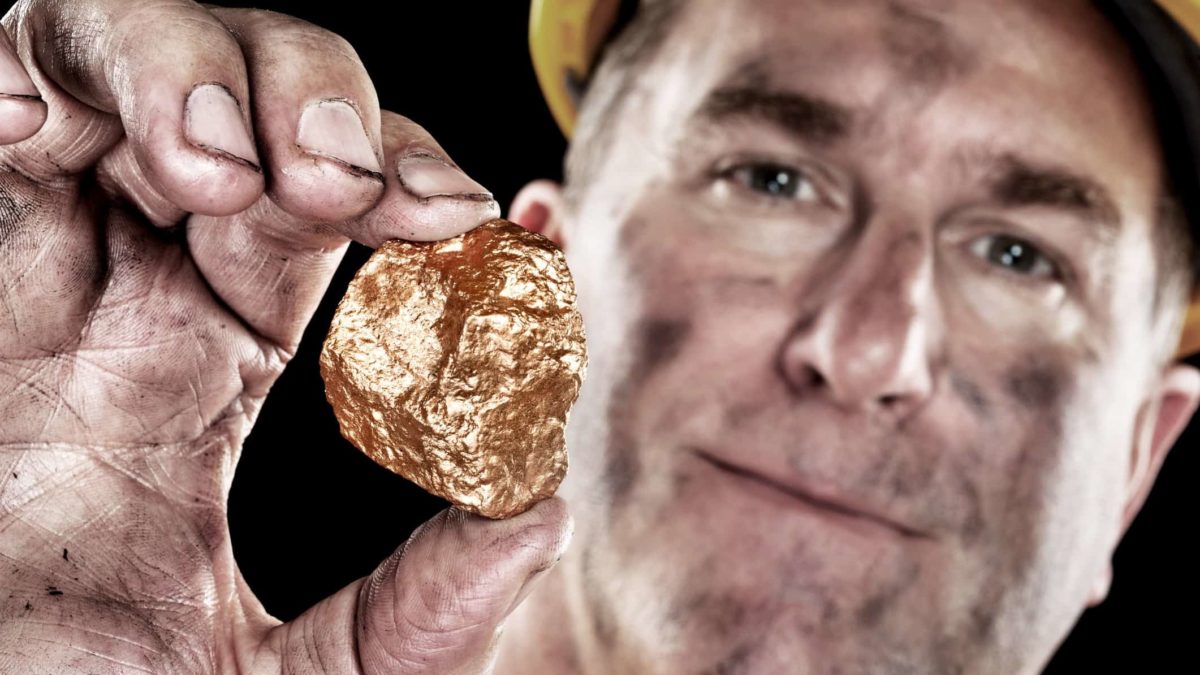
    gold, gold miner, gold discovery, gold nugget, gold price,

    Investors who snapped up ASX gold shares on 28 February should be sitting on some outsized gains today.

    That’s because 27 February marked the beginning of the sizzling run higher for the gold price.

    Just what kind of sizzling run are we talking about?

    Well, on 27 February gold was trading for US$2,030 per ounce, already well above the US$1,820 that same ounce was fetching on 5 October.

    But amid strong central bank buying, the prospect of lower interest rates on the horizon from global central banks, and increased demand for haven assets, the gold price charged higher from there to hit new records on 20 May.

    While bullion has retraced a touch from those highs, it’s still commanding US$2,336 per ounce today. This sees the yellow metal up 15.1% since the end of February.

    As you’d expect, that’s been a boon for most ASX gold shares.

    Indeed, since market close on 28 February, the S&P/ASX All Ordinaries Gold Index (ASX: XGD) has rocketed 23.0%. For some context the All Ordinaries Index (ASX: XAO) is up 1.4% over this same period.

    But with that kind of outperformance already in the bag, is now still a good time to buy ASX gold shares?

    Why ASX gold shares could keep shining bright

    A range of company-specific factors will determine how well any single ASX gold share will perform over the coming years.

    But what happens with the gold price will impact them all.

    On that front, UBS has upgraded four ASX gold shares, labelling the Aussie gold sector as “relatively attractive“.

    As The Australian reports UBS has upgraded its outlook for Northern Star Resources Ltd (ASX: NST), Genesis Minerals Ltd (ASX: GMD), Regis Resources Ltd (ASX: RRL) and SSR Mining Inc (ASX: SSR).

    The upgrades come amid the broker’s upwardly revised expectations for the gold price.

    UBS’ analysts have increased their 2025 gold price target by 21% to US$2,700 per ounce. The broker also increased its 2026 price forecast by 34% to US$2,775 per ounce. And UBS’ revised 2027 gold price forecast of US$2,600 per ounce is up 30% from the prior forecast.

    In Aussie dollars that would see the 2025 gold price at AU$4,053 per ounce.

    Taking ASX gold share Northern Star as one example, the miner’s March quarterly report revealed it was producing gold at an all-in sustaining cost (AISC) of AU$1,844 per ounce (US$1,213/oz). So we’re talking about some hefty potential profit margins here.

    Commenting on the upgrades for the ASX gold shares, UBS analysts said:

    We have previously flagged some moderate risks around FY 2025 guidance and medium-term cost profiles and have taken the opportunity to update this, but this pales in comparison to the prospect of nearly AU$4,000 per ounce gold.

    The post Is buying ASX gold shares right now a good idea? appeared first on The Motley Fool Australia.

    Should you invest $1,000 in Genesis Minerals Limited right now?

    Before you buy Genesis Minerals Limited shares, consider this:

    Motley Fool investing expert Scott Phillips just revealed what he believes are the 5 best stocks for investors to buy right now… and Genesis Minerals Limited wasn’t one of them.

    The online investing service he’s run for over a decade, Motley Fool Share Advisor, has provided thousands of paying members with stock picks that have doubled, tripled or even more.*

    And right now, Scott thinks there are 5 stocks that may be better buys…

    See The 5 Stocks
    *Returns as of 5 May 2024

    More reading

    Motley Fool contributor Bernd Struben has no position in any of the stocks mentioned. The Motley Fool Australia’s parent company Motley Fool Holdings Inc. has no position in any of the stocks mentioned. The Motley Fool Australia has no position in any of the stocks mentioned. The Motley Fool has a disclosure policy. This article contains general investment advice only (under AFSL 400691). Authorised by Scott Phillips.