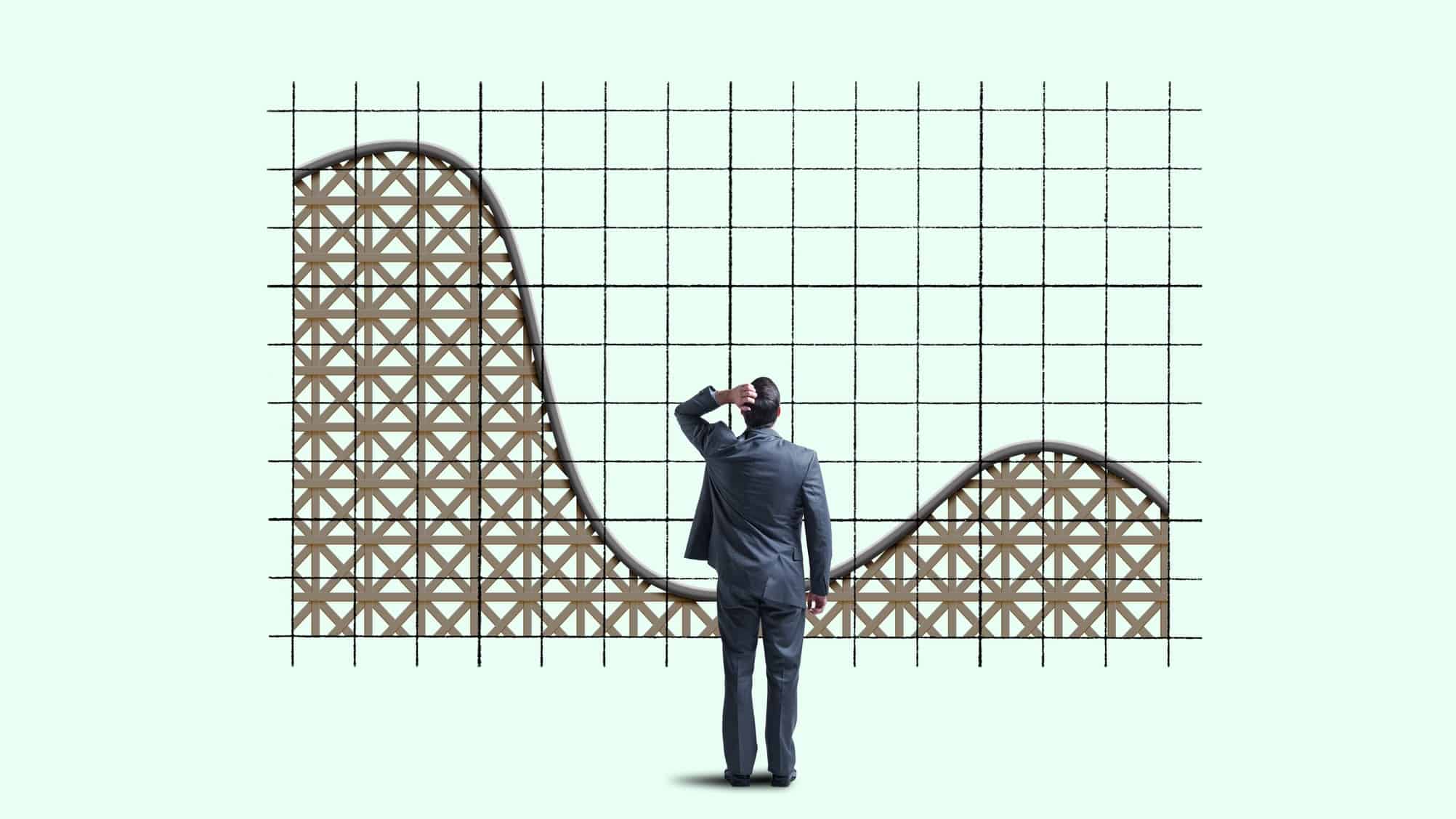
Bath & Body Works' new CEO has a plan to revitalize the company.
Justin Sullivan/Getty Images
Bath & Body Works' CEO criticized the chain as slow and inefficient after reporting weak Q3 results.
The company has struggled to attract younger consumers and has relied on heavy discounting.
Plans include focusing on core products, cutting men's grooming, and launching on Amazon.
"Slow and inefficient."
That's how Bath & Body Works' CEO, Daniel Heaf, described his company on the company's Q3 earnings call on Thursday morning.
"Our organization has become slow and inefficient," Heaf said. "Unnecessary complexity has reduced our speed and dampened our innovation."
Bath & Body Works reported weaker-than-expected Q3 results. The chain reported a drop in sales and earnings and cut its full-year guidance.
Heaf said that while the consumer environment is tough right now, the brand has made mistakes that are driving these weaker numbers.
He said the brand has "not attracted a younger consumer" and has become dependent on heavy discounting, which has eroded brand value and image.
Heaf, who joined Bath & Body Works in May and was previously at Nike, also presented the company's comeback plan on Thursday.
Hesaid that the company plans to" reignite its brand" and attract a new and younger consumer by pouring investment into its core areas — body care, home fragrances, soaps, and sanitizers. It will be axing hair care and men's grooming products from its assortment to simplify its offering.
"We will transform Bath & Body Works to be a faster and more efficient organization. Work has already begun, and we will continue to break down silos, speed up decision making and strengthen the agile operating model that makes this company great," Heaf said in the earnings release.
The chain is also launching on Amazon to reach new customers and target the younger audience. Heaf said that the company estimates that "$60 million to $80 million of Bed & Body Works' products are sold via the grey market on Amazon, so launching there "is an incredible sales opportunity."
Bath & Body Works' stock price is down 25% today and 58% this year.
Elaina Gonzalez has maintained her physical fitness and health throughout her 93 years.
The former body double for a well-known actor also chalks up her longevity to a positive mindset.
She said drops of CBD liquid under her tongue and mixed with her face cream keep her looking young.
When 93-year-old Elaina Gonzalez is asked about her toned body, charming smile, and youthful features, she always downplays them.
She prefers to show humility rather than, as she puts it, be "bragaddacious" about her appearance.
"I'm just a regular person who believes that taking care of yourself and saying please and thank you takes you a little further in life," she told Business Insider.
She minimizes her yearslong stint as a body double for a glamorous Hollywood star — whom she can't name for contract reasons — due to her low-key nature.
Elaina Gonzalez swears by the mantra, "Don't sweat the small stuff."
Courtesy of Elaina Gonzalez
Still, the grandmother of 11 from Lakeville, Minnesota, loves to share her advice to younger generations about health and longevity.
She follows a strict regimen of yoga and dancing at the gym at least four mornings a week, maintains the same weight, and swears by the theory, "don't sweat the small stuff."
Here are her top life lessons:
Never stop exercising
Gonzalez, born in December 1931, was raised by European parents who emphasized the importance of health and regular exercise from a young age.
Her father, a police officer from Switzerland, would encourage her and her two brothers to run to build stamina and lift weights to develop strength.
Around the age of 19, Gonzalez was talent-spotted and cast as a leg model for a commercial. It led to other gigs, including the body double work in Los Angeles.
She maintained her gym memberships for decades, most recently joining a branch of Life Time near her home, where she exercises every Monday to Thursday morning and on alternate Fridays.
Gonzalez is front and center of her exercise classes
Courtesy of Kaylee Sternhagen, Life Time
Starting at 8 a.m., she performs almost an hour of yoga, takes a break, and then attends an aerobics-style dance session called Total Body. "I'm the oldest person there," she said.
Outside the gym, she takes her dogs, Theo and Lily, for daily walks.
Watch your food intake, but don't obsess about it
Gonzalez's breakfast typically consists of fruit, a piece of toast, and a cup of coffee. "You don't want to feel light-headed at the gym," she said.
Then she has an early lunch — her biggest meal of the day — of foods such as pasta, vegetables, chopped chicken, or another lean protein.
Dinner, which she typically eats before 6 p.m. unless she is going out, is often a lighter meal, possibly a combination of fruit and cheese.
She stays hydrated by drinking at least eight glasses of water daily.
"Of course, I'd love to have a hot fudge sundae every day, but I resist," she said. "I prefer to eat well to fuel my body for all the exercise I do, but I don't count calories or become obsessive," Gonzalez said.
Gonzalez follows a simple beauty regimen
Courtesy of Elaina Gonzalez
At 5 feet 3 inches tall, she has maintained a healthy weight of around 130 pounds.
Follow a simple beauty and sleep plan
The nonagenarian doesn't invest in expensive beauty products, such as scrubs or lotions.
"I've been using it for at least a decade, and it works magic on your skin," she said. "It keeps it soft and hydrated — especially in hot climates — and staves off wrinkles."
She also drops a tiny amount of the liquid under her tongue. "I feel like it's my secret weapon to feeling and looking so much better."
As for rest, Gonzalez is usually in bed by 9 p.m., but she spends time reading her favorite books before going to sleep. There is a TV in her bedroom, but she wouldn't dream of watching it at night.
In fact, she avoids any form of blue light for at least two hours before retiring. "It interferes with your vision and your brain activity," she said.
Be grateful
Gonzalez lives by the saying, "Don't sweat the small stuff," and applies a positive mindset.
"I always start the day with a little prayer of gratitude," she said."I want to thank whatever the higher powers are for keeping me walking upright and doing what I do."
Gonzalez with Kaylee Sternhagen, one of her fitness instructors
Courtesy of Kaylee Sternhagen, Life Time
The mother of three sons said that people's older years can be tough, but complaining doesn't help. She knows that she is "blessed" with good health, but she tries to find the good in everything, even setbacks.
"I ask their advice when I'm having trouble with something technical and am amazed by their skills," she said, adding that she is always open to learning new things, "because you can never have too much knowledge, no matter your age."
This time around, it's Tools for Humanity, Sam Altman's $2.5 billion eye-scanning startup that wants to help prove people's humanity in the age of AI.
"We will neither fail, nor will we be an average outcome, and that's what we want and that's all I care about every day and all you should care about every day, and nothing else should matter," CEO Alex Blania told employees at the start of the year, according to a recording reviewed by BI's Nicole Einbinder.
Blania's message has become a common pitch from tech executives to their employees ahead of critical junctures.
For Orb, it's about getting more people to opt into what amounts to a human verification tool.
Tools for Humanity has amassed millions of sign-ups, but Nicole previously reported it's still well shy of its goal of a billion users. Insiders questioned its long-term strategy, especially in a crowded marketplace for payment and identification products.
And then there's the regulatory angle. Some countries, like Spain, India, and Indonesia, have either barred, halted, or investigated the startup.
Not one to get left out of the fun, Microsoft is in the middle of a "rethink."
CEO Satya Nadella said the tech giant needs to adjust its business model for the AI era, and he's tapping an advisor to help.
BI's Ashley Stewart obtained an internal memo from Nadella that explained how the company needs to "rapidly rethink the new economics of AI across the company — just as we once did with the cloud."
For both Tools for Humanity and Microsoft, AI sits at the core of their strategy decisions. As much as the tech has caused anxiety and fear among workers about their future, the companies looking to leverage it are also facing plenty of uncertainty.
That's a difficult proposition for employees: Trust your company as it wades into the unknown despite not having a ton of job security yourself.
Netflix opened its first permanent Netflix House outside Philadelphia.
kat kendon/Kat Kendon / NETFLIX
Netflix and MrBeast are testing mini theme parks to transport their IP off-screen.
The venues are built to wow fans of the brands and meet consumer demand for IRL experiences.
Experts broke down the business case and growth prospects.
What do Netflix and MrBeast have in common? They're two of the most recognizable names in media — and they're both looking to theme parks as a new lane of growth.
This month, Netflix opened a Netflix House in the King of Prussia mall outside Philadelphia, the first of multiple permanent installations for fans to hang out, take selfies, and play games based on popular shows like "Wednesday" and "One Piece."
Top YouTuber MrBeast, meanwhile, unveiled a mini theme park in Saudi Arabia last week, called Beast Land. The 45-day pop-up similarly taps into the creator's intellectual property by offering guests a chance to compete in games that mirror his stunt videos.
Netflix and MrBeast amassed audiences of hundreds of millions by ignoring the old media playbook. So, why are they following in Disney's footsteps by launching theme park experiences?
Fans of Jimmy Donaldson, a.k.a. MrBeast, visit the Beast Land pop-up in Saudi Arabia.
FAYEZ NURELDINE/AFP via Getty Images
There are two big forces at play.
First, there is a demand for in-person experiences.
"There's a lot of on-screen fatigue," said Mike Ellery, chief creative officer at Sparks, which has worked with Netflix on in-person activations like its 2024 Emmy season event. "People want to do things that are live."
Sales for live events like concerts and sporting events have bounced back to (or even exceeded) pre-pandemic levels, with communal experience a big part of the draw, according to Deloitte. Surveys by MG2 Advisory, a retail design and architecture firm, have shown that Gen Z has become more interested in in-person interactions and pop-up experiences over the past two years, after being relegated to screens during the pandemic lockdown. Two of five of these adults, 18 to 26, shopped mostly or entirely in-store in 2025, MG2 found.
Second, there's the desire from media companies for new ways to grow revenue. Netflix's frenzied days of subscriber expansion in the US are over, and the time people are spending watching its shows and movies is slowing. MrBeast, for his part, is racing to become profitable as his company eyes a potential IPO and looks to deliver for investors.
Both want to wring more value out of the massive amount of money they spend on content, and one way to do that is by getting fans to engage more deeply with them in areas like in-person experiences.
"It's an acknowledgment that the battle for time is sort of a fool's errand," said media analyst Doug Shapiro, a senior advisor at BCG. "Time is finite."
Fans of "Wednesday" can step inside Nevermore Academy at Netflix House.
kat kendon/Kat Kendon / NETFLIX
Netflix and MrBeast want to let fans experience their brands in real life
These initial experiments by Netflix and MrBeast are moderately priced.
The Netflix games cost $25 to $40 a pop to play, while Beast Land charges $7 to enter and up to $66 for all-access to the rides. That's roughly on par with attractions like the Top of the Rock observation deck at New York City's Rockefeller Center (starting at $42), but cheaper than a major theme park like Disney World, which starts around $120 per day.
The initial slate of Netflix Houses will be located in malls, allowing people to easily return to them. The experience is varied enough within each locale, and from city to city, that you could see people coming back with friends, as a couple, or with kids to do different things each time, said Melissa Gonzalez, founder and principal of MG2, which has developed escape rooms and immersive pop-ups for brands like Victoria's Secret (Netflix isn't a client).
"There's a lot of different uses here," Gonzalez said. "The way they designed this, things are naturally Instagrammable. It feeds into the experience economy. The younger generation wants that."
The MrBeast team modeled its Beast Land attractions after its videos, with one game featuring the "trap doors" gimmick that has become a signature in MrBeast competitions. The goal was to allow fans to experience what it's like to compete in a MrBeast challenge, the YouTuber said.
Letting people walk through a space or participate in a challenge they've seen on screen brings instant emotional connection and loyalty, Ellery said.
Netflix House wants attendees to leave with a souvenir.
Netflix
The business case
It's hard not to consider these new ventures without thinking of Disney, which has built a $36 billion parks and experiences business off its famous characters and stories. The MrBeast team has even pitched investors on plans to build out a Disney-style empire.
These initial efforts from Netflix and MrBeast don't have Disney-scale ambitions, however.
Netflix has said it's not making its "Houses" for the money but to connect more deeply with fans. Netflix has also historically moved slowly into new areas, committing in a way that doesn't spook investors (see: its foray into video games).
Projects like Netflix's and MrBeast's have a natural cap on scale compared to larger theme parks, which rely on massive numbers of visitors who come for longer and spend a lot, said Jason Ambler, chief content officer of Falcon's Beyond, which develops and operates entertainment destinations and whose clients have included Disney and Universal Studios.
The smaller formats are more agile and replicable, though.
For most companies, the real value isn't in the business itself but in how these experiences boost the brand and drive sales elsewhere, Ambler said. Branded, in-person experiences let companies quickly and safely test new ideas, stay visible between product releases, and strengthen connections with fans.
Beast Land has a partner in Riyadh Season, a Saudi entertainment festival, and is running for a limited time, which reduces MrBeast's financial risk.
While the capital outlay may be relatively small for Netflix and MrBeast, launching these experiences isn't risk-free, Gonzalez said. Netflix's shows have to translate into a real-world environment and not feel shallow or gimmicky. There may be licensing complexities. Replicating the approach in different locales with different footprints can take time.
While these experiments aren't going to turn into a billion-dollar business overnight, Netflix and MrBeast may consider them a success if they determine — through tracking things like customer satisfaction and spending over time — that they keep fans watching, subscribing, and buying other things the company sells.
Marketing is another goal. These experiences are designed for attendees to take selfies and post them, helping spread the word to a wider audience.
"It's creating this shareable experience that you can have in real life with your friends and your people, and you can amplify that with social really easily," Ellery said.
Don't rule out the possibility that these experiences could grow into something bigger down the road.
"All successful franchises start to think about how they can further monetize," said Scott Purdy, a media industry consultant at KPMG US. "They're going down a path others have in terms of business maturity. When companies slow down from frenzied growth, you start to look at other avenues. Can it be a real business? Yes. I don't think it's just a marketing thing."
A US soldier carries the Surveyor interceptor drone at a demonstration in Poland this week.
Kacper Pempel/REUTERS
NATO forces are training to use a cheap intercepter drone that has already proven itself in Ukraine.
Poland and Romania are deploying the Merops system in response to recent Russian drone incursions.
Business Insider watched soldiers train on Merops this week and learned what it can and can't do.
NOWA DĘBA, Poland — Proven in the skies above Ukraine, a cheap drone-killer that has logged nearly 2,000 Russian kills is now in the hands of Western troops.
Poland and Romania have purchased and are deploying the Merops system to better protect Eastern European airspace after a series of Russian drone incursions a couple of months ago, wake-up calls that left NATO allies scrambling to field low-cost air defenses.
This week, Business Insider observed US, Polish, and Romanian forces training on the American-made counter-drone system, which launches an interceptor drone called the "Surveyor" to take down enemy threats by slamming into them or exploding nearby.
At a training range in southeastern Poland, US military officials said that Merops is designed to intercept both reconnaissance and strike drones, including the newer and faster variants powered by jet engines.
"This system right here is very reliable," American ArmySgt. Riley Hiner, an interceptor pilot who has helped train the NATO soldiers, told Business Insider.
However, while the Merops system has a record of success in combat, it's not without its limitations.
A Polish soldier prepares to launch the Surveryor interceptor drone from the bed of a pickup truck.
Jake Epstein/Business Insider
What is Merops?
Interceptor drones have emerged as one of Ukraine's top air defense tools in recent months, allowing it to hunt and destroy large numbers of cheap Russian Shahed-style drones at a relatively low cost per engagement.
Merops, developed by the American initiative Project Eagle, is one of many counter-drone systems that Ukraine has been using.
Ukraine's defense industry is producing hundreds of interceptor drones each month, and Western military leaders seeking to procure cheaper air defense systems to match the growing threat that drones pose to Europe are taking note of their success.
Interest turned to urgency in September after Russian drones violated Polish airspace. NATO fighter jets fired expensive air-to-air missiles to shoot down weapons worth a fraction of their cost.
Poland and Romania, the latter of which faced its own Russian drone incursion just a few days later, decided to procure and deploy Merops as part of a new NATO initiative to defend the alliance's Eastern edge against potential future attacks.
A US soldier holding the Surveyor interceptor.
Jake Epstein/Business Insider
US Army Brig. Gen. Curtis King, the head of the 10th Army Air and Missile Defense Command, described the counter-drone system as "very lethal," "very effective," and also "cost-effective."
Merops consists of a ground control station, the Surveyor interceptor, and launch platforms. Operated by a four-person crew consisting of a commander, a pilot, and two technicians, it can be deployed at a fixed location or on the move, making it a flexible asset.
Business Insider watched Polish, Romanian, and American troops work with the Merops system on Tuesday as the soldiers were nearing the end of their two-week training course. King, speaking to reporters, said the system is user-friendly, so soldiers can quickly learn how to operate it.
US Army Europe and Africa said the Merops training reflects efforts by Poland and Romania to quickly field proven battlefield systems and strengthen NATO's new Eastern Flank Deterrence Line, which aims to protect the alliance with a mix of low-cost drones and layered defenses.
What threats can it hit?
During a demonstration, Polish soldiers launched the Surveyor from the bed of a pickup truck. The interceptor drone attempted to score a direct hit on its target — a drone mimicking a Shahed — but after several attempts and near misses, it deployed a parachute and floated down to the ground.
The Surveyor interceptor drone costs $15,000 apiece.
Jake Epstein/Business Insider
The parachute feature allows troops to reuse the Surveyor, ultimately saving money in the training cycle.
US military officials said that the Surveyor drone was unarmed during Tuesday's demonstrations, but under real combat conditions, it would carry a small warhead that could destroy a hostile drone by exploding next to it rather than needing to score a direct hit.
The propeller-powered Surveyor interceptor drone can be piloted remotely or operate autonomously, using radio frequencies, thermal signatures, or radar sensors to track its target. It is capable of reaching speeds over 175 miles per hour and is resistant to electronic warfare, which has become an ever-present threat to drone operations in Ukraine.
Military officials said the Surveyor is designed to defeat high-flying one-way attack drones, such as the notorious Iranian-designed Shahed, as well as reconnaissance drones. Ukraine has already used it to record more than 1,900 successful intercepts in combat.
They emphasized that the Surveyor interceptor can also take down jet-powered drones, which travel faster than those powered by propellers. Russia began fielding these advanced variants in combat earlier this year.
Hiner, the American pilot, said that Merops has about a 95% success rate, especially when intercepting Shahed-type drones. "I think as mobile as it is, and as versatile as it is, it's very easy to use," he added.
The Surveyor can be launched from trucks or ground stations, making it a flexible option.
Jake Epstein/Business Insider
What are the limitations?
Merops isn't the end-all counter-drone defense. It's built for a specific threat, not all drone threats. For instance, it would likely struggle against low-flying first-person-view (FPV) drones given their size and profile, Hiner said.
Most FPV drones are small quadcopters connected to pilots via radio frequency signal or fiber-optic cables. These drones often carry small explosive payloads and can deliver precision strikes for just a few hundred dollars. They dominate the battlefield in Ukraine.
Merops is built for bigger one-way attack and reconnaissance drones. With its $15,000 Surveyor interceptor, it's designed to be much less expensive than the threat it's hunting. Older Shahed variants, for example, are estimated to be worth $35,000 apiece. Its deployment in NATO gives the alliance a new capability that it previously lacked.
Military officials hope that Merops will also provide NATO with a cheaper alternative to having to use fighter jets and advanced air-to-air missiles, which can cost hundreds of thousands of dollars, for drone defense in Eastern Europe.
"That's our major objective," King said. "We have got to find lower costs — both sensors and effectors."
The author's teens helped reduce the family's grocery bill.
Courtesy of Laura Falin
I made changes to my grocery list and let my teens shop, which all led to out-of-control spending.
When I worked up the courage to tell my kids our grocery bill was over $2,000, they helped us save.
Together, we saved $750 by being more mindful of our purchases.
When my kids were little, I couponed, planned meals around the weekly specials, and tried to keep a tight rein on our grocery budget. But as they grew, I began working more. We all got busier, and I let some of those habits go.
Slowly, without really realizing it, our grocery costs inched up. A few months ago, I tracked every grocery expenditure for the entire month and discovered our bill totaled $2,300. I about had a heart attack.
I knew it was time for a change, and thankfully, the whole family pitched in.
Small changes in my spending habits led to a larger bill
Some of this spending happened because those previously little kids had become teenagers. And while having teen drivers makes me nervous for their safety, I have to admit there's a huge perk: They can run errands for me.
After years of having to load toddlers and babies into the car for a quick trip to the grocery store, they were finally able to repay the favor. In fact, they enjoyed doing it. I could text them as they got out of after-school practice, and they could grab the few small things I needed for dinner that night.
Except it never ended up being just a few small things. I'd get a text back, asking if they could treat themselves to a drink or a snack … usually both. Of course they could! They'd been working hard at school and practice all day. They were probably starving, and they deserved it.
The month of our horrifying grocery bill was also marked by a family birthday party. We grilled, had snacks, and appetizers. We had cocktails for everyone over 21 and fancy sodas for everyone under 21. It was a great party, but that bill definitely contributed to our out-of-control spending.
The other big problem, I realized, was that I'd started grabbing convenience foods. I got frozen breakfast burritos and breakfast sandwiches, figuring the protein would fill up hungry teens more than cereal. We had some easy, ready-made meals for nights we were too busy to cook. All of these small additions combined to produce one huge bill.
I debated whether to tell my kids
On the one hand, we've always talked about budgeting with them. We have talked about the things we can and can't (or don't want to) afford as a family. They do their own budgeting for Christmas and meals out with friends. One of them bought her own car, which cost less than our grocery bill, so budgeting isn't a foreign concept to them.
On the other hand, it felt weird to tell them we needed to watch our spending on groceries. Those feel essential. We've always been fortunate to be able to provide the basic necessities, and it was a blow to my ego to tell them we needed to cut back on food. I didn't want anyone to worry that we couldn't provide for them.
We had a family discussion to reduce our spending
I finally told everyone that we would have to change our grocery shopping habits. The kids were surprisingly on board, and we set a family challenge to reduce our bill.
We agreed to do two inexpensive meatless meals a week and make things like breakfast burritos at home. They started cooking from scratch, and not asking for quick, convenient snacks. My teenage drivers would pick up my once-a-week grocery order from the store, and we managed to avoid adding any extra trips in between.
All of us have gotten better at using up leftovers and emptying the pantry before we shop. We're wasting less food as a family.
We even had another family party this month. Instead of a big cookout, we did a grilled cheese and soup bar, with a homemade menu full of cheesy puns.
By the end of the month, we'd managed to stick to our challenge and cut $750 off our grocery bill. It was a valuable lesson for all of us on how to be mindful of our spending and waste.
I hope this was also helpful to my teens. In a few years, they'll be buying their own groceries, and they probably won't have a lot of money to start. But now, they have some ideas for how to cut costs when they need to do their own shopping.
Professional organizers shared their advice on how to declutter your bedroom.
Catherine Ledner/Getty Images
Business Insider spoke to two professional organizers about how to declutter your bedroom.
Extra bedding, mismatched socks, and old clothing can take up unnecessary space.
Taking things such as mail, dishes, and empty boxes out of the room helps to reduce clutter.
As tedious as it is, decluttering is a necessary task that can make your space look and feel bigger. However, figuring out where to start can be difficult, especially when the clutter gets overwhelming.
For tips on the process, Business Insider asked two professional organizers who cofounded the organizing service Uncluttered Spaces what people should get rid of in their bedrooms.
Here's what the experts said.
Exercise equipment should be kept outside the bedroom.
BM_27/Getty Images
Although home workouts are popular, Uncluttered Spaces' Tina Horan said having equipment in your bedroom could create more clutter and make you feel less relaxed.
She recommended moving the equipment to a designated area for working out in order to make the bedroom feel more organized, relaxed, and spacious.
Dishes should either be kept out of the room or cleaned up right away.
Cuchulainn Liam Gent/Shutterstock
Sometimes a snack in bed is comforting — but Horan advised against letting a pile of dirty dishes build up in your bedroom.
"I'm sure we're all guilty of bringing dishes into our room, but don't wait too long to declutter and remove it to ensure a constantly clean room," Horan said.
Mismatched socks can take up valuable drawer space.
chickaz/Getty Images
Uncluttered Spaces' Nancy Yerkes told BI that having a graveyard of mismatched socks takes up a lot of useful drawer space.
"It's time to buy a new pack of matching socks — let go of the misfit ones and reclaim that drawer space," Yerkes said.
Collecting old clothes minimizes useful closet storage.
Csondy/Getty Images
Keeping items in your closet that no longer fit you is one of the easiest ways for clutter to accumulate.
"Instead of collecting clothes, keep a good routine of trying your pieces on so you know what to keep and get rid of," Horan said.
By routinely trying clothes on, you can stay on top of organizing and maximizing your closet space, she added.
Mismatched hangers are a no-no.
Boogich/Getty Images
For a better-looking, more put-together closet, Yerkes suggested getting rid of mismatched hangers.
"If possible, buy uniform and sturdy hangers. It's the secret to a visually satisfying closet," Yerkes said.
Keeping bills, mail, and other documents in the bedroom can make your space look messy.
sirtravelalot/Shutterstock
Horan advised against opening mail and keeping documents inside your bedroom.
"Having a buildup of mail can cause stress, but it's also messy to have a pile of documents laying around your room," she said.
Instead, she recommended designating a drawer or basket for your mail to keep the collection nice and tidy.
You don’t need a huge collection of extra bedding.
AdShooter/Getty Images
Having extra bedding sets with different designs is a nice way to decorate, but having too many takes up an annoying amount of space, Yerkes said.
"Two sets of everything is all you need — one to use while you wash the other and to switch out when necessary," she added.
Move empty boxes and storage containers outside your bedroom.
Klaus Vedfelt/Getty Images
Horan said breaking down extra boxes is a tedious but necessary step in decluttering your room. This includes old appliance boxes, packaging, and storage bins.
"The boxes might look important, but they also are an eyesore and waste of space you could be using for something else," Horan said.
Instead of keeping them in your room, she recommended stacking and packing them away in a storage closet, crawl space, or basement.
She also suggested throwing away smaller boxes, such as packaging from phones or computers, because they don't offer much storage space.
This story was originally published on August 13, 2024, and most recently updated on November 20, 2025.
I experienced my first fall in New York City after moving from Florida this year.
Anadolu/Anadolu via Getty Images
I'm spending my first fall in New York City after recently moving from Florida.
The cold, rainy weather and fast-changing foliage surprised me the most.
Next year, I'll make seasonal plans in advance to avoid missing the peak views.
I've spent my entire life not experiencing the seasons.
Growing up in a beach town in the Caribbean located only 730 miles away from the equator, and then spending my teenage and college years in sunny Florida, seasons are foreign to me.
Beyond seeing a single palm leaf on the ground on a mildly chilly Florida day — that is, somewhere in the mid-60s — or cozying up during the occasional cold fronts, I had never really experienced a colder season.
As we near the end of the fall season and see the last leaves drop, here are eight things that have surprised me the most about fall.
It is way colder than I expected.
Kristine Villarroel/Business Insider
Movies and other media had made fall seem like a light breeze, only requiring a jacket and maybe a fashionable scarf.
Perhaps it's because I'm used to tropical climates, but the reality has been much colder than I imagined.
Before the end of October, when temperatures in New York City had an average low of 51 degrees Fahrenheit, I found myself needing to layer thermal long-sleeve shirts and leggings underneath every outfit. I began relying heavily on my newly acquired puffer coat, scarves, and gloves to leave the house every day — all before the leaves could even finish turning from yellow to orange.
While the level of layering might look fashionable, it is about survival for me. Anything below 45 degrees feels like a blizzard, and I'm not sure how ready I am for the real winter.
It makes the passage of time very noticeable.
Kristine Villarroel/Business Insider
Walking past the same trees every day and witnessing their gradual transformation made me think more about the passage of time than I usually do.
I grew up in an area where the average temperature doesn't vary by more than 10 degrees throughout the year, and trees remain in a state of perpetual greenness. While we experience dry and rainy seasons throughout the year, it is nearly impossible to determine the time of year just by going outside.
As such, in a year-round tropical climate, where the sun always rises and sets at the same time, it's easy to forget time is passing by.
My first true fall has felt like a nonstop reminder that not only is summer over, but winter is coming — and it's getting closer each day.
It's made me more introspective and has even encouraged me to get out more, as long as the weather allowed.
"This might be the last time in the next six months that I get to do this," is a thought I've had many times.
Even with the lower temperatures, it's a great time to be outdoors.
Kristine Villarroel/Business Insider
As much as it feels good to be inside, cozying up with a warm blanket and a cup of hot chocolate, it's also been a great time to go outside to explore — without overheating.
I've been enjoying every walk I can take, from wandering around neighborhoods near to my apartment to visiting expansive green spaces like Prospect Park in Brooklyn.
While it might require an extra layer, it's great to take long walks without sweating or craving air conditioning, as is the case in Florida.
It makes even the most ordinary daily walks so much more picturesque.
Kristine Villarroel/Business Insider
While I used to dread my 15-minute walk to the subway in the summer, where my hair would get puffy and my makeup would be all sweaty before I even got to the office, I now look forward to it.
Starting every morning by surveying the changing leaves around my neighborhood makes even small daily errands feel much more scenic and eventful.
I've even found myself chronicling the same colorful trees on my walks every morning.
Rainy days don't mix well with the falling leaves.
Spencer Platt/Getty Images
The end of summer comes with some raging storms — which, it turns out, don't mix well with falling leaves.
On a particularly rainy day, I went on social media only to see pictures of cars floating in my neighborhood, which had been flooded.
Falling leaves covering storm drains can make parts of the city, like my neighborhood, particularly susceptible to flooding, officials told CBS News.
Other photos and videos showed subway stations flooding as well, and water even getting inside subway cars.
Thankfully, the water had drained by the time I got home from work. Storms like this don't happen often, but the city has seen its worst-ever four rainstorms in the past four years, suggesting they're becoming more frequent, per CBS News. It was a reminder of just how destructive the rain can be this time of year.
The days get short very quickly.
Kristine Villarroel/Business Insider
Nothing signaled the end of the summer more aggressively than the time changes. Even before daylight-saving time ends, as it did at the start of November, the sun begins setting earlier.
Having grown up with consistent 6 a.m. sunrises and 6 p.m. sunsets, getting used to it being dark outside at 4:30 p.m. has been a challenge, especially during the week, where it feels like daylight vanishes during work hours.
The schedule change has turned me into an early morning person for the first time. All I want to do once I get home — in what looks like the dead of night — is go to bed, so I've started making the most out of my days with an early morning routine.
Now, I get to see the sun rising nearly every day to make up for the missing daylight hours at the end of the day.
Soups, teas, and warming foods are a must.
The Washington Post/The Washington Post via Getty Images
I love soup, but it's never been as present in my life as it is now.
As the weather cools, I've become a huge fan of all kinds of warming and comforting hearty soups. Recently, I've been having red lentil soup for dinner almost every night.
It's also become a staple in my mornings as well. I've started to opt for warm bone broth, oatmeal, and teas first thing in the morning instead of my usual yogurt bowl, fruits, or other cold foods I was used to enjoying even during the winter months in Florida.
It doesn't last long enough!
Kristine Villarroel/Business Insider
It took me a minute to get into the fall flow, from knowing how to properly layer to really noticing the rate at which leaves changed their colors.
By the time I began enjoying it, it was over.
I now understand why people make fall plans — from pumpkin patches to taking foliage trains and hikes — months in advance. I might just do the same next year.
Verizon will lay off up to 20% of its non-union workforce.
Justin Sullivan/Getty Images
Verizon said Thursday that it will lay off more than 13,000 employees.
The company started 2025 with about 100,000 employees.
New CEO Dan Schulman said the cuts will make Verizon "faster and more focused."
Verizon plans to lay off 13,000 employees, its new CEO said Thursday.
The job cuts will make Verizon "faster and more focused," Verizon's CEO Dan Schulman said in a message to employees. Bloomberg earlier reported the news.
Schulman's message said the cuts are meant to reduce costs and focus Verizon on "delighting our customers."
"The actions we're taking are designed to make us faster and more focused, positioning our company to deliver for our customers while continuing to capture new growth opportunities," Schulman said.
Schulman became Verizon's chief executive last month and has said he wants to create a "simpler, leaner, and scrappier" company.
This is a developing story. Check back for updates.
I (not pictured) have figured out how to make packing to visit our family way less stressful for me.
Imgorthand/Getty Images
I regularly travel by plane from New York to Sarasota, Florida, to visit my in-laws.
Packing stressed me out until I realized I could store essentials at my mother-in-law's place.
Now, my husband and I travel light, and I worry less about packing and checking bags.
A few years ago, my husband's brother and his family moved from our hometown in New York to Sarasota, Florida. Some time later, my mother-in-law and aunt-in-law followed.
Now, my husband, our two daughters, and I travel to Sarasota at least once a year, sometimes more.
I'm always excited for my kids to see their grandmother and spend time with their cousins, and I enjoy hanging out with my in-laws in the warm weather, catching up on each other's lives. We shop, laugh, eat, and laugh again.
I love these trips — but I used to hate packing for them.
Packing required too many lists and too much time
Over and over again, I'd pack a full suitcase filled with everything I could need: summer clothes, hoodies for the chilly air-conditioned Florida restaurants, bathing suits, shoes, a dressier outfit that I never wore but always brought just in case.
And, of course, I'd have my least favorite thing to pack: an abundance of toiletries for my hair, skin, and body. My Type-A, list-making personality didn't allow me to just throw these items in my bag.
Instead, I'd start with a list, then take an inventory of what I had and shop for anything I still needed.
From there, I'd write down what could go in my carry-on versus what needed to be in my checked luggage and organize everything into packing cubes and zip-up bags.
This process usually took up to three days to complete. It was madness.
Then, my husband put me onto a life-changing travel trick
One year, my husband had the brilliant idea to stop packing for these trips altogether.
As soon as we arrived in Sarasota, he headed to Walmart, where he purchased a few pairs of shorts, underwear, undershirts, and some T-shirts and button-downs.
Because his mom has the space to spare, when we left to go back home to New York, his clothes stayed in Florida.
My husband realized buying clothes at Walmart and leaving them with family in Florida would save him a lot of time and space for packing.
: Jeffrey Greenberg/Universal Images Group via Getty Images
The next time we visited, after I'd spent days packing and organizing, he simply put his iPad, a book, and some good ol' New York bagels in a bag and off he went to the airport. It was awe-inspiring.
Before our visit last Christmas, I took a page out of his book. I packed clothes and shoes, but only clothes and shoes.
While there, I visited that same Florida Walmart and bought everything else I needed: a toothbrush, floss, face wash, shampoo, conditioner, hairspray, deodorant, and more.
Once our trip came to an end, I left it all there at my mother-in-law's, tucked away in a closet. When we went down the next summer, I again only had to pack clothes. It was so much easier.
This hack has eliminated all the stress of packing for these trips
I look forward to packing light on my next trip to Sarasota.
Delpixart/Getty Images
I love that I can get ready for these trips so quickly now and that I'll never have to go through the headache of packing toiletries to visit family again.
Next time, I won't even be bringing clothes.
Our time in Florida is incredibly laid-back — we mostly stay in and visit casual restaurants. We go to the movies and sometimes to the beach. I don't need my favorite shorts, go-to T-shirts, or that just-in-case dressy outfit. I just need something to wear, anything.
For the next trip, I'm packing only my devices and medicine, buying some essentials after we land, and leaving them there when we depart. When our daughters stop growing, I'll do the same for them.
One day, traveling there will be the easiest thing I do all year. We'll throw a few items in our little carry-on bags, make a quick stop at the bagel store, and be on our way.