
Author: openjargon

  • Lynas to acquire Meteoric Resources in major rare earths deal

    Woman shaking the hand of a man on a deal.

    The Lynas Rare Earths Ltd (ASX: LYC share price is in focus today after announcing a significant acquisition—Lynas will acquire all shares in Meteoric Resources Ltd (ASX: MEI) via an all-scrip deal, valued at approximately A$968 million. Meteoric shareholders are set to benefit from a substantial control premium, while Lynas boosts its resource base, including the largest ionic clay rare earth resource outside China.

    What did Lynas report?

    • Lynas to acquire 100% of Meteoric Resources through a scheme of arrangement.
    • Meteoric shareholders will receive 0.0207 new Lynas shares per Meteoric share held.
    • Implied offer value of A$0.286 per Meteoric share, a 68.4% premium to last closing price.
    • The transaction is valued at A$968 million (fully diluted, 60-day VWAP basis).
    • Post-acquisition, Lynas shareholders will own ~94.1% and Meteoric shareholders ~5.9% of Lynas.
    • Lynas will provide a working capital facility of up to A$110 million to support Caldeira’s development and costs.

    What else do investors need to know?

    The acquisition will bring Meteoric’s Caldeira Project—one of the world’s largest ionic clay rare earths deposits—into the Lynas portfolio. Caldeira boasts a mineral resource of 1,631Mt @ 2,317ppm TREO and an Ore Reserve of 151Mt @ 3,524ppm TREO, with a projected 23-year mine life.

    Meteoric’s board and largest shareholder have unanimously recommended the deal, provided no superior offer arises and subject to an independent expert’s positive conclusion. The transaction is still subject to regulatory and court approvals, and the Scheme Booklet is expected to be dispatched in December 2026.

    What’s next for Lynas?

    Lynas expects the all-scrip structure to preserve its strong balance sheet, allowing continued funding for both Caldeira’s development and other growth initiatives. The company plans to integrate Meteoric’s team and expertise, ensuring continuity for the Brazil-based project.

    With this acquisition, Lynas will significantly diversify its resource base, expanding its global footprint and enhancing supply of critical minerals at a time of robust demand. Investors should watch for further announcements as the deal moves through regulatory and shareholder processes into early 2027.

    Lynas share price snapshot

    Over the past 12 months, Lynas shares have declined 19%, trailing the S&P/ASX 200 Index (ASX: XJO), which has declined 1% over the same period.

    View Original Announcement

    The post Lynas to acquire Meteoric Resources in major rare earths deal appeared first on The Motley Fool Australia.

    Should you invest $1,000 in Lynas Rare Earths Ltd right now?

    Before you buy Lynas Rare Earths Ltd shares, consider this:

    Motley Fool investing expert Scott Phillips just revealed what he believes are the 5 best stocks for investors to buy right now… and Lynas Rare Earths Ltd wasn’t one of them.

    The online investing service he’s run for over a decade, Motley Fool Share Advisor, has provided thousands of paying members with stock picks that have doubled, tripled or even more.*

    And right now, Scott thinks there are 5 stocks that may be better buys…

    * Returns as of 1 August 2026

    .custom-cta-button p {
    margin-bottom: 0 !important;
    }

    More reading

    Motley Fool contributor Laura Stewart has no position in any of the stocks mentioned. The Motley Fool Australia’s parent company Motley Fool Holdings Inc. has recommended Lynas Rare Earths Ltd. The Motley Fool Australia has no position in any of the stocks mentioned. The Motley Fool has a disclosure policy. This article contains general investment advice only (under AFSL 400691). Authorised by Scott Phillips. This article was prepared with the assistance of Large Language Model (LLM) tools for the initial summary of the company announcement. Any content assisted by AI is subject to our robust human-in-the-loop quality control framework, involving thorough review, substantial editing, and fact-checking by our experienced writers and editors holding appropriate credentials. The Motley Fool Australia stands behind the work of our editorial team and takes ultimate responsibility for the content published by The Motley Fool Australia.


  • AFIC reveals FY27 dividend guidance and moves to quarterly payouts

    Person holding Australian dollar notes, symbolising dividends.

    The Australian Foundation Investment Company (ASX: AFI) share price may interest income-focussed investors, with the Board announcing a fully franked FY27 dividend of 37 cents per share and a move to more frequent, quarterly payments.

    What did Australian Foundation Investment Company report?

    • FY27 total dividend guidance of 37 cents per share, fully franked
    • Ordinary dividend of 27 cents per share, up 1.9% on FY26
    • Special dividend of 10 cents per share for FY27
    • Transition to quarterly dividend payments, starting November 2026
    • First quarterly dividend of 9.25 cents per share declared, payable 12 November 2026
    • Dividend Reinvestment Plan (DRP) and Dividend Substitution Share Plan (DSSP) remain available

    What else do investors need to know?

    The shift from semi-annual to quarterly dividends follows feedback from shareholders who want more regular income. This change aims to make AFIC’s payments more in line with other income-focused investment choices on the market.

    The Board will spread the FY27 dividend equally across four quarters, maintaining a stable and predictable payment schedule. While the ordinary dividend is primarily funded by earnings, some realised capital gains will supplement payments, subject to profit outlook and available franking credits.

    Existing DRP and DSSP options mean shareholders can continue to reinvest dividends or substitute them for additional shares, adding flexibility for those building their investment.

    What’s next for Australian Foundation Investment Company?

    Looking ahead, the Board says further special dividends beyond FY27 will depend on future earnings, franking credits, and realised capital gains. The company remains committed to a stable or growing dividend over time, while returning surplus franking credits where possible.

    AFIC plans to review the dividend approach each year to ensure it remains aligned with both company performance and shareholder needs, particularly around providing reliable income.

    Australian Foundation Investment Company share price snapshot

    Over the past 12 months, AFIC shares have declined 7%, trailing the S&P/ASX 200 Index (ASX: XJO), which has declined 1% over the same period.

    View Original Announcement

    The post AFIC reveals FY27 dividend guidance and moves to quarterly payouts appeared first on The Motley Fool Australia.

    Should you invest $1,000 in Australian Foundation Investment Company right now?

    Before you buy Australian Foundation Investment Company shares, consider this:

    Motley Fool investing expert Scott Phillips just revealed what he believes are the 5 best stocks for investors to buy right now… and Australian Foundation Investment Company wasn’t one of them.

    The online investing service he’s run for over a decade, Motley Fool Share Advisor, has provided thousands of paying members with stock picks that have doubled, tripled or even more.*

    And right now, Scott thinks there are 5 stocks that may be better buys…

    * Returns as of 1 August 2026

    .custom-cta-button p {
    margin-bottom: 0 !important;
    }

    More reading

    Motley Fool contributor Laura Stewart has no position in any of the stocks mentioned. The Motley Fool Australia’s parent company Motley Fool Holdings Inc. has no position in any of the stocks mentioned. The Motley Fool Australia has no position in any of the stocks mentioned. The Motley Fool has a disclosure policy. This article contains general investment advice only (under AFSL 400691). Authorised by Scott Phillips. This article was prepared with the assistance of Large Language Model (LLM) tools for the initial summary of the company announcement. Any content assisted by AI is subject to our robust human-in-the-loop quality control framework, involving thorough review, substantial editing, and fact-checking by our experienced writers and editors holding appropriate credentials. The Motley Fool Australia stands behind the work of our editorial team and takes ultimate responsibility for the content published by The Motley Fool Australia.

  • Commonwealth Bank vs BHP: Which ASX blue chip is the better buy in October?

    Blue chip in a trolley with a man pushing it.

    Commonwealth Bank of Australia vs BHP Group Ltd shares

    If you’re keen on ASX blue chips, chances are you’ve looked at Commonwealth Bank of Australia (ASX: CBA) and BHP Group Ltd (ASX: BHP). They’re both among the nation’s most valuable companies, but come from wildly different corners of the economy: one’s a financial powerhouse, the other a global mining giant. So which offers the better proposition for Aussie investors as we head into October? Here’s what I’ve found digging into their latest numbers.

    The case for Commonwealth Bank of Australia

    As one of Australia’s “big four” banks, Commonwealth Bank of Australia is about as iconic as it gets on the ASX. With roots stretching across Australia and into New Zealand, the UK, the US, and Asia, CommBank offers a comprehensive range of financial services—from everyday banking to wealth management, insurance, and broking. It holds a top spot for market capitalisation (in the banking sector) and customer base locally.

    From the latest data, I noticed a few standout fundamentals:

    • Market cap: $253.56 billion—immense, even among banking peers.
    • P/E ratio: 23.14—suggesting investors are willing to pay a premium compared to many other blue chips, though it’s worth remembering banks’ valuations often differ from sectors like resources.
    • Dividend yield: 3.35%, with dividends 100% franked and a robust record of consistent, fully-franked payouts over decades. The most recent dividend was $2.70 per share (final), with an interim of $2.35 earlier this year.

    CBA’s brand recognition and broad financial reach are major moats, and its dividend reliability makes it a favourite among income-seeking investors.

    The case for BHP

    BHP is a global heavyweight in resources, with roots going back centuries. Once known as BHP Billiton, it’s now streamlined to a single ASX listing. The company digs up and sells a range of core commodities: iron ore, copper, coal, and more. As commodity prices shift, so too does BHP’s share price—so you get a different risk profile with this stock compared to the big banks.

    A few key data points jumped out to me:

    • Market cap: $304.03 billion—BHP actually edges past CBA here, making it the largest ASX-listed giant in this comparison.
    • P/E ratio: 22.11—slightly below CBA’s, though I’d note sector comparison between mining and banking is far from apples-to-apples.
    • Dividend yield: 3.98%, also 100% franked. BHP’s dividends sometimes swing with profit cycles, but its recent payouts remain substantial: its last final dividend was $1.38 per share, with a $1.04 interim earlier this year.
    • Year-to-date (YTD) return is a massive 38.8%, driven up by the latest commodity boom and strong operational delivery.

    BHP’s company description highlights its sensitivity to commodity prices, a double-edged sword—potential for big gains in strong years, but risks if global demand wobbles.

    Valuation comparison

    Here’s how the numbers stack up side by side:

    Commonwealth Bank of Australia BHP
    Market Cap $253.56 billion $304.03 billion
    P/E Ratio 23.14 22.11
    Dividend Yield 3.35% 3.98%
    Dividend Franking 100% 100%
    Earnings per Share 6.517 1.932
    Dividend per Share 5.05 2.42

    Note: Both companies report similar P/E ratios, though these aren’t strictly comparable with each other due to the different sectors they operate in. Yield-wise, BHP edges out CBA on dividend, though this can vary considerably year to year for miners.

    Recent share price performance

    Comparing recent share price activity up to 25 September 2026:

    • Commonwealth Bank of Australia closed at $150.83 on 25 Sep 2026, with a year-to-date return of -2.9%. Over the last week in the data, CBA’s price wobbled, experiencing several days of negative moves after a long period above $150.
    • BHP Group closed at $60.72 on 25 Sep 2026, with a year-to-date return of 38.8%. Its share price has surged over the year, though like many resource stocks, recent daily moves bounced around—up one day, down another, with a slight negative in the last session displayed.

    Which is the better buy?

    If I’m weighing up between these two blue chips for October, my pick would be BHP Group. Here’s why: the current data shows BHP outpacing CBA on this year’s return by a massive margin, and it’s also offering a higher 3.98% fully-franked yield compared to CBA’s 3.35%. Both companies show strong dividend records and full franking, but BHP’s recent price momentum and sector tailwinds, driven by strong commodity prices, tip the balance for me right now.

    Of course, with BHP, you are exposed to the swings of the global commodity cycle, so you have to be comfortable with a bumpier ride than you’d get from a major Australian bank like CBA. CommBank remains a reliable income stock and will always deserve a place in any ASX blue chip conversation, but at this snapshot in time—with sector differences acknowledged—I think the stronger momentum and yield favour BHP.

    The post Commonwealth Bank vs BHP: Which ASX blue chip is the better buy in October? appeared first on The Motley Fool Australia.

    Should you invest $1,000 in Commonwealth Bank Of Australia right now?

    Before you buy Commonwealth Bank Of Australia shares, consider this:

    Motley Fool investing expert Scott Phillips just revealed what he believes are the 5 best stocks for investors to buy right now… and Commonwealth Bank Of Australia wasn’t one of them.

    The online investing service he’s run for over a decade, Motley Fool Share Advisor, has provided thousands of paying members with stock picks that have doubled, tripled or even more.*

    And right now, Scott thinks there are 5 stocks that may be better buys…

    * Returns as of 1 August 2026

    .custom-cta-button p {
    margin-bottom: 0 !important;
    }

    More reading

    Motley Fool contributor Laura Stewart has no position in any of the stocks mentioned. The Motley Fool Australia’s parent company Motley Fool Holdings Inc. has no position in any of the stocks mentioned. The Motley Fool Australia has recommended BHP Group. The Motley Fool has a disclosure policy. This article contains general investment advice only (under AFSL 400691). Authorised by Scott Phillips. This article was prepared with the assistance of Large Language Model (LLM) tools for the initial draft. Any content assisted by AI is subject to our robust human-in-the-loop quality control framework, involving thorough review, substantial editing, and fact-checking by our experienced writers and editors holding appropriate credentials. The Motley Fool Australia stands behind the work of our editorial team and takes ultimate responsibility for the content published by The Motley Fool Australia.

  • Forget PLS, this ASX lithium stock could rise 80%

    Businessman planning and analysing investment data.

    PLS Group Ltd (ASX: PLS) shares are a popular option for investors looking for exposure to the lithium industry.

    However, if you are looking for outsized returns, Bell Potter thinks the ASX lithium stock in this article could be the one to buy.

    Which ASX lithium stock?

    The stock that Bell Potter is tipping to rocket is lithium miner Liontown Ltd (ASX: LTR).

    The broker highlights that Liontown has announced plans to expand Kathleen Valley Spodumene Concentrate production capacity. It commented:

    LTR has announced a positive Final Investment Decision to expand Kathleen Valley Spodumene Concentrate (5.4% Li2O) production capacity to around 780ktpa from FY30 (currently ~500ktpa). The expansion capital cost is estimated at $389m, including the $60-70m early works previously communicated in FY27 guidance. The expansion capital will be spent over FY27-29 with a step-change in production from FY30. 

    At normalised expanded production rates, targeted unit costs are $840-920/t (US$610-670/t) SC and annual sustaining capital $90-100m. LTR also reiterated FY27 production and unit cost guidance and Kathleen Valley remains on track to reach 2.8Mtpa mining and processing by mid-2027. FY27 capex guidance is now $435-495m (previously $320-370m), which incorporates the expansion capital.

    While this expansion comes at a cost, Bell Potter appears pleased with the plans. It said:

    LTR’s expansion was within our capital cost estimate and is extremely efficient compared with the expansions of peer lithium producers. Wesfarmers (ASX: WES, not rated) recently announced Mt Holland expansion FID which adds 380ktpa SC capacity for gross capex of $1.3-1.4b. PLS Group’s (ASX: PLS, Hold TP$5.20/sh) P2000 expansion will also likely be highly capital intensive. LTR expect to fund the expansion from cash ($561m at 30 June 2026) and cash flows from operations. 

    We have incorporated LTR’s expansion metrics, resulting in EPS changes: FY27 -8%; FY28 -18%; and FY29 -17%. The key adjustment to our model being a step-change in production from FY30 compared with our previous assumption of more incremental expansions over FY28-29.

    Big potential returns

    According to the note, Bell Potter has retained its buy rating on the ASX lithium stock with a trimmed price target of $1.70 (from $1.90).

    Based on its current share price of 93 cents, this implies potential upside of more than 80% for investors over the next 12 months.

    Commenting on its buy recommendation, the broker said:

    LTR’s EV is lagging the recent recovery in lithium markets and expected tight supplydemand fundamentals. When LTR was trading at its current EV in October 2025, SC6 prices were US$820/t and net debt was $274m. Since then, the Kathleen Valley underground ramp-up has been further de-risked and spot SC6 prices are above US$1,700/t. While we expect lithium markets will be volatile, market fundamentals remain strong. Over FY27, LTR will continue to ramp up and de-risk Kathleen Valley, a highly strategic asset in terms of scale, long project life and location in a tier-one mining jurisdiction

    The post Forget PLS, this ASX lithium stock could rise 80% appeared first on The Motley Fool Australia.

    Should you invest $1,000 in Liontown right now?

    Before you buy Liontown shares, consider this:

    Motley Fool investing expert Scott Phillips just revealed what he believes are the 5 best stocks for investors to buy right now… and Liontown wasn’t one of them.

    The online investing service he’s run for over a decade, Motley Fool Share Advisor, has provided thousands of paying members with stock picks that have doubled, tripled or even more.*

    And right now, Scott thinks there are 5 stocks that may be better buys…

    * Returns as of 1 August 2026

    .custom-cta-button p {
    margin-bottom: 0 !important;
    }

    More reading

    Motley Fool contributor James Mickleboro has no position in any of the stocks mentioned. The Motley Fool Australia’s parent company Motley Fool Holdings Inc. has positions in and has recommended Wesfarmers. The Motley Fool Australia has recommended Wesfarmers. The Motley Fool has a disclosure policy. This article contains general investment advice only (under AFSL 400691). Authorised by Scott Phillips.

  • 5 excellent ASX ETFs to buy in October

    Couple using their digital tablet together.

    October is here, which could make now a good time to look at where fresh money could go next.

    ASX exchange traded funds (ETFs) can make that decision easier by providing exposure to a collection of companies in one trade.

    Here are five that could be worth considering this month.

    Betashares S&P/ASX Australian Technology ETF (ASX: ATEC)

    The Betashares S&P/ASX Australian Technology ETF could be a good option for investors who want exposure to Australia’s technology sector.

    This fund invests across locally listed businesses involved in software, online marketplaces, payments, data, and other digital services.

    Australia does not have a technology sector on the same scale as the United States, but it has still produced some impressive global businesses like WiseTech Global Ltd (ASX: WTC).

    That makes this fund a simple way to back local innovation without having to decide which individual technology company will perform best.

    iShares S&P 500 ETF (ASX: IVV)

    The iShares S&P 500 ETF remains one of the simplest ways for Australian investors to access the US market.

    It owns 500 large American companies spanning technology, healthcare, financial services, industrials, consumer goods, and more. This includes Apple (NASDAQ: AAPL), Nvidia (NASDAQ: NVDA), and Visa (NYSE: V).

    What stands out is how many of these businesses operate well beyond the United States.

    Their products and services are used around the world, giving investors exposure to global earnings through a single fund.

    Betashares Global Quality Leaders ETF (ASX: QLTY)

    The Betashares Global Quality Leaders ETF takes a more selective approach.

    Rather than simply owning the largest companies, it focuses on businesses with characteristics such as strong profitability, healthy balance sheets, and relatively stable earnings.

    That can be a very good thing. When economic conditions become more difficult, financially strong companies are often better placed to keep investing, protect margins, and take advantage of opportunities.

    For investors who want international exposure with a quality tilt, this fund could be a strong option.

    Betashares Global Cybersecurity ETF (ASX: HACK)

    Another ASX ETF to consider is the Betashares Global Cybersecurity ETF. 

    It gives investors exposure to companies protecting the digital economy. That includes businesses involved in network security, cloud protection, identity management, endpoint security, and threat detection.

    Cybersecurity spending is becoming harder for companies to avoid. As businesses use more cloud software, artificial intelligence, online payments, and connected systems, the cost of a security failure can become enormous.

    That could support demand for the companies held by this fund for many years.

    Betashares Australian Quality ETF (ASX: AQLT)

    Finally, the Betashares Australian Quality ETF could suit investors wanting local shares without simply following the biggest companies in the market.

    The fund looks for Australian shares with stronger profitability, healthier balance sheets, and more stable earnings.

    This means its portfolio is shaped by financial quality rather than company size alone.

    That could be attractive for investors who want Australian exposure but would prefer something different from a traditional index fund dominated by banks and miners.

    The post 5 excellent ASX ETFs to buy in October appeared first on The Motley Fool Australia.

    Should you invest $1,000 in BetaShares Australian Quality ETF right now?

    Before you buy BetaShares Australian Quality ETF shares, consider this:

    Motley Fool investing expert Scott Phillips just revealed what he believes are the 5 best stocks for investors to buy right now… and BetaShares Australian Quality ETF wasn’t one of them.

    The online investing service he’s run for over a decade, Motley Fool Share Advisor, has provided thousands of paying members with stock picks that have doubled, tripled or even more.*

    And right now, Scott thinks there are 5 stocks that may be better buys…

    * Returns as of 1 August 2026

    .custom-cta-button p {
    margin-bottom: 0 !important;
    }

    More reading

    Motley Fool contributor James Mickleboro has positions in WiseTech Global. The Motley Fool Australia’s parent company Motley Fool Holdings Inc. has positions in and has recommended Apple, BetaShares Global Cybersecurity ETF, Nvidia, Visa, WiseTech Global, and iShares S&P 500 ETF. The Motley Fool Australia has positions in and has recommended WiseTech Global. The Motley Fool Australia has recommended Apple, Nvidia, Visa, and iShares S&P 500 ETF. The Motley Fool has a disclosure policy. This article contains general investment advice only (under AFSL 400691). Authorised by Scott Phillips.

  • If I invest $10,000 in Fortescue shares, how much passive income could I earn in FY27?

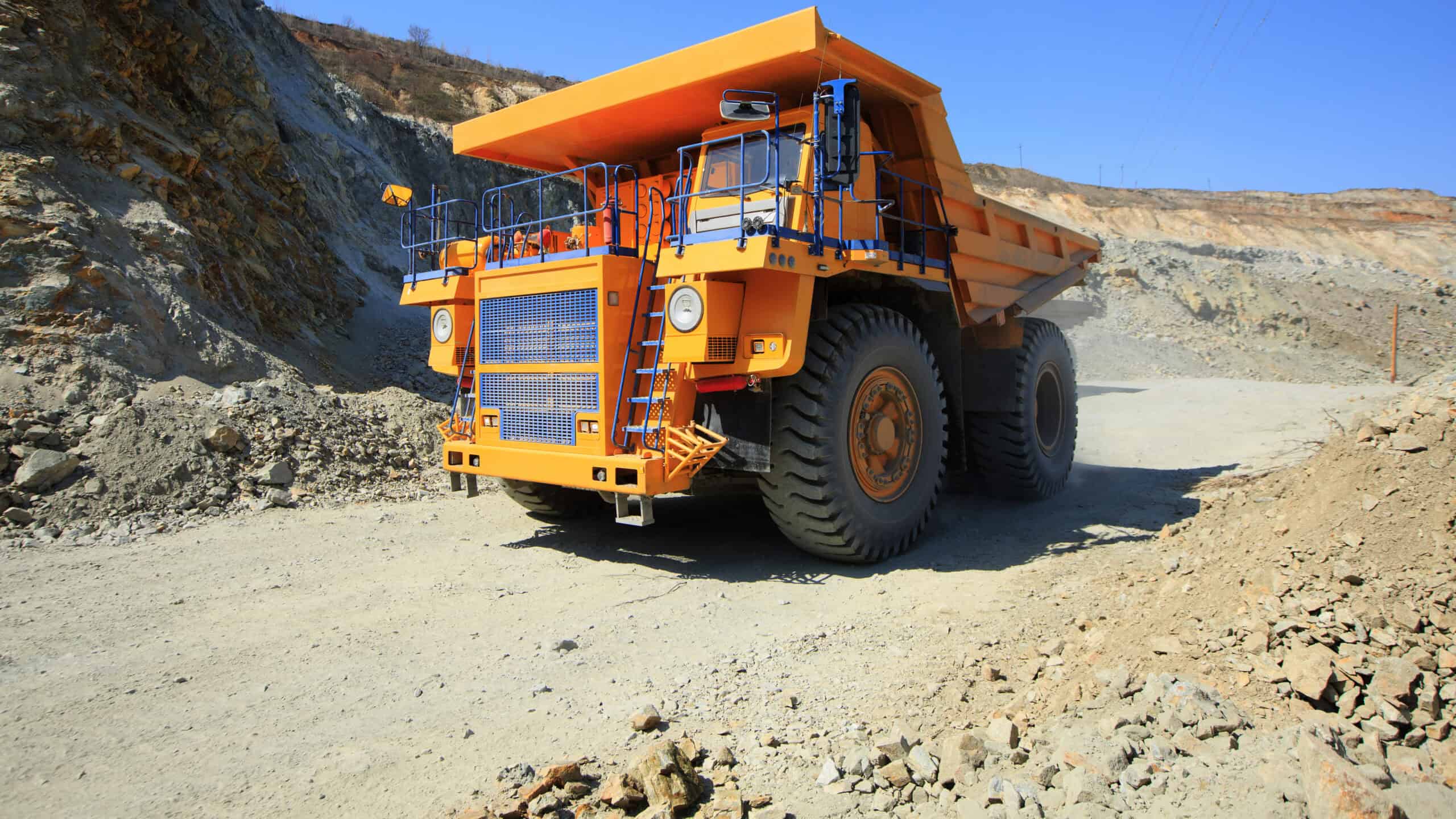
    Mining vehicle at a mine site.

    Fortescue Ltd (ASX: FMG) shares have faced some strong headwinds over the past six months.

    The shares are now just shy of a 52-week low, at $16.27 a piece. For the year-to-date they’re down around 27%.

    The shares have tumbled around 21% since early April, at the time of writing, driven by a sharp drop off in iron ore prices over the same period.

    According to Trading Economics, iron ore spiked to a two-year high of around US$111 per tonne in mid-May, before crashing to around US$94 per tonne in early August. Since then, it has risen slightly, but the metal is still around US$96 per tonne at the time of writing.

    Ongoing conflict in the Middle East has also put downward pressure on shares, driven by concerns about rising costs, oil costs and supply, and general market uncertainty.

    But it’s not all bad news.

    Fortescue shares can offer investors more than just share price growth. The miner can also offer attractive passive income.

    What makes Fortescue an attractive passive income player?

    The miner generates a substantial cash flow from its large iron ore operations and it is able to return a significant portion of its profits to shareholders through regular dividends.

    Fortescue is also actively diversifying its business beyond iron ore and into other markets, such as copper and renewable energy, which could reduce its reliance on iron ore over the long term and strengthen its bottom line.

    But exactly what sort of passive income could you get from a $10,000 investment into Fortescue shares?

    Let’s take a look.

    How many Fortescue shares can I buy with $10,000?

    Using the $16.27 share price at the time of writing, $10,000 will buy around 614 shares.

    What dividend does the miner pay its shareholders?

    The ASX iron ore miner pays its shareholders two fully-franked dividends every year, in March and September. The miner has a policy of returning 50% to 80% of its net profit after tax to shareholders as dividends.

    Fortescue paid its most recent dividend to shareholders in late-September. The final 46 cent fully-franked dividend, combined with the 62 cent fully-franked dividend paid out in March, brings the miner’s total FY26 dividend to $1.08 per share. 

    That translates to a dividend yield of around 6.6% at the time of writing.

    Current forecasts suggest the company’s total dividend per share could fall to 86.4 cents in FY27, driven by lower iron ore prices. 

    Based on the current share price, that translates to a forward dividend yield of around 5.3% for FY27.

    What passive income can I earn off a $10,000 investment in Fortescue shares?

    If the mining giant pays the forecasted 86.4 cent dividend in FY27, then a $10,000 investment (or 614 shares) will generate around $530 in passive income. 

    The post If I invest $10,000 in Fortescue shares, how much passive income could I earn in FY27? appeared first on The Motley Fool Australia.

    Should you invest $1,000 in Fortescue right now?

    Before you buy Fortescue shares, consider this:

    Motley Fool investing expert Scott Phillips just revealed what he believes are the 5 best stocks for investors to buy right now… and Fortescue wasn’t one of them.

    The online investing service he’s run for over a decade, Motley Fool Share Advisor, has provided thousands of paying members with stock picks that have doubled, tripled or even more.*

    And right now, Scott thinks there are 5 stocks that may be better buys…

    * Returns as of 1 August 2026

    .custom-cta-button p {
    margin-bottom: 0 !important;
    }

    More reading

    Motley Fool contributor Samantha Menzies has no position in any of the stocks mentioned. The Motley Fool Australia’s parent company Motley Fool Holdings Inc. has no position in any of the stocks mentioned. The Motley Fool Australia has no position in any of the stocks mentioned. The Motley Fool has a disclosure policy. This article contains general investment advice only (under AFSL 400691). Authorised by Scott Phillips.

  • 5 things to watch on the ASX 200 on Thursday

    Man analysing data on his laptop.

    On Wednesday, the S&P/ASX 200 Index (ASX: XJO) was on form and edged higher. The benchmark index rose 0.9% to 8,789.3 points.

    Will the market be able to build on this on Thursday? Here are five things to watch:

    ASX 200 expected to fall

    It looks set to be a poor start to the month for Australian investors following a mixed night on Wall Street. According to the latest SPI futures, the ASX 200 is expected to open the day 48 points or 0.55% lower this morning. In the United States, the Dow Jones fell 0.85%, the S&P 500 dropped 0.25%, but the Nasdaq rose 0.25%.

    ASX 200 shares paying dividends

    A number of ASX 200 shares are rewarding their shareholders with dividends on Thursday. This includes diversified food company Bega Cheese Ltd (ASX: BGA), appliance manufacturer Breville Group Ltd (ASX: BRG), drinks giant Endeavour Group Ltd (ASX: EDV), and job listings leader Seek Ltd (ASX: SEK). The latter is paying 25 cents per share to shareholders.

    Oil prices rise

    ASX 200 energy shares including Woodside Energy Group Ltd (ASX: WDS) and Santos Ltd (ASX: STO) could have a decent session after oil prices rose overnight. According to Bloomberg, the WTI crude oil price is up 1.1% to US$90.35 a barrel and the Brent crude oil price is up 0.9% to US$103.50 a barrel. Doubts over US-Iran peace talks were behind the rise.

    Buy Liontown shares

    Liontown Ltd (ASX: LTR) shares are undervalued according to Bell Potter. This morning, the broker has retained its buy rating on the lithium miner’s shares with a trimmed price target of $1.70. It said: “LTR’s EV is lagging the recent recovery in lithium markets and expected tight supplydemand fundamentals. When LTR was trading at its current EV in October 2025, SC6 prices were US$820/t and net debt was $274m. Since then, the Kathleen Valley underground ramp-up has been further de-risked and spot SC6 prices are above US$1,700/t. While we expect lithium markets will be volatile, market fundamentals remain strong. Over FY27, LTR will continue to ramp up and de-risk Kathleen Valley, a highly strategic asset in terms of scale, long project life and location in a tier-one mining jurisdiction.”

    Gold price edges higher

    It could be a positive day for ASX 200 gold shares Newmont Corporation (ASX: NEM) and Northern Star Resources Ltd (ASX: NST) on Thursday after the gold price edged higher overnight. According to CNBC, the gold futures price is up 0.2% to US$4,189.5 an ounce. Cooler inflation data boosted the precious metal.

    The post 5 things to watch on the ASX 200 on Thursday appeared first on The Motley Fool Australia.

    Should you invest $1,000 in Bega Cheese right now?

    Before you buy Bega Cheese shares, consider this:

    Motley Fool investing expert Scott Phillips just revealed what he believes are the 5 best stocks for investors to buy right now… and Bega Cheese wasn’t one of them.

    The online investing service he’s run for over a decade, Motley Fool Share Advisor, has provided thousands of paying members with stock picks that have doubled, tripled or even more.*

    And right now, Scott thinks there are 5 stocks that may be better buys…

    * Returns as of 1 August 2026

    .custom-cta-button p {
    margin-bottom: 0 !important;
    }

    More reading

    Motley Fool contributor James Mickleboro has positions in Endeavour Group and Woodside Energy Group Ltd. The Motley Fool Australia’s parent company Motley Fool Holdings Inc. has no position in any of the stocks mentioned. The Motley Fool Australia has no position in any of the stocks mentioned. The Motley Fool has a disclosure policy. This article contains general investment advice only (under AFSL 400691). Authorised by Scott Phillips.

  • Adairs vs Temple & Webster: Which ASX retail stock wins for October?

    Two happy woman on a couch looking at a tablet.

    Adairs vs Temple & Webster Group shares: Which retailer is better in October?

    Australians shopping for homewares and furniture are often choosing between Adairs Ltd (ASX: ADH) and Temple & Webster Group Ltd (ASX: TPW). That makes their shares equally interesting for investors keen on the retail sector, especially as both names are now staples in bedding, furniture, and décor. So, if you’re weighing up Adairs vs Temple & Webster Group shares right now, let’s unpack their standout differences to see which might be the pick heading into October.

    The case for Adairs

    Adairs is a well-known bricks-and-mortar and online homewares retailer in Australia and New Zealand. With a presence in more than 170 stores (as suggested by its company profile) plus a solid e-commerce platform, Adairs offers everything from bedding and towels to lighting, furniture, nursery gear, and pet products. Its brands — Adairs, Mocka, and Focus on Furniture — give it a broad reach across budget and mid-market segments.

    What’s striking about Adairs in this snapshot is its dividend profile. The company’s dividend yield sits at 8.91%, and all its dividends are fully franked — an appealing feature for Aussie investors who prefer those tax credits. Notably, the dividend per share for the most recent period was $0.12, with payments historically consistent and fully franked.

    However, Adairs shows an earnings per share (EPS) of -0.222, putting it in negative earnings territory based on the figures provided. Its market cap stands at $229.52 million, with a P/E ratio of 14.33 (though with negative EPS, this may reflect alternative earnings metrics).

    Year to date, Adairs’ shares are down 20.4%, which suggests a softer period for sentiment or profit, but could also potentially offer value for turnaround seekers.

    The case for Temple & Webster

    Temple & Webster is Australia’s leading online-only destination for furniture and homewares — it doesn’t operate physical stores. With a whopping range of over 200,000 products and “more than a million” Aussie subscribers (according to its most recent company profile), Temple & Webster has carved out a reputation for variety and e-commerce convenience. Its private label, Milan Direct, sits alongside curated branded pieces that cover office, living, lighting, wall art, and more.

    Temple & Webster’s fundamentals show a market cap of $490.66 million, making it more than twice the size of Adairs by that measure. It is solidly profitable per the supplied EPS of 0.064. It’s worth noting, though, that Temple & Webster pays no dividend and has no franking, meaning investors are relying purely on share price appreciation for returns.

    However, the P/E ratio is an eye-popping 121.04 — a figure that jumps off the page, and seems based on positive underlying earnings, though it may factor in forward or adjusted metrics given the EPS. Year to date, the company has suffered a very sharp fall of 69.3%, suggesting the market is penalising it for stalling growth or stretched valuation.

    Valuation comparison

    Here’s how the two line up on the most relevant valuation and shareholder return data:

    Metric Adairs Temple & Webster
    Market Cap $229.52 million $490.66 million
    P/E Ratio 14.33 121.04
    Earnings per Share -0.222 0.064
    Dividend Yield 8.91% 0.00%
    Dividend Franking 100% –
    Year to Date Return -20.4% -69.3%

    Note: Adairs Ltd’s P/E ratio is positive despite a negative EPS, which suggests the reported ratio may be based on an underlying or forecasted earnings figure not directly shown here.

    Temple & Webster’s P/E, on the other hand, is exceptionally high, typical of fast-growth tech or online retailers — but only justifiable if growth resumes.

    Recent share price performance

    Comparing recent share price action up to September 2026:

    • Adairs closed at $1.29 on 28 Sep 2026, down 0.78% for the day, and sunk 20.4% for the year to date.
    • Temple & Webster Group closed at $4.21 on 28 Sep 2026, up a modest 0.24% for the day, but a whopping 69.3% lower year to date.

    Both retailers have copped a battering, but Temple & Webster’s share price decline has been far steeper over 2026 so far.

    Which is the better buy?

    Both these retailers face tough market conditions, but if I had to choose in October, my pick would be Adairs. Here’s why:

    Adairs offers a substantial, fully franked dividend yield near 9%, which softens the blow of recent price falls and provides steady income. Even as its share price has slipped this year, that yield looks enticing, especially compared with Temple & Webster’s zero dividend.

    Temple & Webster still promises online growth and is much larger by market cap, but its P/E ratio is well over 120 — a level I can’t justify based on its current growth and the fact its shares have cratered nearly 70% this year. The lack of a dividend and severe negative momentum make it hard to see an immediate turnaround.

    Both may recover if consumer sentiment improves, but for now, I’d lean towards Adairs as a better income and relative value play for October, especially if you’re after returns you can bank on regardless of what the share price does next.

    The post Adairs vs Temple & Webster: Which ASX retail stock wins for October? appeared first on The Motley Fool Australia.

    Should you invest $1,000 in Temple & Webster Group right now?

    Before you buy Temple & Webster Group shares, consider this:

    Motley Fool investing expert Scott Phillips just revealed what he believes are the 5 best stocks for investors to buy right now… and Temple & Webster Group wasn’t one of them.

    The online investing service he’s run for over a decade, Motley Fool Share Advisor, has provided thousands of paying members with stock picks that have doubled, tripled or even more.*

    And right now, Scott thinks there are 5 stocks that may be better buys…

    * Returns as of 1 August 2026

    .custom-cta-button p {
    margin-bottom: 0 !important;
    }

    More reading

    Motley Fool contributor Laura Stewart has no position in any of the stocks mentioned. The Motley Fool Australia’s parent company Motley Fool Holdings Inc. has positions in and has recommended Adairs and Temple & Webster Group. The Motley Fool Australia has positions in and has recommended Adairs. The Motley Fool Australia has recommended Temple & Webster Group. The Motley Fool has a disclosure policy. This article contains general investment advice only (under AFSL 400691). Authorised by Scott Phillips. This article was prepared with the assistance of Large Language Model (LLM) tools for the initial draft. Any content assisted by AI is subject to our robust human-in-the-loop quality control framework, involving thorough review, substantial editing, and fact-checking by our experienced writers and editors holding appropriate credentials. The Motley Fool Australia stands behind the work of our editorial team and takes ultimate responsibility for the content published by The Motley Fool Australia.
  • Brokers tip up to 67% for these 3 ASX shares

    A happy group of workers around a table raise their arms in the air as though celebrating a work achievement. One woman is on her feet with her arm raised in the air in a fist-pumping action.

    ASX shares have slid lower this week as investors digest the latest interest rate hike and inflation data remains stubbornly high.

    But, while the outlook looks bleak for some S&P/ASX 200 Index (ASX: XKO) shares, there are some which are tipped to drag the index higher over the next 12 months.

    Here are three of them.

    Life360 Inc (ASX: 360)

    Life360 has tumbled lower over the past week after persistent inflation and September’s interest rate increase dragged down growth shares like Life360.

    At the same time, investors may still be digesting the company’s second-quarter FY26 update released last month. Life360 announced a 38% increase in revenue and a 53% hike in EBITDA. It also said it expects FY26 revenue growth to accelerate from 33% to 40% year-on-year.

    But it wasn’t enough to impress investors, who may have expected another upward revision in full-year guidance. 

    The latest slump also follows multiple headwinds over the past year, including a tech-sector-wide sell off, loss in confidence for AI-related stocks and a general investor rotation away from growth shares.

    But it looks like the shares are finally considered to be trading below fair value. Market Index shows that all brokers have a strong buy rating on the ASX shares. The $31.72 target price implies a potential 67% upside at the time of writing.

    A2 Milk Company Ltd (ASX: A2M)

    A2 Milk shares have been relatively resilient over the past week after investors flocked to defensive assets like ASX consumer staple stocks, ahead of the Reserve Bank announcement on Tuesday. Shares like A2 Milk are considered defensive because their products aren’t discretionary.

    It’s good news for the company after it suffered a difficult start to the year. The shares crashed to a multi-year low in June but rebounded quickly and have stayed relatively stable since. However, the share price still has a long way to go to recover to 2025 levels.

    The company’s FY26 results last month weren’t as bad as many were expecting. It reported a 12.4% increase in revenue but a 2.5% decline in full-year statutory EBITDA and a 5.8% drop in statutory NPAT. The announcement didn’t have much impact on A2 Milk’s shares.

    The shares still look well below fair value, though. Market Index data shows most brokers rate the shares a buy. The $8.04 average target price implies a potential 21% upside at the time of writing.

    Aussie Broadband Ltd (ASX: ABB)

    Aussie Broadband shares are around flat for the week so far, again likely supported by the company’s defensive qualities at a time when investors are flocking to less risk-averse assets.

    The ASX telecommunications and internet retail service provider’s shares crashed in August after it posted its FY26 results. The company posted a 19.6% increase in underlying EBITDA and a 9.2% increase in revenue. But investors quickly sold off, possibly due to concerns about the company’s momentum and outlook.

    The shares dropped to an annual low in mid-September but have since rebounded around 6%.

    It looks like they could keep climbing higher. Market Index data shows all brokers rate the telco’s shares a strong buy. The $5.73 average target price implies a potential upside of around 36% at the time of writing.

    The post Brokers tip up to 67% for these 3 ASX shares appeared first on The Motley Fool Australia.

    Should you invest $1,000 in Life360 right now?

    Before you buy Life360 shares, consider this:

    Motley Fool investing expert Scott Phillips just revealed what he believes are the 5 best stocks for investors to buy right now… and Life360 wasn’t one of them.

    The online investing service he’s run for over a decade, Motley Fool Share Advisor, has provided thousands of paying members with stock picks that have doubled, tripled or even more.*

    And right now, Scott thinks there are 5 stocks that may be better buys…

    * Returns as of 1 August 2026

    .custom-cta-button p {
    margin-bottom: 0 !important;
    }

    More reading

    Motley Fool contributor Samantha Menzies has no position in any of the stocks mentioned. The Motley Fool Australia’s parent company Motley Fool Holdings Inc. has positions in and has recommended Aussie Broadband and Life360. The Motley Fool Australia has positions in and has recommended Life360. The Motley Fool Australia has recommended Aussie Broadband. The Motley Fool has a disclosure policy. This article contains general investment advice only (under AFSL 400691). Authorised by Scott Phillips.

  • Goodman Group vs Charter Hall: Which ASX REIT pays better income?

    Hand pressing on digital screen with REIT related images.

    Goodman Group vs Charter Hall Group shares: Which ASX REIT pays better income?

    Comparing Goodman Group (ASXL GMG) and Charter Hall Group (ASX: CHC) makes a lot of sense if you’re looking for reliable REIT income on the ASX. Both companies have built significant property portfolios spanning industrial, office, and retail assets, but their approach to dividends, franking, and portfolio focus differs in interesting ways. I’ve dug into the numbers to see which REIT might suit those chasing income – and why the choice isn’t as simple as size or brand alone.

    The case for Goodman Group

    Goodman Group is a global giant in industrial and logistics property. Since its 2005 merger, Goodman has expanded into 14 countries, with a hefty development and investment presence in Australia, Europe, the Americas, and Asia Pacific. It owns, develops, and manages warehouses, distribution centres, and logistics hubs – putting it at the heart of e-commerce and supply chain growth. As of 30 June, its global portfolio is worth $89 billion, making Goodman the largest REIT on the ASX.

    Looking at the fundamentals, I see three things stand out for Goodman:

    • Market cap of $54.04 billion puts it in a different league to most local REITs.
    • The P/E ratio of 19.85 (with reported EPS at $1.329) is matched by Charter Hall, so it doesn’t look unusually “expensive” within this pair.
    • Dividend yield is 1.14%, with dividends per share steady at $0.30 annually. Goodman’s dividends have remained flat at 15 cents per half since 2020, but crucially, all payments are unfranked.

    Goodman’s enormous scale and prime global assets make it a core holding for many institutional money managers, especially those seeking stability and growth from industrial property.

    The case for Charter Hall Group

    Charter Hall Group is a diversified property manager and investor, with major activities in funds management and operating a series of listed and unlisted REITs. Charter Hall’s interests range from shopping centres and logistics hubs to office buildings and early learning assets. As of 30 June, the managed portfolio covers $76 billion in assets and a strong property development pipeline.

    Here’s what catches my eye about Charter Hall’s numbers:

    • Market cap is $8.45 billion, making it a mid-sized REIT relative to Goodman.
    • P/E ratio is also 19.85, with EPS reported at $0.888.
    • Dividend yield is 2.87% – more than double Goodman’s rate.
    • Dividends per share are $0.52 annually and, importantly, heavily franked. Recent dividend history shows franking up to 90% for some payments, with a current blended franking rate around 80%.

    For income-focused investors, Charter Hall looks more rewarding at first blush, not just for its higher yield but also that generous franking credit potential. Its track record over the past decade has also seen regular increases to dividends per share.

    Valuation comparison

    Here’s how Goodman and Charter Hall stack up on key income and value metrics:

    Goodman Group Charter Hall Group
    Market Cap $54.04 billion $8.45 billion
    P/E Ratio 19.85 19.85
    Earnings per Share (EPS) $1.329 $0.888
    Dividend Yield 1.14% 2.87%
    Dividend per Share $0.30 $0.52
    Dividend Franking 0% ~80%

    Note: Both companies report matching P/E ratios despite different EPS figures. This could reflect slight differences in the earnings calculation method or timing.

    Charter Hall comes out ahead for dividend yield and offers substantial franking, making each dollar of payout potentially more valuable for after-tax income than Goodman’s unfranked distributions.

    Recent share price performance

    Let’s see how Goodman Group and Charter Hall Group shares have performed recently.

    Comparing share price activity up to 28 September 2026:

    • Goodman Group closed at $26.30 on 28 Sep 2026, down 14.4% year-to-date.
    • Charter Hall Group closed at $17.86 on 28 Sep 2026, down 26.8% year-to-date.

    In recent weeks, Goodman’s share price has shown a small dip but relative resilience. Charter Hall has faced steeper year-to-date declines, despite a recent day or two in positive territory.

    Which is the better buy?

    If I’m focusing on income, my pick is Charter Hall Group over Goodman Group. The headline reasons are hard to ignore: Charter Hall’s dividend yield is more than double Goodman’s, and its dividends come with substantial franking – which means extra value at tax time for many Australian investors. Charter Hall also has a history of boosting its payout per share over time, and its current yield of 2.87% stands out in a sector where steady, inflation-beating income is prized.

    Goodman Group is the titan of the sector, but with its low (and unfranked) income distributions, I think it suits those seeking global growth and stability rather than immediate income rewards. Its share price has been more resilient than Charter Hall’s during this tough period for property stocks, but if reliable, tax-effective passive income is my main goal, I’d lean toward Charter Hall Group as the more attractive buy right now.

    The post Goodman Group vs Charter Hall: Which ASX REIT pays better income? appeared first on The Motley Fool Australia.

    Should you invest $1,000 in Goodman Group right now?

    Before you buy Goodman Group shares, consider this:

    Motley Fool investing expert Scott Phillips just revealed what he believes are the 5 best stocks for investors to buy right now… and Goodman Group wasn’t one of them.

    The online investing service he’s run for over a decade, Motley Fool Share Advisor, has provided thousands of paying members with stock picks that have doubled, tripled or even more.*

    And right now, Scott thinks there are 5 stocks that may be better buys…

    * Returns as of 1 August 2026

    .custom-cta-button p {
    margin-bottom: 0 !important;
    }

    More reading

    Motley Fool contributor Laura Stewart has no position in any of the stocks mentioned. The Motley Fool Australia’s parent company Motley Fool Holdings Inc. has positions in and has recommended Goodman Group. The Motley Fool Australia has recommended Goodman Group. The Motley Fool has a disclosure policy. This article contains general investment advice only (under AFSL 400691). Authorised by Scott Phillips. This article was prepared with the assistance of Large Language Model (LLM) tools for the initial draft. Any content assisted by AI is subject to our robust human-in-the-loop quality control framework, involving thorough review, substantial editing, and fact-checking by our experienced writers and editors holding appropriate credentials. The Motley Fool Australia stands behind the work of our editorial team and takes ultimate responsibility for the content published by The Motley Fool Australia.