Thursday is shaping up to be a huge day for S&P/ASX 200 Index (ASX: XJO) investors.
Yes, yes, I know the Federal budget comes out tonight.
And depending on what is and isn’t included, this could have some major implications for ASX 200 shares at market open tomorrow.
With the government expected to up its support for miners in the critical minerals space, this will be one sector to watch.
Now here are two reasons Thursday could see some even bigger moves among ASX 200 stocks.
What’s happening on Thursday?
At market open on Thursday, ASX 200 investors will get some fresh insight into how the Federal Reserve’s inflation battle is going in the United States.
The latest consumer price index (CPI) data will be released on Wednesday in the US, overnight Aussie time.
“Analysts anticipate a downward trend in inflation, marking a pivotal moment in the economic landscape,” Josh Gilbert, market analyst at eToro said.
With inflation in the world’s top economy proving to be unexpectedly sticky, the Fed has been holding the official interest rate at 20-year highs. And markets have been pushing back the timing and pace of any pending interest rate cuts.
According to Gilbert:
The upcoming CPI reading carries significant implications, especially amidst anticipation of a rebound in inflation. While markets initially eyed July for potential rate cuts, the outcome of this week’s data could alter this trajectory.
Gilbert noted that if US inflation does ease in April, this could put “rate cuts back on the agenda”. This would also likely offer some healthy tailwinds for the ASX 200 on Thursday.
Indeed, Fundstrat Global’s Tom Lee is recommending clients buy stocks ahead of the CPI data release.
According to Lee (quoted by The Australian Financial Review):
We think an ‘in-line’ April CPI will cause the market’s expected number of Fed cuts (by year-end 2024) to rise from about 1.8 towards 2.5 cuts or more. The rationale, in our view, is that this April CPI will highlight the possibility that auto insurance’s disproportionate impact on CPI is eroding.
The key in April CPI remains auto insurance. This rose +2.58 per cent in March and was the singular largest contributor to the ‘hot’ March reading (miss). It is not entirely clear if April will show an improvement. But we think each month that passes, this probability rises that the surge in auto insurance is ebbing.
What else could materially move the ASX 200 on Thursday?
The second thing that could either boost or pressure the ASX 200 on Thursday is the latest Aussie unemployment data.
This will largely be a case of good news for workers is bad news for the stock market. If the labour market data is robust this will make the RBA’s own inflation battle trickier and push out the likelihood of any near-term interest rate cuts in Australia.
Gilbert believes, however, that unemployment has likely ticked higher:
This past Wednesday, Seek released labour market data, revealing that the number of job ads plunged 4.7% in April to the lowest level since January 2021. It’s likely that we will see a climbing unemployment figure that echoes this movement.
With Treasurer Jim Chalmers confirming that jobseeker payments won’t increase in the new Federal budget (due out tonight), Gilbert cautioned, “There is plenty of concern, especially with an increase in the rate of business insolvencies further tightening the jobs market this year.”
Gilbert added:
While much of this is usually good news when trying to fight inflation, the issue is proving sticky and interest rate cuts still seem a long way off if there are no meaningful concessions for hard-done-by workers in the budget.
The ASX 200 is down 0.3% in afternoon trade today, at 7,725.4 points.
Should you invest $1,000 in S&P/ASX 200 right now?
Before you buy S&P/ASX 200 shares, consider this:
Motley Fool investing expert Scott Phillips just revealed what he believes are the 5 best stocks for investors to buy right now… and S&P/ASX 200 wasn’t one of them.
The online investing service heâs run for over a decade, Motley Fool Share Advisor, has provided thousands of paying members with stock picks that have doubled, tripled or even more.*
And right now, Scott thinks there are 5 stocks that may be better buys…
Motley Fool contributor Bernd Struben has no position in any of the stocks mentioned. The Motley Fool Australia’s parent company Motley Fool Holdings Inc. has no position in any of the stocks mentioned. The Motley Fool Australia has no position in any of the stocks mentioned. The Motley Fool has a disclosure policy. This article contains general investment advice only (under AFSL 400691). Authorised by Scott Phillips.
Netwealth Group Ltd (ASX: NWL) shares have skyrocketed since the start of the year.
The ASX financial share has streaked 29.94% higher to trade at $20.18 per share at the time of writing.
Meantime, the S&P/ASX 200 Index (ASX: XJO) has limped 1.34% forward.
Here’s how much you’d have now had you invested $10,000 in Netwealth shares at the start of 2024.
Netwealth shares began the year at $15.35 per share
Yep, you read that right.
The Netwealth share price at the opening bell on 2 January was $15.35.
So, a $10,000 budget would have bought you 651 Netwealth shares. Total spend: $9,992.85.
Today, those 651 shares are worth $13,137.18.
On top of that capital gain, you would have received the interim dividend of 14 cents per share plus franking in March. That’s worth a total of $91.14 ex-franking.
So, the total return you would have received just four-and-a-half months after acquisition is $3,235.47.
What’s the latest news from Netwealth?
Netwealth’s latest price-sensitive news announcement came on 11 April when the company released its March quarter business update.
Netwealth reported $2.7 billion in net inflows for the quarter, a 62.2% increase on the prior corresponding period (pcp) of the March quarter 2023.
This took its funds under administration (FUA) to $84.7 billion as of 31 March.
FUA increased by $6.7 billion during the March quarter, comprising FUA net inflows of $2.7 billion and positive market movement of $4 billion.
The number of accounts increased by 11.6% compared to the pcp.
Over the 12 months to 31 March, the company achieved record FUA inflows of $21.2 billion.
Total FUA for the year increased by 28.5% or $18.8 billion, comprising net inflows of $10.6 billion and positive market movement of $8.2 billion.
It appears that shareholders had loftier ambitions for that set of results, with the Netwealth share price declining 5.03% on the day the report was released.
Should you buy Netwealth at today’s share price?
The consensus rating on Netwealth shares among 16 analysts on the CBA trading platform is a hold.
Three analysts say the stock is a strong buy, 1 says a moderate buy, six say hold, two give it a moderate sell rating and four analysts say Netwealth shares are a strong sell.
The consensus expectation for earnings per share (EPS) is 35 cents in 2024, 43.7 cents in 2024 and 52.2 cents in 2025.
The analysts anticipate dividends per share of 29.9 cents in 2024, 38 cents in 2025 and 45 cents in 2026.
Should you invest $1,000 in Netwealth Group Limited right now?
Before you buy Netwealth Group Limited shares, consider this:
Motley Fool investing expert Scott Phillips just revealed what he believes are the 5 best stocks for investors to buy right now… and Netwealth Group Limited wasn’t one of them.
The online investing service heâs run for over a decade, Motley Fool Share Advisor, has provided thousands of paying members with stock picks that have doubled, tripled or even more.*
And right now, Scott thinks there are 5 stocks that may be better buys…
Motley Fool contributor Bronwyn Allen has no position in any of the stocks mentioned. The Motley Fool Australia’s parent company Motley Fool Holdings Inc. has positions in and has recommended Netwealth Group. The Motley Fool Australia has positions in and has recommended Netwealth Group. The Motley Fool has a disclosure policy. This article contains general investment advice only (under AFSL 400691). Authorised by Scott Phillips.
The Resmed CDI (ASX: RMD) share price has risen 46% over the last six months, and a fund manager reckons there are more gains to come.
This ASX healthcare share has been through a lot in the past year as investors worried about the effects of weight loss drugs on its business, as we can see on the chart below.
The latest financial updates have shown the company continues to deliver a strong, profitable performance. The FY24 third-quarterearnings before interest and tax (EBIT) beat market consensus estimates by 7%, and management was feeling confident about the outlook in the conference call, according to fund manager Firetrail.
Firetrail said there has been “significant noise” about ResMed shares because of a GLP-1 drug trial being conducted on sleep apnea patients.
The fund manager is still bullish about the company for a few different reasons. I’ll run through each of them below, leading Firetrail to say that Resmed shares are “just too cheap!”.
Manageable impacts from weight loss drugs
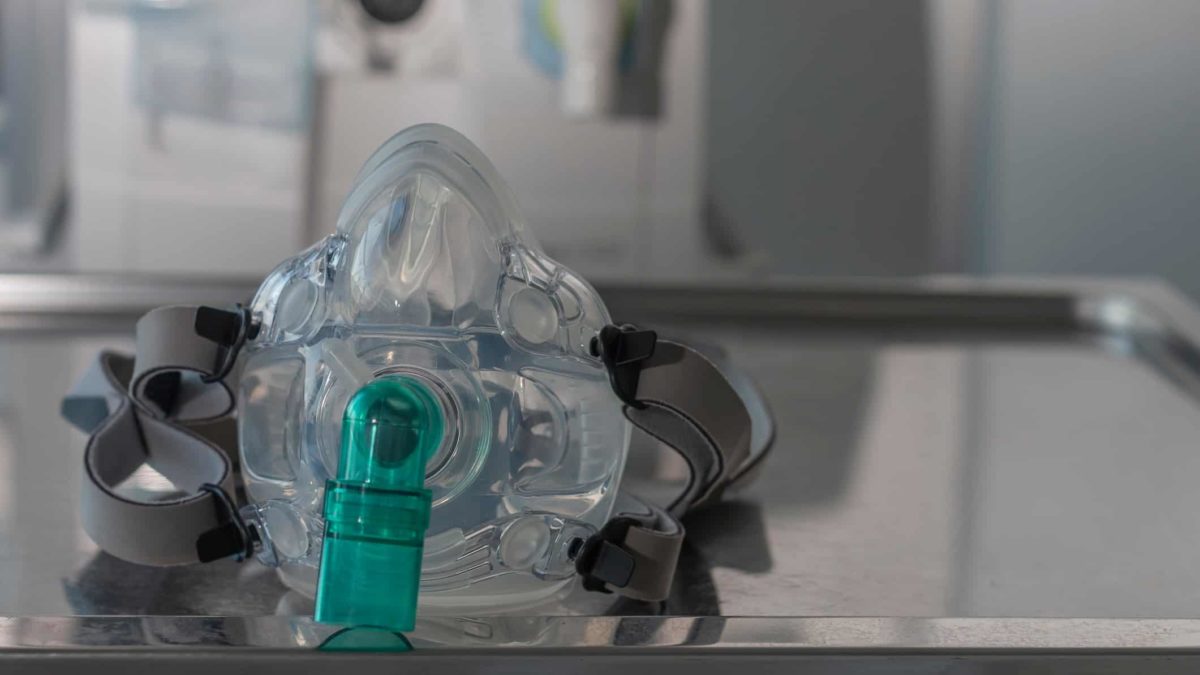
Firetrail said its view has been that increased awareness of CPAP (continuous positive airway pressure) therapy will “largely offset the negative impact of patient drop-out due to weight loss”.
With its FY24 third-quarter update, Resmed updated its findings from the dataset of 660,000 patients with a sleep apnea diagnosis who have taken a GLP-1 drug in the past two and a half years.
Firetrail commented:
While not proving causation, only correlation, this data shows that GLP-1 users are 10.5% more likely to start CPAP therapy and have mask resupply rates 3-5% better than non-GLP-1 patients with sleep apnoea.
Revenue growth
The fund manager said competitor Philips’ consent decree “looks likely to keep it out of the US CPAP device market for a number of years.”
Firetrail pointed out that Resmed recently reported record device sales in what is its seasonally weakest quarter. In the FY24 third quarter, the business generated revenue growth of 7%, taking the revenue to $1.2 billion.
The fund manager suggests the business is growing its market share amid these record sales.
Gross profit margin
The third positive area that Firetrail discussed for Resmed shares was the gross profit margin. Firetrail said the weaker gross profit margin was due to fight and manufacturing cost pressures, but these effects are only transitory.
Resmed’s FY24 third-quarter update showed a 160 basis point (1.60%) expansion for the gross profit margin.
Pleasingly, the Resmed gross margin is now “almost back to pre-COVID levels”.
Should you invest $1,000 in Resmed Inc. right now?
Before you buy Resmed Inc. shares, consider this:
Motley Fool investing expert Scott Phillips just revealed what he believes are the 5 best stocks for investors to buy right now… and Resmed Inc. wasn’t one of them.
The online investing service heâs run for over a decade, Motley Fool Share Advisor, has provided thousands of paying members with stock picks that have doubled, tripled or even more.*
And right now, Scott thinks there are 5 stocks that may be better buys…
Motley Fool contributor Tristan Harrison has no position in any of the stocks mentioned. The Motley Fool Australia’s parent company Motley Fool Holdings Inc. has positions in and has recommended ResMed. The Motley Fool Australia has positions in and has recommended ResMed. The Motley Fool has a disclosure policy. This article contains general investment advice only (under AFSL 400691). Authorised by Scott Phillips.
The Avita Medical share price is currently 10.2% higher at $2.81 per share after the ‘spray-on skin’ burns treatment company announced its first quarter results for 2024.
For the three months ending 31 March, Avita reported a 5.8% lift in commercial revenue, compared to the first quarter of 2023, to $11.1 million. The gross profit margin came in at 86.4%.
Cash and cash equivalents fell 23% to $16,951,000, with Avita’s CFO David O’Toole explaining that the big spend mostly related to several non-recurring expenses.
O’Toole commented:
We acknowledge the significant cash utilization this quarter, however we remain confident in our financial stability and our ability to reach cashflow break even as guided.
The company expects to reach cashflow break even no later than the third quarter of 2025.
As for forward guidance for 2024, Avita said commercial revenue for the second quarter was expected to be in the range of $14.3 million to $15.3 million.
Avita expects full-year commercial revenue at the low end of its previously provided guidance range of $78.5 million to $84.5 million.
During the quarter, Avita launched PermeaDerm, a co-branded biosynthetic wound matrix, in the United States.
Avita CEO Jim Corbett said:
We believe we have taken the necessary measures to invigorate our burns business and improve our commercial sales process to return to sustained growth.
We remain dedicated to establishing RECELL as the standard of care for burn and full-thickness skin defects.
Simultaneously, we are actively transforming AVITA Medical into a broad wound care business by expanding our portfolio to address the full spectrum of clinical needs.
The ASX healthcare share is down 32.7% in the year to date and down 23% over the past 12 months.
The Race Oncology share price is currently 7.1% higher at $1.66 per share after the clinical-stage cancer drug biotech announced positive preclinical study results.
Race said bisantrene and decitabine used together had “significantly improved cancer cell killing across a broad panel of 143 tumour cell lines than either drug used alone”.
The company said the results support the use of the combined drugs as a potential treatment for many cancers. These include solid tumours such as lung, prostate, pancreas, breast, and head and neck cancers.
The two drugs will be explored further in a proposed Phase 1/2 investigator-initiated AML clinical trial.
Race CEO Dr Daniel Tillett commented:
These results open exciting new treatment opportunities for both bisantrene and decitabine. While decitabine has proven its effectiveness in haematological cancers, it has not demonstrated clinical utility in solid tumours, like lung or breast cancer.
This new body of work is highly supportive of the results from the University of Newcastle in preclinical AML models using a combination of bisantrene and decitabine.
Wondering where you should invest $1,000 right now?
When investing expert Scott Phillips has a stock tip, it can pay to listen. After all, the flagship Motley Fool Share Advisor newsletter he has run for over ten years has provided thousands of paying members with stock picks that have doubled, tripled or even more.*
Scott just revealed what he believes could be the ‘five best ASX stocks’ for investors to buy right now. We believe these stocks are trading at attractive prices and Scott thinks they could be great buys right now…
Motley Fool contributor Bronwyn Allen has no position in any of the stocks mentioned. The Motley Fool Australia’s parent company Motley Fool Holdings Inc. has positions in and has recommended Avita Medical. The Motley Fool Australia has recommended Avita Medical. The Motley Fool has a disclosure policy. This article contains general investment advice only (under AFSL 400691). Authorised by Scott Phillips.
OpenAI's new GPT-4o model prompted parallels to the 2013 movie "Her" and jokes about society moving closer to normalizing 100% digital companions.
Matthias Balk/picture alliance via Getty Images
OpenAI on Monday announced its new chatbot model, GPT-4o, with voice and vision abilities.
The reveal quickly prompted jokes about digital girlfriends, and parallels to the movie "Her."
Some sex workers are embracing AI as a way to make their jobs easier and safer.
OpenAI's new GPT-4o model sounded more than a little flirty in its demo released Monday.
The announcement of the new chatbot, which boasts voice and vision abilities, quickly prompted parallels to the 2013 movie "Her" — in which Scarlett Johannson voices the artificially intelligent love interest of Joaquin Pheonix — and jokes about society coming a step closer to normalizing 100% digital companions.
"OpenAI wants you to want to bang your smartphone," Scott Woods, the blogger behind Whole Mars Catalogue, quipped on X in response to a post-demonstration post by OpenAI CEO Sam Altman that read, simply: "her."
While some speculate that the opportunity to flirt with a chatbot could change how the world views romance and relationships and potentially alter how the sex work industry operates, some in that line of work are enjoying innovations in AI that they say make their jobs both easier and safer.
Linda, a phone sex operator, told Business Insider that artificial intelligence is being adopted by some in the sex work community, and she now regularly sees AI-generated images on profiles of fellow phone sex workers.
Linda was granted anonymity to speak freely about her work and maintain her privacy. Her identity has been verified by BI.
"I kinda want a chatbot sometimes to deal with timewasters," Linda said, adding that slow conversations often begin with simple hellos and other pleasantries she'd rather skip. A chatbot, she said, would help her "make that $15-20 in chat fees just doing boring small talk without the boredom or loathing."
Major creators like OnlyFans titan Kaitlyn "Amouranth" Siragusa have already embraced the power of AI bots. Last summer, Siragusa launched her own chatbot for fans to interact with for $1 a minute, offering an artificial version of her voice to indulge in explicit conversation. Following the launch, she told Polygon the tech would simplify her job and protect her from overly-attached fans.
Others have adopted the tech to boost customer satisfaction by creating a log of personal preferences and details from past conversations, and The New York Post reported earlier this year on a brothel in Berlin run entirely using AI, virtual reality, and robotic sex dolls.
"It's not for everyone, but, honestly, I think it's great — like you want a sex robot, guys — here ya go! " Linda said.
Representatives for OpenAI did not immediately respond to a request for comment from Business Insider.
Along with axing jobs, the retail giant is directing workers in small offices in Dallas, Atlanta, and Toronto to move to central hubs like Walmart's corporate headquarters in Arkansas, New Jersey, or Southern California, people familiar with the matter told the Journal.
Previously-remote staff can work hybrid schedules, the Journal reported.
Walmart did not immediately respond to Business Insider's request for comment sent outside standard business hours.
Last week, the retailer announced it will close two more stores, bringing the number of closures this year to eight. The company quietly reduced its US store count by more than 100 locations between January and August last year — a repositioning celebrated by Wall Street.The company operated 4,615 US stores as of January 31, according to its website.
Walmart, the country's largest employer, has 1.6 million workers in the US. It is one of several companies that have been pushing a return to office mandate — a tactic career experts say is a way of getting rid of employees without conducting mass layoffs.
The move has been called quiet firing. It's a subtle way to make roles less appealing, motivating workers to quit rather than slashing jobs only through layoffs, BI previously reported.
Major companies across the US have enforced RTO mandates in the past year, including Meta, Google, and Salesforce.
Sergey Brin is a billionaire and one half of the duo that founded Google.
Lionel Hahn/Getty Images
Sergey Brin and Larry Page founded and launched Google from a dorm room near Stanford University.
Since then, Google has become the world's most popular search engine and the company has evolved.
Here's everything you need to know about Brin, who is now worth about $134 billion.
Sergey Brin has amassed a multi-billion-dollar fortune after co-founding Google.
Brin teamed up with Larry Page at university in 1998 to launch what would become one of the world's most powerful search engines. Brin also spearheaded many of Google's innovative projects beyond search before stepping down from Alphabet, Google's parent company, in 2019.
But his influence is still clear. Sundar Pichai, Alphabet's current CEO, reportedly began meeting with Brin and Page throughout 2023 to strategize the development of Google's Gemini to rival OpenAI's chatGPT.
Outside his career, Brin enjoys extreme sports and attending music festival Burning Man. He has been married twice; he filed for divorce from his second wife in January 2022.
Brin's early life
Sergey Brin's father is a former math professor at the University of Maryland.
Edwin Remsberg/Universal Images Group via Getty Images
Brin might have a sizable net worth now, valued at $134 billion, per the Bloomberg Billionaires Index, but the tech mogul comes from humble beginnings. He was born in the Soviet Union during the summer of 1973.
Brin's father was an economist who had bigger aspirations than the USSR allowed at that time. His father dreamed of being an astrophysicist, but his Jewish background and the USSR's antisemitism kept him from those ambitions.
Brin's family managed to get exit visas and flee the country when Brin was 6. But his family's stressful, troubled experience left him with a lasting appreciation for democracy and freedom.
The Brin family ended up in Maryland, where the Google cofounder was enrolled in a Montessori school — like Larry Page — that emphasized independence and fostering creativity.
Brin didn't revisit Moscow until he was 17, during a class trip led by his father. "Thank you for taking us all out of Russia," Brin told his dad, a former math professor at the University of Maryland.
Spurred on by a blossoming defiant streak, he threw pebbles at a police car while in Russia and almost got in serious trouble when the officers inside noticed.
Brin and Larry Page create Google
Brin met Page at Stanford University before the pair dropped out to focus on Google.
Randi Lynn Beach/Associated Press
Brin earned his bachelor's degree in mathematics and computer science at the University of Maryland and a Ph.D. in computer science from Stanford.
There, his love of high-adrenaline exercise flourished: he tried out skating, skiing, gymnastics, and even trapeze.
Brin met Google cofounder Larry Page at Stanford in 1995.
The two reportedly found each other "obnoxious" at first, but they later became classmates and close friends who geeked out about computer science.
Brin and Page started collaborating in 1996 on a search engine they initially called BackRub.
Before Google, Brin was more focused on making an algorithm for personalized movie recommendations or finding a way to automatically detect copyright infringement cases.
Brin's résumé from back in 1996, as he was working toward his Ph.D. at Stanford, is still available online.
The pair registered the domain Google.com in September 1997. Brin and Page had a mission to organize the world's information and dropped out of Stanford the following year to work on their search engine. The rest, as we now know, is history.
That same year, the pair created the first Google Doodle.
Both Brin and Page are "burners," meaning they're devout fans and attendees of Burning Man, the freewheeling art festival in the middle of the Nevada desert. They made the first Google Doodle to let people know they weren't around to do damage control if the site broke while they were at the event.
When the time came to find an outside CEO for Google, they approved the hire of Eric Schmidt in 2001 after learning he had attended the festival. They then brought Schmidt to Burning Man to "see how he would do."
Brin led Google's ambitious moonshot projects
Brin has overseen an array of futuristic projects that didn't always land.
Dimitrios Kambouris/Getty Images
Some of Brin's projects at Google include self-driving cars now known as Waymo, smart contact lenses, and smart glasses.
As Google ballooned from simply a search engine to a massive corporation with dozens of diverse projects, Brin became the mastermind behind some of its most ambitious ones as the head of Google X, the company's innovative moonshot factory.
Brin was a big proponent of Google Glass — Google's failed attempt at launching smart glasses.
For a long time, you couldn't spot Brin without the computerized Google Glass smart glasses.
Brin reportedly played a big role in the product's rocky launch in 2012, but famously, it was rushed into the world before it was ready for public scrutiny.
Brin also worked on Google's now-dismantled social network, Google Plus.
He admitted onstage in 2014 that he should have never worked on it because he's "kind of a weirdo" and not very social.
"It was probably a mistake for me to be working on anything tangentially related to social to begin with," Brin said in 2014.
He has maintained an eclectic presence at Google since its beginning.
Brin's fashion style is well-known around the Google campus
Brin was often seen around the Google campus in activewear.
Brooks Kraft/Getty Images
Even as Google grew into a multibillion-dollar company, Brin maintained the freewheeling spirit of the early days. Around Googleplex, Google's headquarters in Mountain View, California, Brin typically wore workout clothes and Vibram barefoot shoes, and he was frequently seen zipping around the office on Rollerblades, doing yoga stretches during meetings, or walking around on his hands for fun.
The Economist once dubbed Brin the "Enlightenment Man" for his dedication to using reason and science to solve huge world problems.
Brin's personal life
Anne Wojcicki and Sergey Brin have two children together, whose last names are Wojin.
Kevork Djansezian/Getty Images
In 2007, Brin married Anne Wojcicki, the CEO of the genetics company 23andMe.
She's the sister of early Google employee — and former YouTube CEO — Susan Wojcicki. For the wedding, the couple invited guests to a secret location in the Bahamas and wore bathing suits for the ceremony, which reportedly took place on a sandbar.
Brin and Wojcicki have two children together. Both kids have the last name Wojin, a portmanteau of their parents' last names.
Parkinson's runs in Brin's family, so he does what he can to lower his likelihood of getting the disease. Brin and Wojcicki donated hundreds of millions of dollars to charity, including to Parkinson's research. A test through 23andMe revealed that Brin has a genetic mutation that makes him predisposed to the disease.
To lower his chances of developing it, Brin started exercising even more intensely and drinking green tea twice a day. Due to his health regimen and scientific progress, he estimated in 2010 that he now has only about a 10% chance of getting the disease.
Brin's marriage to Wojcicki hit the rocks in 2013, and the couple separated. Around the time of his separation with Wojcicki, Brin had reportedly started an affair with a Google employee who was also in a relationship with another high-level Google executive at the same time.
Brin and Wojcicki officially finalized their divorce in June 2015 after eight years of marriage.
The 2018 book "Valley of Genius" described Brin as "the Google playboy" during the company's early days.
"He was known for getting his fingers caught in the cookie jar with employees that worked for the company in the masseuse room," a former employee said. "He got around."
In 2018, Brin married Nicole Shanahan, a lawyer and the founder of a legal-tech startup. The couple met in 2015 at a yoga retreat. They had a baby girl together the same year they wed.
Brin's divorce from Shanahan was finalized in September 2023.
Kimberly White/Getty Images
Four years later, Brin filed for divorce from Shanahan. The filing came after rumors swirled that his wife at the time was having an affair with Elon Musk, the billionaire Tesla CEO.
Their divorce was finalized in 2023. Both Musk and Shanahan have denied the cheating allegations.
Brin stepped down from his role as Alphabet president in 2019
Google laid off hundreds of staff.
SOPA Images
In August 2015, Brin's title got a major upgrade when Google underwent a major restructuring.
Brin transitioned from director of special projects at the moonshot division, Google X, to become the president of Alphabet, Google's new parent company. Page was named Alphabet's CEO.
Then, in December 2019, Brin and Page shocked the world: They announced in a joint statement that they were stepping down from their respective roles at Alphabet.
Since leaving, Brin has stayed busy with exercising, philanthropy, and an airship startup.
"We've never been ones to hold on to management roles when we think there's a better way to run the company," they wrote. Both Page and Brin remain members of Alphabet's board of directors.
Brin's life outside Alphabet
Brin's company LTA Research got clearance to begin test flights for its Pathfinder 1 airship.
LTA Research via LinkedIn
Meanwhile, Brin and Page had become billionaires several times over.
In 2005, they bought a 50-person plane together.
Brin owns real estate in both New York City and California.
He's invested a lot of money in Los Altos, where he owns property, through a real estate investment firm called Passerelle Investment Co. The investments reportedly went toward helping mom-and-pop, kid-friendly stores and cafés spring up or stay in business.
Brin has tried to learn several Olympic sports, runs a family foundation supporting Parkinson's research and education, and has been working on an airship startup called LTA Research.
In 2023, the company received an airworthiness certificate for its Pathfinder 1 airship to begin test flights. The massive vessel is almost 400 feet long and about 66 feet wide at its widest point.
And Brin is no stranger to flashy modes of transportation. The mogul owns a collection of watercraft that his friends call the "Fly Fleet." It includes a 40-meter superyacht called Butterfly and 73-meter megayacht known as Dragonfly. He bought Dragonfly in 2011 for $80 million.
Brin was also been rumored to be writing a physics textbook in 2022, but there's no sign it's been published yet.
Brin and Page's return to Google
Google's Gemini drew criticism for its images and text generation.
SOPA Images/Getty Images
At the beginning of 2023, reports emerged that Alphabet tapped Brin and Page to help Google compete with OpenAI's ChatGPT in the race to dominate the artificial intelligence space.
By the end of the year, Google confirmed that Brin was a key factor in bringing its AI model Gemini to fruition. In the white paper explaining Gemini's capabilities, Brin is listed as a "core contributor."
When he spoke at San Francisco's AGI House in March, Brin said he "kind of came out of retirement just because the trajectory of AI is so exciting."
He also addressed criticism of Gemini by defending the text generation feature but conceding that Google "definitely messed up on the image generation."
A trade ban on enriched uranium could further fuel the explosive run witnessed across ASX uranium shares over the past year.
While Australia continues to squabble over whether nuclear energy is viable, the United States is taking steps to secure the energy source domestically.
A glance at ASX uranium shares today may not show it, but the land of the free implemented a major sanction on enriched uranium supply overnight. Despite the tempered reaction, the decision is a major one that will affect 24% of the uranium used by nuclear power stations in the United States.
Biden takes action on Russian reliance
United States President Joe Biden signed the Prohibiting Russian Uranium Imports Act last night.
As per the White House statement, the act aims to bolster the country’s energy and economic security. To do this, the United States will reduce — and eventually eliminate — its dependence on Russia for the inputs needed for nuclear power.
Unpacking the magnitude of the decision further, U.S. National Security advisor Jake Sullivan wrote:
This new law reestablishes America’s leadership in the nuclear sector. It will help secure our energy sector for generations to come. Andâbuilding off the unprecedented $2.72 billion in federal funding that Congress recently appropriated at the President’s requestâit will jumpstart new enrichment capacity in the United States and send a clear message to industry that we are committed to long-term growth in our nuclear sector.
The ban on Russian enriched uranium imports into the United States will take effect 90 days from today.
Shifting away from Russian supply will be a major undertaking. According to the U.S. Energy Information Administration, nuclear energy accounted for 18.6% of all electricity generation in the country last year.
This might explain why the government is allowing exceptions until 2028 when the absence of Russian supply would result in a reactor shutting down.
What could it mean for ASX uranium shares?
Aussie investors aren’t making much of the news today. At the time of writing, some of the most prominent ASX uranium shares are skating lower:
Paladin Energy Ltd (ASX: PDN) down 1.49% to $16.225
There’s always a chance the market had already ‘factored in’ the sanction before today. Hence, the common phrase, ‘buy the rumour, sell the news’ among traders.
Alternatively, some may see this move as a negative for all uranium producers outside the United States. The country is actively pouring billions into making a local industry, which may present a risk to all foreign demand.
Nevertheless, the price of uranium is still perched near its 17-year-high of US$100 per pound.
Wondering where you should invest $1,000 right now?
When investing expert Scott Phillips has a stock tip, it can pay to listen. After all, the flagship Motley Fool Share Advisor newsletter he has run for over ten years has provided thousands of paying members with stock picks that have doubled, tripled or even more.*
Scott just revealed what he believes could be the ‘five best ASX stocks’ for investors to buy right now. We believe these stocks are trading at attractive prices and Scott thinks they could be great buys right now…
Motley Fool contributor Mitchell Lawler has no position in any of the stocks mentioned. The Motley Fool Australia’s parent company Motley Fool Holdings Inc. has no position in any of the stocks mentioned. The Motley Fool Australia has no position in any of the stocks mentioned. The Motley Fool has a disclosure policy. This article contains general investment advice only (under AFSL 400691). Authorised by Scott Phillips.
The first ASX 300 share getting re-rated is Credit Corp Group Ltd (ASX: CCP)
The Credit Corp share price is up 4.0% in intraday trading at $15.47 a share. That sees the stock up more than 23% over six months.
And Macquarie believes it’s still undervalued after that strong run. The broker raised Credit Corp to an ‘outperform’ rating with an $18.32 price target. That represents a 19% potential upside from current levels.
Credit Corp shares also have a strong history of delivering reliable passive income. Over the past 12 months, the company has paid out 62 cents a share in fully franked dividends. That equates to a current trailing yield of 4.0%.
Which brings us to the second ASX 300 share getting a broker re-rate today, Neuren Pharmaceuticals Ltd (ASX: NEU).
The Neuren Pharmaceuticals share price is up 6.1% in intraday trading at $20.22 a share. Shares are now up a whopping 42% over six months.
And according to JP Morgan it still looks like a bargain at these levels.
The broker gave Neuren an ‘overweight’ rating and a $23.60 price target, representing a potential 17% upside from current levels. The company does not pay dividends at this time.
Also getting re-rated
Also getting re-rated today is ASX 300 share FleetPartners Group Ltd (ASX: FPR).
The FleetPartners share price is down 4.1% today at $3.31 a share. However, shares remain up 19% over six months.
And Morgan Stanley thinks today’s sell-down is likely misguided. The broker increased its price target for FleetPartners by 22% to $3.90 a share and maintained its ‘overweight’ rating. That represents a potential 18% upside from current levels.
FleetPartners shares last delivered dividends in 2018.
Rounding off the list, the fourth ASX 300 share getting re-rated today is Fletcher Building Ltd (ASX: FBU).
(Did you guess all four?)
The Fletcher Building share price is down 3.0% today at $2.79 a share. The stock has tumbled 35% over six months.
Fortunately, Morgan Stanley believes the worst of the pain should be over.
While the broker cut its price target by 23% to $2.84 a share, Morgan Stanley maintained its ‘equal-weight’ rating.
Fletcher Buildings suspended its interim dividend payment for FY 2024 due to challenging trading conditions.
Wondering where you should invest $1,000 right now?
When investing expert Scott Phillips has a stock tip, it can pay to listen. After all, the flagship Motley Fool Share Advisor newsletter he has run for over ten years has provided thousands of paying members with stock picks that have doubled, tripled or even more.*
Scott just revealed what he believes could be the ‘five best ASX stocks’ for investors to buy right now. We believe these stocks are trading at attractive prices and Scott thinks they could be great buys right now…
JPMorgan Chase is an advertising partner of The Ascent, a Motley Fool company. Motley Fool contributor Bernd Struben has no position in any of the stocks mentioned. The Motley Fool Australia’s parent company Motley Fool Holdings Inc. has positions in and has recommended JPMorgan Chase and Macquarie Group. The Motley Fool Australia has positions in and has recommended Macquarie Group. The Motley Fool has a disclosure policy. This article contains general investment advice only (under AFSL 400691). Authorised by Scott Phillips.
One of my personal investing mottos is “the market is straight up kooky dooks“.
Not only did I think of this saying again today, I also felt it fitting that it was paraphrased from a movie â in this case the Disney (NYSE: DIS) animated movie Moana.
That is because, as I woke up this morning and checked the overnight news, I saw that the share price of American cinema company, AMC Entertainment (NYSE: AMC), increased by over 78% overnight.
On a whim, I then looked at the share price of GameStop (NYSE: GME), a company whose story is now intrinsically linked with AMC Entertainment. Yep, it too saw its share price rise dramatically overnight. In this case 75%.
It appears the “meme stock” days are back.
My first feeling was one of sadness.
I hoped that this was a saga that we left back in the dark days of the COVID pandemic. Whilst many saw it as an entertaining side show, or even a David vs Goliath story, I saw it differently. I knew that a lot of regular people were going to lose a lot of money that they couldn’t afford to lose.
I watched with horror as people, many who were entering the markets for the very first time, piled into, what I believed to be, “bad” companies.
I’ve seen this film before. I know how it ends and I don’t like it.
Unsurprisingly, fast forward a few years later, and the share price of AMC Cinemas is down over 99% and GameStop down 59% from their 2021 peaks. I am sure many of those who were wiped out will never trust the share market again despite it being, overall, a great tool for people looking to build wealth.
So, it is again I feel my stomach churn seeing the potential sequel with people piling into companies which, in my opinion, have really bad fundamentals and are suffering from an enormous list of structural headwinds that they will struggle to overcome.
I could go on and on about the various tips, techniques and lessons that I have learned to become the investor I am today. I could also go on for pages highlighting why I personally wouldn’t touch the shares of the above businesses with a 100-foot pole. However, in this case, I feel there is only one thing to remind you allâ¦
Whilst the share market can, and will, do almost anything in the short term. Over the long term, share prices tend to, almost always, track the fundamentals of the underlying business. Some meme stockers will tell you that fundamentals don’t matter. They are playing a different game. They’ll tell you to just trust them. That I am part of the enormous Wall Street conspiracy looking to keep the regular folk down.
But fundamentals do matter. In fact, if you plan on holding for years, you can argue that they are the only thing that matter.
So, if you find yourself looking at the recent share price rise of companies like AMC Entertainment and GameStop and getting tempted to press “Buy”, ask yourself, do I think these companies have good fundamentals? Do I think these companies are going to be earning significantly more revenue and profits in 2, 3, 5, 10 years’ time than they are today?
If you, like a lot of others, think the answer is no. Then don’t buy.
There are countless other opportunities (both from listed companies and passive investment vehicles like ETFs) that offer high quality, growing and profitable opportunities. So, don’t waste your time trying to ride a wave of what many consider to be irrationality.
This is also the best way to make a short seller‘s life miserable, much better than trying to outsmart them by trying to fight them directly when the fundamentals are against you.
Wondering where you should invest $1,000 right now?
When investing expert Scott Phillips has a stock tip, it can pay to listen. After all, the flagship Motley Fool Share Advisor newsletter he has run for over ten years has provided thousands of paying members with stock picks that have doubled, tripled or even more.*
Scott just revealed what he believes could be the ‘five best ASX stocks’ for investors to buy right now. We believe these stocks are trading at attractive prices and Scott thinks they could be great buys right now…
Motley Fool contributor Andrew Legget has positions in Walt Disney. The Motley Fool Australia’s parent company Motley Fool Holdings Inc. has positions in and has recommended Walt Disney. The Motley Fool Australia has recommended Walt Disney. The Motley Fool has a disclosure policy. This article contains general investment advice only (under AFSL 400691). Authorised by Scott Phillips.



 One of my personal investing mottos is “the market is straight up kooky dooks“.