• Could CBA shares be the best source of banking dividends in 2024?

    Man holding different Australian dollar notes.

    Man holding different Australian dollar notes.

    Commonwealth Bank of Australia (ASX: CBA) shares have paid a dividend to shareholders every year for decades. Most ASX bank shares do pay a dividend, so it will be an interesting exercise to compare CBA to the others.

    The Commonwealth Bank continued to pay a solid dividend during the COVID-19-hit financial year of 2020 with a payment of $2.98 per share.

    The annual payout has been steadily increasing since 2020 to reflect the recovery from the worrisome trading conditions during COVID-19.

    In the latest result, being the half-year period to 31 December 2022, we saw the interim dividend per share increase by 20% to $2.10 per share, which is a very solid increase.

    But what could the next few dividends from CBA shares look like?

    Projections of dividends from CBA shares

    The current projection on Commsec, which uses independent analyst data, suggests that CBA could pay an annual dividend per share of $4.35 in FY23, which would be an increase of 13%.

    If CBA does pay that dividend payout, it would be a grossed-up dividend yield of 6.2%.

    Projections on Commsec then suggest that CBA shares could pay a dividend per share of $4.41 in FY24, which would represent an increase of 1.4%. If that ends up being the actual payout, it’d be a grossed-up dividend yield of 6.3%.

    The potential dividend yields from the ASX bank share for FY23 and FY24 are far better than what savers can get from the bank accounts offered by CBA, though the shares come with equity risk, of course.

    Which ASX bank share offers the best dividend yield?

    Let’s look at CBA’s major bank peers.

    Using Commsec estimates, in FY24, Westpac Banking Corp (ASX: WBC) shares are projected to pay a grossed-up dividend yield of 9.5%, ANZ Group Holdings Ltd (ASX: ANZ) shares are estimated to pay a grossed-up dividend yield of 9.6%, and National Australia Bank Ltd (ASX: NAB) is projected to pay a grossed-up dividend yield of 8.8%.

    There’s quite a difference between what the yield from CBA shares might be and what the other three big ASX bank shares are going to pay.

    Two of the smaller ASX bank shares could also pay larger yields.

    In FY24, Bank of Queensland Limited (ASX: BOQ) shares might pay a grossed-up dividend yield of 10.5% and Bendigo and Adelaide Bank Ltd (ASX: BEN) shares could pay a grossed-up dividend yield of around 10%.

    So, it seems that all of the main ASX bank shares are going to pay a bigger dividend yield than CBA.

    The biggest dividend yield may not always be the best. If the lower-yielding dividend is more resilient or growing faster, then it could be the better option.

    However, due to the fact that CBA operates in the same industry as the other ASX bank shares, I think I’d rather go for one of the other ASX bank shares, such as NAB, that could provide better dividend income.

    The post Could CBA shares be the best source of banking dividends in 2024? appeared first on The Motley Fool Australia.

    Should you invest $1,000 in Commonwealth Bank Of Australia right now?

    Before you consider Commonwealth Bank Of Australia, you’ll want to hear this.

    Motley Fool Investing expert Scott Phillips just revealed what he believes are the 5 best stocks for investors to buy right now… and Commonwealth Bank Of Australia wasn’t one of them.

    The online investing service he’s run for over a decade, Motley Fool Share Advisor, has provided thousands of paying members with stock picks that have doubled, tripled or even more.* And right now, Scott thinks there are 5 stocks that are better buys.

    See The 5 Stocks
    *Returns as of April 3 2023

    (function() {
    function setButtonColorDefaults(param, property, defaultValue) {
    if( !param || !param.includes(‘#’)) {
    var button = document.getElementsByClassName(“pitch-snippet”)[0].getElementsByClassName(“pitch-button”)[0];
    button.style[property] = defaultValue;
    }
    }

    setButtonColorDefaults(“#43B02A”, ‘background’, ‘#5FA85D’);
    setButtonColorDefaults(“#43B02A”, ‘border-color’, ‘#43A24A’);
    setButtonColorDefaults(“#fff”, ‘color’, ‘#fff’);
    })()

    More reading

    Motley Fool contributor Tristan Harrison has no position in any of the stocks mentioned. The Motley Fool Australia’s parent company Motley Fool Holdings Inc. has no position in any of the stocks mentioned. The Motley Fool Australia has positions in and has recommended Bendigo And Adelaide Bank. The Motley Fool Australia has recommended Westpac Banking Corporation. The Motley Fool has a disclosure policy. This article contains general investment advice only (under AFSL 400691). Authorised by Scott Phillips.

    from The Motley Fool Australia https://ift.tt/xkgGafK

  • New Hope share price charges 4% higher on strong Q3 earnings growth

    A coal miner wearing a red hard hat holds a piece of coal up and gives the thumbs up sign in his other hand

    A coal miner wearing a red hard hat holds a piece of coal up and gives the thumbs up sign in his other hand

    The New Hope Corporation Limited (ASX: NHC) share price is charging higher on Monday.

    In morning trade, the coal miner’s shares are up 4.5% to $5.34.

    Why is the New Hope share price charging higher?

    The catalyst for the rise in the New Hope share price on Monday has been the release of the company’s third-quarter update.

    Here’s a summary of how the company performed during the period:

    • Total ROM coal production down 8% year over year to 6,915mt
    • Total coal sales down 21% to 5,492mt
    • Underlying EBITDA up 20.6% to $448.1 million
    • Closing cash and cash equivalents balance of $827 million

    What happened during the quarter?

    For the three months ended 28 April, New Hope reported an 8% fall in total ROM coal production and a 21% decline in coal sales. This reflects a solid performance from Bengalla, which was offset by the temporary suspension of activities at New Acland.

    As for its earnings, New Hope’s underlying EBITDA came in at $448.1 million for the quarter. This was an increase of 14.8% compared to the previous quarter and a 20.6% increase compared to the same quarter last year.

    This ultimately led to New Hope finishing the period with cash and cash equivalents of $827.0 million. That’s despite the payment of the FY 2023 interim and special dividend, which returned a total of $348.8 million to shareholders earlier this month.

    Outlook

    Management appears positive on its outlook, which could be boosting the New Hope share price today.

    New Acland is being prepared for first coal washing during quarter one of FY 2024, and preparations are underway for major infrastructure works.

    Management also commented on demand for its coal from China following the removal of import restrictions, as well as other key markets. It commented:

    With import restrictions on Australian coal into China being lifted and the spread between 6000 and 5500 kcal/kg NAR products narrowing, we have refreshed our relationships into the Chinese market and completed our first sales which will be delivered in the next quarter. The robust demand from China of lower energy product has provided an outlet for a portion of our coal over the low season. Imports in key markets are expected to increase in the coming months, with continued tight global supply expected to provide support to pricing for higher CV coal. The outlook for the remainder of calendar year 2023 remains positive, with market forwards continuing to show a contango.

    The post New Hope share price charges 4% higher on strong Q3 earnings growth appeared first on The Motley Fool Australia.

    Should you invest $1,000 in New Hope Corporation Limited right now?

    Before you consider New Hope Corporation Limited, you’ll want to hear this.

    Motley Fool Investing expert Scott Phillips just revealed what he believes are the 5 best stocks for investors to buy right now… and New Hope Corporation Limited wasn’t one of them.

    The online investing service he’s run for over a decade, Motley Fool Share Advisor, has provided thousands of paying members with stock picks that have doubled, tripled or even more.* And right now, Scott thinks there are 5 stocks that are better buys.

    See The 5 Stocks
    *Returns as of April 3 2023

    (function() {
    function setButtonColorDefaults(param, property, defaultValue) {
    if( !param || !param.includes(‘#’)) {
    var button = document.getElementsByClassName(“pitch-snippet”)[0].getElementsByClassName(“pitch-button”)[0];
    button.style[property] = defaultValue;
    }
    }

    setButtonColorDefaults(“#0095C8”, ‘background’, ‘#5FA85D’);
    setButtonColorDefaults(“#0095C8”, ‘border-color’, ‘#43A24A’);
    setButtonColorDefaults(“#fff”, ‘color’, ‘#fff’);
    })()

    More reading

    Motley Fool contributor James Mickleboro has no position in any of the stocks mentioned. The Motley Fool Australia’s parent company Motley Fool Holdings Inc. has no position in any of the stocks mentioned. The Motley Fool Australia has no position in any of the stocks mentioned. The Motley Fool has a disclosure policy. This article contains general investment advice only (under AFSL 400691). Authorised by Scott Phillips.

    from The Motley Fool Australia https://ift.tt/zBTN6Mi

  • 2 ASX 200 shares this fund manager believes could zoom higher

    A male investor sits at his desk looking at his laptop screen holding his hand to his chin pondering whether to buy Macquarie shares

    A male investor sits at his desk looking at his laptop screen holding his hand to his chin pondering whether to buy Macquarie shares

    The S&P/ASX 200 Index (ASX: XJO) shares revealed in this article could be in line to experience a rebound in their share prices, according to a fund manager.

    Contact Asset Management’s Australian ex-50 fund seeks to balance growth and income with a portfolio of quality Australian companies. It aims to return 10% per annum and looks for businesses that are typically founder-led and could be tomorrow’s leaders.

    In its latest monthly update, Contact said there are mixed signals from a macroeconomic perspective. The fund management outfit suggested this is a “stock pickers’ market”, one where fundamentals and quality matter.

    Contact noted it started to see a “mean reversion in small stocks versus large stocks in April and believe[s] this could continue given the extent of dispersion over the past two years”.

    With that in mind, the Contact ex-50 fund remains “invested in high-quality companies that are profitable, generate solid returns and offer an income stream”.

    These are the two ASX 200 shares Contact named as opportunities.

    IPH Ltd (ASX: IPH)

    IPH is a law business that specialises in providing intellectual property and trademark services in the Australia-New Zealand and Asian regions.

    Earlier this year, the company disclosed it was subject to a cybersecurity incident, which made some investors fearful of the repercussions. Yet, the IPH share price was a performer in April, rising by 10%.

    The fund manager noted an update from IPH that said there had been a “relatively immaterial impact [from the cybersecurity incident] to date and that the revenue would likely be deferred”.

    Contact noted the ASX 200 share has a strong market share of 35% in Australia, with global growth opportunities. The fund manager also said IPH is a defensive business with a “high proportion of recurring revenue and strong cash flow generation”.

    The fund manager revealed the fund recently added to its IPH position and the investment team “remain[s] optimistic” about the company.

    Bank of Queensland Limited (ASX: BOQ)

    Contact noted BOQ recently delivered a “soft” FY23 interim result that “highlighted the intensifying competition in the Australian banking industry for both mortgages and deposits”.  It further noted pressure on the bank’s net interest margin (NIM) has intensified.

    The ASX 200 bank share is only a small position in the Contact portfolio. However, the fund manager intends to be patient with the ASX bank share because of the discount the BOQ share price is valued at compared to its book value. This means the bank’s shares are valued more cheaply than the bank’s net asset value (NAV) on the balance sheet.

    The fund manager says the ME Bank acquisition is “integrating well and should deliver on synergies”. The leader of Bank of Queensland, its chair and CEO Patrick Allaway is “eager to reduce the cost base”.

    Contact Asset Management is expecting any sign of good news will result in a “material re-rating of the stock”.

    The post 2 ASX 200 shares this fund manager believes could zoom higher appeared first on The Motley Fool Australia.

    FREE Guide for New Investors

    Despite what some people may say – we believe investing in shares doesn’t have to be overwhelming or complicated…

    For over a decade, we’ve been helping everyday Aussies get started on their journey.

    And to help even more people cut through some of the confusion “experts’” seem to want to perpetuate – we’ve created a brand-new “how to” guide.

    Yes, Claim my FREE copy!
    *Returns as of April 3 2023

    (function() {
    function setButtonColorDefaults(param, property, defaultValue) {
    if( !param || !param.includes(‘#’)) {
    var button = document.getElementsByClassName(“pitch-snippet”)[0].getElementsByClassName(“pitch-button”)[0];
    button.style[property] = defaultValue;
    }
    }

    setButtonColorDefaults(“#0095C8”, ‘background’, ‘#5FA85D’);
    setButtonColorDefaults(“#0095C8”, ‘border-color’, ‘#43A24A’);
    setButtonColorDefaults(“#fff”, ‘color’, ‘#fff’);
    })()

    More reading

    Motley Fool contributor Tristan Harrison has no position in any of the stocks mentioned. The Motley Fool Australia’s parent company Motley Fool Holdings Inc. has no position in any of the stocks mentioned. The Motley Fool Australia has recommended IPH. The Motley Fool has a disclosure policy. This article contains general investment advice only (under AFSL 400691). Authorised by Scott Phillips.

    from The Motley Fool Australia https://ift.tt/WPwXUYj

  • 2 ASX ETFs I’d buy for dividend income

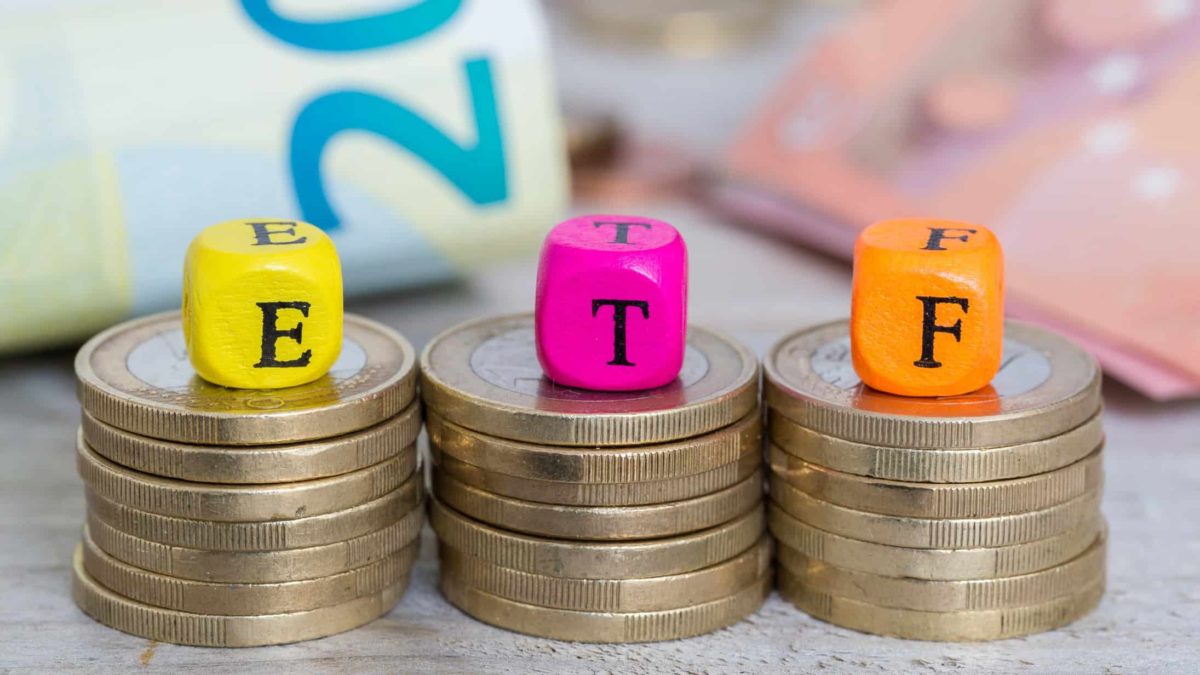
    ETF written on cubes sitting on piles of coins.ETF written on cubes sitting on piles of coins.

    The ASX exchange-traded fund (ETF) sector of the share market can be a fruitful place to find opportunities for diversification, dividend income and growth.

    Some ETFs are known for being more growth-focused, such as the iShares S&P 500 ETF (ASX: IVV) or the Vanguard Diversified High Growth Index ETF (ASX: VDHG).

    I don’t mind the ETFs that are focused on the large ASX shares, such as Vanguard Australian Shares Index ETF (ASX: VAS) or the BetaShares Australia 200 ETF (ASX: A200). But I don’t think they have a lot of growth potential because of the nature of large ASX bank shares and large ASX mining shares.

    There are a group of ASX ETFs that could provide a mixture of solid dividend income and decent capital growth. Here I’m going to tell you about two of them.

    Betashares FTSE 100 ETF (ASX: F100)

    The idea behind this ETF is that it tracks an index of 100 of the largest businesses that are trading on the London Stock Exchange.

    While the ASX is heavily weighted to resources and banks, the F100 ETF has a more healthy split between the different sectors in my opinion. There are currently six sectors with a weighting of more than 10%: consumer staples (19.2%), financials (17.6%), energy (13.1%), healthcare (12.4%), materials (10.7%) and industrials (10.3%).

    Investors may recognise some of the biggest 10 positions in the portfolio of AstraZeneca, Shell, HSBC, Unilever, BP, Diageo, British American Tobacco, GSK, Glencore and Rio Tinto.

    BetaShares says that the ASX ETF’s distribution yield, which is based on the last 12 months of distributions, is around 3%. That’s not huge, but it’s more than double the dividend yield of the US shares-focused iShares S&P 500 ETF.

    The ETF is delivering capital growth, though we can never know when volatility may hit. As we can see on the graph below, the Betashares FTSE 100 ETF has risen by over 11% in 2023 to date.

    Australian Ex-20 Portfolio Diversifier ETF (ASX: EX20)

    As the name suggests, this ASX ETF is invested in ASX share, but a key difference to ones like the VAS ETF is that it excludes the biggest 20 ASX shares and invests in the next 180 names. In other words, it’s not invested in names like Commonwealth Bank of Australia (ASX: CBA), BHP Group Ltd (ASX: BHP) and CSL Limited (ASX: CSL).

    What are the benefits of this? Firstly, the EX20 ETF reduces portfolio concentration to a few large banks and miners – it can enable diversification.

    With this 180-name portfolio, I think it can deliver a bit more growth. Larger businesses are normally quite far along on their growth journey, whereas the smaller ones could have more growth potential.

    As of 18 May 2023, these were the biggest 10 positions: Brambles Limited (ASX: BXB), South32 Ltd (ASX: S32), James Hardie Industries plc (ASX: JHX), Sonic Healthcare Ltd (ASX: SHL), Cochlear Limited (ASX: COH), Suncorp Group Ltd (ASX: SUN), Northern Star Resources Ltd (ASX: NST), Origin Energy Ltd (ASX: ORG),  Scentre Group (ASX: SCG) and ResMed Inc (ASX: RMD).

    Seeing as this article is about passive income, now let’s look at the most important part of the ASX ETF – the dividend yield. BetaShares said that the last 12 month distribution yield is 3.1%, or 3.8% when grossed-up for franking credits.

    If the underlying EX20 ETF’s businesses can achieve attractive earnings growth over time, then it could mean that the dividends could grow at a faster pace.

    The post 2 ASX ETFs I’d buy for dividend income appeared first on The Motley Fool Australia.

    Should you invest $1,000 in Betashares Ftse100 Etf right now?

    Before you consider Betashares Ftse100 Etf, you’ll want to hear this.

    Motley Fool Investing expert Scott Phillips just revealed what he believes are the 5 best stocks for investors to buy right now… and Betashares Ftse100 Etf wasn’t one of them.

    The online investing service he’s run for over a decade, Motley Fool Share Advisor, has provided thousands of paying members with stock picks that have doubled, tripled or even more.* And right now, Scott thinks there are 5 stocks that are better buys.

    See The 5 Stocks
    *Returns as of April 3 2023

    (function() {
    function setButtonColorDefaults(param, property, defaultValue) {
    if( !param || !param.includes(‘#’)) {
    var button = document.getElementsByClassName(“pitch-snippet”)[0].getElementsByClassName(“pitch-button”)[0];
    button.style[property] = defaultValue;
    }
    }

    setButtonColorDefaults(“#0095C8”, ‘background’, ‘#5FA85D’);
    setButtonColorDefaults(“#0095C8”, ‘border-color’, ‘#43A24A’);
    setButtonColorDefaults(“#fff”, ‘color’, ‘#fff’);
    })()

    More reading

    Motley Fool contributor Tristan Harrison has no position in any of the stocks mentioned. The Motley Fool Australia’s parent company Motley Fool Holdings Inc. has positions in and has recommended CSL, Cochlear, and ResMed. The Motley Fool Australia has positions in and has recommended ResMed. The Motley Fool Australia has recommended Cochlear, Sonic Healthcare, and iShares S&P 500 ETF. The Motley Fool has a disclosure policy. This article contains general investment advice only (under AFSL 400691). Authorised by Scott Phillips.

    from The Motley Fool Australia https://ift.tt/bzVoun7

  • Bought $7,000 of Northern Star shares five years ago? Here’s how much passive income you’ve earned

    A woman wearing a top of gold coins and large gold hoop earrings and a heavy gold bracelet stands amid a shower of gold coins with her mouth open wide and an excited look on her face.A woman wearing a top of gold coins and large gold hoop earrings and a heavy gold bracelet stands amid a shower of gold coins with her mouth open wide and an excited look on her face.

    The Northern Star Resources Ltd (ASX: NST) share price has more than doubled over the last five years.

    Indeed, a $7,000 investment in the gold mining stock back in May 2018 would have seen a buyer walk away with 1,114 shares, paying $6.28 apiece.

    Today, that parcel would be worth $14,827.34. The Northern Star share price last traded at $13.31.

    Comparatively, the S&P/ASX 200 Index (ASX: XJO) has gained 21% in that same time.

    But how much harder might our imagined investor’s money have worked if we also factor in the dividends on offer from the mining giant? Let’s take a look.

    All dividends paid to those buying Northern Star shares in 2018

    Here is all the passive income offered by Northern Star shares over the last five years:

    Northern Star dividends’ pay date Type Dividend amount
    March 2023 Interim 11 cents
    September 2022 Final 11.5 cents
    March 2022 Interim 10 cents
    September 2021 Final 9.5 cents
    March 2021 Interim 9.5 cents
    September 2020 Final and special 9.5 cents and 10 cents
    July 2020 Interim 7.5 cents
    November 2019 Final 7.5 cents
    April 2019 Interim 6 cents
    September 2018 Final 5 cents
    Total:   97 cents

    As the above chart shows, each Northern Star share has yielded 97 cents of dividends since May 2018.

    That means our figurative parcel has probably brought in around $1,080.58 of passive income.

    At that rate, our imagined investor has realised a total return on investment (ROI), considering share price gains and dividends, of 127%.

    And just imagine the compounding returns they may have experienced had they reinvested their offerings.

    Not to mention, all the dividends paid by the company in that time have been fully franked, meaning they might have brought additional benefits for some investors at tax time.

    Right now, Northern Star shares are trading with a 1.69% dividend yield.

    The post Bought $7,000 of Northern Star shares five years ago? Here’s how much passive income you’ve earned appeared first on The Motley Fool Australia.

    Should you invest $1,000 in Northern Star Resources Limited right now?

    Before you consider Northern Star Resources Limited, you’ll want to hear this.

    Motley Fool Investing expert Scott Phillips just revealed what he believes are the 5 best stocks for investors to buy right now… and Northern Star Resources Limited wasn’t one of them.

    The online investing service he’s run for over a decade, Motley Fool Share Advisor, has provided thousands of paying members with stock picks that have doubled, tripled or even more.* And right now, Scott thinks there are 5 stocks that are better buys.

    See The 5 Stocks
    *Returns as of April 3 2023

    (function() {
    function setButtonColorDefaults(param, property, defaultValue) {
    if( !param || !param.includes(‘#’)) {
    var button = document.getElementsByClassName(“pitch-snippet”)[0].getElementsByClassName(“pitch-button”)[0];
    button.style[property] = defaultValue;
    }
    }

    setButtonColorDefaults(“#0095C8”, ‘background’, ‘#5FA85D’);
    setButtonColorDefaults(“#0095C8”, ‘border-color’, ‘#43A24A’);
    setButtonColorDefaults(“#fff”, ‘color’, ‘#fff’);
    })()

    More reading

    Motley Fool contributor Brooke Cooper has no position in any of the stocks mentioned. The Motley Fool Australia’s parent company Motley Fool Holdings Inc. has no position in any of the stocks mentioned. The Motley Fool Australia has no position in any of the stocks mentioned. The Motley Fool has a disclosure policy. This article contains general investment advice only (under AFSL 400691). Authorised by Scott Phillips.

    from The Motley Fool Australia https://ift.tt/mhTeXRp

  • Goldman Sachs says this ASX 100 share is a strong buy

    A man in his office leans back in his chair with his hands behind his head looking out his window at the city, sitting back and relaxed, confident in his ASX share investments for the long term.

    A man in his office leans back in his chair with his hands behind his head looking out his window at the city, sitting back and relaxed, confident in his ASX share investments for the long term.The Aristocrat Leisure Ltd (ASX: ALL) share price could have plenty of room to climb higher from current levels.

    That’s the view of analysts at Goldman Sachs, which have recently reiterated their conviction buy rating on the ASX 100 share.

    This follows the release of the gaming technology company’s half-year results last week.

    What is Goldman saying about this ASX 100 share?

    According to the note, the broker has retained its buy rating on its shares with an improved price target of $46.70.

    Based on the current Aristocrat share price of $38.50, this implies potential upside of 21% for investors over the next 12 months.

    Goldman highlights that the ASX 100 share reported a half-year result in line with expectations despite a soft performance from its digital business. Overall, it has seen enough to believe that its buy thesis remains intact. It commented:

    1H23 results were in line with our expectations with mixed reads across various divisions. While the market reaction to this update was weak, which we believe to be largely driven by Pixel United, the update offers incremental support to our Buy thesis.

    One of the highlights was the company’s new Anaxi real money gaming business. The broker explained:

    The update from Anaxi was another key positive in our view. While management has not provided any financial target expectations for this business over the next couple of years, Anaxi has also signed FanDuel as a content distribution partner, resulting in access to c. 55% of the market. We continue to view this as the strongest growth opportunity for ALL, which has especially been enhanced by the proposed NeoGames acquisition.

    The sum of the above is that Goldman is now forecasting a double-digit annual earnings per share growth rate from this ASX 100 share through to FY 2025. It concludes:

    Overall, we revise the segment profit outlook by 2-3% over FY23-25e and our 12m Target Price by +2.2%. ALL currently trades at 17x FY24 P/E while offering 12% CAGR EPS growth over FY22-25e. We maintain our Buy (On CL) rating.

    The post Goldman Sachs says this ASX 100 share is a strong buy appeared first on The Motley Fool Australia.

    Should you invest $1,000 in Aristocrat Leisure Limited right now?

    Before you consider Aristocrat Leisure Limited, you’ll want to hear this.

    Motley Fool Investing expert Scott Phillips just revealed what he believes are the 5 best stocks for investors to buy right now… and Aristocrat Leisure Limited wasn’t one of them.

    The online investing service he’s run for over a decade, Motley Fool Share Advisor, has provided thousands of paying members with stock picks that have doubled, tripled or even more.* And right now, Scott thinks there are 5 stocks that are better buys.

    See The 5 Stocks
    *Returns as of April 3 2023

    (function() {
    function setButtonColorDefaults(param, property, defaultValue) {
    if( !param || !param.includes(‘#’)) {
    var button = document.getElementsByClassName(“pitch-snippet”)[0].getElementsByClassName(“pitch-button”)[0];
    button.style[property] = defaultValue;
    }
    }

    setButtonColorDefaults(“#0095C8”, ‘background’, ‘#5FA85D’);
    setButtonColorDefaults(“#0095C8”, ‘border-color’, ‘#43A24A’);
    setButtonColorDefaults(“#fff”, ‘color’, ‘#fff’);
    })()

    More reading

    Motley Fool contributor James Mickleboro has no position in any of the stocks mentioned. The Motley Fool Australia’s parent company Motley Fool Holdings Inc. has no position in any of the stocks mentioned. The Motley Fool Australia has no position in any of the stocks mentioned. The Motley Fool has a disclosure policy. This article contains general investment advice only (under AFSL 400691). Authorised by Scott Phillips.

    from The Motley Fool Australia https://ift.tt/D5RdpzF

  • This is my no. 1 ASX mining share to buy right now

    A Paladin Energy miner wearing a hard hat and protective gear stands in front of a large mining truck and smiles to the camera.

    A Paladin Energy miner wearing a hard hat and protective gear stands in front of a large mining truck and smiles to the camera.

    The Aeris Resources Ltd (ASX: AIS) share price looks very cheap to me, given the company’s promising future in copper. I’m going to tell you why it’s my number one ASX mining share pick at the moment.

    It’s not exactly a tiny business. According to the ASX, it has a market capitalisation of $332 million. Aeris is best known as a copper miner which is one of the main reasons I like it.

    Firstly, I’m going to explain why I’m optimistic about future demand for copper.

    Positive outlook for the copper ASX mining share

    Commodity prices typically move up and down through cycles as supply and demand change.

    I think there is a very positive tailwind for copper as the world moves towards decarbonisation.

    ASX mining giant Rio Tinto Limited (ASX: RIO) has described the many uses of copper:

    We use copper in pots and pans, in the water pipes in our homes, and in the radiators in our cars. Copper also plays an essential role in computers, smartphones, electronics, appliances and construction.

    Copper also promises to play an essential role in the transition to the low-carbon economy. Just one 1MW wind turbine, for example, uses three tonnes of copper. And electric vehicles have a copper intensity 3 to 4 times higher than traditional vehicles. As a result, global demand for copper is set to grow 1.5% to 2.5% per year, driven by electrification and increasing requirements for renewable energy.

    While nothing is certain, there are predictions the copper price could rise in the future because of new demand. However, it’s becoming increasingly difficult to find easily accessible, large copper deposits.

    Why I’m bullish on the Aeris Resources share price

    It’s beneficial for any ASX mining share’s profitability if the commodity it sells goes up in price because, essentially, it gets more revenue for the same amount of production, improving profitability.

    The company is working on expanding its copper production, with potential growth in Victoria with the Stockman project as well as the company’s plans in North Queensland.

    Certainly, the ASX mining share’s profit could ramp up in FY24 and FY25 as more production comes online.

    Current earnings projections on Commsec suggest the business could generate 11.2 cents of earnings per share (EPS) in FY24 and 14.5 cents of EPS in FY25. These estimates would put the Aeris Resources share price at just 4.5 times FY24’s estimated earnings and 3.5 times FY25’s estimated earnings.

    That seems exceptionally cheap to me. Even if it were to rise 25% over the next 12 months, I still think it would seem cheap.

    I think the business has a very good future and it’s priced at a very good valuation.

    The post This is my no. 1 ASX mining share to buy right now appeared first on The Motley Fool Australia.

    Should you invest $1,000 in Aeris Resources Limited right now?

    Before you consider Aeris Resources Limited, you’ll want to hear this.

    Motley Fool Investing expert Scott Phillips just revealed what he believes are the 5 best stocks for investors to buy right now… and Aeris Resources Limited wasn’t one of them.

    The online investing service he’s run for over a decade, Motley Fool Share Advisor, has provided thousands of paying members with stock picks that have doubled, tripled or even more.* And right now, Scott thinks there are 5 stocks that are better buys.

    See The 5 Stocks
    *Returns as of April 3 2023

    (function() {
    function setButtonColorDefaults(param, property, defaultValue) {
    if( !param || !param.includes(‘#’)) {
    var button = document.getElementsByClassName(“pitch-snippet”)[0].getElementsByClassName(“pitch-button”)[0];
    button.style[property] = defaultValue;
    }
    }

    setButtonColorDefaults(“#43B02A”, ‘background’, ‘#5FA85D’);
    setButtonColorDefaults(“#43B02A”, ‘border-color’, ‘#43A24A’);
    setButtonColorDefaults(“#fff”, ‘color’, ‘#fff’);
    })()

    More reading

    Motley Fool contributor Tristan Harrison has no position in any of the stocks mentioned. The Motley Fool Australia’s parent company Motley Fool Holdings Inc. has no position in any of the stocks mentioned. The Motley Fool Australia has no position in any of the stocks mentioned. The Motley Fool has a disclosure policy. This article contains general investment advice only (under AFSL 400691). Authorised by Scott Phillips.

    from The Motley Fool Australia https://ift.tt/BnTW4yF

  • Mike Tyson on investing

    A man in a business suit wearing boxing gloves slumps in the corner of a boxing ring representing the beaten-up Zip share price in recent times

    A man in a business suit wearing boxing gloves slumps in the corner of a boxing ring representing the beaten-up Zip share price in recent times

    I have a question for you.

    Would you rather a certain $500,000, or a 50:50 shot at ending up with $700,000, but getting only $200,000 if things don’t work out?

    I can tell you what the maths suggests: a 50:50 chance of either $700,000 or $200,000 gives an expected value of $450,000 (50% of 700k + 50% of 200k).

    A certain $500,000 is, well, still $500,000. It’s the better bet, statistically speaking.

    But why do I ask?

    Because that very question – explicit and implicit – is being asked and answered by investors, every day.

    Some have the conversation with their financial planner, assessing their tolerance for risk, and selecting an investment strategy accordingly.

    Some think it through themselves, and the answer is shown in what psychologists call their ‘revealed preferences’ – how they actually invest.

    And some answered a Twitter poll, posted by our US sister organisation. The question posed was ‘What matters more to you in stock investing?’.

    The options:

    1. Avoiding big losers
    2. Finding big winners

    And the results?

    50:50.

    Well, 49.9% and 50.1%, respectively… but I’ll call that a tie.

    Now, Twitter polls aren’t scientific etc. And yet, that very poetic 50:50 split illustrates the issue beautifully.

    See, when someone asks me, at a barbecue, on telly, or in an Uber ‘What stocks should I buy?’, the real answer is always ‘it depends’.

    It depends on your answer to the above question.

    And a whole lot of other things!

    But – and let me dig a little deeper here – I’m not even sure those people answering the poll really, truly, know themselves, necessarily.

    How many investors, in 2021, were in the ‘Finding big winners’ camp, but are now chastened by the big tech company share price falls of 2022 and 2023 and are now in the ‘Avoiding big losers’ group?

    How many investors, who consider themselves in the ‘Avoiding big losers’ camp, will start swinging for the fences, once their brothers-in-law start getting rich on some speculative mining stocks?

    Or who will play it safe for a while, only to realise they won’t have as much as they’d like in retirement, and start to try to play ‘catch up’, taking greater and greater risks – knowingly or otherwise?

    And – and let me put my investment advisor’s hat on here for a sec – how many of both groups are making decisions without a good understanding of themselves, of the maths, and of the markets?

    You’ve probably heard the Mike Tyson line that ‘everyone has a plan until they’re punched in the face’. That can be true of investing. It can be very easy to lose your nerve when markets go south.

    See pain – emotional and otherwise – is hard to endure. And people will do what they can to avoid it. It’s where the phrase ‘to cut your losses’ comes from. The key thought? Just. Make. It. Stop.

    Now, Tyson more than anyone, understands ‘no pain, no gain’. (Well, Evander Hollyfield probably understands it better, after Tyson bit off part of his ear, but I digress.)

    So what should an investor do? Well, there is one good option, one okay option, and one bad option.

    The good option is to have planned for down markets, to have steeled yourself for them, and to have prepared your portfolio for them. To own companies that are long term winners, even if you have to endure some paper losses along the way.

    The okay option? If you can’t do the above, don’t do it at all. Because…

    The bad option is investing during the good times, then selling, at a loss, in the bad times because you can’t take it any more… crystallising a permanent capital loss.

    Because it’s easy for me to say ‘I reckon you should buy shares in Company X, because over the next decade, I think it’ll do really well’.

    It’s harder for some people (perhaps those 50% who wanted to avoid big losers) to keep the faith, if that company’s shares fall 30%, 40% or more half a dozen times along the journey, even if I’m right in the end.

    And if they’re going to sell at the first sign of trouble, they’re better not buying those shares at all, because they won’t be around to share in the eventual spoils.

    I’ve often talked about Amazon’s extraordinary rise, both as a business, and as a stock. (I own shares, for the record).

    Those shares, up 129,000% (unfortunately, I was late to this particular party!) since listing, have nonetheless fallen – hard – many, many times.

    Worth holding, regardless? You bet.

    But you had to do just that… hold.

    Too many people didn’t. Couldn’t.

    They get no criticism from me. But I wish they’d have known that about themselves, up front, rather than buying, then selling for a loss, and wondering what might have been.

    See, I want everyone to invest. I’ve seen – from history and with my own eyes – just how remarkable long-term compounding can be.

    But I don’t want people to invest unless and until they’ve made their peace with what to expect from the stock market.

    If you haven’t, or can’t, I reckon you’re better off not investing at all.

    But I hope you can find a way to make your peace with it.

    To know what to expect. And to commit yourself to seeing it through anyway; accepting the lumps and bumps because the outcomes are worth the pain.

    You don’t have to be Mike Tyson.

    But you do have to make sure you’re still in the proverbial ring at the end of the bout.

    You don’t have to love the pain.

    You don’t have to enjoy falling share prices.

    But you do have to commit to staying the course.

    How you do that is up to you.

    Maybe you make yourself a student of financial history, learning about both the historical volatility and the enormous historical returns, despite that volatility.

    Maybe you use a financial planner as your financial coach.

    Maybe you build your portfolio using one of our investment services (or one of our – reputable – competitors) where you can lean on the analysis and experience of others.

    Maybe you simply decide it’s not for you.

    All of those are valid options.

    And each is better than jumping in and out of the market, locking in losses each time, and swearing off investing.

    Because forewarned is, as they say, forearmed.

    There is going to be volatility.

    There are going to be losses.

    There are going to be times when you just want the pain to stop.

    And yet, history tells us that, over the long term, a suitably diversified portfolio has delivered extraordinary gains.

    I can’t promise that’ll continue. No-one knows the future.

    But I can tell you that I expect to be fully invested – and adding more to my portfolio – for decades and decades to come.

    My suggestion?

    Why not re-read the above. Work out what sort of investor you are, and what you need to do to make sure you can stay the course.

    Because, financially, nothing substitutes for making sure you’re still there at the end.

    Fool on!

    The post Mike Tyson on investing appeared first on The Motley Fool Australia.

    Should you invest $1,000 in right now?

    Before you consider , you’ll want to hear this.

    Motley Fool Investing expert Scott Phillips just revealed what he believes are the 5 best stocks for investors to buy right now… and wasn’t one of them.

    The online investing service he’s run for over a decade, Motley Fool Share Advisor, has provided thousands of paying members with stock picks that have doubled, tripled or even more.* And right now, Scott thinks there are 5 stocks that are better buys.

    See The 5 Stocks
    *Returns as of April 3 2023

    (function() {
    function setButtonColorDefaults(param, property, defaultValue) {
    if( !param || !param.includes(‘#’)) {
    var button = document.getElementsByClassName(“pitch-snippet”)[0].getElementsByClassName(“pitch-button”)[0];
    button.style[property] = defaultValue;
    }
    }

    setButtonColorDefaults(“#43B02A”, ‘background’, ‘#5FA85D’);
    setButtonColorDefaults(“#43B02A”, ‘border-color’, ‘#43A24A’);
    setButtonColorDefaults(“#fff”, ‘color’, ‘#fff’);
    })()

    More reading

    John Mackey, former CEO of Whole Foods Market, an Amazon subsidiary, is a member of The Motley Fool’s board of directors. Motley Fool contributor Scott Phillips has positions in Amazon.com. The Motley Fool Australia’s parent company Motley Fool Holdings Inc. has positions in and has recommended Amazon.com and Uber Technologies. The Motley Fool Australia has recommended Amazon.com. The Motley Fool has a disclosure policy. This article contains general investment advice only (under AFSL 400691). Authorised by Scott Phillips.

    from The Motley Fool Australia https://ift.tt/OrgmCTS

  • The market has soured 20% on the A2 Milk share price. Is it a turnaround buy?

    A man in a business suit holds a mobile phone to his ear while he drinks a large glass of milk.A man in a business suit holds a mobile phone to his ear while he drinks a large glass of milk.

    The A2 Milk Company Ltd (ASX: A2M) share price has shed 20% in 2023 to date. But when businesses drop heavily, it’s worth considering whether they are a beaten-up opportunity.

    Most investors will likely already know that A2 Milk’s two main product categories are infant formula and liquid milk. Though it does sell other types of products including ice cream and milk powder.

    Why is the A2 Milk share price falling?

    As we can see on the chart above, the last 12 months have been a volatile time for the company.

    Much of its recent decline started in March and has continued. The fall in share price appears to have been triggered by another dairy company Synlait Milk Ltd (ASX: SM1). It is a major supplier to A2 Milk and, in turn, A2 Milk owns a significant parcel of Synlait shares.

    Given their relationship, Synlait’s comments could also speak to (future) demand for A2 Milk products.

    On 17 March 2023, Synlait said its two-year recovery plan was going to take three years. It spoke of a “reduction or delay in advanced nutrition demand” following “forecast changes by Synlait’s largest customer”.

    At the time of that March update, Synlait was guiding that net profit after tax (NPAT) would be between $15 million to $25 million.

    Synlait then gave another update near the end of April 2023. This reduced its guidance range to between a net loss of $5 million to a net profit of $5 million.

    It said that was due to “further advanced nutrition demand reductions, mostly from one of Synlait’s customers, which impact consumer packaged infant formula volumes and base powder production”, as well as other factors.  

    A2 Milk response

    In an ASX announcement, A2 Milk responded to the comments, saying it was surprised by the extent of the reduction in Synlait’s guidance.

    However, A2 Milk acknowledged in two Synlait forecasts, A2 Milk had also lowered its total forecast production volume needs. Specifically, these were for English-label consumer-packaged infant formula for March, April, May, and June 2023 production months. The volumes needed dropped around 1,650 metric tonnes in total. This equated to less than 5% of Synlait’s advanced nutritional sales volumes over the 12 months to 31 January 2023.

    A2 Milk also said there has been “continued weakness” in the Australia-New Zealand daigou market. This is where private sellers supply directly to China. According to the company, it is “down 49% in the most recently reported quarter from Kantar”.

    It also talked about significant cumulative delays in English-label consumer-packaging infant formula deliveries from Synlait to A2 Milk over an extended period. These were expected to be fulfilled in the fourth quarter of FY23, resulting in a “material amount” of inventory arriving within a relatively short period which “needs to be managed”.

    A2 Milk also referred to the “ongoing refinement of the company’s English label distribution model”.

    Taking into account all the factors A2 Milk has talked about, the infant formula company confirmed: “there is no material change to its FY23 outlook”. Certainly, one could argue this is supportive of the A2 Milk share price.

    The company is expecting FY23 revenue to grow in the low-double digits, though English-label revenue is now expected to be down in the mid-single digits. This would be partially offset by “continued strong double-digit growth in Chinese label infant formula revenue”, the company said.

    FY23 revenue growth is expected to be “at the low end of its previous expectations”, meaning around 10%. However, A2 Milk is still expecting an earnings before interest, tax, depreciation and amortisation (EBITDA) margin similar to FY22.

    My view on the A2 Milk share price

    It’s understandable the market may not have enjoyed hearing of potentially lower-than-expected volumes and revenue growth at the bottom of its guidance range.

    But A2 Milk has a strong brand and it seems to be going well in China, a key market for the company’s success. It will be interesting to see how FY23 progresses for A2 Milk (and Synlait).

    A2 Milk’s ongoing expansion in markets outside of Australia and New Zealand is promising in my opinion. Looking at profit projections on Commsec for the next few years, earnings per share (EPS) could rise each year to FY25.

    The current A2 Milk share price is valued at 19 times FY25’s estimated earnings. Certainly, a growing profit would be a good tailwind for hopeful share price growth.

    The post The market has soured 20% on the A2 Milk share price. Is it a turnaround buy? appeared first on The Motley Fool Australia.

    Tech Stock That’s Changing Streaming

    Discover one tiny “Triple Down” stock that’s 1/45th the size of Google and could stand to profit as more and more people ditch free-to-air for streaming TV.

    But this isn’t a competitor to Netflix, Disney+ or Amazon Prime Video, as you might expect…

    Learn more about our Tripledown report
    *Returns as of April 3 2023

    (function() {
    function setButtonColorDefaults(param, property, defaultValue) {
    if( !param || !param.includes(‘#’)) {
    var button = document.getElementsByClassName(“pitch-snippet”)[0].getElementsByClassName(“pitch-button”)[0];
    button.style[property] = defaultValue;
    }
    }

    setButtonColorDefaults(“#0095C8”, ‘background’, ‘#5FA85D’);
    setButtonColorDefaults(“#0095C8”, ‘border-color’, ‘#43A24A’);
    setButtonColorDefaults(“#fff”, ‘color’, ‘#fff’);
    })()

    More reading

    Motley Fool contributor Tristan Harrison has no position in any of the stocks mentioned. The Motley Fool Australia’s parent company Motley Fool Holdings Inc. has no position in any of the stocks mentioned. The Motley Fool Australia has recommended A2 Milk. The Motley Fool has a disclosure policy. This article contains general investment advice only (under AFSL 400691). Authorised by Scott Phillips.

    from The Motley Fool Australia https://ift.tt/xGXdYW5

  • Is the Webjet share price a buy before it reports this week?

    A woman on holiday stands with her arms outstretched joyously in an aeroplane cabin.A woman on holiday stands with her arms outstretched joyously in an aeroplane cabin.

    The Webjet Limited (ASX: WEB) share price will face the spotlight this week as the ASX travel share reports its FY23 result.

    Webjet has two main parts to its business – an online travel agency (OTA) in Australia and a global business-to-business (B2B) segment called WebBeds which “digitally provides hotel rooms to global partners”.

    I think there are two main areas that investors should focus on to decide whether the business is a buy right now. They are how much profit it can make and whether the outlook is strong.

    Is profitability improving?

    As an online-only business, Webjet’s operating model can come with noticeable benefits compared to a ‘bricks and mortar’ travel agent.

    In the company’s FY23 half-year result, its OTA segment achieved an earnings before interest, tax, depreciation and amortisation (EBITDA) margin of 41.3%. Webjet said it expects the future EBITDA margin to be more than 40% despite inflationary wage pressures.

    Webjet also said that its total transaction value (TTV) to revenue margin is expected to improve from 8.4% to between 9% to 10% once international capacity returns to 2019 levels.

    Qantas Airways Limited (ASX: QAN) announced just last week it is boosting its international network with extra flights, more aircraft, and new routes. This will see its international capacity double compared to pre-COVID levels. Perhaps this could be the margin booster that Webjet was referring to.

    WebBeds reported an excellent EBITDA margin of 55.7% in HY23. It’s targeting an EBITDA margin of 62.5% so there’s room for further improvement.

    It seems there’s scope for Webjet’s margins to improve for both of its main businesses, which I think is very promising for the Webjet share price.

    The company is expected to generate growing profit over FY23, FY24, and FY25. The estimates on Commsec suggest it could make 15.1 cents of earnings per share (EPS) in FY23 and 26 cents of EPS in FY24. This would put the Webjet share price at 49 times FY23’s estimated earnings and 29 times FY24’s estimated earnings.

    Outlook potential

    When we look at two of Webjet’s ASX travel share peers, both talked about strong travel demand which also bodes well for Webjet.

    In a recent trading update for Flight Centre Travel Group Ltd (ASX: FLT), it said travel demand was “holding up strongly”. It achieved a “post-COVID record TTV in March 2023 – 6% above March 2019”.

    Corporate Travel Management Ltd (ASX: CTD) also said in its trading update with its FY23 half-year result that “travel demand remains strong with no signs of macroeconomic factors impacting the recovery”.

    With travel demand looking good, that seems like a good tailwind for the Webjet share price going forwards.

    The digital business model means its profit could be very scalable as it processes more travellers. The same digital infrastructure has already been built and can handle large volumes of customers.

    Is the Webjet share price a buy?

    As we can see on the graph above, the Webjet share price has climbed 20% since the start of the year. The market seems to have largely priced in the recovery of travel demand.

    I’m not expecting the Webjet share price to rise another 20% over the rest of the year. But I think the underlying travel demand and rising profit margins can help the business continue to outperform the market over 2023 and beyond.

    On top of that, the business could start paying dividends again in FY24 (according to Commsec projections), which can boost shareholder returns.

    I’d be happy to buy Webjet shares on a three-year or five-year investment horizon.

    The post Is the Webjet share price a buy before it reports this week? appeared first on The Motley Fool Australia.

    Should you invest $1,000 in Webjet Limited right now?

    Before you consider Webjet Limited, you’ll want to hear this.

    Motley Fool Investing expert Scott Phillips just revealed what he believes are the 5 best stocks for investors to buy right now… and Webjet Limited wasn’t one of them.

    The online investing service he’s run for over a decade, Motley Fool Share Advisor, has provided thousands of paying members with stock picks that have doubled, tripled or even more.* And right now, Scott thinks there are 5 stocks that are better buys.

    See The 5 Stocks
    *Returns as of April 3 2023

    (function() {
    function setButtonColorDefaults(param, property, defaultValue) {
    if( !param || !param.includes(‘#’)) {
    var button = document.getElementsByClassName(“pitch-snippet”)[0].getElementsByClassName(“pitch-button”)[0];
    button.style[property] = defaultValue;
    }
    }

    setButtonColorDefaults(“#0095C8”, ‘background’, ‘#5FA85D’);
    setButtonColorDefaults(“#0095C8”, ‘border-color’, ‘#43A24A’);
    setButtonColorDefaults(“#fff”, ‘color’, ‘#fff’);
    })()

    More reading

    Motley Fool contributor Tristan Harrison has no position in any of the stocks mentioned. The Motley Fool Australia’s parent company Motley Fool Holdings Inc. has no position in any of the stocks mentioned. The Motley Fool Australia has recommended Corporate Travel Management and Flight Centre Travel Group. The Motley Fool has a disclosure policy. This article contains general investment advice only (under AFSL 400691). Authorised by Scott Phillips.

    from The Motley Fool Australia https://ift.tt/5EdiG6e