• NIB share price gains 6% despite net profit drop in FY22

    a man sits back from his laptop computer with both hands behind his head feeling happy to see the Brambles share price moving significantly higher todaya man sits back from his laptop computer with both hands behind his head feeling happy to see the Brambles share price moving significantly higher today

    The NIB Holdings Ltd (ASX: NHF) share price is up from the open following the release of the company’s full-year results for FY22.

    At the time of writing, the NIB share price is trading 5.57% higher at $7.675.

    Let’s check what the company reported.

    NIB grows revenue, slumps profit

    Key takeouts from the period include:

    • Group underlying revenue of $2.8 billion, up 7.2% year on year
    • Operating profit of $235.3 million, up 14.8% from the same time last year
    • Net profit after tax (NPAT) came in at $133.8 million, down 16.6% from “investment losses”
    • Group claims expense (total claims for underwriting segments only) came in at $2.1 billion, up 4%
    • Statutory earnings per share (EPS) of 29.6 cents, down 15.9% from the previous year’s result
    • Final dividend of 11.0 cents per share fully franked, down from 14.0 cps in FY21

    What else happened for NIB?

    Whilst revenue was up 7% for the year, NPAT was more than 16% lower due to volatility in the financial markets.

    “The losses represented a negative swing of $81.8 million on previous year earnings of $51.8 million,” NIB explained today.

    The company also increased the value of support measures to its customers to $100 million following COVID-19 impacts.

    Meanwhile, premium revenue in its flagship Australian Residents Health Insurance (ARHI) business gained 5% year on year, whereas claims fell 3% to $1.5 billion.

    Management commentary

    Speaking on the announcement, NIB managing director Mark Fitzgibbon said:

    Our Australian Residents Health Insurance business (ARHI) grew 3.2%, well above what we expect the industry will report. Premium revenue rose 5.2% to $2,286.2 million, even though we deferred the 2022 annual premium increase. Our final quarter of FY22 was particularly good; the best we’ve experienced in seven years.

    Across the Group, we’re especially pushing hard on our Payer to Partner (P2P) strategy and making our value proposition as much about maintaining good health as it is today about financial protection.

    What’s next for NIB?

    The company is reportedly looking forward to more favourable macroeconomic conditions for each of its businesses looking ahead.

    Fitzgibbon noted the company’s payer to partner (P2P) strategy is looking to ramp up and increase digital engagement with customers.

    He said:

    AHRI is in very good shape and away to a very good start adding 4,399 members in the first six weeks of FY23. We expect net growth of 3-4% this year [in the segment] …

    NIB New Zealand will continue to grow as we further develop our integrated life and living products and pursue additional partnerships with Māori communities. NIB Travel is positioned well to ride the back of resurgent travel with new, superior underwriting arrangements.

    The NIB share price is down more than 5% in the last 12 months but has gained more than 8% year to date.

    The post NIB share price gains 6% despite net profit drop in FY22 appeared first on The Motley Fool Australia.

    Should you invest $1,000 in Nib Holdings Limited right now?

    Before you consider Nib Holdings Limited, you’ll want to hear this.

    Motley Fool Investing expert Scott Phillips just revealed what he believes are the 5 best stocks for investors to buy right now… and Nib Holdings Limited wasn’t one of them.

    The online investing service he’s run for over a decade, Motley Fool Share Advisor, has provided thousands of paying members with stock picks that have doubled, tripled or even more.* And right now, Scott thinks there are 5 stocks that are better buys.

    See The 5 Stocks
    *Returns as of August 4 2022

    (function() {
    function setButtonColorDefaults(param, property, defaultValue) {
    if( !param || !param.includes(‘#’)) {
    var button = document.getElementsByClassName(“pitch-snippet”)[0].getElementsByClassName(“pitch-button”)[0];
    button.style[property] = defaultValue;
    }
    }

    setButtonColorDefaults(“#0095C8”, ‘background’, ‘#5FA85D’);
    setButtonColorDefaults(“#0095C8”, ‘border-color’, ‘#43A24A’);
    setButtonColorDefaults(“#fff”, ‘color’, ‘#fff’);
    })()

    More reading

    Motley Fool contributor Zach Bristow has no position in any of the stocks mentioned. The Motley Fool Australia’s parent company Motley Fool Holdings Inc. has no position in any of the stocks mentioned. The Motley Fool Australia has recommended NIB Holdings Limited. The Motley Fool has a disclosure policy. This article contains general investment advice only (under AFSL 400691). Authorised by Scott Phillips.

    from The Motley Fool Australia https://ift.tt/PUOXIWy

  • Ampol share price dips as profits reach historic highs

    A man looks frustrated with head on hand as he fills up car at a service station.A man looks frustrated with head on hand as he fills up car at a service station.

    The Ampol Ltd (ASX: ALD) share price is moving to the downside on Monday after the company released its half-year results.

    At the time of writing, shares in the transport fuels supplier are down 0.85% to $33.85.

    Ampol share price falters despite dazzling results

    • Total revenue up 83% from the prior corresponding period to $11,333 million
    • Replacement cost operating profit (RCOP) EBIT up 120% to $693.1 million (continuing operations)
    • Sales volume increased 4% to 11.5 billion litres
    • Statutory net profit after tax (NPAT) up 114% to $695.9 million
    • Interim dividend up 131% to $1.20 per share
    • Completed Z Energy acquisition

    The meteoric rise in oil prices lifted Ampol’s half-year result to unprecedented levels. However, the effects were not felt as tailwinds for all of the company’s divisions. Rather, refining benefitted while retail sales were impacted.

    According to the report, the fuels and infrastructure division witnessed a major uptick in earnings. This was mostly attributable to a ninefold increase in Lytton refinery RCOP EBIT to $443.9 million. In turn, the Lytton refiner margin came in at US$22.35 per barrel.

    However, on the convenience retail side, Ampol succumbed to headwinds including floods, Omicron, and reduced demand due to high fuel prices. As a result, the consumer-facing division experienced an earnings decline to $127.3 million.

    What else happened in the half?

    In addition to record results, the half involved significant acquisition and divestment activities. Namely, the completion of the company’s Z Energy acquisition.

    The process of integrating the New Zealand fuel retailer was officially completed on 10 May 2022. For reference, the Ampol share price has climbed 2.5% since then.

    Furthermore, Ampol upped its investment in what it labels ‘future energy’. Rising from $1.6 million to $13.2 million, the company poured millions into rolling out its electric vehicle charging brand AMPCharge.

    What did management say?

    Commenting on the result, Ampol managing director and CEO Matt Halliday said:

    Against the backdrop of increased market volatility due to the global energy shock, COVID-19 outbreaks and extreme weather, Ampol has delivered the strongest half-year Replacement Cost Operating Profit in its history. This result demonstrates the benefits of Ampol’s integrated supply chain.

    The turnaround is particularly remarkable considering last year the federal government was depending on a ‘fuel security package’ to keep its head above water.

    What’s next?

    Today, investors are staring down record profits. However, management’s commentary on current conditions is less rosy. For July, the Lytton refiner margin has stooped to US$16.46 per barrel. Although, Ampol notes that inventory levels are low given this time of year.

    In contrast, the convenience retail division strengthened in July. The company believes its retail strategy will continue to gain traction, supporting better income.

    Ampol share price snapshot

    The Ampol share price has largely been immune to the tattering of equity markets in 2022. Specifically, the company’s shares have risen 14.13% in value, compared to a 5.34% fall in the S&P/ASX 200 Index (ASX: XJO).

    At present, Ampol trades on a price-to-earnings (P/E) ratio of 14.5 times.

    The post Ampol share price dips as profits reach historic highs appeared first on The Motley Fool Australia.

    Wondering where you should invest $1,000 right now?

    When investing expert Scott Phillips has a stock tip, it can pay to listen. After all, the flagship Motley Fool Share Advisor newsletter he has run for over ten years has provided thousands of paying members with stock picks that have doubled, tripled or even more.* Scott just revealed what he believes could be the “five best ASX stocks” for investors to buy right now. These stocks are trading at near dirt-cheap prices and Scott thinks they could be great buys right now

    See The 5 Stocks
    *Returns as of August 4 2022

    (function() {
    function setButtonColorDefaults(param, property, defaultValue) {
    if( !param || !param.includes(‘#’)) {
    var button = document.getElementsByClassName(“pitch-snippet”)[0].getElementsByClassName(“pitch-button”)[0];
    button.style[property] = defaultValue;
    }
    }

    setButtonColorDefaults(“#0095C8”, ‘background’, ‘#5FA85D’);
    setButtonColorDefaults(“#0095C8”, ‘border-color’, ‘#43A24A’);
    setButtonColorDefaults(“#fff”, ‘color’, ‘#fff’);
    })()

    More reading

    Motley Fool contributor Mitchell Lawler has no position in any of the stocks mentioned. The Motley Fool Australia’s parent company Motley Fool Holdings Inc. has no position in any of the stocks mentioned. The Motley Fool Australia has no position in any of the stocks mentioned. The Motley Fool has a disclosure policy. This article contains general investment advice only (under AFSL 400691). Authorised by Scott Phillips.

    from The Motley Fool Australia https://ift.tt/NC20pw1

  • Adbri share price tumbles 12% following a drop in profits

    A miner wearing a high-vis vest and orange hardhat bows his head and puts his hands on his head and screams as the Hawsons Iron share price falls today despite a new progress report on its flagship projectA miner wearing a high-vis vest and orange hardhat bows his head and puts his hands on his head and screams as the Hawsons Iron share price falls today despite a new progress report on its flagship project

    The Adbri Ltd (ASX: ABC) share price slumped after management posted a drop in profits even as revenue improved for the six months to 30 June 2022.

    Strong demand from its construction and mining customers wasn’t enough to offset rising costs and bad weather.

    This is despite the construction materials and lime producer cutting costs and lifting prices for its product.

    The news caused a 12% sell-off in the Adbri share price to $2.34 in early trade when the S&P/ASX 200 Index (ASX: XJO) slipped 0.2%.

    Summary of Adbri’s 1HFY22 results

    • Interim revenue increased to $812.4 million, up 8.0% on 1H21 driven primarily by strong construction and mining sector demand and improved pricing across most products
    • Statutory net profit after tax (NPAT) decreased 15.0% to $48.1 million
    • Underlying NPAT decreased 1.3% to $54.3 million on 1H21.
    • The drop in NPAT was due to operational challenges associated with extreme wet weather events on the east coast of Australia; anticipated lower lime volumes; higher raw materials, shipping, transport, power and fuel costs
    • Cost-out program delivered $7.5 million in gross savings for 1H22, only partially offsetting inflationary pressures
    • Fully franked interim dividend of 5.0 cents per share, down from 5.5 cents per share in 1H21, equating to 70.6% dividend payout ratio of underlying earnings excluding property profits

    Other key highlights to Adbri’s interim profit results

    Adbri is pursuing opportunities in the infrastructure construction market. The federal and state governments have committed billions to new road, rail and power projects.

    The company said that it achieved a 29% win ratio on infrastructure tenders bid in the half. Its order book is also up around 30% since end of 2021.

    Further, its lime business may be benefitting from shipping delays. Local customers are increasingly turning to Adbri to secure stable supply while Adbri’s competitors struggle to import enough product.

    However, the company’s margin squeeze shows how competitive the building materials market is. This is unlike other S&P/ASX 200 Index (ASX: XJO) shares, such as Brambles Limited (ASX: BXB) and Amcor CDI (ASX: AMC), which are having an easier time managing costs pressures.

    Management commentary

    Adbri’s managing director and chief executive officer, Nick Miller, commented:

    We have delivered another period of top line growth, with increasing volumes across the majority of our product lines as strong demand continued in the construction and mining sectors, despite significant disruption to the business as a result of severe weather events on the east coast of Australia. The Company has actively managed its pricing strategy to partially mitigate significant inflationary pressures while continuing to execute our cost reduction program to deliver savings and protect earnings.

    Outlook

    Management backed away from providing a guidance for FY22 due to the uncertain trading environment.

    But it did note that demand for its products is expected to stay strong in the second half. This is so much so that underlying earnings in 2HFY22 will be ahead of the same period last year.

    What’s driving the growth is its cement, concrete, aggregates, masonry, joint ventures and recent business acquisitions.

    The company is also targeting circa $10 million in cost savings for the year and is looking to make more out-of-cycle price increases for its products.

    Adbri share price snapshot

    The Adbri’s share price has fallen around 40% over the past year. In contrast, the ASX 200 index lost a more modest 5%.

    But Adbri is in good company as other ASX building materials companies are also struggling. The James Hardie Industries plc (ASX: JHX) share price has lost 31% while the Boral Limited (ASX: BLD) share price has shed 55% over the same period.

    The post Adbri share price tumbles 12% following a drop in profits appeared first on The Motley Fool Australia.

    Should you invest $1,000 in Adbri Ltd right now?

    Before you consider Adbri Ltd, you’ll want to hear this.

    Motley Fool Investing expert Scott Phillips just revealed what he believes are the 5 best stocks for investors to buy right now… and Adbri Ltd wasn’t one of them.

    The online investing service he’s run for over a decade, Motley Fool Share Advisor, has provided thousands of paying members with stock picks that have doubled, tripled or even more.* And right now, Scott thinks there are 5 stocks that are better buys.

    See The 5 Stocks
    *Returns as of August 4 2022

    (function() {
    function setButtonColorDefaults(param, property, defaultValue) {
    if( !param || !param.includes(‘#’)) {
    var button = document.getElementsByClassName(“pitch-snippet”)[0].getElementsByClassName(“pitch-button”)[0];
    button.style[property] = defaultValue;
    }
    }

    setButtonColorDefaults(“#0095C8”, ‘background’, ‘#5FA85D’);
    setButtonColorDefaults(“#0095C8”, ‘border-color’, ‘#43A24A’);
    setButtonColorDefaults(“#fff”, ‘color’, ‘#fff’);
    })()

    More reading

    Motley Fool contributor Brendon Lau has no position in any of the stocks mentioned. The Motley Fool Australia’s parent company Motley Fool Holdings Inc. has no position in any of the stocks mentioned. The Motley Fool Australia has positions in and has recommended Amcor Limited. The Motley Fool has a disclosure policy. This article contains general investment advice only (under AFSL 400691). Authorised by Scott Phillips.

    from The Motley Fool Australia https://ift.tt/ZnmxkYj

  • Own Coles shares? Here’s what to expect from the supermarket giant’s FY22 results

    Happy couple doing grocery shopping together.

    Happy couple doing grocery shopping together.

    Coles Group Ltd (ASX: COL) shares will be on watch this week.

    On Wednesday, the supermarket giant is expected to release its full year results for FY 2022.

    Ahead of the release, let’s look to see what analysts are expecting from the company.

    What is expected from Coles in FY 2022?

    According to a note out of Goldman Sachs, it is expecting the company to report a 2.2% increase in group sales to $39,417 million.

    This is expected to be driven by a 2.4% increase in Food sales to $34,654 million and a 2.7% lift in Liquor sales to $3,621 million, which will offset a 4.2% decline in Coles Express sales to $1,142 million.

    As a comparison, the consensus estimate is for slightly higher sales of $39,601 million for FY 2022.

    What about profits?

    Goldman is forecasting a spot of margin pressure, which it expects to lead to relatively flat earnings in FY 2022.

    It has pencilled in an underlying net profit after tax of $1,004 million, which will be down 0.1% year over year. This is broadly in line with the consensus estimate of $1,010 million.

    The broker explained:

    While we expect that WOW and COL will deliver similar 4Q comps of 6.4% and 6.3% YoY respectively, we expect that WOW will deliver moderate margin expansion of 40bps due to positive mix while COL will deliver steady EBIT margins YoY given higher opex as it begins to become more proactive on digital transformation.

    What else could impact Coles’ shares?

    Goldman also highlights that the company’s outlook could have an impact on the performance of Coles’ shares this week.

    It concludes:

    Outlook statements will be key in terms of volume demand and pricing as well as cost inflation given still elevated fresh prices as well as re-surfacing of absenteeism. Longer-term opex/capex investments will also be key especially as COL will step up to deliver Ocado and Witron investments as WOW continues to invest behind digital including market place and retail media.

    Goldman Sachs currently has a neutral rating and $17.30 price target on Coles shares.

    The post Own Coles shares? Here’s what to expect from the supermarket giant’s FY22 results appeared first on The Motley Fool Australia.

    Should you invest $1,000 in Coles Group Ltd right now?

    Before you consider Coles Group Ltd, you’ll want to hear this.

    Motley Fool Investing expert Scott Phillips just revealed what he believes are the 5 best stocks for investors to buy right now… and Coles Group Ltd wasn’t one of them.

    The online investing service he’s run for over a decade, Motley Fool Share Advisor, has provided thousands of paying members with stock picks that have doubled, tripled or even more.* And right now, Scott thinks there are 5 stocks that are better buys.

    See The 5 Stocks
    *Returns as of August 4 2022

    (function() {
    function setButtonColorDefaults(param, property, defaultValue) {
    if( !param || !param.includes(‘#’)) {
    var button = document.getElementsByClassName(“pitch-snippet”)[0].getElementsByClassName(“pitch-button”)[0];
    button.style[property] = defaultValue;
    }
    }

    setButtonColorDefaults(“#43B02A”, ‘background’, ‘#5FA85D’);
    setButtonColorDefaults(“#43B02A”, ‘border-color’, ‘#43A24A’);
    setButtonColorDefaults(“#fff”, ‘color’, ‘#fff’);
    })()

    More reading

    Motley Fool contributor James Mickleboro has no position in any of the stocks mentioned. The Motley Fool Australia’s parent company Motley Fool Holdings Inc. has no position in any of the stocks mentioned. The Motley Fool Australia has positions in and has recommended COLESGROUP DEF SET. The Motley Fool has a disclosure policy. This article contains general investment advice only (under AFSL 400691). Authorised by Scott Phillips.

    from The Motley Fool Australia https://ift.tt/BKfvE39

  • Reliance Worldwide share price slumps 3% on ‘year of significant operational challenges’

    A man holds a bucket to stop the roof leaking while on the phone calling for help.A man holds a bucket to stop the roof leaking while on the phone calling for help.

    The Reliance Worldwide Corporation Ltd (ASX: RWC) share price is in the red this morning after the S&P/ASX 200 Index (ASX: XJO) plumbing products producer released its full-year earnings results.

    After opening at $4.22 – 6.4% lower than its previous close – the stock has regain some ground to trade at $4.36. However, that’s still 3.33% lower than it was at the end of Friday’s session.

    Reliance Worldwide share price falls despite surging sales

    Reliance Worldwide’s operating cash flow was down 44% year-on-year to US$139.6 million as the company invested in its inventory levels in a bid to counter supply chain disruptions. On top of supply chain issues, the company battled high commodity, freight, packaging, and energy prices, as well as inflation.  

    Meanwhile, its revenue was boosted by its EZ-Flo acquisition, new product revenues, volume growth, and price increases. Average price increases of around 9.5% were implemented in its key markets over the period.

    Its sales in the America’s lifted 26% last financial year. In the Asia Pacific and Europe, Middle East, and Africa regions, they increased 6% and 1% respectively on a constant currency basis.

    When adjusting for acquisition and integration costs, among other impacts, the company’s EBITDA came to US$268.7 million while its NPAT increased to US$161.4 million. Those figures represent respective improvements of 3% and 2%.  

    What else happened in FY22?

    The major news from the company last financial year was its acquisition of EZ-Flo International. EZ-Flo manufactures and distributes plumping supplies, with a focus on specialty products.

    News of the acquisition – which dropped alongside a trading update – saw the market bid the Reliance Worldwide share price 0.4% higher in October.

    The company also completed the acquisition of Australia’s largest producer of bronze brass copper alloys, LCL, in August 2021.

    What did management say?

    Reliance Worldwide CEO Heath Sharp commented on the company’s earnings, saying:

    This was a year of significant operational challenges. Supply chain disruption, ongoing COVID outbreaks, and cost inflation were all prominent. Despite this, our team has guided the company effectively through these disruptions and delivered record underlying net earnings.

    For a second consecutive year we have set new all-time volume records across many of our markets. At the same time, we have been able to implement price increases in all our markets to offset the significant cost inflation we encountered throughout the year.

    What’s next?

    The company didn’t offer new earnings guidance today. However, it did provide an update on market conditions.

    It said short-term demand outlook for its key markets was satisfactory while backlogs in repair and maintenance markets and construction activity in Australia should support volumes. It also noted that its end market exposure – predominantly repair and maintenance activity – should provide greater economic resilience than the residential construction market.

    However, looking to the medium term, the company says weaker global economic conditions and recession risks in its key markets means its outlook is less certain. Its working to mitigate risks of rising interest rates, weaker consumer confidence, inflation, and supply chain disruption in financial year 2023.

    Reliance Worldwide share price snapshot

    Today’s fall included, the Reliance Worldwide share price is trading 32% lower than it was at the start of 2022. It has also dumped 25% since this time last year.

    For comparison, the ASX 200 has fallen 7% year to date and around 6% over the last 12 months.

    The post Reliance Worldwide share price slumps 3% on ‘year of significant operational challenges’ appeared first on The Motley Fool Australia.

    Wondering where you should invest $1,000 right now?

    When investing expert Scott Phillips has a stock tip, it can pay to listen. After all, the flagship Motley Fool Share Advisor newsletter he has run for over ten years has provided thousands of paying members with stock picks that have doubled, tripled or even more.* Scott just revealed what he believes could be the “five best ASX stocks” for investors to buy right now. These stocks are trading at near dirt-cheap prices and Scott thinks they could be great buys right now

    See The 5 Stocks
    *Returns as of August 4 2022

    (function() {
    function setButtonColorDefaults(param, property, defaultValue) {
    if( !param || !param.includes(‘#’)) {
    var button = document.getElementsByClassName(“pitch-snippet”)[0].getElementsByClassName(“pitch-button”)[0];
    button.style[property] = defaultValue;
    }
    }

    setButtonColorDefaults(“#43B02A”, ‘background’, ‘#5FA85D’);
    setButtonColorDefaults(“#43B02A”, ‘border-color’, ‘#43A24A’);
    setButtonColorDefaults(“#fff”, ‘color’, ‘#fff’);
    })()

    More reading

    Motley Fool contributor Brooke Cooper has no position in any of the stocks mentioned. The Motley Fool Australia’s parent company Motley Fool Holdings Inc. has positions in and has recommended Reliance Worldwide Corporation Limited. The Motley Fool Australia has recommended Reliance Worldwide Corporation Limited. The Motley Fool has a disclosure policy. This article contains general investment advice only (under AFSL 400691). Authorised by Scott Phillips.

    from The Motley Fool Australia https://ift.tt/fg1hbdl

  • Qantas share price sinks upon call for CEO resignation

    a crowd of people at an airport stand, some in queues, others looking around, while all drag their bags on wheels beside them.a crowd of people at an airport stand, some in queues, others looking around, while all drag their bags on wheels beside them.

    The Qantas Airways Limited (ASX: QAN) share price is down 2.13% in early trade Monday with a union calling for chief executive Alan Joyce to resign in the aftermath of his apology to customers.

    Over the weekend, Qantas offered its frequent flyers gifts such as $50 credit and lounge passes to quell anger over its service quality this year. 

    “Over the past few months, too many of you have had flights delayed, flights cancelled and bags misplaced,” Joyce said.

    “On behalf of the national carrier, I want to apologise and assure you that we’re working hard to get back to our best.”

    However, Transport Workers’ Union national secretary Michael Kaine labelled the apology “a stunt” that does nothing to solve the problems.

    “Enough of the gimmicks,” he said.

    “If Qantas management, or indeed Joyce, really cared about customers, the right thing to do would be to appoint a new CEO with the business acumen to bring back highly trained, experienced workers and treat them with respect.”

    Customers and regulators are all frowning at Qantas

    Despite Australians again travelling in massive numbers this year after years of interstate and international border restrictions, the Qantas share price has dropped 8.7% so far in 2022.

    Customers have heavily criticised the airline for charging a premium over its budget rivals in return for its service, but not delivering on that premise.

    Joyce blamed “good reasons” for the issues.

    “We’re already seeing a sustained improvement in baggage handling and on-time performance, and while factors out of our control like weather can have an impact on our schedule, we expect things to keep improving each week.”

    The news is not much better in the back office either.

    Earlier this year, Qantas proposed to acquire its wet lease provider Alliance Aviation Services Ltd (ASX: AQZ) in a $765 million deal.

    But recently the Australian Competition and Consumer Competition has expressed concerns about the potential adverse effects of such a takeover on the aviation industry.

    The watchdog has the power to block the deal if its final report concludes that is the best route to preserve competition in the sector.

    The post Qantas share price sinks upon call for CEO resignation appeared first on The Motley Fool Australia.

    Should you invest $1,000 in Qantas Airways Limited right now?

    Before you consider Qantas Airways Limited, you’ll want to hear this.

    Motley Fool Investing expert Scott Phillips just revealed what he believes are the 5 best stocks for investors to buy right now… and Qantas Airways Limited wasn’t one of them.

    The online investing service he’s run for over a decade, Motley Fool Share Advisor, has provided thousands of paying members with stock picks that have doubled, tripled or even more.* And right now, Scott thinks there are 5 stocks that are better buys.

    See The 5 Stocks
    *Returns as of August 4 2022

    (function() {
    function setButtonColorDefaults(param, property, defaultValue) {
    if( !param || !param.includes(‘#’)) {
    var button = document.getElementsByClassName(“pitch-snippet”)[0].getElementsByClassName(“pitch-button”)[0];
    button.style[property] = defaultValue;
    }
    }

    setButtonColorDefaults(“#43B02A”, ‘background’, ‘#5FA85D’);
    setButtonColorDefaults(“#43B02A”, ‘border-color’, ‘#43A24A’);
    setButtonColorDefaults(“#fff”, ‘color’, ‘#fff’);
    })()

    More reading

    Motley Fool contributor Tony Yoo has no position in any of the stocks mentioned. The Motley Fool Australia’s parent company Motley Fool Holdings Inc. has no position in any of the stocks mentioned. The Motley Fool Australia has no position in any of the stocks mentioned. The Motley Fool has a disclosure policy. This article contains general investment advice only (under AFSL 400691). Authorised by Scott Phillips.

    from The Motley Fool Australia https://ift.tt/EQ6NmB8

  • Could ASX battery minerals shares be in for a boost next month?

    A group of friends push their van up the road on an Australian road.A group of friends push their van up the road on an Australian road.

    ASX battery minerals shares could continue to get a lot of investor attention in the coming weeks, months and years. That’s thanks to a concerted effort by government to get more electric vehicles (EVs) on the road.

    The Australian federal government recently committed to a more ambitious target of emissions reduction by 2030 compared to 2005 levels. Australia has committed a reduction of 43%. Another target is net zero by 2050.

    As part of that emissions reductions target, there are three areas that new policies will focus on: “build on existing emissions reduction programs, give Australian industry a comprehensive and consistent policy framework and encourage Australian households, businesses and communities to embrace the opportunities presented by the transition to net zero.”

    There are a number of different materials used in an electric vehicle including copper, nickel, manganese, cobalt, and lithium.

    A global and local increase in electric vehicles may offer a boost for a number of ASX battery minerals shares for commodities used in EVs, of which there are plenty. You might think of names like Pilbara Minerals Ltd (ASX: PLS), Liontown Resources Limited (ASX: LTR), OZ Minerals Limited (ASX: OZL), Allkem Ltd (ASX: AKE), Core Lithium Ltd (ASX: CXO), BHP Group Ltd (ASX: BHP), South32 Ltd (ASX: S32) and Rio Tinto Limited (ASX: RIO).

    What’s Australia doing?

    Chris Bowen is the Minister for Climate Change and Energy. He is working on the government’s electric vehicle strategy consultation — due for release next month — and how to get more affordable EVs into Australia.

    He said that “Australia is missing out on affordable electric vehicles as manufacturers send affordable EVs to other countries who require them under law”. Bowen also commented that more EV choice would be helpful for both emissions and cost of living:

    We are experiencing significant cost of living challenges. And giving Australians better access to EV options which allow them to never lift the nozzle on a petrol pump again is a good cost of living measure.

    Bowen says that the government has already introduced legislation to make EVs cheaper by cutting taxes on them.

    The federal government is also partnering with NRMA to roll out an EV fast charger “once every 150km”. The aim here is to ensure that every Australian can consider getting an EV, wherever they live.

    According to reporting by The Guardian, EVs only make up 2% of national passenger car sales in Australia. We are lagging compared to many other western countries. New Zealand’s electric vehicles reportedly make up 10% of passenger car sales. Bowen pointed out that in just two years, Sweden increased its proportion of car sales from 18% to 62%.

    The Age reported on Bowen’s comments when he spoke at a national electric vehicle summit:

    We believe that now is the time to have an orderly and sensible discussion about whether vehicle fuel efficiency standards could help improve the supply of electric vehicles into the Australian market, to address the cost-of-living impacts of inefficient cars, and to reduce emissions from the transport sector.

    The minister said that Australia and Russia are the only OECD countries not to have (or be in the process of developing) fuel efficiency standards. He also said that “the lack of such standards in Australia is cited as one of the factors impacting the supply and cost of EVs”.

    Foolish takeaway

    Australia is only a small part of the global population. So it’s the rest of the world that will have the biggest impact on ASX battery mineral shares. For instance, the US recently moved to boost electric vehicles in the Inflation Reduction Act. But, Australia’s changes could help.

    The post Could ASX battery minerals shares be in for a boost next month? appeared first on The Motley Fool Australia.

    Wondering where you should invest $1,000 right now?

    When investing expert Scott Phillips has a stock tip, it can pay to listen. After all, the flagship Motley Fool Share Advisor newsletter he has run for over ten years has provided thousands of paying members with stock picks that have doubled, tripled or even more.* Scott just revealed what he believes could be the “five best ASX stocks” for investors to buy right now. These stocks are trading at near dirt-cheap prices and Scott thinks they could be great buys right now

    See The 5 Stocks
    *Returns as of August 4 2022

    (function() {
    function setButtonColorDefaults(param, property, defaultValue) {
    if( !param || !param.includes(‘#’)) {
    var button = document.getElementsByClassName(“pitch-snippet”)[0].getElementsByClassName(“pitch-button”)[0];
    button.style[property] = defaultValue;
    }
    }

    setButtonColorDefaults(“#0095C8”, ‘background’, ‘#5FA85D’);
    setButtonColorDefaults(“#0095C8”, ‘border-color’, ‘#43A24A’);
    setButtonColorDefaults(“#fff”, ‘color’, ‘#fff’);
    })()

    More reading

    Motley Fool contributor Tristan Harrison has no position in any of the stocks mentioned. The Motley Fool Australia’s parent company Motley Fool Holdings Inc. has no position in any of the stocks mentioned. The Motley Fool Australia has no position in any of the stocks mentioned. The Motley Fool has a disclosure policy. This article contains general investment advice only (under AFSL 400691). Authorised by Scott Phillips.

    from The Motley Fool Australia https://ift.tt/QTf5zWi

  • Why I think these 2 ASX shares are bargain buys

    Two women jumping into the air representing the ASX All Ordinaries rebound today

    Two women jumping into the air representing the ASX All Ordinaries rebound today

    I’m always on the hunt for good ASX shares. I think that ones that have a good future and have dropped could be good choices as bargain buys.

    With so much volatility in 2022 seemingly due to inflation and rising interest rates, I think there is a chance to take advantage of these lower prices.

    At a supermarket, would you rather have food prices be more expensive or cheaper? I know which one I’d go for.

    With that in mind, let’s look at two ASX shares that have seen their share prices sold off:

    Betashares Global Cybersecurity ETF (ASX: HACK)

    As the name suggests, this is an exchange-traded fund (ETF) that is focused on the global cybersecurity sector. The ETF has suffered a 15% fall in its unit price since the beginning of 2022.

    There aren’t that many names in the portfolio. At 19 August 2022, there were 38 positions including: Cloudflare, Crowdstrike, Zscaler, Cisco Systems and Palo Alto Networks.

    According to Statista, the projected size of the global cybersecurity market is expected to go from $137.6 billion in 2017 to $248.3 billion in 2023.

    BetaShares notes that Australian investors currently have few local options for gaining exposure to the fast-growing cybersecurity sector.

    Past performance is certainly no guarantee of future results. But over the past five years, the HACK ETF has produced an average return per annum of 18.4% to 31 July 2022.

    Airtasker Ltd (ASX: ART)

    Airtasker is one of the most interesting ASX shares in my opinion. It offers a platform for local services to match up people who need work with people who want to work.

    This ASX share has a very high gross profit margin (of more than 90%) and its revenue is growing rapidly as well. That combination means the business can invest substantially in more growth as its revenue rises.

    In the last quarter of FY22, for the three months to June 2022, it generated revenue growth of 30.6% to $9 million. International gross marketplace volume (GMV) grew by 112% year over year. International refers to its UK and US operations.

    Airtasker also says that the current inflationary environment could help its earnings because it clips the target and higher task prices would indirectly help Airtasker.

    The Airtasker share price has fallen around 50% in 2022.

    The post Why I think these 2 ASX shares are bargain buys appeared first on The Motley Fool Australia.

    Wondering where you should invest $1,000 right now?

    When investing expert Scott Phillips has a stock tip, it can pay to listen. After all, the flagship Motley Fool Share Advisor newsletter he has run for over ten years has provided thousands of paying members with stock picks that have doubled, tripled or even more.* Scott just revealed what he believes could be the “five best ASX stocks” for investors to buy right now. These stocks are trading at near dirt-cheap prices and Scott thinks they could be great buys right now

    See The 5 Stocks
    *Returns as of August 4 2022

    (function() {
    function setButtonColorDefaults(param, property, defaultValue) {
    if( !param || !param.includes(‘#’)) {
    var button = document.getElementsByClassName(“pitch-snippet”)[0].getElementsByClassName(“pitch-button”)[0];
    button.style[property] = defaultValue;
    }
    }

    setButtonColorDefaults(“#43B02A”, ‘background’, ‘#5FA85D’);
    setButtonColorDefaults(“#43B02A”, ‘border-color’, ‘#43A24A’);
    setButtonColorDefaults(“#fff”, ‘color’, ‘#fff’);
    })()

    More reading

    Motley Fool contributor Tristan Harrison has no position in any of the stocks mentioned. The Motley Fool Australia’s parent company Motley Fool Holdings Inc. has positions in and has recommended BETA CYBER ETF UNITS. The Motley Fool Australia’s parent company Motley Fool Holdings Inc. has recommended Airtasker Limited. The Motley Fool Australia has positions in and has recommended BETA CYBER ETF UNITS. The Motley Fool has a disclosure policy. This article contains general investment advice only (under AFSL 400691). Authorised by Scott Phillips.

    from The Motley Fool Australia https://ift.tt/wEMV7Cy

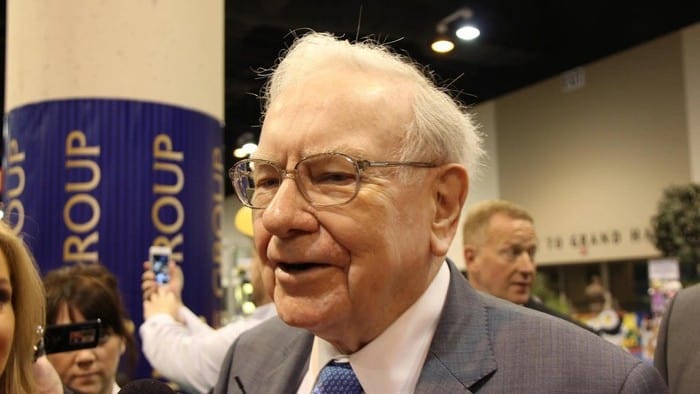
  • Warren Buffett more than tripled his position in this stock. Is it a buy?

    This article was originally published on Fool.com. All figures quoted in US dollars unless otherwise stated.

    Warren Buffett

    This article was originally published on Fool.com. All figures quoted in US dollars unless otherwise stated.

    tIn the first quarter of the year, Warren Buffett and his company Berkshire Hathaway (NYSE: BRK-B) initiated a small stake in the digital consumer bank Ally Financial (NYSE: ALLY), which is also a big auto lender. In the second quarter of the year, Berkshire more than tripled its position in the stock, purchasing more than 21 million shares in the quarter. Now, Berkshire’s position in Ally amounts to 30 million shares valued at more than $1 billion, representing nearly 9% of the company. With Buffett and Berkshire buying heavily now, is Ally a buy? Let’s take a look.

    Wall Street has grown bearish

    Interestingly, Buffett is piling into Ally as the Street is growing more bearish. After a strong second-quarter earnings report, a number of analysts downgraded the stock on concerns regarding funding and credit quality.

    Ally has been bolstered in recent years by a shortage of car inventory and elevated car pricing and interest rates, which have boosted financial results. Ally’s retail auto loan portfolio at the end of the second quarter reached more than $82 billion, up 8.4% on a year-over-year basis. As the Federal Reserve has hiked interest rates, margins have also expanded significantly.

    This has helped Ally generate a core return on tangible common equity (ROTCE) of more than 23% in the second quarter, which is superb. Furthermore, management said on Ally’s second-quarter earnings call that they have been originating auto loans at an 8% yield in the third quarter while still maintaining their underwriting standards.

    But analysts are worried about what will happen when car prices normalize, and how consumers will fare now that stimulus programs have winded down and economic conditions are more difficult. In the second quarter, Ally saw 30-day delinquencies in its retail auto portfolio jump by 0.50%. Also in the quarter, Ally started to see its deposit costs climb, which will keep climbing this year along with interest rates and could begin to cut into the bank’s margins.

    Why is Buffett buying?

    Let’s remember a few things when we talk about Buffett and Berkshire’s investing philosophy: They both like to invest on a long-term basis and they both know the car business quite well.

    Berkshire first invested in General Motors (NYSE: GM) in 2012, although it actually trimmed its position in the company in the second quarter. Ally was a financing division of GM called the General Motors Acceptance Corporation up until 2006, when GM sold a controlling interest in the company. Eventually, General Motors Acceptance Corporation would apply for a bank charter and rebrand into Ally. 

    Ally’s management team does seem prepared for the normalization of auto prices and said they have assumed that used car prices, which are up 60% since 2019, will come down by 30% from the end of 2021 and 2023. The bank is also reserving for future losses prudently when you consider it is still not seeing huge cracks in credit quality just yet.

    In addition, Ally has also done a much better job of improving its funding base and relationship with customers. In 2018, only 64% of its funding base came from deposits. Now, more than 85% of its funding comes from deposits. Also, Ally now offers mortgages, credit cards, point-of-sale lending, and wealth management, all of which can help create better relationships with consumers and hopefully lead to more primary banking relationships and a higher-quality deposit base. Ally’s deposit costs are still fairly high compared to other large banks, but it seems like the company has really improved this aspect of the business and can continue to do so.

    Finally, Ally believes its returns are going to continue to be higher post-pandemic. Prior to the pandemic, the company would at best generate a 12% ROTCE. Now, management has guided for a 16% to 18% ROTCE in 2022 and on a medium-term time horizon.

    A value play for Buffett

    Buffett and Berkshire have long been value investors, and Ally gives them the opportunity to purchase an asset that they believe is trading for less than its fair value. Ally currently trades at about 105% to its tangible book value or net worth, and at about five times forward earnings.

    Companies generating and guiding for the kind of returns that Ally is would normally trade at a much higher valuation, so the market is clearly skeptical of how sustainable the returns are. But Buffett and Berkshire clearly like the risk-reward setup here, which I think is favorable considering Ally’s low valuation. Ally also pays an annual dividend yield in excess of 3% and buys back a lot of stock, two other things Berkshire and Buffett find attractive. Overall, I agree with Buffett and Berkshire and do think Ally is a buy at these levels.

    This article was originally published on Fool.com. All figures quoted in US dollars unless otherwise stated.

    The post Warren Buffett more than tripled his position in this stock. Is it a buy? appeared first on The Motley Fool Australia.

    Wondering where you should invest $1,000 right now?

    When investing expert Scott Phillips has a stock tip, it can pay to listen. After all, the flagship Motley Fool Share Advisor newsletter he has run for over ten years has provided thousands of paying members with stock picks that have doubled, tripled or even more.* Scott just revealed what he believes could be the “five best ASX stocks” for investors to buy right now. These stocks are trading at near dirt-cheap prices and Scott thinks they could be great buys right now

    See The 5 Stocks *Returns as of August 4 2022

    (function() { function setButtonColorDefaults(param, property, defaultValue) { if( !param || !param.includes(‘#’)) { var button = document.getElementsByClassName(“pitch-snippet”)[0].getElementsByClassName(“pitch-button”)[0]; button.style[property] = defaultValue; } } setButtonColorDefaults(“#43B02A”, ‘background’, ‘#5FA85D’); setButtonColorDefaults(“#43B02A”, ‘border-color’, ‘#43A24A’); setButtonColorDefaults(“#fff”, ‘color’, ‘#fff’); })()

    More reading

    Ally is an advertising partner of The Ascent, a Motley Fool company. Bram Berkowitz has no position in any of the stocks mentioned. The Motley Fool Australia’s parent company Motley Fool Holdings Inc. has positions in and has recommended Berkshire Hathaway (B shares). The Motley Fool Australia’s parent company Motley Fool Holdings Inc. has recommended the following options: long January 2023 $200 calls on Berkshire Hathaway (B shares), short January 2023 $200 puts on Berkshire Hathaway (B shares), and short January 2023 $265 calls on Berkshire Hathaway (B shares). The Motley Fool Australia has recommended Berkshire Hathaway (B shares). The Motley Fool has a disclosure policy. This article contains general investment advice only (under AFSL 400691). Authorised by Scott Phillips.

    This article was originally published on Fool.com. All figures quoted in US dollars unless otherwise stated.


    from The Motley Fool Australia https://ift.tt/OAlE96Q
  • Work from home appears here to stay. Which ASX shares could be impacted?

    A young man working from home sits at his home office desk holding a cup of tea and looking out the window

    A young man working from home sits at his home office desk holding a cup of tea and looking out the window

    A number of ASX shares are exposed to the work-from-home phenomenon.

    For businesses that own the offices and toll roads, it’s a tricky proposition.

    Does a company need to rent an office space if everyone works from home? If employees are coming to an office, will every employee get their own desk, or will it be a shared working environment?

    There are interesting ramifications to consider. Let’s look at what might happen next.

    A permanent shift?

    According to reporting news.com.au, a survey of around 1,200 companies, conducted by the Australian HR Institute in July, found that just 4% of companies required employees to work in the office full-time.

    The survey also revealed that 7% of organisations allowed employees to completely work from home while 34% didn’t have a set number of days required in the office but did encourage it. On average, 18% of employees work continuously from home.

    However, a substantial portion of organisations have a hybrid model, with 46% of companies requiring employees to come into the office for at least two or three days a week. Some companies are reportedly trying to tempt people back into the office with enticements like free meals.

    With such a large mindset change about working from home, it may not be surprising to learn that an office real estate investment trust (REIT) like Centuria Office REIT (ASX: COF) has been heavily hit. In fact, the ASX share is down 31% in 2022. However, rising interest rates could also be a factor here.

    While each REIT’s office portfolio is made up of different assets, it could be worthwhile to consider what was said in the Centuria Office REIT’s FY22 result.

    It said it’s expecting its funds from operations (FFO) – the net rental profit – to drop 13%. Its portfolio occupancy increased to 94.7% and the weighted average lease expiry (WALE) was maintained at 4.2 years. However, management said it was optimistic about the future.

    Fund manager and Centuria’s head of office Grant Nichols said:

    During FY22, we witnessed a continuous shift in tenant preferences towards better quality accommodation that is close to key transport nodes, providing better commutability and subsequently improved work-life flexibility. Centuria Office Fund’s young office portfolio lends itself to these leasing preferences, with its modern and sustainable office buildings providing better access to wellbeing amenity, retail and hospitality while offering affordable rents. Australia’s strong employment rate and rising return to corporate policies, provide encouraging tailwinds for tenant demand in FY23.

    The REIT pointed to its tenant base of predominately government and major tenants.

    There are plenty of other ASX shares that have exposure to office buildings either through ownership or management of them, including Cromwell Property Group (ASX: CMW), Dexus Industria REIT (ASX: DXI), DEXUS Property Group (ASX: DXS), and Centuria Capital Group (ASX: CNI). Collectively, they have seen large falls in 2022.

    It’s not all negative

    However, as mentioned, many businesses still want their employees to come into the office some of the time.

    JLL’s global Future of Work Survey found that 72% of decision-makers believe the office is “critical to doing business”. But it was also recognised that flexible working spaces could be key to attracting and retaining talent. Offices can still be that place, just in a different format.

    ‘Culture’ could be another substantial factor. According to Gartner vice president of research and advisory Aaron McEwan, leaders want to “keep a tight grip in culture in a hybrid environment”. He said:

    Leaders aren’t asking me about productivity, interestingly enough, because every measure we get is showing us that productivity and performance have been [steady] – it’s starting to decline a little bit now, but there are different reasons for that. But everyone is petrified they’re going to lose their culture.

    It’s this panic, particularly from our CEOs and board of directors, which is forcing a whole bunch of people to come back into the office, when they don’t want to.

    McEwan suggested that culture could simply evolve.

    Roads are already back to full volume?

    One of the other ASX shares that generate substantial earnings from people commuting is Transurban Group (ASX: TCL).

    It said in the fourth quarter of FY22, traffic reached a new high and exceeded pre-pandemic levels, driven by new asset capacity and increased mobility and travel. The company also said it was benefiting from inflation-linked toll escalations.

    While office workers going into the office is one factor, Transurban pointed out that more people are using private transport to get around cities. As well, people are increasingly using roads to get to airports again.

    According to an external survey by Transurban, at the end of FY22, “most people travelled at least three days a week on average to their workplace or place of study”.

    The post Work from home appears here to stay. Which ASX shares could be impacted? appeared first on The Motley Fool Australia.

    Wondering where you should invest $1,000 right now?

    When investing expert Scott Phillips has a stock tip, it can pay to listen. After all, the flagship Motley Fool Share Advisor newsletter he has run for over ten years has provided thousands of paying members with stock picks that have doubled, tripled or even more.* Scott just revealed what he believes could be the “five best ASX stocks” for investors to buy right now. These stocks are trading at near dirt-cheap prices and Scott thinks they could be great buys right now

    See The 5 Stocks
    *Returns as of August 4 2022

    (function() {
    function setButtonColorDefaults(param, property, defaultValue) {
    if( !param || !param.includes(‘#’)) {
    var button = document.getElementsByClassName(“pitch-snippet”)[0].getElementsByClassName(“pitch-button”)[0];
    button.style[property] = defaultValue;
    }
    }

    setButtonColorDefaults(“#43B02A”, ‘background’, ‘#5FA85D’);
    setButtonColorDefaults(“#43B02A”, ‘border-color’, ‘#43A24A’);
    setButtonColorDefaults(“#fff”, ‘color’, ‘#fff’);
    })()

    More reading

    Motley Fool contributor Tristan Harrison has no position in any of the stocks mentioned. The Motley Fool Australia’s parent company Motley Fool Holdings Inc. has no position in any of the stocks mentioned. The Motley Fool Australia has no position in any of the stocks mentioned. The Motley Fool has a disclosure policy. This article contains general investment advice only (under AFSL 400691). Authorised by Scott Phillips.

    from The Motley Fool Australia https://ift.tt/wrtFA6T