
• Why Develop Global, IDP Education, JB Hi-Fi, and Wesfarmers shares are pushing higher today

    two men smiling with a laptop in front of them, symbolising a rising share price.

    In afternoon trade, the S&P/ASX 200 Index (ASX: XJO) is on course to record a decent gain. At the time of writing, the benchmark index is up 0.35% to 8,633.2 points.

    Four ASX shares that are rising more than most today are listed below. Here’s why they are climbing:

    Develop Global Ltd (ASX: DVP)

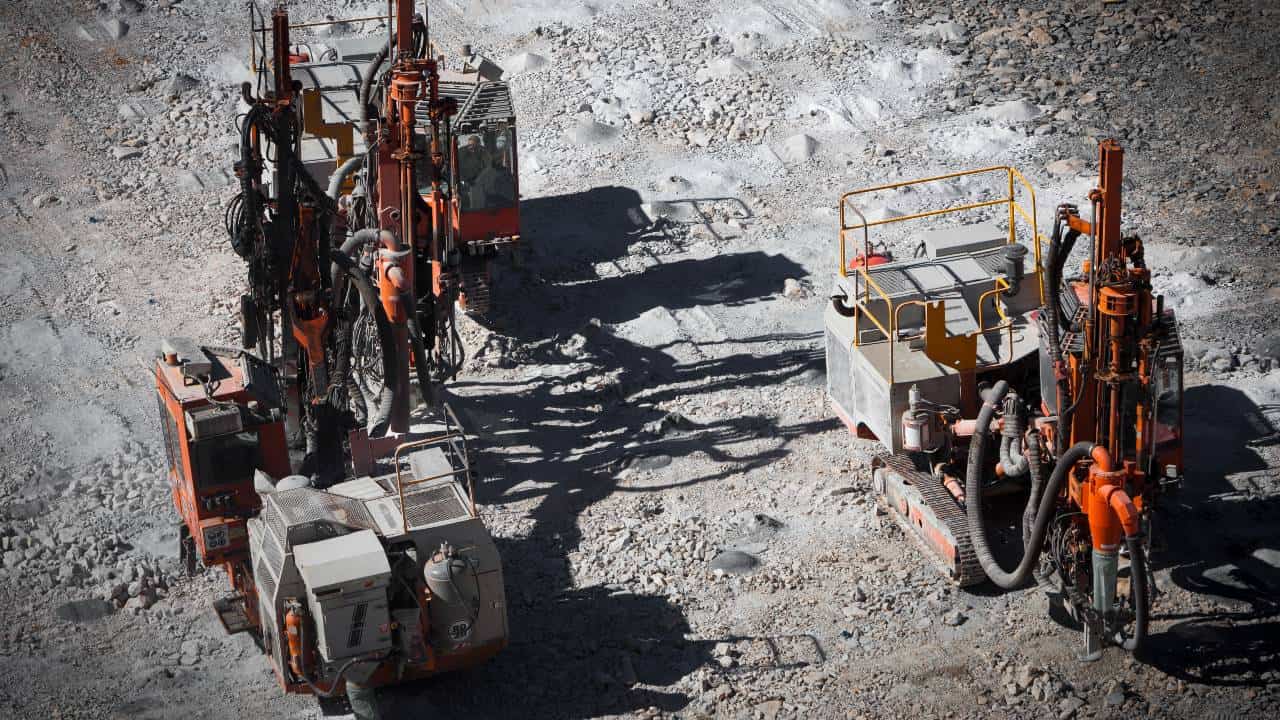
    The Develop Global share price is up 1.5% to $6.50. This morning, this mining and mining services company announced that it will develop the Sulphur Springs and Pioneer Dome projects after making final investment decisions. The company’s managing director, Bill Beament, commented: “These are pivotal developments which set up our company for rapid growth. They unlock the huge value of these two projects, putting us on track to generate significant cashflows from three operations covering copper, zinc, silver and lithium and all in Australia.”

    IDP Education Ltd (ASX: IEL)

    The IDP Education share price is up 4% to $2.19. This may have been driven by a broker note out of Morgans this week. It upgraded the language testing and student placement company’s shares to a buy rating with a $3.15 price target. It said: “Visa data in IDP’s key destination markets remains in deep contraction, with AUS, CAD, and the UK all experiencing material volume and visa grant rate declines. Positively, IDP’s China IELTS is scaling quickly (13 test centres vs 5 at 1H26), the cost base reset is on track (A$25m net reduction), and the group continues to demonstrate pricing power across both IELTS and Student Placement (SP). With structural demand drivers for international study intact, a leaner cost base, growing China optionality and ongoing technology/product development (Navi, FastLane, One Skill Retake), we are willing to look through the near-term backdrop on a cyclically depressed multiple. We upgrade to BUY, A$3.15ps PT.”

    JB Hi-Fi Ltd (ASX: JBH)

    The JB Hi-Fi share price is up over 3.5% to $76.16. This is despite there being no news out of the retail giant. However, it is worth noting that investors have been buying retail shares on Wednesday. This could possibly be due to optimism that interest rate hikes are over in Australia and the RBA’s next move will be to lower them.

    Wesfarmers Ltd (ASX: WES)

    The Wesfarmers share price is up 2.5% to $82.05. Investors appear to have responded positively to the company’s 2026 Strategy Briefing Day event. At the event, Wesfarmers highlighted three key messages. It is accelerating its growth and productivity agenda, it has a portfolio of high-quality businesses with a mix of growth and resilience, and it retains a strong balance sheet with flexibility to invest.

    The post Why Develop Global, IDP Education, JB Hi-Fi, and Wesfarmers shares are pushing higher today appeared first on The Motley Fool Australia.

    Should you invest $1,000 in Develop Global right now?

    Before you buy Develop Global shares, consider this:

    Motley Fool investing expert Scott Phillips just revealed what he believes are the 5 best stocks for investors to buy right now… and Develop Global wasn’t one of them.

    The online investing service he’s run for over a decade, Motley Fool Share Advisor, has provided thousands of paying members with stock picks that have doubled, tripled or even more.*

    And right now, Scott thinks there are 5 stocks that may be better buys…

    * Returns as of 20 Feb 2026

    .custom-cta-button p {
    margin-bottom: 0 !important;
    }

    More reading

    Motley Fool contributor James Mickleboro has no position in any of the stocks mentioned. The Motley Fool Australia’s parent company Motley Fool Holdings Inc. has positions in and has recommended Wesfarmers. The Motley Fool Australia has recommended Wesfarmers. The Motley Fool has a disclosure policy. This article contains general investment advice only (under AFSL 400691). Authorised by Scott Phillips.

  • Why $250,000 in superannuation is not enough for a comfortable retirement

    Australian dollar notes in a nest, symbolising a nest egg.

    Retirees with less than $250,000 in their superannuation nest egg on retirement face a high likelihood of running out of money within a decade if they target a comfortable lifestyle, a new study from the Monash Centre for Financial Studies says.

    But the good news is that at balances greater than $400,000, “the chance of sustaining income rises to near certainty, regardless of portfolio design”, Associate Professor Ummul Ruthbah said.

    Larger nest egg the key

    According to the research carried out by Associate Professor Ruthbah and Dr Trinh Le, retirees with smaller savings pools can’t sustain higher spending targets – a comfortable lifestyle – regardless of their portfolio design.

    Associate Professor Ruthbah said:

    If someone has a low superannuation balance, one option is to adjust spending. Our study finds that when retirees target a moderate level of spending rather than a more comfortable lifestyle, the portfolio is more likely to remain sustainable over ten years, regardless of the asset allocation. Another important consideration is maintaining some exposure to equities. Our capital market assumptions suggest that bond-only portfolios are unlikely to generate optimal returns relative to the level of risk taken over the long term.

    The research also highlights the importance of market losses early in retirement.

    The research report said:

    For example, someone who retired in 2022 – a year impacted by market volatility that delivered negative equity and fixed income returns – may end up with a significantly lower portfolio balance after 10 years than someone who retired in 2023 with the same superannuation balance and investment strategy. One approach retirees can consider is to reduce or postpone withdrawals from their superannuation during periods of significant market decline. More generally, retirees may benefit from adopting a flexible withdrawal strategy that adjusts to market conditions and personal circumstances, rather than relying on a fixed withdrawal rate regardless of investment performance.

    The report said an early market downturn can reduce ending balances by as much as 25%.

    And in terms of portfolio design:

    The evidence points to a simple conclusion: retirees benefit from maintaining meaningful exposure to growth assets. Portfolios that lean too heavily on fixed income may feel safe in the short term, but almost guarantee declining balances over time.

    Gender gap needs to be addressed

    It also found that women were at greater risk of depleting their superannuation savings, given they tended to have 20% to 30% less to begin with.

    Associate Professor Ruthbah said:

    This gap has profound implications for retirement adequacy and policy design. It underlines the need for measures to boost women’s superannuation savings, whether through targeted contribution incentives, reforms to address career breaks and pay disparities, or enhancements to the Age Pension safety net.

    The report used the Association of Superannuation Funds of Australia (ASFA) standards, about $51,800 a year for a comfortable lifestyle and $32,900 for a modest one.

    The post Why $250,000 in superannuation is not enough for a comfortable retirement appeared first on The Motley Fool Australia.

    Wondering where you should invest $1,000 right now?

    When investing expert Scott Phillips has a stock tip, it can pay to listen. After all, the flagship Motley Fool Share Advisor newsletter he has run for over ten years has provided thousands of paying members with stock picks that have doubled, tripled or even more.*

    Scott just revealed what he believes could be the ‘five best ASX stocks’ for investors to buy right now. We believe these stocks are trading at attractive prices and Scott thinks they could be great buys right now…

    * Returns as of 20 Feb 2026

    .custom-cta-button p {
    margin-bottom: 0 !important;
    }

    More reading

    Motley Fool contributor Cameron England has no position in any of the stocks mentioned. The Motley Fool Australia’s parent company Motley Fool Holdings Inc. has no position in any of the stocks mentioned. The Motley Fool Australia has no position in any of the stocks mentioned. The Motley Fool has a disclosure policy. This article contains general investment advice only (under AFSL 400691). Authorised by Scott Phillips.

  • Why Evolution Mining, REA Group, Sigma Healthcare, and TechnologyOne shares are tumbling today

    a man weraing a suit sits nervously at his laptop computer biting into his clenched hand with nerves, and perhaps fear.

    The S&P/ASX 200 Index (ASX: XJO) is back on form and pushing higher. At the time of writing, the benchmark index is up almost 0.5% to 8,644.9 points.

    Four ASX shares that have failed to follow the market higher today are listed below. Here’s why they are falling:

    Evolution Mining Ltd (ASX: EVN)

    The Evolution Mining share price is down almost 3% to $10.99. Investors have been selling its shares after the gold price pulled back again overnight. Traders were selling gold ahead of the release of US inflation data. There are concerns that inflation could be running hot and that interest rate hikes may be necessary.

    REA Group Ltd (ASX: REA)

    The REA Group share price is down almost 3% to $148.39. This appears to have been driven by a second broker downgrade in as many days. After Bell Potter downgraded the property listings company’s shares to a sell rating (from buy) yesterday, UBS has followed suit and cut its recommendation to neutral from buy with a reduced price target of $165 (from $213). The broker has concerns that recent property tax changes could weigh on listing volumes in the near term.

    Sigma Healthcare Ltd (ASX: SIG)

    The Sigma Healthcare share price is down over 4% to $2.79. This follows news that the Chemist Warehouse owner is in preliminary talks to buy UK retail chain Boots. It said: “Sigma Healthcare Limited (Sigma) refers to the recent media speculation regarding the sale process of The Boots Group (Boots). Sigma continuously reviews opportunities that would create value for shareholders and has engaged in preliminary discussions in relation to the sale process. There is no certainty that any transaction will eventuate.” It seems that some investors are not keen on the ambitious move.

    TechnologyOne Ltd (ASX: TNE)

    The TechnologyOne share price is down 1.5% to $32.03. The catalyst for this may have been a broker note out of Bell Potter. It has downgraded the enterprise software provider’s shares to a hold rating (from buy) with an improved price target of $34.25 (from $32.25). Bell Potter said: “Our updated TP of $34.25 is <15% premium to the share price so we downgrade our recommendation to HOLD. We now see the stock as reasonable value on FY26 and FY27 PE ratios of 66x and 55x respectively. We do see Technology One as one of if not the best quality large cap SaaS company on the ASX but we note it is already trading at almost double the FY26 and FY27 PE ratios of WiseTech (ASX: WTC) on 35x and 28x.”

    The post Why Evolution Mining, REA Group, Sigma Healthcare, and TechnologyOne shares are tumbling today appeared first on The Motley Fool Australia.

    Should you invest $1,000 in Evolution Mining right now?

    Before you buy Evolution Mining shares, consider this:

    Motley Fool investing expert Scott Phillips just revealed what he believes are the 5 best stocks for investors to buy right now… and Evolution Mining wasn’t one of them.

    The online investing service he’s run for over a decade, Motley Fool Share Advisor, has provided thousands of paying members with stock picks that have doubled, tripled or even more.*

    And right now, Scott thinks there are 5 stocks that may be better buys…

    * Returns as of 20 Feb 2026

    .custom-cta-button p {
    margin-bottom: 0 !important;
    }

    More reading

    Motley Fool contributor James Mickleboro has positions in REA Group, Technology One, and WiseTech Global. The Motley Fool Australia’s parent company Motley Fool Holdings Inc. has positions in and has recommended Technology One and WiseTech Global. The Motley Fool Australia has positions in and has recommended WiseTech Global. The Motley Fool Australia has recommended Technology One. The Motley Fool has a disclosure policy. This article contains general investment advice only (under AFSL 400691). Authorised by Scott Phillips.

  • The SpaceX and Anthropic IPOs will massively impact ASX AI shares

    A woman researcher holds a finger up in happiness as if making the 'number one' sign with a graphic of technological data and an orb emanating from her finger while fellow researchers work in the background.

    This week is a big one for global capital markets and ASX AI shares.

    SpaceX prices its shares tomorrow, 11 June 2026, at US$135 per share, implying a valuation of approximately US$1.75 trillion, and begins trading on the Nasdaq under the ticker SPCX on Thursday, 12 June.

    That would make it the largest IPO in stock market history, surpassing Saudi Aramco‘s US$1.7 trillion listing in 2019.

    Anthropic, the AI company behind the Claude platform, has filed confidentially with the SEC at a reported valuation of approximately US$900 billion, targeting a public debut as soon as October.

    And just this week, OpenAI also filed confidentially for an IPO, with the combined three-company valuation potentially exceeding US$3.6 trillion.

    None of these companies will be available on the ASX. But all three will reshape how the market thinks about AI stocks, including the ones that are available here.

    Why these IPOs change everything for ASX AI shares

    For the first time, the world’s most important AI infrastructure companies are being given public market price tags.

    That is important for ASX investors for two reasons.

    First, successful listings at these valuations validate the entire AI investment thesis at a scale that no private funding round has ever achieved.

    Second, the capital flows these IPOs generate will not stay in the United States.

    Institutional investors across Asia-Pacific, including Australia’s own superannuation funds, will look to rebalance AI exposure following the listings.

    This rebalancing will direct fresh attention and capital toward ASX-listed AI infrastructure plays.

    Three in particular stand out.

    Betashares Space Industry ETF

    The most direct ASX beneficiary of the SpaceX listing is the Betashares Space Industry ETF (ASX: RCKT), which launched on 12 May 2026.

    The ETF has had a wild ride as SpaceX anticipation built throughout the month.

    RCKT tracks the Solactive Space Industry Index, holding 28 companies across the global space economy with Rocket Lab and AST SpaceMobile as its two largest positions.

    SpaceX will need to meet index inclusion criteria before RCKT can formally hold it, a process that typically takes several months.

    In the meantime, RCKT remains the clearest and most liquid ASX proxy for investor excitement around the space economy that SpaceX is bringing.

    NextDC Ltd

    NextDC Ltd (ASX: NXT) is Australia’s largest independent data centre operator.

    The company is building a $7 billion AI data centre campus in Western Sydney with OpenAI as its foundational customer.

    Now that OpenAI has filed for its own IPO, that customer relationship takes on new significance.

    For context, Anthropic is paying SpaceX’s xAI division US$1.25 billion per month for exclusive compute access. This illustrates just how voracious AI companies’ appetite for data centre capacity has become.

    Every dollar an AI company spends on compute creates demand for the infrastructure NextDC provides.

    Perhaps as a result, NextDC raised its FY 2026 capital expenditure guidance to between $2.7 billion and $3.0 billion as contracted utilisation surged 60% in the March quarter.

    Macquarie Technology Group Ltd

    Macquarie Technology Group Ltd (ASX: MAQ) plays a different but equally important role in the AI IPO story.

    Anthropic’s Claude platform is increasingly being adopted by Australian government agencies, financial institutions, and critical infrastructure operators.

    Many of these organisations cannot use offshore AI infrastructure for data sovereignty reasons.

    This has created a captive market for Macquarie Technology, which provides sovereign cloud and AI infrastructure backed by a $200 million National Reconstruction Fund investment.

    As Anthropic’s public listing raises its enterprise profile globally, the demand for sovereign Australian AI infrastructure will only grow.

    The risk worth acknowledging for ASX AI shares

    History offers a warning.

    Of the five largest IPOs in modern history, only Visa significantly outperformed markets after listing.

    On the other end, Saudi Aramco still trades below its issue price.

    If SpaceX disappoints in its first weeks of trading, the repricing conversation that follows would weigh on AI stocks globally, including the RCKT ETF, NextDC, and Macquarie Technology.

    Foolish Takeaway

    SpaceX prices tomorrow, Anthropic is months away from listing, and OpenAI just filed.

    For ASX investors who want exposure to the AI IPO wave without buying US-listed stocks, the RCKT ETF, NextDC, and Macquarie Technology offer three unique ways to participate.

    The post The SpaceX and Anthropic IPOs will massively impact ASX AI shares appeared first on The Motley Fool Australia.

    Should you invest $1,000 in Nextdc right now?

    Before you buy Nextdc shares, consider this:

    Motley Fool investing expert Scott Phillips just revealed what he believes are the 5 best stocks for investors to buy right now… and Nextdc wasn’t one of them.

    The online investing service he’s run for over a decade, Motley Fool Share Advisor, has provided thousands of paying members with stock picks that have doubled, tripled or even more.*

    And right now, Scott thinks there are 5 stocks that may be better buys…

    * Returns as of 20 Feb 2026

    .custom-cta-button p {
    margin-bottom: 0 !important;
    }

    More reading

    Motley Fool contributor Mark Verhoeven has no position in any of the stocks mentioned. The Motley Fool Australia’s parent company Motley Fool Holdings Inc. has no position in any of the stocks mentioned. The Motley Fool Australia has no position in any of the stocks mentioned. The Motley Fool has a disclosure policy. This article contains general investment advice only (under AFSL 400691). Authorised by Scott Phillips.

  • The four pictures that tell our (recent) economic story

    A woman sits in contemplation with superimposed images of piles of gold coins, graphs, and star-like lights above her head as though she is thinking about investment options.

    As is often the case, I was halfway through writing about something else, when another inspiration hit, this time courtesy of some interactions I had on social media.

    And it’s not directly investing-related, today, but it does go to our economic situation, and the subsequent potential political upheaval that seems to be building.

    Don’t worry – I’m not going to delve into the politics.

    But if you’re an investor, you probably have an interest in the broader economy and economic policy.

    So I wanted to simply share four screenshots, with only a small amount of commentary, which I think demonstrate (at least in significant part, if not entirely), how people are thinking, based on what’s actually happening in the economy.

    To set the scene, a chart from a KPMG report, taken from reporting in the Sydney Morning Herald, outlining how we’re feeling, overall, and by age cohort:

    So, we know how people are feeling.

    But why?

    Lots of reasons, but I think the three screenshots that follow tell a pretty significant part of the story.

    First, while we’ve only had two recessions over the past 36 years, the numbers on GDP per capita are starkly different (the summary was created by Google’s Gemini AI, using ABS data):

    That tells the story at a national, aggregate level, but averaged to a per-person statistic, and shows that total GDP masks a less healthy recent past.

    Then, there’s real wages, with a really significant fall since 2021, via the Australian Bureau of Statistics:

    Thankfully, recent data has started to recover on this front… but we’re still a long, long way behind, overall.

    And that’s wages compared to average consumer prices. But the housing affordability stats are even more stark, from the Australian Institute of Health and Welfare:

    So, while each dataset isn’t directly comparable, and there are always going to be differences across different age groups, geographies, income levels and time-frames, I think it’s a pretty stark summary.

    – People are feeling less satisfied, for lots of reasons, but many presumably economic.

    – While the economy has been growing, a lot of that growth (sometimes even more than the total growth) has been offset by a larger population. The pie continues to grow, but the slices often get smaller.

    – Not only have prices increased (and ‘sticker shock’ is real), but wages haven’t kept up, since COVID. People feel – and are – poorer.

    – And housing, only partly captured in the CPI data, has consumed more and more of the household budget, leaving far less available to pay those higher prices, even allowing for wage rises.

    Together, it’s a story of economic underperformance and, I think, justified unhappiness (even if I’d rather have our problems than almost anyone else’s!).

    True, some of it is outside the realm of government influence – cycles have always happened – but some is absolutely the result of actions (including inaction).

    And regardless, those impacts seem to have coalesced into social disruption and potentially political upheaval.

    Whether that upheaval results in better or worse outcomes is up for debate, of course, but I don’t think we should be surprised that it’s happening.

    Fool on!

    The post The four pictures that tell our (recent) economic story appeared first on The Motley Fool Australia.

    Wondering where you should invest $1,000 right now?

    When investing expert Scott Phillips has a stock tip, it can pay to listen. After all, the flagship Motley Fool Share Advisor newsletter he has run for over ten years has provided thousands of paying members with stock picks that have doubled, tripled or even more.*

    Scott just revealed what he believes could be the ‘five best ASX stocks’ for investors to buy right now. We believe these stocks are trading at attractive prices and Scott thinks they could be great buys right now…

    * Returns as of 20 Feb 2026

    .custom-cta-button p {
    margin-bottom: 0 !important;
    }

    More reading

    Motley Fool contributor Scott Phillips has no position in any of the stocks mentioned. The Motley Fool Australia’s parent company Motley Fool Holdings Inc. has no position in any of the stocks mentioned. The Motley Fool Australia has no position in any of the stocks mentioned. The Motley Fool has a disclosure policy. This article contains general investment advice only (under AFSL 400691). Authorised by Scott Phillips.

  • Do experts rate BHP, Cochlear, and ResMed shares as buys, holds, or sells?

    Business people discussing project on digital tablet.

    If you are thinking about buying BHP Group Ltd (ASX: BHP), Cochlear Ltd (ASX: COH), or ResMed Inc. (ASX: RMD) shares this month, then it could pay to listen to what analysts are saying about them before making your move.

    Experts have named all three as holds this week, according to The Bull, but why? Let’s find out:

    BHP shares

    Morgans is a big fan of the Big Australian and believes it deserves its position as a core holding for resource-oriented portfolios.

    However, due to recent share price strength, the broker thinks it is fairly valued and sees limited near term re-rating catalysts. As a result, it rates BHP shares as a hold. It explains:

    The global miner offers broad diversification across iron ore, copper and potash, underpinned by a fortress balance sheet and a disciplined approach to capital returns. Copper provides meaningful long term exposure to the global electrification and energy transition theme, while iron ore remains the dominant near term earnings driver.

    However, the macro backdrop remains uncertain, with Chinese steel demand facing structural headwinds and global growth indicators sending mixed signals. The valuation at current levels appears broadly fair, with commodity price assumptions already reflecting a reasonable medium term outlook. BHP remains a core holding for resource oriented portfolios, but with limited near term re-rating catalysts, we retain a hold recommendation.

    Cochlear shares

    Over at MPC Markets, its team has named Cochlear shares as a hold this week.

    It highlights that the market has concerns over margins and procedure volumes. Until those concerns are resolved, MPC Markets thinks investors should sit on the sidelines. It said:

    Cochlear remains a global leader in hearing implants, but the investment case has become more balanced. The shares have been under pressure after analysts re-assessed growth expectations and lowered revenue, margin and valuation assumptions. The long term demand profile remains attractive, supported by ageing populations and continued adoption of implantable hearing technology.

    However, the market will need evidence that procedure volumes and margins can recover before a stronger recommendation is warranted. At these levels, investors can continue to hold, but should monitor earnings momentum and further analyst revisions.

    ResMed shares

    MPC Markets has also named ResMed as a hold this week.

    Once again, this is partly due to concerns over margin uncertainty. Commenting on its hold recommendation, it said:

    ResMed remains a high quality respiratory care business. Concerns about the impact of GLP-1 weight loss drugs have weighed on sentiment, although recent analysis suggests the big undiagnosed sleep apnoea market still provides a long runway for device demand.

    The company continues to benefit from a strong mask and device portfolio, but investors were disappointed management left its fiscal year 2026 outlook unchanged after a solid third quarter result. Our hold recommendation balances the quality of the franchise against near term uncertainty around margins, competition and investor expectations.

    The post Do experts rate BHP, Cochlear, and ResMed shares as buys, holds, or sells? appeared first on The Motley Fool Australia.

    Should you invest $1,000 in BHP Group right now?

    Before you buy BHP Group shares, consider this:

    Motley Fool investing expert Scott Phillips just revealed what he believes are the 5 best stocks for investors to buy right now… and BHP Group wasn’t one of them.

    The online investing service he’s run for over a decade, Motley Fool Share Advisor, has provided thousands of paying members with stock picks that have doubled, tripled or even more.*

    And right now, Scott thinks there are 5 stocks that may be better buys…

    * Returns as of 20 Feb 2026

    .custom-cta-button p {
    margin-bottom: 0 !important;
    }

    More reading

    Motley Fool contributor James Mickleboro has positions in Cochlear and ResMed. The Motley Fool Australia’s parent company Motley Fool Holdings Inc. has positions in and has recommended Cochlear and ResMed. The Motley Fool Australia has positions in and has recommended ResMed. The Motley Fool Australia has recommended BHP Group and Cochlear. The Motley Fool has a disclosure policy. This article contains general investment advice only (under AFSL 400691). Authorised by Scott Phillips.

  • Up 74% since August, ASX 300 gold stock hits new high-grade zones in Victoria

    gold, gold miner, gold discovery, gold nugget, gold price,

    S&P/ASX 300 Index (ASX: XKO) gold stock Southern Cross Gold Consolidated (ASX: SX2) is tumbling today.

    Southern Cross Gold shares closed yesterday trading for $9.77. In early morning trade on Wednesday, shares are changing hands for $9.35 apiece, down 4.3%.

    For some context, the ASX 300 is up 0.1%, while the S&P/ASX All Ordinaries Gold Index (ASX: XGD) is down 1.2% at this same time.

    The broader gold market selling pressure today comes amid investor concerns that the Middle East conflict could reignite rather than wind down following renewed military strikes overnight. Those fears sent the gold price down 1% to currently be trading at US$4,220 per ounce, according to data from Bloomberg.

    Still, investors who bought Southern Cross Gold shares at the 1 August closing price of $5.37 will be sitting on gains of 74.1% today.

    The ASX 300 gold stock has benefited from both its own operational successes on and below the ground as well as a surging gold price. Despite recent declines, the yellow metal has gained 25% since 1 August.

    Now, here’s what Southern Cross Gold just announced.

    ASX 300 gold stock hits high-grade zones

    Southern Cross Gold shares are falling today despite the miner reporting on some high-grade intercepts at its 100%-owned Sunday Creek Gold-Antimony Project, located in Victoria.

    The results stem from seven drill holes from the Apollo and Apollo East prospects within Sunday Creek.

    Among the top results, the ASX 300 gold stock reported one hole returned 36.6 metres at 6.5 grams of gold equivalent per tonne (4.0 g/t Au, 1.0% Sb) from 700.0 metres. ‘Sb’, if you’re not familiar, is antimony, a silvery metalloid often used in batteries and to strengthen other metals, like lead.

    The miner said the latest drill results show the continued high-grade growth in Apollo as its ongoing exploration continues to expand the known boundaries of the mineralisation.

    What did Southern Cross management say?

    Commenting on the drill results that could help support the ASX 300 gold stock longer term, Southern Cross CEO and president Michael Hudson said, “These seven holes continue to do what Sunday Creek does best, growing the system in every direction we test.”

    Hudson noted:

    [Drill hole] SDDSC202 delivered a standout 36.6 metres at 6.5 g/t AuEq with high grade assays up to 493 g/t gold, while [hole] SDDSC214W1 has pushed mineralisation to the most easterly position yet identified anywhere on the property, opening up new ground at Apollo East. The shallow, antimony-rich results up to 31.3% Sb in [hole] SDDSC217 are equally important, confirming strong critical-metal tenor close to surface.

    Looking ahead, Hudson concluded, “With eleven rigs turning and 67 holes pending, we are only accelerating as we drive toward defining the full extent of this exceptional gold-antimony system.”

    The post Up 74% since August, ASX 300 gold stock hits new high-grade zones in Victoria appeared first on The Motley Fool Australia.

    Should you invest $1,000 in Southern Cross Gold Consolidated right now?

    Before you buy Southern Cross Gold Consolidated shares, consider this:

    Motley Fool investing expert Scott Phillips just revealed what he believes are the 5 best stocks for investors to buy right now… and Southern Cross Gold Consolidated wasn’t one of them.

    The online investing service he’s run for over a decade, Motley Fool Share Advisor, has provided thousands of paying members with stock picks that have doubled, tripled or even more.*

    And right now, Scott thinks there are 5 stocks that may be better buys…

    * Returns as of 20 Feb 2026

    .custom-cta-button p {
    margin-bottom: 0 !important;
    }

    More reading

    Motley Fool contributor Bernd Struben has no position in any of the stocks mentioned. The Motley Fool Australia’s parent company Motley Fool Holdings Inc. has no position in any of the stocks mentioned. The Motley Fool Australia has no position in any of the stocks mentioned. The Motley Fool has a disclosure policy. This article contains general investment advice only (under AFSL 400691). Authorised by Scott Phillips.

  • Payday superannuation starting 1 July could change how every Australian thinks about their retirement

    Four senior friends laugh together with arms around each other

    For most of Australia’s history, superannuation has been paid quarterly.

    Your employer withheld your super contribution each pay cycle, then transferred it to your fund four times per year.

    In a world of elevated interest rates, that three-month delay has cost workers real money.

    From 1 July 2026, that changes permanently. Under the new payday superannuation rules, employers must pay super at the same time as wages, every pay cycle.

    For Australian workers, that is one of the most significant improvements to the superannuation system in a generation.

    Why the timing change matters more than most people realise

    The difference between quarterly and payday super sounds administrative. But the compounding impact over a career is anything but.

    Consider a worker earning $80,000 per year with a 12% super guarantee rate.

    They receive $9,600 per year in employer super, or $800 per month if paid monthly.

    Under the old system, that money sat with the employer for up to three months before arriving in the super fund.

    Under payday super, it arrives immediately and starts compounding from day one. Over a 30-year career, the additional compounding from payday super is estimated to add approximately $6,000 to $9,000 to the average worker’s retirement balance.

    This is according to modelling by the Association of Superannuation Funds of Australia.

    This is free money generated purely by the timing of contributions, not by working harder, earning more, or taking more risk.

    Payday superannuation also protects workers from unpaid super

    The timing change has another equally important benefit: it dramatically reduces the risk of employers failing to pay super at all.

    Under the quarterly system, workers often did not discover unpaid super for months, by which time the employer may have closed or entered administration.

    The ATO estimates that approximately $5.1 billion in superannuation goes unpaid each year. This makes unpaid super one of the most significant wealth leakages in the Australian retirement system.

    Payday super makes non-payment visible almost immediately, giving workers and the ATO the ability to act before the problem compounds.

    What to invest your superannuation in

    Payday super delivers more money to your fund, more frequently. But the returns those contributions generate over your career depend entirely on what your fund invests in.

    For investors thinking about their superannuation asset allocation, two ASX options are worth knowing about.

    The Betashares Australia 200 ETF (ASX: A200) is available inside self-managed superannuation funds and gives investors instant exposure to 200 of Australia’s largest companies at a management fee of just 0.04% per annum.

    Since inception, the underlying index has returned approximately 8.53% per annum including dividends. Inside a 15% super tax environment, this figure translates into a powerful compounding engine.

    On the other hand, Commonwealth Bank of Australia (ASX: CBA) is the most widely held stock in Australian superannuation funds for a reason.

    Its fully-franked dividend, which CMC Invest forecasts at approximately $5.15 per share in FY 2026, generates franking credit refunds inside a super fund that boosts the after-tax yield well above the headline figure.

    For investors building a superannuation portfolio designed to generate growing income in retirement, CBA’s combination of franking credits and consistent dividend growth makes it a natural foundation holding.

    The 30 June deadline is still important

    Payday super starts 1 July, but 30 June 2026 remains a very important financial date of the year for superannuation.

    The concessional contributions cap for FY 2026 sits at $30,000, including employer contributions.

    Investors who have not yet reached that cap have less than four weeks to make additional salary sacrifice contributions.

    Every dollar contributed at the 15% concessional rate before 30 June rather than at a marginal rate of 32.5% or higher is a permanent and compounding tax saving that payday superannuation will then help grow faster than before.

    Foolish Takeaway

    Payday super is a permanent improvement to the retirement system that will compound into meaningful additional wealth for millions of Australian workers over the coming decades.

    Combined with smart investment choices inside super, including quality ASX shares and low-cost ETFs, the new rules give every Australian worker a better chance of retiring with the balance ASFA says they need.

    This article is general information only and does not constitute financial advice.

    The post Payday superannuation starting 1 July could change how every Australian thinks about their retirement appeared first on The Motley Fool Australia.

    Should you invest $1,000 in Commonwealth Bank Of Australia right now?

    Before you buy Commonwealth Bank Of Australia shares, consider this:

    Motley Fool investing expert Scott Phillips just revealed what he believes are the 5 best stocks for investors to buy right now… and Commonwealth Bank Of Australia wasn’t one of them.

    The online investing service he’s run for over a decade, Motley Fool Share Advisor, has provided thousands of paying members with stock picks that have doubled, tripled or even more.*

    And right now, Scott thinks there are 5 stocks that may be better buys…

    * Returns as of 20 Feb 2026

    .custom-cta-button p {
    margin-bottom: 0 !important;
    }

    More reading

    Motley Fool contributor Mark Verhoeven has no position in any of the stocks mentioned. The Motley Fool Australia’s parent company Motley Fool Holdings Inc. has no position in any of the stocks mentioned. The Motley Fool Australia has no position in any of the stocks mentioned. The Motley Fool has a disclosure policy. This article contains general investment advice only (under AFSL 400691). Authorised by Scott Phillips.

  • Guess the ASX lithium stock racing higher on big news

    A man checks his phone next to an electric vehicle charging station with his electric vehicle parked in the charging bay.

    Core Lithium Ltd (ASX: CXO) shares are on the move on Wednesday morning.

    At the time of writing, the ASX lithium stock is up 4% to 26.5 cents.

    Why is this ASX lithium stock rising?

    Investors have been bidding Core Lithium shares higher today after it made a big announcement.

    According to the release, the company has entered into a binding sale and purchase agreement with Glencore International (LSE: GLEN) for the sale of 25,000 tonnes of lithium fines from the Finniss Lithium Operation.

    Management highlights that the transaction represents the second sale from the Finniss lithium fines stockpile, following the announcement in April of an initial 20,000 tonnes sale to Glencore.

    It believes the sale represents a further step in Core Lithium’s strategy to monetise existing stockpiled material and generate cash flow while mining, processing, and development activities at Finniss progress.

    What are the terms?

    The ASX lithium stock advised that pricing under the agreement reflects prevailing lithium fines market conditions at the time of sale.

    Net proceeds are subject to final grade adjustments and transport costs. However, it has a base price of ~US$270 per tonne (A$375 per tonne) CIF based on indicative Li₂O content. The shipment is expected to occur in June 2026 through Darwin Port.

    Management notes that the agreement is otherwise unconditional and subject to customary terms for a transaction of this nature.

    What’s next?

    The company highlights that this second fines sale builds on its February sale of its spodumene concentrate stockpile and the initial fines sale announced in April 2026.

    It feels these transactions demonstrate the value of its existing Finniss logistics chain and its strategic partnership with Glencore in providing market access and execution certainty. Management continues to explore pathways for the sale of the remaining ~30kt fines stockpile.

    Operations update

    More good news is that the company continues to make progress across Finniss with mining underway at the Grants open pit and development at BP33 progressing in parallel.

    Pleasingly, development activities continue on schedule with box cut remediation underway and ground support for the portal face location nearing completion in preparation for the portal cut.

    Bulk earthworks for the non-process infrastructure (NPI) are progressing, with the pad for the power station complete. In addition, underground decline development remains on track to commence in July.

    As a result, the ASX lithium stock believes it is well positioned to progress the development of Finniss as a long-life lithium operation.

    Commenting on news, Core Lithium’s managing director, Paul Brown, said:

    This second sale of lithium fines further strengthens Core’s liquidity position as we ramp up operations at Finniss. During 2026 we have generated ~$28.5 million from the sales of lithium stockpiles at Finniss.

    This additional liquidity provides Core with greater financial flexibility as we progress mining activities, advance development activities at BP33 and the restart of processing operations. We will continue to assess opportunities to realise further value from the remaining fines stockpile.

    The post Guess the ASX lithium stock racing higher on big news appeared first on The Motley Fool Australia.

    Should you invest $1,000 in Core Lithium right now?

    Before you buy Core Lithium shares, consider this:

    Motley Fool investing expert Scott Phillips just revealed what he believes are the 5 best stocks for investors to buy right now… and Core Lithium wasn’t one of them.

    The online investing service he’s run for over a decade, Motley Fool Share Advisor, has provided thousands of paying members with stock picks that have doubled, tripled or even more.*

    And right now, Scott thinks there are 5 stocks that may be better buys…

    * Returns as of 20 Feb 2026

    .custom-cta-button p {
    margin-bottom: 0 !important;
    }

    More reading

    Motley Fool contributor James Mickleboro has no position in any of the stocks mentioned. The Motley Fool Australia’s parent company Motley Fool Holdings Inc. has no position in any of the stocks mentioned. The Motley Fool Australia has no position in any of the stocks mentioned. The Motley Fool has a disclosure policy. This article contains general investment advice only (under AFSL 400691). Authorised by Scott Phillips.

  • Why are Wesfarmers shares pushing higher today?

    A smiling woman at a hardware shop selects paint colours from a wall display.

    Wesfarmers Ltd (ASX: WES) shares are rising on Wednesday.

    In morning trade, the Bunnings and Kmart owner’s shares are up 2.5% to $82.00.

    Why are Wesfarmers shares rising?

    This morning, Wesfarmers released its 2026 Strategy Briefing Day presentation.

    Investors appear to be taking a positive view of the company’s growth plans across its portfolio, particularly with the key Bunnings and Kmart brands.

    Wesfarmers highlighted three key messages for the market. It is accelerating its growth and productivity agenda, it has a portfolio of high-quality businesses with a mix of growth and resilience, and it retains a strong balance sheet with flexibility to invest.

    The company also pointed to its growing digital, data, and artificial intelligence capabilities as an important driver of future sales and earnings growth.

    Bunnings remains the key growth engine

    Bunnings was a major focus of the update.

    Management said the business continues to be supported by strong foundations, including its lowest prices, widest range, and best experience strategy.

    Bunnings is looking to grow by expanding its offer, improving its store network, accelerating commercial sales, and developing adjacent opportunities.

    One area of focus is commercial customers. Bunnings is relaunching its commercial loyalty platform and improving its delivery, service channels, and digital tools for builders, trades, businesses, and organisations.

    The company is also expanding in newer areas such as home electrification through Zelora, its home renewable energy offer.

    Its marketplace is another growth opportunity. Bunnings now has around 300,000 marketplace products across more than 600 sellers and plans to launch the marketplace in New Zealand in the second quarter of FY 2027.

    Artificial intelligence is also becoming a bigger part of the Bunnings strategy. The company said its AI-powered shopping tool, Buddy, is helping customers plan projects, find products, and complete purchases, while also driving higher basket sizes and conversion.

    Kmart focusing on value and growth

    Kmart Group was another key part of the presentation.

    Management said customers remain focused on value and that Kmart is continuing to invest in its low-cost operating model.

    The business has made more than 2,500 price drops in FY 2026 and is expanding strategic growth categories.

    Kmart is also investing in store format innovation, with 16 stores now trading in the new Kmart Plan C+ format. This is expected to increase to 40 stores by the end of FY 2027.

    Digital growth is another priority. Kmart has launched a third-party marketplace, is scaling agentic commerce, and continues to see strong engagement across its digital platforms.

    The group also sees international growth potential from its Anko brand, with five Anko stores operating in the Philippines and another five planned by the end of FY 2027.

    Other growth areas

    Wesfarmers also provided updates on Officeworks, WesCEF, and Wesfarmers Health.

    WesCEF’s lithium project is progressing, with nameplate spodumene production achieved in FY 2026 and nameplate lithium hydroxide production targeted for the second half of calendar year 2027.

    Wesfarmers Health is also progressing its multi-year transformation, with Priceline Pharmacy, digital health, loyalty, and wholesale efficiency key priorities. This includes the rollout of the atomica store brand, which stocks K-Beauty products like Medicube and appears inspired by Korean beauty retailer Olive Young.

    Overall, today’s update reinforces Wesfarmers’ long-term strategy of investing in strong businesses, expanding addressable markets, and using technology to improve productivity.

    With Bunnings and Kmart continuing to show growth opportunities, investors appear to be backing the company’s strategy on Wednesday.

    The post Why are Wesfarmers shares pushing higher today? appeared first on The Motley Fool Australia.

    Should you invest $1,000 in Wesfarmers right now?

    Before you buy Wesfarmers shares, consider this:

    Motley Fool investing expert Scott Phillips just revealed what he believes are the 5 best stocks for investors to buy right now… and Wesfarmers wasn’t one of them.

    The online investing service he’s run for over a decade, Motley Fool Share Advisor, has provided thousands of paying members with stock picks that have doubled, tripled or even more.*

    And right now, Scott thinks there are 5 stocks that may be better buys…

    * Returns as of 20 Feb 2026

    .custom-cta-button p {
    margin-bottom: 0 !important;
    }

    More reading

    Motley Fool contributor James Mickleboro has no position in any of the stocks mentioned. The Motley Fool Australia’s parent company Motley Fool Holdings Inc. has positions in and has recommended Wesfarmers. The Motley Fool Australia has recommended Wesfarmers. The Motley Fool has a disclosure policy. This article contains general investment advice only (under AFSL 400691). Authorised by Scott Phillips.