
• The national problem we should take personally

    a daisy growing through cracked earth depicting resilience in the face of diversity

    We learned an important lesson from COVID. But we didn’t do anything about it.

    The lesson: redundancy and resilience matter as much as efficiency and profitability.

    Or, in investing terms, ‘In good times, people focus on the profit and loss statement. In bad times, they focus on the balance sheet’.

    We have, over decades, optimised for efficiency. And that has made us more fragile.

    ‘Just in time’ supply chains work only if the last two words remain true. ‘Just late’ means things start to break.

    We see it across all facets of life, too: the finer and more precise an instrument, the more impressive the results… but the more easily it tends to break.

    And so that’s the too-often undiscussed balance that we need to strike: keeping costs down (which improves living standards), while making sure we have sufficient ability to roll with whatever punches life throws at us.

    If it feels like I’m talking about fuel, I absolutely am. 

    But it’s fuel this time. It was PPE during COVID.

    It’ll be something else next time.

    Now, I’m absolutely not suggesting Australia should be fully self-sufficient, even if we wanted to.

    I mean, full self-sufficiency is a pipe dream. Just look around you. Look at the materials, products and services you own and consume. Now imagine if every one of them had to be sourced, made and/or provided here.

    Phones. Computers. Cars. And every component therein. The full supply chain. Including how those things are supported (think networks, satellites, the internet itself). 

    Now, let’s say you wanted to do all of that. Just imagine how much it would cost, given Australia’s wage levels (being a high wage country is a wonderful thing, by the way), and the tiny size of our market, which would mean economies of scale would be equally tiny, compared to the rest of the world.

    I haven’t done the numbers, but it would be catastrophic for our living standards. We’d be paying multiples of the current price of almost anything made overseas.

    With what? Tax? We’d have to get used to paying a lot more of that. So we’d have much less to spend, which would decimate our own living standards, as well as costing truckloads of jobs.

    What about no extra tax, but just paying more for everything? At a national level, the result would be identical – we’d buy many fewer things, and everything we did buy would cost a motza… decimating our living standards and costing jobs!

    But at least we’d be self-sufficient, right?

    Ask yourself whether you want to go back to the 1800s. Early 1900s, if we’re lucky. Including all of the technology and devices we’d have to give up because they’re made overseas, only some of which would be made here instead, at hugely more expensive prices.

    Plus there’d be less choice. A lot less choice. Not only between items, but some things wouldn’t be available at all, because the people who currently provide them here would be doing other jobs, because of the requirement of self-sufficiency.

    If you think productivity growth is poor now (it is!), just wait until you see it plummet as we lose all of the advantages of international trade.

    No, it wouldn’t be North Korea. But Cuba might be close.

    Which… might feel somehow romantic or nostalgic. But there are more Cubans going to America on fishing boats than the other way around.

    And don’t get me wrong… I’m not fetishising hyper-capitalism or the United States.

    I’m just making the point that it’s easy, and seductive, to want to ‘make things here’.

    We just need to recognise it’s also… what’s that technical term, again?… bloody expensive to do so, and at a significant national cost.

    But hang on… didn’t I start this piece by talking about redundancy and resilience?

    Am I not trying to have my cake and eat it too?

    Yes… and no.

    The answer to a brittle and fragile ‘efficient’ supply chain isn’t to replace it with much more expensive (and often unsuitable) local supply.

    It’s to hold a constructive tension between efficiency and redundancy.

    Regular readers will know my family tends to take a mid-year road trip holiday, usually somewhere north and west of here.

    We don’t go hyper-remote, usually, so we’re not doing Bush Tucker Man stuff, and I don’t need to be MacGyver (kids, ask your parents about both… and do yourself a favour and look it up on YouTube). 

    But I always try to make sure I’m prepared, in case of emergency.

    Extra fuel, just in case. A well-stocked first aid kit. A basic toolkit. A personal locator beacon, in case of medical emergency. Maps. Enough food for an extended, unplanned stop.

    There’s more than that, but you get the idea.

    What I don’t take is an entire second vehicle, weeks and weeks of food. I haven’t done a medical degree, and I can’t make a helicopter out of paper clips and palm fronds, as MacGyver might.

    My point? I’m not entirely self-sufficient for every possible emergency. But I have enough to be resilient, either to get myself out of trouble or to be comfortable and safe for as long as it might take for help to arrive.

    Oh, and we almost always travel with others.

    Back to Australia: my point is that I think self-sufficiency is an expensive vanity project. I don’t think it’s truly possible other than at massive cost… and if it’s not possible, being partly self-sufficient is like being half-pregnant.


    YouTube LIVE. Tomorrow, Friday, April 10, 12pm AEST 

    There’s a lot going on in the world – and the financial markets aren’t immune.

    Inflation. Oil. Interest Rates. Artificial Intelligence and the SaaSpocalypse. 

    And – most importantly of all – the way we bring our temperament to bear on all that.

    So… I’m running a YouTube LIVE at 12pm AEST tomorrow (Friday, April 9) to chat about all of that. 

    And, more importantly, I’ll be taking your questions, live, too!

    Why not grab a sandwich and a coffee and join me?

    Just click here to join (and if you do it now, you can set a reminder, so YouTube will alert you!).

    See you tomorrow!


    Instead? Instead, we should plan to be resilient.

    That would mean things like multiple sources of supply and multiple export markets.

    It would mean sufficient stockpiles of critical supplies, calculated to allow us to minimise disruption, based on reasonably likely scenarios. 

    Why not every scenario? Because, for example, a years-long nuclear winter is possible to prepare for, but we’re back to the 1800s at that point, and at some point there’s a trade-off between risk and reward (or in this case, risk and cost).

    Again, we could choose to make those preparations if we wanted to… we just need to decide what cost we’re prepared to pay.

    It strikes me that a sensible, wealthy country blessed with our benefits, but which can benefit even more from international trade, is best to use strategic stockpiles, rather than aim for absolute self-sufficiency, when it comes to vital or important goods. 

    Yes, like fuel. And PPE. And more besides.

    That would give us redundancy and resilience. And yes, it would cost a little more, but it would resemble a (relatively cheap) insurance policy, in keeping with a sensible assessment of risk and implications.

    And importantly, it would give us very similar outcomes as attempting to be self-sufficient, other than in the extreme outlying cases, but at a tiny fraction of the cost.

    One other thing, too, which is a little passe these days: just as our supply chains have become more fragile, so has our personal resilience.

    We are – how do I put this nicely – just a little precious, aren’t we? Our ability to endure discomfort is not just a little questionable. That doesn’t excuse mismanagement or poor governance, but man… I’m not sure our forebears who lived through a couple of world wars would think particularly fondly of our sense of entitlement or expectation!

    Everything is a drama, and we always want someone to blame. Have we lost just a little perspective? I suspect so.

    Now, all of that is important from a national interest perspective. But just as it applies to our country, it might be worth applying it to our personal circumstances and finances, too.

    Maybe the boy scout I once was is still deep inside me, but the creed ‘Be Prepared’ has always stuck with me.

    I had an extra pack of toilet paper in the cupboard long before COVID made it fashionable. The freezer always has some extra food, as does the cupboard. No, not in a prepper ‘world is ending’ kinda way – if the zombies come, I’m woefully underprepared for that eventuality. 

    Just in a ‘just in case’ kinda way.

    Similarly, while I like to be fully invested at all times (rather than have cash ready to invest ‘opportunistically’), we have an amount of cash set aside for emergencies. 

    It’s also why my portfolio is diversified – to make it more resilient in the face of specific geographic or industry risks.

    I could make more money if I invested that emergency fund. I could make more money if I bet correctly on a single company, or theme, or trend, rather than being diversified… but I could lose a lot more if I’m wrong.

    One of my favourite underquoted Warren Buffett lines is the one he used to describe a hedge fund that blew itself up: “To make money they didn’t have and didn’t need, they risked what they did have and did need. And that’s foolish.”

    Rather than optimising my finances for the highest possible return, I’ve chosen to optimise for resilience. 

    Not for disaster – if I was doing that, I’d be investing in baked beans and shotguns instead – but for resilience.

    And that’s not unusual, when you think about it. The safest way to live life on a day-by-day basis is probably to stay in bed. But we walk, drive, climb ladders and clean our teeth – all things that have killed people – because we have learned to assess and manage risk.

    We take sensible precautions and weigh risk and return instinctively in our personal lives.

    Doing it at a national level, and in our individual financial lives, isn’t quite as instinctive – but it’s equally important.

    By all means, we should optimise our outcomes. But we should be optimising for the best outcomes possible while balancing that against our ability to respond to less-than-ideal circumstances.

    We should have built-in redundancy, and aim for national- and personal resilience.

    And, as our grandparents might have told us, that should probably begin at home.

    Fool on!

    The post The national problem we should take personally appeared first on The Motley Fool Australia.

    Wondering where you should invest $1,000 right now?

    When investing expert Scott Phillips has a stock tip, it can pay to listen. After all, the flagship Motley Fool Share Advisor newsletter he has run for over ten years has provided thousands of paying members with stock picks that have doubled, tripled or even more.*

    Scott just revealed what he believes could be the ‘five best ASX stocks’ for investors to buy right now. We believe these stocks are trading at attractive prices and Scott thinks they could be great buys right now…

    * Returns as of 20 Feb 2026

    .custom-cta-button p {
    margin-bottom: 0 !important;
    }

    More reading

    Motley Fool contributor Scott Phillips has no position in any of the stocks mentioned. The Motley Fool Australia’s parent company Motley Fool Holdings Inc. has no position in any of the stocks mentioned. The Motley Fool Australia has no position in any of the stocks mentioned. The Motley Fool has a disclosure policy. This article contains general investment advice only (under AFSL 400691). Authorised by Scott Phillips.


  • 3 reasons to buy Capstone Copper shares today

    Red buy button on an Apple keyboard with a finger on it.

    Capstone Copper Corp (ASX: CSC) shares are sliding today.

    Shares in the S&P/ASX 200 Index (ASX: XJO) copper stock closed up 9.1% yesterday, ending the day at $12.45. During the Thursday lunch hour, shares are changing hands for $12.02 each, down 3.5%.

    For some context, the ASX 200 is down 0.1% at this same time.

    It’s now been just over two years since Canadian-based Capstone Copper shares began trading on the ASX. That was back on 8 April 2024.

    Although shares have retraced from the all-time closing high of $17.54, posted on 29 January, the ASX 200 copper stock has gained 94.6% over the past 12 months, racing ahead of the 21.3% one-year gains posted by the benchmark index.

    Atop its own operational successes, the miner has benefited from a 47% increase in copper prices since this time last year. The red metal is currently trading for US$12,709 per tonne.

    And looking to the year ahead, Morgans Financial’s Mitch Belichovski believes the stock is well-placed to keep outperforming (courtesy of The Bull).

    Should you buy Capstone Copper shares today?

    “This copper miner and developer has five long-life assets strategically located in the Americas,” said Belichovski, citing the first reason you might want to buy Capstone Copper shares today.

    “CSC is one of a limited number of pure play copper names listed on the ASX,” he added.

    As for the second reason, Belichovski noted that miner’s strong growth potential.

    According to Belichovski:

    Copper production growth differentiates CSC from its peers. Growth is driven by a combination of near term and longer dated brownfield and greenfield projects, alongside a declining cost profile.

    And despite the near doubling in the miner’s share price over the past year, he noted that the stock still looks to be trading at a good value.

    “CSC was recently trading on a modest price-earnings ratio in 2026 and offers good value at these price levels,” he concluded.

    What’s the latest from the ASX 200 copper stock?

    Capstone reported its fourth quarter (Q4 2025) results on 3 March.

    Highlights for the three months to 31 December included all-time high copper production of 58,273 tonnes.

    This helped drive record quarterly adjusted earnings before interest, taxes, depreciation and amortisation (EBITDA) of $308 million, up 79% from Q4 2024 earnings.

    Looking ahead, the ASX 200 copper stock provided full year 2026 production guidance of 200,000 to 230,000 tonnes of copper. 2025 saw the miner deliver record copper production of 224,764 tonnes.

    Despite the strong quarterly results, Capstone Copper shares closed down 8.1% on the day of the results release, just two trading days into the Iran war. That selling looks to have been driven by investor fears that the war could disrupt global growth and dampen medium-term demand for copper.

    The post 3 reasons to buy Capstone Copper shares today appeared first on The Motley Fool Australia.

    Should you invest $1,000 in Capstone Copper right now?

    Before you buy Capstone Copper shares, consider this:

    Motley Fool investing expert Scott Phillips just revealed what he believes are the 5 best stocks for investors to buy right now… and Capstone Copper wasn’t one of them.

    The online investing service he’s run for over a decade, Motley Fool Share Advisor, has provided thousands of paying members with stock picks that have doubled, tripled or even more.*

    And right now, Scott thinks there are 5 stocks that may be better buys…

    * Returns as of 20 Feb 2026

    .custom-cta-button p {
    margin-bottom: 0 !important;
    }

    More reading

    Motley Fool contributor Bernd Struben has no position in any of the stocks mentioned. The Motley Fool Australia’s parent company Motley Fool Holdings Inc. has no position in any of the stocks mentioned. The Motley Fool Australia has no position in any of the stocks mentioned. The Motley Fool has a disclosure policy. This article contains general investment advice only (under AFSL 400691). Authorised by Scott Phillips.

  • Which of these ASX stocks near 52-week lows is worth buying?

    Man with a hand on his head looks at a red stock market chart showing a falling share price.

    ASX shares roared back to life yesterday after a heavy sell-off in March. 

    Yesterday, investors were reacting positively to breaking news that the Strait of Hormuz could reopen amidst a fragile ceasefire agreement. 

    The S&P/ASX 200 Index (ASX: XJO) climbed 2.5% higher during Wednesday’s trade. 

    This morning however, it seems Aussie investors are still cautious, as the market has held relatively flat. 

    However there have been ASX shares that seemingly missed the rally, and remain close to 52-week lows. 

    These 3 ASX shares remain down significantly from this time last year, along with updated outlooks from experts. 

    Stockland Corp Ltd (ASX: SGP)

    Stockland is a diversified property development company. The company is one of Australia’s largest residential land and housing developers.

    In 2026, it has fallen almost 30%, and is currently trading for approximately $4.04 today, close to a 52-week low. 

    Interest rate rises have likely weighed on investor sentiment, but long-term prospects remain positive. 

    Outlooks from analysts and brokers indicate it could be a buy-low opportunity. 

    Macquarie currently has a buy rating on Stockland shares with a target price of $4.42.

    Additionally, 9 analyst forecasts via TradingView have an average one year price target of $5.34 on Stockland shares. 

    From the current stock price of $4.04, these targets indicate a potential upside between 9% and 31%. 

    Endeavour Group Ltd (ASX: EDV)

    Endeavour Group is an alcoholic beverages retailer, hotel operator, and poker machines operator spun off from Woolworths Group in 2021. 

    This ASX stock is hovering close to yearly lows, having fallen more than 16% in the last 12 months. 

    It is currently changing hands for approximately $3.28 per share. 

    Despite being heavily sold off, experts are warning investors to stay away from this ASX stock. 

    Recently, Morgans reinforced its hold rating on Endeavour Group shares, along with a $3.65 price target. 

    Elsewhere, Investor Pulse has a sell recommendation on this ASX stock, as the broker said a tough first half result could be just the beginning. 

    Lendlease Group (ASX: LLC)

    Lendlease Group shares have opened trading today down nearly 2%. 

    The current share price of $3.24 is close to yearly lows, down 37% from this time last year. 

    It is an international property development and construction business operating across Australia, the Americas, the UK, Europe, and Asia.

    It is unsurprising it has also suffered from interest rate hikes, as real estate shares have struggled across the board in 2026. 

    In fact, the S&P/ASX 200 Real Estate (ASX:XRE) index is down roughly 13% year to date. 

    Despite the subdued sentiment, analysts’ views indicate this ASX stock could be one to add to your watchlist. 

    6 analyst ratings via TradingView have an average one year price target of $5.21 on Lendlease shares. 

    This is approximately 61% higher than the current share price. 

    The post Which of these ASX stocks near 52-week lows is worth buying? appeared first on The Motley Fool Australia.

    Should you invest $1,000 in Stockland right now?

    Before you buy Stockland shares, consider this:

    Motley Fool investing expert Scott Phillips just revealed what he believes are the 5 best stocks for investors to buy right now… and Stockland wasn’t one of them.

    The online investing service he’s run for over a decade, Motley Fool Share Advisor, has provided thousands of paying members with stock picks that have doubled, tripled or even more.*

    And right now, Scott thinks there are 5 stocks that may be better buys…

    * Returns as of 20 Feb 2026

    .custom-cta-button p {
    margin-bottom: 0 !important;
    }

    More reading

    Motley Fool contributor Aaron Bell has no position in any of the stocks mentioned. The Motley Fool Australia’s parent company Motley Fool Holdings Inc. has no position in any of the stocks mentioned. The Motley Fool Australia has no position in any of the stocks mentioned. The Motley Fool has a disclosure policy. This article contains general investment advice only (under AFSL 400691). Authorised by Scott Phillips.

  • Up 180% in a year, this ASX gold stock climbs again

    A woman in a business suit holds a large gold bar in both hands with a gold arrow tracking upwards.

    Alkane Resources Ltd (ASX: ALK) shares are edging higher on Thursday after the gold and antimony producer released a market update.

    In early afternoon trade, the Alkane share price is up 3.20% to $1.775.

    That leaves the stock up more than 180% over the past 12 months, lifting its market capitalisation to roughly $2.43 billion.

    The modest gain still stands out on a softer market day, with the S&P/ASX 200 Index (ASX: XJO) down 0.1% to 8,951 points.

    Let’s take a closer look at what was announced today.

    Strong quarter keeps full-year guidance on track

    In its March quarter production update, Alkane produced 45,776 ounces of gold equivalent during the 3 months to 31 March.

    That included 44,669 ounces of gold and 377 tonnes of antimony across its 3 operating mines, Tomingley in New South Wales, Costerfield in Victoria, and Bjorkdal in Sweden.

    Sales for the quarter came in at 43,373 gold equivalent ounces, made up of 42,550 ounces of gold and 280 tonnes of antimony.

    The balance sheet also strengthened over the period.

    Cash, bullion, and listed investments finished the quarter at $374 million, up $128 million from the prior quarter. Total liquidity rises to $472 million when including its undrawn $110 million revolving credit facility expected in June.

    Management also reaffirmed FY2026 production guidance of 160,000 to 175,000 gold equivalent ounces. Furthermore, all-in sustaining costs (AISC) were unchanged at $2,600 to $2,900 per ounce.

    Management commentary

    Managing director and CEO Nic Earner said:

    Alkane has had an excellent quarter’s production from our three operating mines…

    He also added:

    We have a very strong balance sheet with A$374 million in cash, bullion and listed investments at quarter end and total liquidity of $472 million including undrawn revolving credit facility.

    That balance sheet growth is likely to remain a key focus for investors given the stock’s strong rerating over the past year.

    The combination of solid mine performance, stable cost guidance, and rising liquidity continues to support sentiment.

    Foolish takeaway

    Alkane still looks like one of the ASX gold sector’s stronger momentum stocks. Rising production and a much larger cash position continue to support the rally.

    With the stock now valued at around $2.43 billion and still tracking within FY2026 guidance, the latest update gives investors another reason to stay positive.

    After gaining more than 180% over the past year, the latest quarter suggests the rally is still being supported by operating performance.

    The post Up 180% in a year, this ASX gold stock climbs again appeared first on The Motley Fool Australia.

    Should you invest $1,000 in Alkane Resources right now?

    Before you buy Alkane Resources shares, consider this:

    Motley Fool investing expert Scott Phillips just revealed what he believes are the 5 best stocks for investors to buy right now… and Alkane Resources wasn’t one of them.

    The online investing service he’s run for over a decade, Motley Fool Share Advisor, has provided thousands of paying members with stock picks that have doubled, tripled or even more.*

    And right now, Scott thinks there are 5 stocks that may be better buys…

    * Returns as of 20 Feb 2026

    .custom-cta-button p {
    margin-bottom: 0 !important;
    }

    More reading

    Motley Fool contributor Aaron Teboneras has no position in any of the stocks mentioned. The Motley Fool Australia’s parent company Motley Fool Holdings Inc. has no position in any of the stocks mentioned. The Motley Fool Australia has no position in any of the stocks mentioned. The Motley Fool has a disclosure policy. This article contains general investment advice only (under AFSL 400691). Authorised by Scott Phillips.
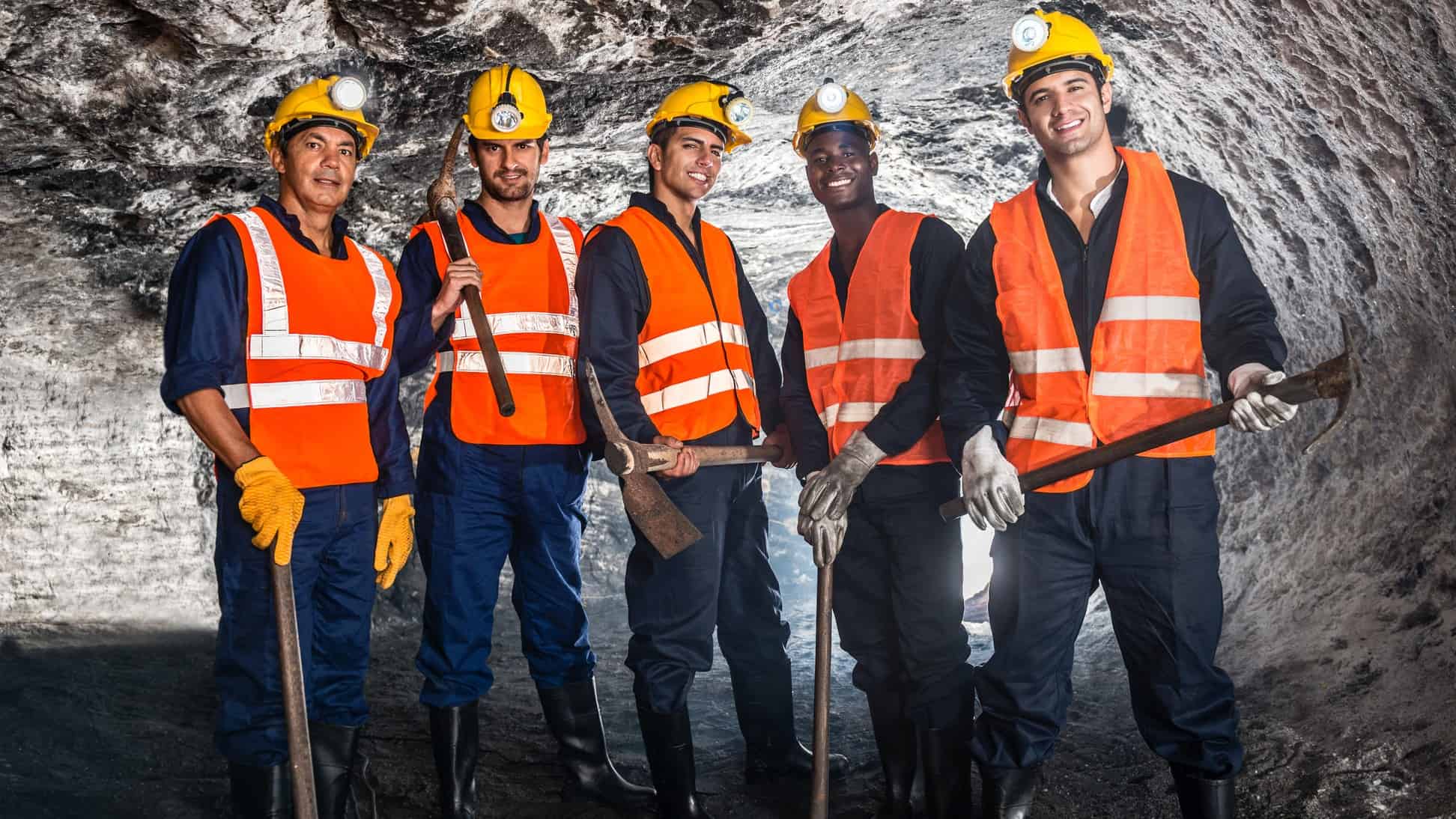
  • This ASX resources stock is up 74% over the past year. How much higher can it go?

    Young successful engineer, with blueprints, notepad, and digital tablet, observing the project implementation on construction site and in mine.

    Ramelius Resources Ltd (ASX: RMS) this week put out a March quarter update, reaffirming that they are likely to hit the midpoint of their guidance for the full year.

    The analyst team at Shaw and Partners has had a look at the result, and maintained their buy recommendation with a bullish price target on the stock. We’ll get to that shortly.

    Production dipping but stockpiles strong

    Firstly let’s have a look at what Ramelius announced earlier this week.

    The Western Australia-focussed gold miner said it had produced 38,093 ounces of gold for the quarter, which Shaw pointed out in their report, “continues the sequentially falling FY26 production; after 45,600 ounces in Q2 and 55,000 ounces in Q1”.

    Ramelius said there had been a planned six-day shutdown of its Mt Magnet mill, and haul road closures due to rainfall associated with Cyclone Narelle, “resulting in significant high-grade mine stockpiles at quarter end”.

    The company said it remained on track to hit the midpoint of its forecast production guidance of 185,000-205,000 ounces for the full year.

    Ramelius said it had executed share buybacks of $110.2 million during the quarter and had cash and gold worth $606.5 million on hand at the end of the quarter.

    The company also said its Mt Magnet operations were not currently impacted by diesel supply chain disruptions with their supply sourced directly from a major global oil company on a long-term contract.

    Managing director Mark Zeptner said of the quarter:

    We remain on track to deliver at the mid-point of our FY26 production guidance with significant contributions from Dalgaranga and Cue planned in the June 2026 Quarter. Dalgaranga’s first stope in the Never Never orebody was fired ahead of schedule on 13 March 2026 and above grade expectations at above 7 grams per tonne. While still early days, the geological model is reconciling better than expected and our newest mine is off to a fantastic start. Ramelius remains committed to maintaining and growing shareholder returns. With A$110 million in share buybacks during the Quarter, we are executing on another element of our plan to deliver value to shareholders. We look forward to sharing an update on the Dalgaranga exploration program in coming weeks demonstrating the significant potential upside at the Mt Magnet production hub.

    Shares looking cheap

    The Shaw team has lowered their estimated FY26 production forecast for Ramelius to 194,000 ounces, down from 201,000, and has increased their estimated all in sustaining cost of production from $1825 per ounce to $1960.

    They said they continued to have a positive view on gold, “which Ramelius is exposed to via its multi-year production growth”.

    Shaw has a price target of $6.50 on the ASX resources shares compared with the current price of $3.95. The company isvalued at $7.78 billion.

    The post This ASX resources stock is up 74% over the past year. How much higher can it go? appeared first on The Motley Fool Australia.

    Should you invest $1,000 in Ramelius Resources Limited right now?

    Before you buy Ramelius Resources Limited shares, consider this:

    Motley Fool investing expert Scott Phillips just revealed what he believes are the 5 best stocks for investors to buy right now… and Ramelius Resources Limited wasn’t one of them.

    The online investing service he’s run for over a decade, Motley Fool Share Advisor, has provided thousands of paying members with stock picks that have doubled, tripled or even more.*

    And right now, Scott thinks there are 5 stocks that may be better buys…

    * Returns as of 20 Feb 2026

    .custom-cta-button p {
    margin-bottom: 0 !important;
    }

    More reading

    Motley Fool contributor Cameron England has no position in any of the stocks mentioned. The Motley Fool Australia’s parent company Motley Fool Holdings Inc. has no position in any of the stocks mentioned. The Motley Fool Australia has no position in any of the stocks mentioned. The Motley Fool has a disclosure policy. This article contains general investment advice only (under AFSL 400691). Authorised by Scott Phillips.

  • ASX passive income: How much do I need to invest in to earn $1,000 per week?

    A woman looks excited as she holds Australian dollars in the air.

    Passive income gives investors regular and ongoing cash flow without having to do any work.

    Not only do passive income shares on the ASX help to build your wealth over time, they help to diversify your portfolio and give you more financial freedom in terms of your time, career choices and when you might want to retire.

    The question is, how much do you need to invest in ASX shares to earn the passive income you want?

    Here’s a quick calculation to help.

    Calculation breakdown

    To work out how much you need to invest you need to divide your intended annual income by the dividend yield of your investment.

    For example, earning $1,000 per month in passive income equates to $52,000 per year in dividend payments.

    The problem is that the answer varies depending on the dividend yield of the ASX shares you’d be buying. 

    ASX shares yielding 4% would require a $1.3 million investment, while shares yielding 5% would need around $1 million.

    ASX dividend shares which pay out a higher yield of around 6% would require an investment of around $870,000 in order to reach a $1,000 per month passive income goal.

    For high yield shares offering 7%, you’d only need to invest $740,000 in order to earn your $1,000 per week passive income.

    These calculations assume dividends are paid consistently and exclude any impact from franking credits.

    Great, but how do I build this level of portfolio?

    For many investors, the problem isn’t finding the ASX shares paying the dividend yield you want, but rather working out how to get to that level of portfolio in the first place. 

    The good news is that getting to a $1 million portfolio, which is roughly what you’d need to earn $1,000 per week in passive income on 5% yielding shares, is more achievable than you’d think.

    The trick is that it takes consistency and lots of patience. 

    There aren’t many Australian investors which could drop $1 million in the sharemarket at once. But a regular contribution of $500 per month (or more) is a great start.

    Then compounding does the heavy lifting. 

    If you’re able to consistently invest $500 per month it could take around 40 years to reach a $1 million portfolio. But hike that to $1000 per month and it’ll easily cut 10 years off your timeline. 

    Another way to shave back the time needed to reach your goal is to buy some shares with higher dividend yields, add lump sums into your portfolio where you can, or slowly increase your investments over time.

    The post ASX passive income: How much do I need to invest in to earn $1,000 per week? appeared first on The Motley Fool Australia.

    Wondering where you should invest $1,000 right now?

    When investing expert Scott Phillips has a stock tip, it can pay to listen. After all, the flagship Motley Fool Share Advisor newsletter he has run for over ten years has provided thousands of paying members with stock picks that have doubled, tripled or even more.*

    Scott just revealed what he believes could be the ‘five best ASX stocks’ for investors to buy right now. We believe these stocks are trading at attractive prices and Scott thinks they could be great buys right now…

    * Returns as of 20 Feb 2026

    .custom-cta-button p {
    margin-bottom: 0 !important;
    }

    More reading

    Motley Fool contributor Samantha Menzies has no position in any of the stocks mentioned. The Motley Fool Australia’s parent company Motley Fool Holdings Inc. has no position in any of the stocks mentioned. The Motley Fool Australia has no position in any of the stocks mentioned. The Motley Fool has a disclosure policy. This article contains general investment advice only (under AFSL 400691). Authorised by Scott Phillips.</em>

  • Why is everyone talking about Sandfire, Bendigo Bank, and DroneShield shares on Thursday?

    A smiling young surf life saver at the beach shouts out on a megaphone.

    Sandfire Resources Ltd (ASX: SFR), Bendigo and Adelaide Bank Ltd (ASX: BEN), and DroneShield Ltd (ASX: DRO) shares are catching plenty of investor interest today.

    In late morning trade on Thursday, two of the S&P/ASX 200 Index (ASX: XJO) stocks are outpacing the 0.1% losses posted by the benchmark index while the other is trailing behind.

    Here’s what’s happening.

    DroneShield shares lift on growth outlook

    DroneShield shares are outperforming today. Shares in the ASX 200 drone defence company are up 1.2% at time of writing, trading for $3.49 apiece.

    The stock is grabbing headlines again today following a market update highlighting the immense growth potential of its defence oriented business model.

    Indeed, the company estimates that the global counter-drone market is worth some US$60 billion, with both national defence and civilian customers seeking to secure potentially vulnerable assets.

    Today’s update follows on yesterday’s news that CEO Oleg Vornik was exiting the top role after more than 10 years at the helm. Angus Bean, who’s been working as chief product officer, has stepped in as the new CEO.

    DroneShield shares closed down 13.5% on Wednesday following the leadership shakeup but remain up a whopping 315% since this time last year.

    Sandfire shares sink amid weather woes

    Unlike DroneShield shares, Sandfire Resources shares are taking a tumble today following the release of the miner’s March quarter results.

    Shares in the ASX 200 copper miner are down 4.1% at time of writing, trading for $17.39 each.

    Sandfire reported copper equivalent (CuEq) production of 34,500 tonnes for the three months. The miner had a net cash balance of $76 million as at 31 March.

    But Sandfire shares look to be under pressure, with the company citing persistent high rainfall and unplanned maintenance as likely seeing its full year CuEq production come in towards the lower half of its guidance range of 149,000 to 165,000 tonnes.

    Sandfire shares remain up 114% over 12 months.

    Which brings us to the third ASX 200 stock grabbing headlines today.

    Bendigo Bank shares rocket on earnings boost

    Bendigo Bank shares are outperforming the benchmark and DroneShield shares today following the release of the challenger bank’s March quarter trading update (Q3 FY 2026).

    Bendigo Bank shares are up 8.3% at time of writing, changing hands for $11.33 apiece.

    Investors are bidding up the ASX 200 bank stock with Bendigo reporting unaudited cash earnings of $137.9 million for the quarter. That’s up 7.6% from the quarterly average achieved in the first half of FY 2026.

    On the bottom line, the bank reported a statutory net profit after tax (NPAT) of $109.4 million.

    Bendigo Bank shares are up 14.0% in 12 months.

    The post Why is everyone talking about Sandfire, Bendigo Bank, and DroneShield shares on Thursday? appeared first on The Motley Fool Australia.

    Should you invest $1,000 in Bendigo and Adelaide Bank Limited right now?

    Before you buy Bendigo and Adelaide Bank Limited shares, consider this:

    Motley Fool investing expert Scott Phillips just revealed what he believes are the 5 best stocks for investors to buy right now… and Bendigo and Adelaide Bank Limited wasn’t one of them.

    The online investing service he’s run for over a decade, Motley Fool Share Advisor, has provided thousands of paying members with stock picks that have doubled, tripled or even more.*

    And right now, Scott thinks there are 5 stocks that may be better buys…

    * Returns as of 20 Feb 2026

    .custom-cta-button p {
    margin-bottom: 0 !important;
    }

    More reading

    Motley Fool contributor Bernd Struben has no position in any of the stocks mentioned. The Motley Fool Australia’s parent company Motley Fool Holdings Inc. has positions in and has recommended DroneShield and is short shares of DroneShield. The Motley Fool Australia has positions in and has recommended Bendigo And Adelaide Bank. The Motley Fool has a disclosure policy. This article contains general investment advice only (under AFSL 400691). Authorised by Scott Phillips.

  • This ASX tech firm presents a “unique” opportunity, Shaw and Partners says

    A boy holds on tight as his gaming console nearly blows him away.

    Playside Studios Ltd (ASX: PLY) is about to launch its much-anticipated new game, Mouse: P.I. For Hire, with the analyst team at Shaw and Partners convinced the company’s shares are undervalued in the lead up to the release.

    Momentum building

    The company released an update about the game today, saying that the number of people who had put the game on their wish list had increased from 1.4 million to 1.5 million across all platforms.

    The company added:

    Recent marketing initiatives have driven tens of millions of organic views across owned social channels and secured significant global media coverage in the last two weeks, including favourable reviews of a demo build of the game. Wish listing activity for the week ending 7 April increased by 60% week on-week, indicating strong organic momentum heading into launch.

    The company is scheduled to release the game digitally on April 16, across PC, PlayStation 5, Xbox, and Nintendo Switch 2, priced at US$29.99 or US$39.99 for the digital deluxe edition.

    The company said, following the launch, it would provide formal FY26 guidance within 30 days and expected FY26 revenue to exceed FY25, with a reduction in operating costs.

    Good early reviews crucial

    The Shaw team has analysed the digital gaming market and said that, based on the 213 games released on the Steam platform since 2013 and which have generated more than US$10 million in revenue, positive review scores were critical.

    They added:

    We have specifically analysed 36 games that have generated between US$20-100m gross revenue on Steam, and had a wish list ranking among the Top 25 unreleased titles on Steam prior to launch. Key takes: 1) Reviews is the key metric. More reviews = more revenue; 2) The first 90 days is key, as about 60% of max reviews are captured in that period.

    Shaw said that Gamediscoverco data showed that Mouse: P.I. For Hire currently had 62,278 followers, and was the 16th most wish listed unreleased title on Steam.

    They added:

    Assuming follower conversion rates and revenue per 90-day review metrics consistent with our US$20-50m sample, supports a circa US$30m estimate of gross revenue for MOUSE on Steam. Note: this is Steam revenue only and excludes sales on other platforms like Nintendo etc. If MOUSE can achieve follower conversion rates and revenue per 90-day review metrics consistent with our US$50-100m sample, then we see potential for about US$45m of gross revenue on Steam alone. We see a unique opportunity in Playside, where it has invested substantially in its original IP portfolio over the last 18 months (about $35m), and follower/wish list data for MOUSE, the first major title, suggests it will be a material revenue generator and that catalyst is just weeks away.

    Shares looking cheap

    Shaw and Partners has a buy rating on Playside shares and a price target of 44 cents, compared with the current price of 27 cents.

    The ASX tech company was valued at $119.6 million at Wednesday’s close.

    The post This ASX tech firm presents a “unique” opportunity, Shaw and Partners says appeared first on The Motley Fool Australia.

    Should you invest $1,000 in PlaySide Studios Limited right now?

    Before you buy PlaySide Studios Limited shares, consider this:

    Motley Fool investing expert Scott Phillips just revealed what he believes are the 5 best stocks for investors to buy right now… and PlaySide Studios Limited wasn’t one of them.

    The online investing service he’s run for over a decade, Motley Fool Share Advisor, has provided thousands of paying members with stock picks that have doubled, tripled or even more.*

    And right now, Scott thinks there are 5 stocks that may be better buys…

    * Returns as of 20 Feb 2026

    .custom-cta-button p {
    margin-bottom: 0 !important;
    }

    More reading

    Motley Fool contributor Cameron England has no position in any of the stocks mentioned. The Motley Fool Australia’s parent company Motley Fool Holdings Inc. has no position in any of the stocks mentioned. The Motley Fool Australia has no position in any of the stocks mentioned. The Motley Fool has a disclosure policy. This article contains general investment advice only (under AFSL 400691). Authorised by Scott Phillips.

  • This ASX 200 giant is rising while the market sells off. Here’s why

    Toll road at night time.

    A broad ASX sell-off on Thursday has not stopped Transurban Group Ltd (ASX: TCL) from pushing higher.

    While renewed Middle East tensions and fresh Strait of Hormuz disruption fears have weighed on market sentiment, Transurban shares are edging 0.29% higher to $13.94 in morning trade.

    The move follows the toll road operator’s March quarter update, which showed continued traffic growth across its key regions, led by Brisbane, Melbourne, and North America.

    Even so, the stock is up only about 3% over the past 12 months, making today’s performance stand out a little more.

    With oil market risks again lifting inflation concerns, defensive businesses with visible cash flow and CPI-linked pricing are finding support.

    Here’s what was announced.

    Traffic growth remains broad across the network

    Transurban’s latest quarterly result showed steady momentum across most of its major toll road markets.

    Group average daily traffic (ADT) rose 3% over the prior corresponding period, with Brisbane leading the growth profile at 5.2%. The result was helped by a softer comparison base after Tropical Cyclone Alfred disrupted traffic volumes in March last year.

    Melbourne also delivered a strong contribution, with ADT up 3.8% as the West Gate Tunnel continued to add traffic following its December 2025 opening.

    North America remained another key driver, where traffic increased 7.9% as the 495 Northern Extension and Express Lanes kept ramping up.

    The only softer patch was Sydney. Traffic growth there was limited to 0.6% due to ongoing disruption tied to construction works around the Warringah Freeway upgrade. Management noted this should improve through the June quarter as more lanes progressively open.

    Looking across the full financial year-to-date, group traffic is now running 3.6% ahead of the prior period. This continued growth highlights the resilience of Transurban’s urban transport network despite the weaker macro backdrop and recent market volatility.

    Defensive earnings are back in focus

    The modest gain suggests the market is seeing the quarterly update as steady and broadly in line with expectations.

    Transurban is still valued for its reliable cash flow, long-life concession assets, and toll pricing that is mostly linked to CPI or fixed annual increases.

    That business model is helping the stock hold up today as the wider ASX weakens on the risk of higher oil prices adding to inflation pressure.

    That helps explain why Transurban is staying in positive territory while the broader ASX comes under pressure.

    With a market capitalisation of roughly $43.4 billion, it remains one of the ASX’s largest listed infrastructure stocks.

    The post This ASX 200 giant is rising while the market sells off. Here’s why appeared first on The Motley Fool Australia.

    Should you invest $1,000 in Transurban Group right now?

    Before you buy Transurban Group shares, consider this:

    Motley Fool investing expert Scott Phillips just revealed what he believes are the 5 best stocks for investors to buy right now… and Transurban Group wasn’t one of them.

    The online investing service he’s run for over a decade, Motley Fool Share Advisor, has provided thousands of paying members with stock picks that have doubled, tripled or even more.*

    And right now, Scott thinks there are 5 stocks that may be better buys…

    * Returns as of 20 Feb 2026

    .custom-cta-button p {
    margin-bottom: 0 !important;
    }

    More reading

    Motley Fool contributor Aaron Teboneras has no position in any of the stocks mentioned. The Motley Fool Australia’s parent company Motley Fool Holdings Inc. has positions in and has recommended Transurban Group. The Motley Fool Australia has positions in and has recommended Transurban Group. The Motley Fool has a disclosure policy. This article contains general investment advice only (under AFSL 400691). Authorised by Scott Phillips.

  • This value ASX ETF has been smashing the ASX 200 over the past 5 years

    Man climbing ladder to percentage sign, symbolising higher interest rates.

    There are many ASX ETFs available to investors that aim to utilise different strategies. 

    Sometimes these focus on generating passive income through dividends

    Other strategies focus on targeting high growth companies. 

    However a new report from VanEck has shed light on the success of value investing over the last 5 years. 

    What is value investing?

    The core ethos of value investing is the understanding that the market isn’t always accurate with pricing a company’s intrinsic value. 

    The key to identifying a value share is that it has an inexpensive valuation compared to the value of its assets or key financial metrics, such as revenue, earnings or cash flow.

    It’s the strategy most associated with the common investing phrase ‘buy low, sell high’. The value investor seeks out value stocks trading below their book value. 

    VanEck Msci International Value ETF

    The team at VanEck harnessed this idea in the VanEck Msci International Value ETF (ASX: VLUE). 

    This ASX ETF tracks the MSCI World ex Australia Enhanced Value Top 250 Select Index (VLUE Index). 

    VanEck said it believes this is the most representative expression of the value factor available on ASX.

    VLUE does not include small caps, which have diluted the returns of some other value exposures, and with only 250 high-conviction holdings, it avoids the watered-down approach of broader value indices that hold hundreds of stocks with varying degrees of value characteristics.

    Because it is rules-based, it does not drift from its style, nor is there the key-man risk associated with active funds.

    Additionally, VanEck said some ‘value’ companies are cheap for a reason, and these could be ‘value traps’. 

    MSCI analysis found that using forward earnings can help protect against ‘value traps’. 

    Therefore, MSCI developed its Enhanced Value Indices, which apply three valuation ratio descriptors on a sector-relative basis:

    • Price-to-book value
    • Price-to-forward earnings
    • Enterprise value-to-cash flow from operations. 

    Value outperforming

    Since this ASX ETF was first listed 5 years ago, it has had a great track record of outperforming other investment strategies in this period.

    It is up almost 66% in that span. 

    For comparison, the S&P/ASX 200 Index (ASX: XJO) is up approximately 28% in that same period. 

    VanEck said this success has come from using a unique strategy compared to a traditional value approach. 

    MSCI’s enhanced value overcomes many of the criticisms of value because it puts less weight on price-to-book as a metric and moves away from backward-looking dividend yield altogether. It uses a whole-firm valuation measure in enterprise value that could reduce concentration in leveraged companies.

    The post This value ASX ETF has been smashing the ASX 200 over the past 5 years appeared first on The Motley Fool Australia.

    Should you invest $1,000 in VanEck Msci International Value ETF right now?

    Before you buy VanEck Msci International Value ETF shares, consider this:

    Motley Fool investing expert Scott Phillips just revealed what he believes are the 5 best stocks for investors to buy right now… and VanEck Msci International Value ETF wasn’t one of them.

    The online investing service he’s run for over a decade, Motley Fool Share Advisor, has provided thousands of paying members with stock picks that have doubled, tripled or even more.*

    And right now, Scott thinks there are 5 stocks that may be better buys…

    * Returns as of 20 Feb 2026

    .custom-cta-button p {
    margin-bottom: 0 !important;
    }

    More reading

    Motley Fool contributor Aaron Bell has no position in any of the stocks mentioned. The Motley Fool Australia’s parent company Motley Fool Holdings Inc. has no position in any of the stocks mentioned. The Motley Fool Australia has no position in any of the stocks mentioned. The Motley Fool has a disclosure policy. This article contains general investment advice only (under AFSL 400691). Authorised by Scott Phillips.