
The Monday bankruptcy filing follows the craft beer and spirits maker's abrupt shutdown of all its brewing and restaurant locations across Oregon, according to local news reports.
The court papers indicate that the brewery's revenue has declined in recent years, dropping from $23.5 million in 2023 to $19.6 million in 2024 to $14.9 million in the first 11 months of 2025.
Representatives for the brewery and its bankruptcy attorney did not immediately respond to requests for comment by Business Insider on Wednesday.
In its bankruptcy filing, Oregon Brewing Company reported that it and its subsidiaries — Rogue River Brewing Company and Yaquina Bay Beverage Company — owe nearly $17 million in liabilities and have $4.9 million in assets.
The documents show that the brewery owes more than $594,000 in rent to the Port of Newport, where its massive production facility was headquartered, and over $510,000 in property taxes to Lincoln County.
Nearly another $66,000 is owed to the federal government for alcohol taxes, according to the legal filings.
The bankruptcy filing lists 1,300 "work in progress" barrels of aging whiskey among the brewery's assets. The brewery reported in the court documents that the whiskey is valued at over $2.8 million, but estimated it could only be liquidated for $975,000.
More than $1 million worth of hops, malt, grain, and other raw brewing materials were also listed as among the brewery's assets.
The Rogue Ales brewery, known for its Dead Guy brew, has been ranked by the Brewers Association trade group as among the 50 largest craft breweries in America.
It was founded in 1988 by a trio of Nike veterans — former executive Jack Joyce, Bob Woodell, the company's first president, and Rob Strasser, Nike's first head of marketing, who has been described as the "man who saved Nike" — along with their friend Jeff Schultz.
"For over thirty-plus years, Rogue has been at the forefront of Oregon's booming beer industry," the brewery's website says. "By offering an ever-changing product lineup, Rogue has developed a fan base that never knows what to expect other than the unexpected."
The brewery, which distributed its products across the US and in more than two dozen countries, won more than 2,000 awards for taste, quality, and packaging, according to its website.
The Air Force's Agile Combat Employment concept has been a focus for years as it prepares for the potential of a conflict where it can't fully operate out of its major air bases.
US Air Force photo by Airman 1st Class Rachel Howell
The US Air Force spent weeks testing how pilots and technicians would operate without communication.
Scenarios included losing communications and keeping aircraft operational with limited resources.
This is part of preparation for a conflict with a near-peer like China.
In a future war where battlefield systems are contested, pilots could find themselves flying and fighting without consistent communications with commanders.
The Air Force just war-gamed what such a scenario would look like, forcing its pilots to adapt by generating sorties on their own rather than waiting around for orders.
This month, the 23rd Wing from Moody Air Force in Georgia ran Exercise Mosaic Tiger 26-1, a series of flights based around the Air Force's Agile Combat Employment strategy. Aircraft like the A-10C Thunderbolt II "Warthog" attack aircraft and HC-130J Combat King II recovery aircraft were involved in the training.
One element included sustaining air operations should pilots and maintainers lose communications, like encrypted radio or messages, with command and control. If communications are out for 72 hours, pilots would refer to the Air Tasking Order, or the pre-determined directive that outlines daily air missions, roles and responsibilities of aircraft and units, and targets.
"With the published Air Tasking Order (ATO) for 72 hours out, I have the ability to fall back and execute those operations for the next three days," said Lt. Col. Nathan Frey, 74th Fighter Squadron director of operations, according to an Air Force press release.
Airmen involved in the exercise had to shift objectives based on limited maintenance resources and communications while still supporting combat sortie generation.
US Air Force photo by Airman 1st Class Rachel Howell
The US military's global communications and navigation are highly dependent on satellite transmissions — systems a powerful adversary could attempt to disrupt or physically damage.
If the communications outage goes beyond 72 hours, the situation would look a lot different. Pilots would rely on pre-briefed timelines of events and the last information they have on what their commanderwould want. They'd be flying air operations without real-time updates.
"If degradation lasts past 72 hours, we would shift to military-type orders that provide broad intent and allow us to coordinate with adjacent units without the detailed integration from the AOC," said Lt. Col. David Pool, 74th MGFE commander, in the press release. "That's where the Wing would step in to assist in liaising between adjacent units to conduct detailed mission planning prior to execution."
Other parts of Exercise Mosaic Tiger 26-1 included stressing rescue and support teams in contested conditions. In the scenarios, airmen flew out of, rearmed and refueled aircraft at, and operated from small or converted airstrips. They also did jobs that weren't their focus areas, like maintaining aircraft, establishing communications, and defending base perimeters.
"Every Airman in the squadron is tackling tasks that normally wouldn't fall in their wheelhouse," said Lt. Col. Justin May, 23d Combat Air Base commander.
Having "multi-capable airmen" has been a focus of the Agile Combat Employment strategy for years, spreading lessons on maintenance, munitions, and logistics across airmen.
Airmen run post-flight inspections on an A-10C Thunderbolt II in Florida as part of Exercise Mosaic Tiger 26-1 earlier this month.
US Air Force photo by Airman 1st Class Rachel Howell
Maintenance airmen from the 74th and 75th Fighter Generation Squadrons also had to meet the challenge of keeping aircraft ready to fly for lengths of time without knowing when or if they'd be resupplied.
That meant equipment and supplies were used sparingly, and parts were reused, a far different environment for technicians than their home bases.
"Being responsible for what supplies we do have on-site all leads back to ensuring that we stay accountable and utilize all resources available," Staff Sgt. William Flores, a crew chief with the 75th, said per the release. "Take oil, for example. If we're burning too much oil, we may want to swap jets so we're not using more oil than we can supply, and by doing that, we can maintain air operations."
The Air Force's Agile Combat Employment concept is designed to prepare the service for a future conflict where it wouldn't be operating from big, centralized air bases but rather flying out of more spread-out, distributed places that can be as austere as a stretch of highway. The plan is one of the Air Force's potential counters to China's massive missile force, which, in a war, would target those air bases and runways to prevent US aircraft from taking off.
Agile Combat Employment is especially relevant to the vast Indo-Pacific region where important bases like Anderson Air Force Base on Guam are within range of China's missiles.
The recording appeared to show the now-former executive, Martin Bally, disparaging customers and colleagues and referring to the company's chicken as "3D-printed."
"The comments were vulgar, offensive and false, and we apologize for the hurt they have caused," the company said in a statement Wednesday. "This behavior does not reflect our values and the culture of our company, and we will not tolerate that kind of language under any circumstances."
The accusations about the former Campbell executive, Martin Bally, were made in a lawsuit filed in Michigan on November 20 by Robert Garza, a former employee. Garza said he was unjustly fired after complaining about Bally's conduct.
Garza said he secretly recorded a conversation where Bally — then Campbell's vice president of information technology — insulted the intelligence of "Indians," belittled customers, and blasted the company's products in a profane rant.
Garza's law firm provided Business Insider with a copy of the recording. It wasn't included as an exhibit in the lawsuit and Business Insider hasn't verified its authenticity.
In a sample quote from the conversation, the person in the recording said Campbell's products were "shit for fucking poor people" and "unhealthy."
"Even in a can of soup — I look at it, and look at bioengineered meat," the person said. "I don't want to eat a fucking piece of chicken that came from a 3D printer, do you?"
Campbell said in its Wednesday statement that it believed "the voice on the recording is in fact Martin Bally" and said the description of the food is "patently absurd. " The company said Tuesday that Bally was "on leave" before saying Wednesday that he "is no longer employed by the company.:
The remarks caused a firestorm online and caught the eye of Florida Attorney General James Uthmeier, who said he would investigate the company because of the state's ban on lab-grown meat.
Bally didn't immediately respond to a request for comment.
I'm a huge pasta fan, especially when the recipe is by Ina Garten (I've even been ranking them!). So I decided to try her "grown-up" mac and cheese just in time for Thanksgiving.
Ina Garten's "grown-up" mac and cheese features bacon, basil, and plenty of cheese.
Anneta Konstantinides/Business Insider
To make Garten's "grown-up" mac and cheese for four, you'll need:
4 cups of elbow macaroni or cavatappi
4 slices of white sandwich bread
8 ounces of Gruyère cheese, grated
6 ounces of extra-sharp cheddar, grated
4 ounces of blue cheese, crumbled (Garten recommends Roquefort)
8 ounces of thick-sliced bacon
3 cups of milk
4 tablespoons of all-purpose flour
4 tablespoons of unsalted butter
4 tablespoons of freshly chopped basil leaves
½ teaspoon of freshly ground black pepper
Pinch of nutmeg
First, I preheated the oven to 400 degrees Fahrenheit and prepped the bacon.
Anneta Konstantinides/Business Insider
I arranged my bacon on a sheet pan in one layer. Garten recommends placing a baking rack over the sheet pan, but I didn't have one, so I just lined mine with aluminum foil to avoid making a greasy mess.
I cooked my bacon for 15 minutes, until the strips turned crisp, then transferred them to a plate lined with a paper towel.
While the bacon was in the oven, I prepped my breadcrumbs and started cooking the pasta.
Anneta Konstantinides/Business Insider
I sliced the crusts off my sandwich bread, cut each slice into smaller pieces, and roughly chopped my basil.
Then, I threw my pasta into a large pot of boiling salted water, letting it cook for around six minutes. I opted for cavatappi over elbow macaroni because I believe it's better at carrying the ooey-gooey sauce of a great mac and cheese.
Once my noodles were al dente, I drained them and set them aside.
And I grated a lot of cheese.
Anneta Konstantinides/Business Insider
If you're making this for Thanksgiving, just recruit some family members to help!
I threw my chopped bread and basil into a food processor to make the breadcrumbs.
Anneta Konstantinides/Business Insider
After a few pulses, my breadcrumbs were ready!
Once the bacon had cooled a bit, I gave it a rough chop.
Anneta Konstantinides/Business Insider
Garten kept her bacon pieces pretty chunky while demonstrating this recipe on an episode of "Barefoot Contessa," so I did the same.
Then, I began warming up some milk for the roux.
Anneta Konstantinides/Business Insider
I heated the milk in a small saucepan, making sure not to boil it.
While the milk was heating, I began melting my butter.
Anneta Konstantinides/Business Insider
I added the butter to a pot set over medium-low heat.
Then, I added flour to the pot with the melting butter.
Anneta Konstantinides/Business Insider
I stirred the butter and flour together over low heat for two minutes.
"This cooked butter and flour is going to act as a thickener for the sauce," Garten explained during the episode.
As I whisked the flour and butter together, I added the hot milk.
Anneta Konstantinides/Business Insider
Garten says you should cook the sauce for about one or two more minutes, until it's thickened and looks smooth.
"It's not incredibly thick, but what it does is it just coats the spoon," she added.
I took the pot off the heat and added all my cheeses, plus seasoning.
Anneta Konstantinides/Business Insider
Garten recommends adding one teaspoon of salt, some freshly ground black pepper, and nutmeg.
"It's a really classic spice that's used in gratins," Garten says in the episode. "You won't know it's there, but it'll make everything taste better."
I added the cooked cavatappi to the pot, as well as the chopped bacon.
Anneta Konstantinides/Business Insider
I gave everything a good stir as a delicious cheesy scent filled my kitchen.
Then, I poured my mac and cheese into a casserole dish.
Anneta Konstantinides/Business Insider
Garten used individual gratin dishes while making this on "Barefoot Contessa" since she was only making it for herself and her husband, Jeffrey.
Since I doubled the recipe to make dinner for my family, I used a 12-inch casserole dish, which was the perfect size.
I sprinkled my breadcrumbs over the mac and cheese and threw the dish into the oven.
Anneta Konstantinides/Business Insider
I didn't use all of the breadcrumbs because I had already fully covered the top, but my family later said they wished there had been more — so I recommend using every last crumb!
If you're planning to make Garten's "grown-up" mac and cheese the day before, just throw your dish into the fridge overnight and bake it right before you want to serve it.
Garten says to bake the mac and cheese for 35 to 40 minutes, but my pasta didn't need that long.
Anneta Konstantinides/Business Insider
While reading reviews of Garten's recipe on the Food Network's website, I saw that many people said their mac and cheese had turned dry after baking it for the recommended amount of time. They suggested baking the pasta for 25 minutes or less.
I checked my mac and cheese at the 20-minute mark and saw the breadcrumbs were already starting to brown. At the 25-minute mark, they were beautifully golden, so I took my dish out of the oven.
Not all ovens are made equal, so check your mac and cheese as you go.
My pasta was still bubbling as I started to serve dinner, and it looked like a creamy, cheesy dream.
Anneta Konstantinides/Business Insider
The sound of the bubbling sauce was so satisfying that I couldn't resist taking a few videos of it.
My family watched with excitement as I dug my spoon through the breadcrumbs and pulled up a scoop of ooey-gooey noodles. Dinner couldn't come soon enough!
Garten's "grown-up" mac and cheese is easy, delicious, and a great Thanksgiving side dish.
Anneta Konstantinides/Business Insider
My parents and sister were huge fans of Garten's mac and cheese.
The texture is velvety rather than cloying, and I loved the balance of flavor between the Gruyère, cheddar, and blue cheeses. The Roquefort adds a bit of tang, so if you're making this for someone who really dislikes blue cheese, maybe only use half so you're still getting the depth that it adds. Personally, I'm not a huge blue cheese fan, but I didn't find it overpowering.
I also loved how the smoky bacon cut through the cheesiness — I'd even recommend throwing in an extra slice or two. The crunchy breadcrumbs on top were also a huge hit, adding a lovely contrast to the creamy noodles underneath (definitely don't skimp on them).
I think the flavors of Garten's mac and cheese are perfect for a holiday side and would pair well with turkey. We even enjoyed eating it as a main course for dinner.
If you're looking for a great traditional Thanksgiving dish with a twist, Garten's "grown-up" mac and cheese is a great pick.
When it comes to building wealth, few names carry more weight than Warren Buffett.
The Oracle of Omaha has turned a modest investment partnership in the 1950s into one of the greatest fortunes ever created, largely by following a simple, disciplined approach that almost any investor can replicate.
You don’t need millions, you don’t need special access, and you don’t need to pick the next hot tech stock.
Buffett’s strategy is built on timeless principles that work just as well on the ASX as they do on Wall Street. Here’s how he does it, and how you can apply the same approach today with ASX shares.
Buy wonderful businesses
Warren Buffett learned early in his career that buying low-quality companies just because they looked cheap was a mistake. Instead, he shifted his focus toward what he famously calls wonderful businesses at fair prices.
These are companies with strong competitive advantages, steady demand, dependable earnings and loyal customers. On the ASX, businesses like ResMed Inc. (ASX: RMD), Goodman Group (ASX: GMG) and Xero Ltd (ASX: XRO) all share similar characteristics. They have pricing power, sticky customer bases, and long runways for growth. These are the types of companies Buffett would likely gravitate toward.
The lesson? Don’t chase what’s beaten down, chase what is durable.
Think in decades
One of Buffett’s most repeated lines is that “our favourite holding period is forever.”
He doesn’t buy stocks to flip them. He buys them the way you would buy a house, to hold for the long term. That mindset allows compounding to do the heavy lifting. Just like ResMed steadily expands its addressable market or TechnologyOne Ltd (ASX: TNE) builds recurring revenue year after year, the companies you own become more valuable simply by doing what they do best.
For everyday investors, this means resisting the urge to trade on every market wobble.
Avoid speculation
Warren Buffett famously avoids businesses he doesn’t fully understand, and that discipline has kept him out of more trouble than most investors realise. You don’t need to understand every industry. You just need to invest in ones where the drivers of long-term value are clear.
In Australia, that might mean supermarkets, healthcare, infrastructure, technology, or property. You don’t have to chase crypto miners or speculative biotechs to build wealth. Buffett wouldn’t, and you don’t need to either.
Keep it simple
If Buffett were starting again today with a more modest sum, he has said repeatedly that he would simply buy a low-cost S&P 500 index fund and hold it for life.
On the ASX, that’s as easy as buying an ETF like the iShares S&P 500 ETF (ASX: IVV).
Sometimes the simplest strategy is also the best one.
Foolish takeaway
Buffett’s wealth wasn’t built on bold predictions, complex trading strategies, or timing the market. It was built on discipline, patience and buying high-quality businesses at sensible prices.
Do those three things consistently and time will do the rest.
Should you invest $1,000 in Goodman Group right now?
Before you buy Goodman Group shares, consider this:
Motley Fool investing expert Scott Phillips just revealed what he believes are the 5 best stocks for investors to buy right now… and Goodman Group wasn’t one of them.
The online investing service he’s run for over a decade, Motley Fool Share Advisor, has provided thousands of paying members with stock picks that have doubled, tripled or even more.*
And right now, Scott thinks there are 5 stocks that may be better buys…
Motley Fool contributor James Mickleboro has positions in Goodman Group, ResMed, Technology One, and Xero. The Motley Fool Australia’s parent company Motley Fool Holdings Inc. has positions in and has recommended Goodman Group, ResMed, Technology One, Xero, and iShares S&P 500 ETF. The Motley Fool Australia has positions in and has recommended ResMed and Xero. The Motley Fool Australia has recommended Goodman Group, Technology One, and iShares S&P 500 ETF. The Motley Fool has a disclosure policy. This article contains general investment advice only (under AFSL 400691). Authorised by Scott Phillips.

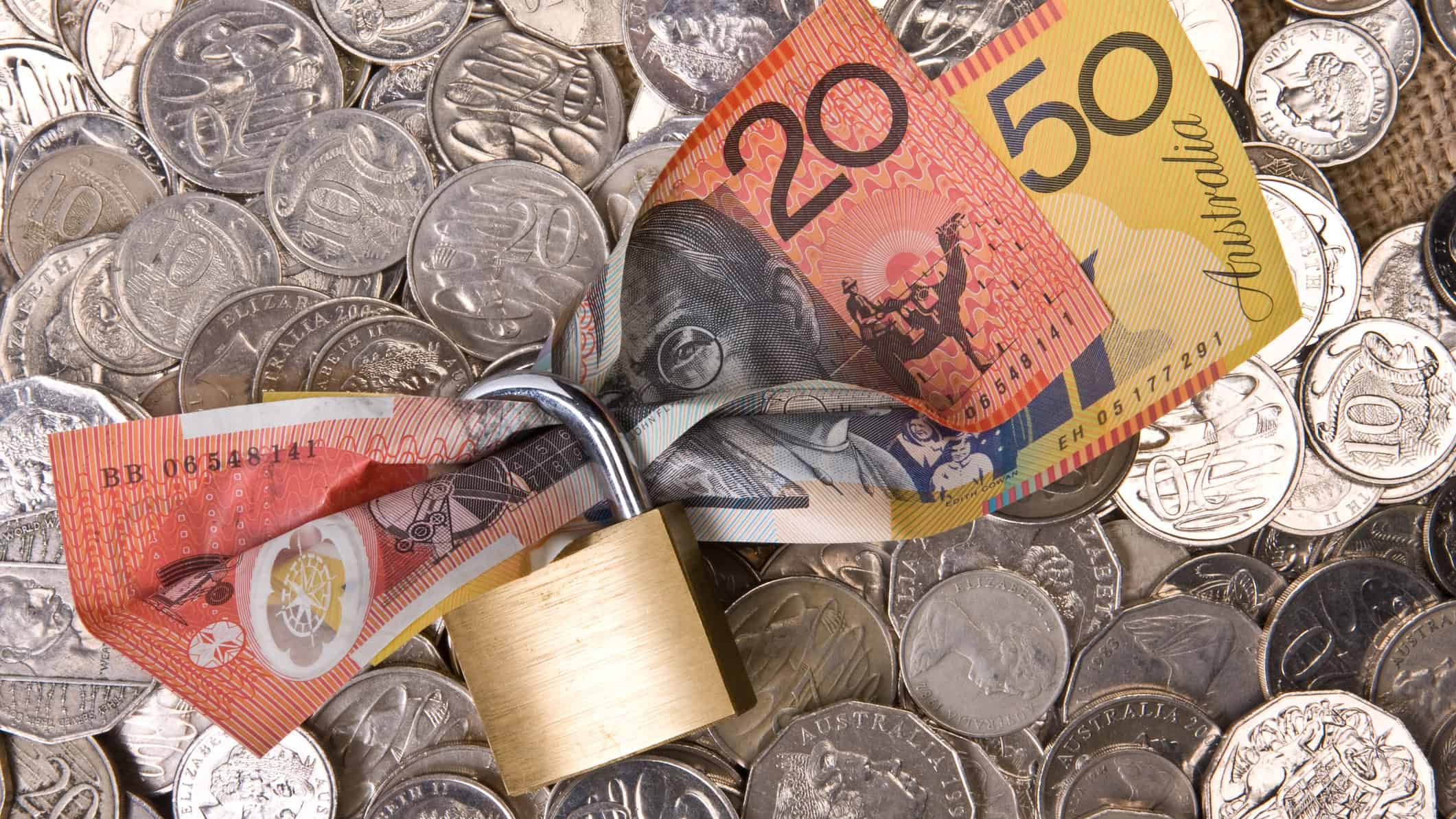
ASX growth shares can generate some of the strongest returns over time, but there can be plenty of volatility along the way. I’m going to highlight two companies that have exciting futures and whose recent valuation declines have made them appear better value.
It’s normal for fast-growing businesses to sometimes experience a bump. There have been numerous sell-offs, for example, of Amazon and Microsoft shares over the last 30 years. Those dips were opportunities.
I’m not expecting the following two businesses to do as well as the US tech giants, but the future looks positive for these stocks.
Pro Medicus is one of the most impressive ASX growth shares, in my view. It provides a full range of medical imaging software and services to hospitals, imaging centres, and healthcare groups in Australia and internationally.
The company is winning a lot of new contracts, which is driving its earnings higher at a rapid rate. In this month alone, it has announced multiple contracts worth a total of $73 million. Large clients are clearly loving what they’re seeing with the offering.
This new revenue is extremely valuable to the business because it has an underlying operating profit (EBIT) margin of 74% (as of FY25). That means almost three-quarters of revenue is turning into EBIT, which is a very high proportion. This is helping drive the bottom line and dividends to higher levels at a growth rate of more than 30% (in FY25).
Its FY25 revenue rose 31.9% and it seems the company is set to deliver further strong growth for the foreseeable future.
The ASX growth share still has a high price-to-earnings (P/E) ratio, but it appears considerably cheaper after the Pro Medicus share price declined by 20% since July, as the chart below shows.
This company sells homewares and furniture online. The ASX growth share took a hammering yesterday after delivering a trading update that didn’t live up to expectations. I think this is a long-term buying opportunity.
Revenue between 1 July 2025 and 20 November 2025 grew by only 18% year over year, compared to the 28% growth achieved between 1 July and 11 August 2025. It’s clear there has been a major slowdown since August.
However, the company has a long history of delivering strong growth, so I believe this is just a temporary hit for the ASX growth share rather than a permanent situation.
For starters, the overall Australian furniture and homewares market only recently reached 20% online penetration. In the US and UK markets, online penetration has climbed to 29% and 35%, respectively, suggesting a further increase in e-commerce adoption by shoppers.
With 18% revenue growth for the financial year to date, the company is still gaining market share, giving it more market power and economies of scale.
The business noted a number of other positives in its AGM update â it’s starting to ship products to New Zealand, its home improvement revenue rose over 40% year over year, and the trade and commercial revenue increased 23% year over year.
I’m expecting the company’s revenue to be significantly higher in five years, and the profit margins should climb thanks to operating leverage and specific efforts the ASX growth share is making to improve efficiencies, leverage AI, and enhance technology across the business.
Should you invest $1,000 in Pro Medicus right now?
Before you buy Pro Medicus shares, consider this:
Motley Fool investing expert Scott Phillips just revealed what he believes are the 5 best stocks for investors to buy right now… and Pro Medicus wasn’t one of them.
The online investing service he’s run for over a decade, Motley Fool Share Advisor, has provided thousands of paying members with stock picks that have doubled, tripled or even more.*
And right now, Scott thinks there are 5 stocks that may be better buys…
Motley Fool contributor Tristan Harrison has positions in Pro Medicus and Temple & Webster Group. The Motley Fool Australia’s parent company Motley Fool Holdings Inc. has positions in and has recommended Amazon, Microsoft, and Temple & Webster Group. The Motley Fool Australia’s parent company Motley Fool Holdings Inc. has recommended Pro Medicus and has recommended the following options: long January 2026 $395 calls on Microsoft and short January 2026 $405 calls on Microsoft. The Motley Fool Australia has recommended Amazon, Microsoft, Pro Medicus, and Temple & Webster Group. The Motley Fool has a disclosure policy. This article contains general investment advice only (under AFSL 400691). Authorised by Scott Phillips.

This article was originally published on Fool.com. All figures quoted in US dollars unless otherwise stated.
Key Points
Warren Buffett evaluates companies based on reputation, management, and competitive advantage.
The CEO is a risk to the Tesla brand and leadership.
Tesla is losing market share despite industry growth.
EV company Tesla(NASDAQ: TSLA) has had a rough year. One on hand, EV sales rose in quarter three, and the energy business is growing steadily. On the other hand, EV tax credits expired in September, and the Pew Research Center has polled declining support for solar and EVs.Â
While meaningful, these may be short-term headwinds. Going deeper, we’ll look at Tesla through the lens of Warren Buffett, one of the greatest investors of all time. Warren Buffett’s partner, Charlie Munger, strongly suggested that investors “invert, always invert” when considering investments.
Here, we’ll invert by swapping “reasons to invest in Tesla” with “reasons to distance yourself from Tesla.” In doing so, we can quickly pinpoint who might be better off investing elsewhere.Â
1. Tesla’s CEO has reputation issues and lacks focus
Trust is crucial to any business. Warren Buffett has said, “It takes 20 years to build a reputation and five minutes to ruin it. If you think about that, you’ll do things differently.” I think Tesla has stumbled more than once here. The EV company — CEO Elon Musk in particular — has built a reputation not just for excellent cars, but for partisan politics. That’s worrying.
People associate Tesla’s brand with Elon Musk’s politics. A 2025 study by the nonpartisan National Bureau of Economic Research suggests that Tesla sales between October 2022 and April 2025 would have been 67-83% higher (1-1.26 million more vehicles sold) had the Tesla CEO avoided polarization. If so, this may be why trailing 12-month vehicle deliveries peaked at ~1.8m in Q3 of 2023. Despite slashing Tesla prices 20% in 2023, deliveries have remained flat or down.
Mr. Musk also poses a growing risk to management. In a 1996 Berkshire Hathaway shareholder letter, Warren Buffett says, “Loss of focus is what most worries Charlie and me when we contemplate investing in businesses that in general look outstanding. All too often, we’ve seen value stagnate in the presence of hubris or of boredom that caused the attention of managers to wander.”
Elon Musk’s attention seems sporadic. He has founded seven companies and is actively participating in six (Tesla, SpaceX, Neuralink, xAI, X.com, The Boring Company). In 2024-2025, he spent months at the White House running the Department of Government Efficiency (DOGE). After that, he floated the idea of a third political party to X.com users.
The risk of Elon Musk losing focus on Tesla is so high that the company’s board of directors has released a letter to the public, urging shareholders to approve a pay package that could be worth a trillion dollars, in order to prevent Elon from leaving the company. Recently, shareholders approved the package.
While the pay package does a good job of aligning incentives, it’s no guarantee that Elon Musk will prioritize Tesla.
2. Tesla lacks a durable competitive advantage
Competition is something to watch. In a 1999 Fortune Magazine interview with Carol Loomis, Warren Buffett says, “The key to investing is not assessing how much an industry is going to affect society, or how much it will grow, but rather determining the competitive advantage of any given company and, above all, the durability of that advantage.” Tesla produces excellent cars, and its growing automation efforts may significantly impact society. But it seems to lack a moat that protects its share of the EV market.
Declining EV sales isn’t a global problem; it’s a Tesla problem. Trailing 12-month deliveries of Tesla vehicles reached a peak in 2023. However, global EV sales increased from over 13 million to 17 million between 2023 and 2024. In the U.S., Tesla’s home turf, sales of EVs rose from 1.2 to 1.3 million. All this indicates stiffer competition in what should be Tesla’s strongest region (the U.S.). Unfortunately, Tesla has far from recovered. By August 2025, Tesla’s U.S. market share of EVs fell from 80% to 38%, an eight-year low.
Global competition is already stiff and rising. Chinese groups BYD(OTC: BYDDY) and Geely(OTC: GELYY) boast the greatest market share and are growing. (Berkshire Hathaway purchased BYD shares in 2008, selling in 2025 for a tidy profit.) According to a study by SNL Research, Tesla hasn’t just lost market share in every major market. It’s the only top global EV company with a negative growth rate (-11% between January and August 2025, by deliveries).
I think it’s worth asking whether Tesla’s current business can withstand competition in EV sales, its biggest revenue generator. It had a first-mover advantage, but Tesla’s momentum is gone.
Risk is leadership and competition
If I were Warren Buffett, I’d take issue with Tesla’s CEO (poor reputation, unfocused) and lack of competitive advantage. Tesla’s CEO poses a long-term risk to trust and focus, and Tesla is losing market share to competition. I’ll be holding off on adding to my Tesla position until I’m confident that Tesla’s CEO will prioritize Tesla. Until then, I’m better off investing in higher-confidence businesses.Â
This article was originally published on Fool.com. All figures quoted in US dollars unless otherwise stated.
Should you invest $1,000 in Tesla right now?
Before you buy Tesla shares, consider this:
Motley Fool investing expert Scott Phillips just revealed what he believes are the 5 best stocks for investors to buy right now… and Tesla wasn’t one of them.
The online investing service heâs run for over a decade, Motley Fool Share Advisor, has provided thousands of paying members with stock picks that have doubled, tripled or even more.*
And right now, Scott thinks there are 5 stocks that may be better buys…
Cole Tretheway owns Tesla stock. The Motley Fool Australia’s parent company Motley Fool Holdings Inc. has positions in and has recommended Tesla. The Motley Fool Australia’s parent company Motley Fool Holdings Inc. has recommended BYD Company. The Motley Fool Australia has no position in any of the stocks mentioned. The Motley Fool has a disclosure policy. This article contains general investment advice only (under AFSL 400691). Authorised by Scott Phillips.

This article was originally published on Fool.com. All figures quoted in US dollars unless otherwise stated.
Key Points
Nvidia stock surges after delivering yet another record quarter.
Nvidia is on its way to becoming the most profitable company in the world.
Nvidiaâs sustained momentum depends on a handful of key customers.
Nvidia (NASDAQ: NVDA) rocketed as much as 6.5% higher in after-hours trading on Nov. 19 after reporting third-quarter fiscal 2026 results and issuing fourth-quarter guidance.
While some investors may have been focused on the revenue and earnings per share (EPS) beats, the most jaw-dropping number of the report was hiding in plain sight.
Here’s what blew me away about Nvidia’s recent quarter, and why the artificial intelligence (AI) growth stock remains a great buy now.
Nvidia’s revenue growth is mostly profit
Nvidia grew revenue by $21.92 billion compared to the same quarter last year, but the cost of revenue grew by just $6.23 billion, and operating expenses only grew by $1.17 billion. Â This means that Nvidia is converting the bulk of additional revenue into operating income.
Despite fears that Nvidia’s margins would compress due to competition and increased research and development spending, Nvidia’s operating margin was actually higher this quarter than in Q3 of fiscal 2025. More importantly, Nvidia converted a staggering 56% of revenue into after-tax net income.
With $31.91 billion in net income generated in the quarter, Nvidia will likely eclipse Alphabet within the next year as the most profitable U.S. company — and probably the most profitable company in the world unless oil prices, and, in turn, Saudi Aramco‘s profits surge.
Nvidia is thriving, but risks remain
Nvidia gets a lot of attention for its stock price, but the performance of the business is what long-term investors should continue to focus on.
There’s simply no company in the world remotely close to Nvidia’s size that is growing earnings this quickly. The combination of industry leadership, high margins, and technology at the epicenter of AI data centers makes Nvidia a compelling long-term investment.
As for the valuation, Nvidia is priced as if it is going to continue growing earnings by double digits quarter over quarter. For that to happen, its key customers — the hyperscalers building out data centers and training AI models — need to keep spending. These hyperscalers must continue to generate strong cloud computing growth from key customers across various sectors. But to do that, compute and AI spending need to be profitable for cloud customers. The whole value chain breaks if end user spending isn’t paying off.
As excellent as Nvidia’s results are, it would be a mistake to overlook the double-edged sword that Nvidia holds as the undisputed leader in data center computing and networking. Nvidia is the single biggest beneficiary of increased AI capital, but it would also be one of the hardest-hit companies during a critical slowdown.
Fortunately for long-term investors, Nvidia has $60.61 billion in cash, cash equivalents, and marketable securities on its balance sheet, compared to just $7.47 billion in long-term debt. Paired with its ultra-high margins, Nvidia is undoubtedly the best-positioned AI company to ride out a slowdown.
Nvidia is still a buy
Nvidia is the poster child of today’s top-heavy, premium-priced market. What separates Nvidia is that the stock’s run-up is supported by solid fundamentals, whereas other pockets of the market have valuations that are arguably overextended.
All told, Nvidia is still a good buy for investors who believe in a sustained ramp-up in hyperscaler AI capital expenditures.
This article was originally published on Fool.com. All figures quoted in US dollars unless otherwise stated.
Should you invest $1,000 in Nvidia right now?
Before you buy Nvidia shares, consider this:
Motley Fool investing expert Scott Phillips just revealed what he believes are the 5 best stocks for investors to buy right now… and Nvidia wasn’t one of them.
The online investing service heâs run for over a decade, Motley Fool Share Advisor, has provided thousands of paying members with stock picks that have doubled, tripled or even more.*
And right now, Scott thinks there are 5 stocks that may be better buys…
Daniel Foelber has positions in Nvidia. The Motley Fool Australia’s parent company Motley Fool Holdings Inc. has positions in and has recommended Alphabet and Nvidia. The Motley Fool Australia has recommended Alphabet and Nvidia. The Motley Fool has a disclosure policy. This article contains general investment advice only (under AFSL 400691). Authorised by Scott Phillips.
The Thanksgiving travel season could break records this year.
There are some surprising things you can't bring on a plane via airport security.
Foam swords are not allowed in carry-on bags, but lightsabers are permitted.
Thanksgiving travel season can mean long lines at the airport, so it's always helpful to know what items you can — and can't — put in your carry-on bag.
According to the Federal Aviation Administration, this week's Thanksgiving travel period could be the busiest in 15 years.
Before you hop on a flight, you may want to check that you don't have any items that could slow you down at TSA.
The Transportation Security Administration, or TSA, maintains a lengthy, searchable online database of items you can review before packing your bags, and you might be surprised to learn that everything from large quantities of soup to Magic 8 Balls are prohibited in carry-on luggage on flights.
Here are 12 carry-on items you'd be surprised aren't allowed through airport security.
Snow globes
Dan Kitwood/Getty Images
Leave the snow globes at home. They often contain more than the permitted amount of liquid for carrying on a plane.
According to the TSA, snow globes are allowed through if they are about tennis-ball size or less, and appear to contain less than 3.4 ounces of liquid. However, if you're bringing back a travel memento from a trip, it's usually a safe idea to pack it in your checked bag.
Magic 8 Balls
A Magic 8 Ball toy in its packaging.
The Image Party/Shutterstock
When it comes to Magic 8 Balls, the future is clear: Leave them at home, or put them in your checked bag. Toys like the Magic 8 Ball that contain liquid are not allowed in carry-on bags.
"For carry-on bags: We asked the Magic 8 Ball and it told us… Outlook not so good," TSA wrote on its official website. "For checked bags: We asked the Magic 8 Ball and it told us… It is certain!"
Christmas crackers
Monkey Business Images/Shutterstock
If you're traveling to or from the UK around the holidays, you might want to avoid packing this traditional British Christmas item. TSA guidelines state that "English Christmas crackers" are not allowed in carry-on or checked bags.
Made from a cardboard tube wrapped in brightly colored paper, crackers contain small gifts that come out when pulled on either end. When both ends of the cracker are pulled, there is a bang.
That's because, inside, there are two strips of card attached to each end of the cracker. The two pieces of card have a slight overlap that is treated with gunpowder. When each end of the cracker is pulled, friction is generated where the card overlaps, creating a small explosion on the part containing gunpowder.
A US Transportation Security Administration spokesman told Airport Parking and Hotels that these items are prohibited from flying in checked or carry-on bags.
"They are flammable and should not be brought on airplanes. They fall in the same category as sparklers and fireworks," they said.
Large quantities of soup
Erin McDowell/Business Insider
You can bring snacks on a plane, but a large quantity of soup is prohibited in carry-on luggage.
The TSA reported that soup is allowed on flights if you are carrying less than or equal to 3.4 fluid ounces, but any amount larger than that is prohibited in carry-on bags.
Cast-iron cookware
Marie C Fields/Shutterstock
If you plan on cooking at your destination, cast-iron cookware should be packed in your checked luggage.
Cast-iron cookware, such as skillets and pans, is not allowed in carry-on luggage. While the TSA website does not explain why these items are prohibited, heavy cast-iron items could cause serious injuries or damage if used as weapons.
Other types of pots and pans are allowed in carry-on and checked bags.
Alcoholic beverages containing more than 70% alcohol
Vicky Gosselin/Shutterstock
Alcoholic beverages with more than 70% alcohol, or over 140 proof, are prohibited from both carry-on and checked bags.
Some high-percentage alcohols that would be affected by this ban include Hapsburg Absinthe XC, Sunset Very Strong Rum, Devil's Springs Vodka 160, and Golden Grain 190, which contains 95% alcohol by volume.
Alcoholic beverages that contain more than 24% but not more than 70% alcohol are limited in checked bags to no more than 5 liters and no more than 3.4 liquid ounces in carry-on bags.
Foam toy swords
A family playing with foam toy swords in public park together.
vgajic/Getty Images
They might not be lethal, but foam toy swords can't come in your carry-on. Instead, they can be packed in checked bags.
That being said, lightsabers are allowed to be brought on board, per TSA guidelines.
Nerf guns
Tom Vickers/MOVI Inc
Carry-on bags cannot contain squirt guns, Nerf guns, or other items that resemble realistic firearms or weapons.
The TSA recommends that you pack these items in your checked bags, instead. The agency also notes that "replicas of explosives, such as hand grenades, are prohibited in checked and carry-on baggage."
Water guns packed in a carry-on should be emptied of all liquid, or contain less than the 3.4 ounces allowed through security.
TSA officers also have the option to prohibit or confiscate any item that goes through the security screening checkpoint "if they believe it poses a security threat," TSA guidelines state.
Full-size scissors
Fiskars
Nail scissors are allowed in carry-on luggage, but regular scissors need to be checked in a bag — anything that could be used as a weapon is usually banned from carry-on bags, and full-sized scissors are no exception.
TSA's website states that scissors are allowed in your carry-on, but must be less than 4 inches in length from the pivot point and wrapped or sheathed securely "to prevent injury to baggage handlers and inspectors."
Fertilizer
Jeanne Nolan, organic gardening expert, demonstrates how to plant a seedling to Yates Elementary students to the "Sowing Millions, Growing Minds" event on April 24, 2012 at Edible Gardens at the Lincoln Park Zoo's Farm in the Zoo in Chicago.
Associated Press/Ross Dettman
TSA guidelines explain that fertilizer is not allowed in carry-on or checked bags. The Street reported that this is because fertilizer is deemed a hazardous material, as it can be flammable and could be a risk for explosion.
Gel-filled heating pads
Shutterstock
Gel-filled heating pads are also not allowed in carry-on luggage, since the gel in heating pads is liquid, but they can be checked.
Electric heating pads that do not contain gel or liquid are not restricted in any way.
The Samsung Galaxy Note 7
Samsung employees (R) show attendees the Samsung Galaxy Note 7 smartphone during a launch event for the Samsung Galaxy Note 7 at the Hammerstein Ballroom, August 2, 2016 in New York City.
Drew Angerer/Getty Images
After a series of dangerous incidents in which the phones overheated, Samsung recalled the devices on September 15, 2016, and again on October 13, 2016. The Department of Transportation issued a 2016 statement banning both recalled Galaxy Note 7 phones and refurbished versions.
"We recognize that banning these phones from airlines will inconvenience some passengers, but the safety of all those aboard an aircraft must take priority," then-Transportation Secretary Anthony Foxx said in 2016. "We are taking this additional step because even one fire incident in-flight poses a high risk of severe personal injury and puts many lives at risk."
"The fire hazard with the original Note 7 and with the replacement Note 7 is simply too great for anyone to risk it and not respond to this official recall," said US Consumer Product Safety Commission (CPSC) chairman Elliot F. Kaye. "I would like to remind consumers once again to take advantage of the remedies offered, including a full refund. It's the right thing to do and the safest thing to do."
In a December 2016 statement, Samsung said 93% of recalled Galaxy Note 7 phones had been returned, but that the company was rolling out a software update that month that would render the phones unusable.
"Consumer safety remains our highest priority," it said in the statement.
Kourtnee Turner bought her first home in Maryland after stacking homebuying incentives offered by the state.
Courtesy of Kourtnee Turner
Kourtnee Turner used Maryland homebuying incentives to purchase her first house in Baltimore.
She previously joined the Tulsa Remote Program, which paid her $10,000 to live in Oklahoma.
Turner found Baltimore's culture and cost of living ideal for her lifestyle.
This as-told-to essay is based on conversations with Kourtnee Turner, 34, a mortgage professional who purchased her first home in Baltimore after utilizing various homebuying incentives. She moved to Baltimore from Tulsa, Oklahoma, after taking advantage of the Tulsa Remote Program, which grants movers $10,000 to live there. The conversation has been edited for length and clarity.
I moved from Newport News, Virginia, to Tulsa, Oklahoma, in 2022 because of the Tulsa Remote program.
It was around Christmastime of 2021, and I was looking for a new opportunity. I had just moved to Newport News from Virginia Beach just for that year. I really needed a change of pace, and I got introduced to MakeYourMove.com.
I saw that a bunch of different cities had incentives for remote workers at the time, and I thought Tulsa's program had the most moving parts to it.
There was one in West Virginia, there was one for Chattanooga, and there were some for Michigan. I didn't think I would like it in any of those places. I chose Tulsa.
When I got to Tulsa, there were about 2,000 people who had made the move already, so I knew a lot of people had gone through the program. They called me, I interviewed, and they accepted me in February of 2022, but I did not move until October of 2022.
Turner was first a part of the Tulsa Remote Program, which paid her $10,000 to live in Tulsa, Oklahoma, for a year.
Courtesy of Kourtnee Turner
I probably thought about buying a home in Tulsa when I initially moved there, but after I lived there for a year, I decided it probably wasn't for me.
I just went out there to experience it. But being 1,000 miles away from all my family members was a little bit crazy because I'm from Virginia.
I was in Tulsa for 13 months. You only have to stay for 12, but I was there for 13 really just because I was waiting to close on my house in Baltimore.
I enjoyed my time in Oklahoma. I made some great connections, and I'm always grateful for the opportunities that I was afforded by participating in the program.
But as a single woman of color, I felt like Baltimore was more in alignment with what I have planned for myself.
I stacked multiple incentives to buy a home in Maryland
I know a lot of people in my age range who own homes.
I was privileged enough to be around people in my personal life who owned homes, so I could negate all the social media chatter saying, "We're never going to afford to buy a house."
I didn't want to rent again. I wanted to ground myself, because by the time I moved to Baltimore, I had moved to three cities in three years.
I purchased my house for $200,000. My mortgage payment was around $1,700, but then I experienced a layoff in 2024, so I got a loan modification, and now I'm paying $1,432.
My house is a three-bedroom, one-and-a-half bath with a basement. It was built in 1920, and has 1,160 square feet — and that's just the finished square footage, not including the basement.
Turner's home in Baltimore.
Courtesy of Kourtnee Turner.
I was paying $1,085 for rent in Tulsa for a two-bedroom — but it was in a really nice area.
The incentive in Maryland I initially found out about was the Maryland SmartBuy Program. They'll pay off your student loans if you purchase a house in Maryland. I came across that on Instagram — thank goodness for social media.
I saw it and I was like, "I have student loans, I want to buy a house. Let me inquire more." Then I thought, if I'm going to move to Maryland, where can I afford to buy?
Rates were pretty high at that time, so I thought about how far my money could go. So I decided to look into Baltimore.
Since I'm familiar with a lot of cities having programs with incentives for homebuying, I found Live Baltimore. That organization offers incentives and teaches people about moving to Baltimore. So I learned about the $10,000 first-time homebuyer grant, as well as the Trolley Tour Lottery, which is a $5,000 grant — both of which I got and went toward the purchase of my home.
Owning a home was a personal goal. I have been in the mortgage industry for a decade now, and I think I have a little bit more insight and firsthand view of owning a home. I think it was the best investment I could have ever made — it's protection.
For me, it saved me when I didn't have a job. You can call the bank and say, "Hey, I got laid off," and there's protection that you don't have in renting.
I don't think people realize how much of a safety net it is to be a homeowner, and how you build wealth and equity by owning a home.
Baltimore offered a lifestyle closer to what I was looking for
Moving to Maryland was about the incentives, but moving to Baltimore specifically was about the cost of living and the quality of life.
Baltimore is a little bit more cultured overall, and it's more fast-paced than Tulsa — and I'm a young person, so it just made more sense. There are a lot of families in Tulsa.
Baltimore, Maryland
Sean Pavone/Shutterstock
For young people, Baltimore is bustling. You can be out every night because there's so much to do.
We have a Major League Baseball team here, we have an NFL team here, we have so much access to so many things on the East Coast. I love the harbor, I enjoy the many parks, and the National Aquarium is here. We have all kinds of events that you can access.
Every day, Baltimore gets better. Honestly, I enjoy living in Baltimore so much.
There's a lot more here than people think. It's really a vibrant place. It's a little weathered sometimes, but overall, everybody is really kind.