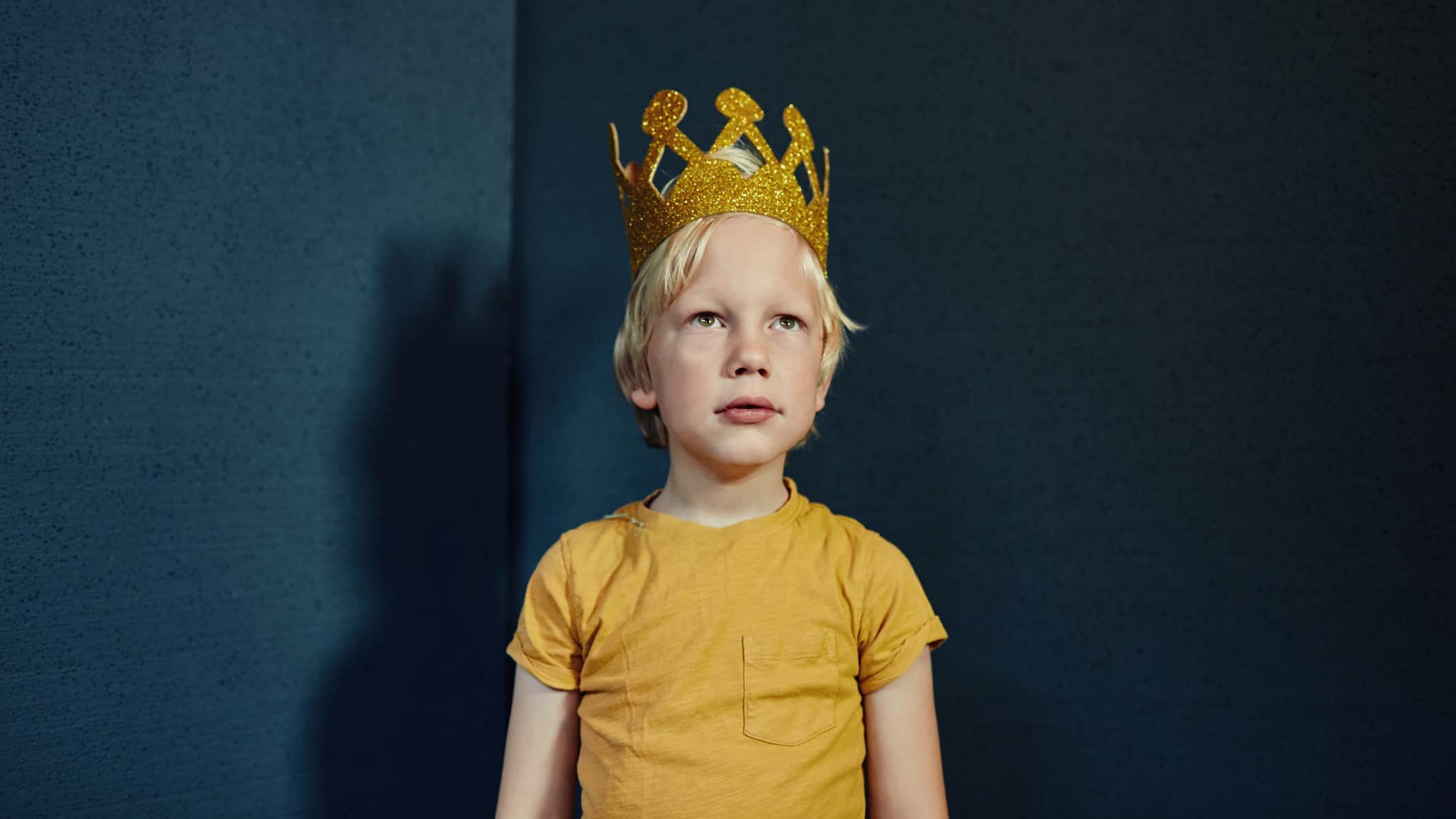
Mountaineer and Everest guide Garrett Madison has made a career out of climbing the world's tallest, most challenging peaks.
Photo courtesy of Garrett Madison
Mountaineer and Everest guide Garrett Madison summits the tallest mountains in the world.
He's summited Everest 14 times, and just earned his second "triple crown," a rare mountaineering achievement.
When he's not on expedition, he keeps his body in Everest-mode by staying active in the mountains of his home state, Washington.
Garrett Madison has built a career on risking his life to stand atop the world's tallest peaks. The mountaineer and expedition guide has summited Mt. Everest 14 times, and has led more than 80 other climbers to the top since 2009.
In May, he earned his second "triple crown" by summiting Mt. Everest and two of its neighboring peaks, Mt. Lhotse and Mt. Nuptse, in a single season. Few have achieved this rare feat.
"I feel really lucky and privileged to get to go on these expeditions," he told Business Insider.
"Fortunately, I'm on expedition quite a bit throughout the year on big mountains, so my body and mind kind of stay in mountain shape," Madison said.
But during those rare times when he isn't on expedition, he's preparing for the next one. Madison has developed a strategy for keeping his body in Everest mode in the off-season.
Always seek high-elevation
Garrett Madison geared up in an oxygen mask while on expedition. On top of Mt. Everest, oxygen is scarce.
Photo courtesy of Garrett Madison
When he isn't climbing massive Himalayan peaks, Madison spends time skiing and hiking in the smaller, but still mighty mountains in and around his home state of Washington.
"Continuing to stay in the mountains throughout the year is very, very beneficial if that's where you want to be," he said.
That's because the body adapts to the low-oxygen levels at higher elevations. The top of Mt. Everest has only a third of the oxygen available at sea level. Spending time in low-oxygen environments —even ones that are less extreme than the top of Everest — actually changes your blood.
Lack of oxygen causes the body to produce more red blood cells, which carry oxygen from the lungs to the rest of the body. It also produces more hemoglobin, a protein in red blood cells that helps them do their job. At extreme elevations, climbers' supercharged blood helps make sure all their organs receive enough oxygen.
This enhanced fleet of blood cells lasts long after a climber has returned to low elevation, sticking around for about 120 days. But after that, they'll start to die off. That's why Madison makes sure to spend as much time as he can at high altitudes to keep his blood Everest-ready.
How you can whip your body into Everest shape
It's best to train for a high-altitude climb outdoors on hilly terrain. But if you don't have access to that kind of space, you can tailor your gym workout toward your goals.
michelangeloop/Getty Images
When he's not working out at great heights, Madison said he makes sure to stay active in the gym.
"If I'm not skiing or out hiking or climbing, I'll definitely go to the gym and do a mix of strength training, and some balance, flexibility, agility work," he said.
His company, Madison Mountaineering, has even created a training guide that can help whip your body into shape for an Everest-level climbing expedition.
The cardio exercises include things like hour-long runs and steep day hikes. Muscle training includes lunges, push-ups, and jumping exercises.
It's best to train for an expedition outdoors on hilly terrain, according to the Madison Mountaineering website. But not everyone has access to this where they live.
If you're limited to working out in the gym but want to train for a big climb, try the stair mill. It mimics mountain terrain by making you lift a portion of your body weight each step, the website says.
Training for a mountaineering expedition takes a lot of time and work, but all of that effort is important to your safety on the mountain.
"It's a lot of work, but it's definitely worth it," Madison said.
Eric Schmidt bought his mansion for around $2 million in 1990, according to Zillow, and is now trying to sell it for $24.5 million.
Vivien Killilea/Peter Lyons/Getty
Eric Schmidt, Google's ex-CEO, found a buyer for his Atherton mansion.
The property, located in the most expensive US zip code, includes a main home and a guest house.
Schmidt, who served as Google and Alphabet chairman, has a net worth of around $23.9 billion.
Google's former CEO, Eric Schmidt, and his wife, Wendy, found a buyer for their mansion in Atherton, California two weeks after listing it for $24.5 million, according to a Wall Street Journal report.
The sale closed a month later, Mansion Global reported, with a price of $22.5 million.
The 5,265 square-foot listing includes a main home and a guest house in the most expensive zip code in the US. Schmidt's current net worth is estimated at around $23.9 billion, according to Forbes' ranking.
Schmidt, 69, served as CEO of Google from 2001 to 2011. He later served as chairman of Google and its parent company, Alphabet, until 2018.
The five-bedroom home at the top of a cul-de-sac in Atherton was Schmidt's primary residence for the last several decades.
Schmidt purchased the Atherton home for $2 million in 1990.
Peter Lyons
The former CEO purchased the Atherton home for around $2 million in 1990, according to estimates by Zillow. The home was built in 1969, according to the listing.
Atherton, a small town in San Mateo County, is known to be a hotspot for tech moguls, like former Facebook COO Sheryl Sandberg, Microsoft cofounder Paul Allen, and former HP CEO Meg Whitman.
Other tech titans like Sheryl Sandberg and Paul Allen also purchased Atherton homes.
Tech investors Ben Horowitz and Marc Andreessen, as well as early Tesla investor Alan Salzman, have also bought properties in Atherton.
The home has dark hardwood flooring and traditional nodes of design.
Peter Lyons
The prestigious town is about a 45-minute drive to San Francisco and less than 20 minutes from the headquarters of Google, Meta, and Tesla. The average household income in Atherton is over $450,000.
It isn't the only home Schmidt bought in California. He bought Ellen Degeneres and Portia de Rossi's 7,000-square-foot Montecito mansion in 2007.
Schmidt's portfolio includes multiple properties on the East and West Coast.
Peter Lyons
He bought the home for $20 million and used to rent it out for weddings. However, he reportedly struggled to keep renting it after Kim Kardashian and Kris Humphries used the home as their wedding venue and divorced soon after.
The billionaire also bought a Southern California "French chateau" in Los Angeles in 2014, about five minutes from the Playboy Mansion.
He also bought homes on the East Coast. In 2013, he purchased a $15 million penthouse in New York City and reportedly spent millions soundproofing it.
The Atherton kitchen has marble counters, white wooden cabinets, and a steel stove area.
Peter Lyons
Schmidt and his wife purchased a home in Nantucket in 1999, where she reportedly spent most of her time.
The billionaire also reportedly paid $67.6 million for a 267-foot superyacht in 2023.
The exterior of the guest house has an outdoor fireplace, an amphitheater on one side, and a cascading water feature on the other.
The home was designed by Schwanke architecture in 1969.
Peter Lyons
Both the guest house and main home were designed by Schwanke Architecture.
The home has multiple terraces and access to the outdoors in almost every room.
The home has ample amounts of natural light.
Peter Lyons
The home has ample access to natural light with large open doors and windows throughout the home.
The estate has five bedrooms, eight total bathrooms, and a fireplace in the living room and family room.
The estate has five bedrooms and eight total bathrooms.
Peter Lyons
The two-story home also has a wet bar, according to the online listing by The reSolve Group.
The sold mansion includes three acres of park-like grounds and an outdoor pool.
The property has an outdoor pool and three acres of park-like grounds.
Peter Lyons
The property has a 3.36 acre lot and 5,265 square foot living area, according to the listing.
Like many Atherton homes, landscaping surrounding the house creates a secluded feel to the property.
Many Atherton homes are secluded by landscaping or fencing.
Peter Lyons
Both the front and back of the house are shaded by large trees and greenery. The back of the house also has a fenced area to create privacy.
The estate includes a diverse selection of mature plants and specimen trees from Amdega Conservatory imported from the UK.
The home features a greenhouse.
Peter Lyons
The greenhouse is equipped with wooden shelves, a sink, and black and white floor tiles.
The home also has several areas for growing plants or produce.
The home has a greenhouse and outdoor garden area.
Peter Lyons
In addition to the greenhouse, the outdoor area has several planting plots.
The home embraces the California landscape of while incorporating European design.
The dining room has a traditional design with large windows and greenery.
Peter Lyons
Dark wooden furniture and flooring contrast against bright green outdoor openings in the estate.
Russia's President Vladimir Putin visits Uralvagonzavod, the country's main tank factory, in February 2024.
Getty/ALEXANDER KAZAKOV
Russia is expanding arms production by buying secondhand tools via China to evade sanctions.
A new report sheds light on how the Kremlin is circumventing Western restrictions.
There's a lack of compliance in the secondhand market, the lead researcher told the FT.
Russia is rushing to expand its arms production by buying secondhand machine tools from China through covert networks to get around Western sanctions.
A report from Washington-based nonprofit think-tank The Center for Advanced Defense Studies, or C4ADS, said that Russia's arms manufacturers were "scrambling to expand their production capabilities using whatever they can get."
And Russian defense industry analyst and lead researcher Allen Maggard told the Financial Times that the decades-old machine tools Russia is importing are still effective.
"Just because a machining center is two or three decades old doesn't mean that it's incapable of producing simple components for weapons," he said.
"This speaks to a lack of compliance in the second-hand market, not to mention that manufacturers are unlikely to care about where their products end up after being sold," he added.
Getting around sanctions
Since it launched its full-scale invasion of Ukraine in February 2022, Russia has had to find the supplies needed to keep its war machine going.
One of Russia's greatest vulnerabilities is its reliance on foreign technologies, including machine tools that automate the manufacture of precision-guided munitions and aircraft parts, among other key defense equipment, the researchers wrote in the report.
Faced with restrictive sanctions and export controls, the Kremlin has turned to complicated arrangements with opaque companies that act as middlemen.
Many Russian military suppliers have been placed under sanctions by the US. However, they are finding workarounds.
One supplier, AMG, increased its buying of high-end defense equipment made by a Japanese company, Tsugami, from $600,000 in 2021 to $50 million in 2023, according to customs documents.
In 2023 more than 60% of Tsugami sales were to China.
The rise from AMG has come through two middlemen, according to the report: Amegino, a US-sanctioned company based in the UAE and owned by Andrey Mironov, and ELE Technology, a company based in China that fraudulently claims to be part of US company Gray Machinery.
Glenn Gray, the president of Gray Machinery, told the FT he'd never heard of the company.
Tsugami also told the publication that it hasn't sold any products directly to ELE.
Documents seen by C4ADS show that Amegino and ELE have worked together to procure goods for Russia, according to the report, with Amegino acting as a broker, commissioning Chinese companies such as ELE to ship goods to Russia.
C4ADS found other similar cases including a Russian company, UMIC — not sanctioned by the US but thought to be owned by the wife of the owner of AMG — acquiring machine tools made in various countries around the world, but all bought in yuan through Chinese traders and shipped from China.
UMIC and ELE did not immediately reply to Business Insider's request for comment.
Dubai is one of the Middle Eastern cities emerging as a hedge fund hot spot.
Alexsl/Getty
A record 128,000 millionaires are expected to move countries in 2024, according to a new report.
Data from Henley & Partners shows the UAE has the largest predicted inflow of millionaires.
This is the third year the UAE, dubbed a "wealth magnet" by the firm, topped the list.
Millionaires are choosing one place above all to move to, according to a new report: the United Arab Emirates.
According to data from the latest report by Henley & Partners, a firm that advises the wealthy on where to move to protect and grow their assets, 6,700 millionaires are projected to move to the UAE this year.
That's nearly double the inflow to the US, which had the second-highest expected migration of millionaires, at 3,800.
The US, however, still has the largest overall population of millionaires, followed by China, it said. The UAE came in 14th.
The annual wealth report suggested that a record-breaking 128,000 millionaires, defined as individuals with liquid investable assets over $1 million, are expected to move countries this year.
The firm dubbed 2024 a "watershed moment in the global migration of wealth."
The firm's calculations are based on millionaire migration data from the first six months of 2024, rounded to the nearest 100, supplied by wealth intelligence firm New World Wealth.
China is actually on track to lose the greatest number of millionaires in 2024, with 15,200 high-net-worth individuals, or HNWIs, expected to leave the country, it said.
This is a 10% increase from last year, it added, when China also had the highest outflow of millionaires.
The UK is predicted to see the second-highest expatriation of millionaires in 2024, it said, with 9,500 likely to leave. This is double the 4,200 who left the UK last year.
The UK, particularly London, is feeling a steep reversal in its status as a hub for the ultrawealthy. Policy changes targeting the ultrawealthy ahead of elections this summer are to blame, according to Hannah White, director of the UK think tank Insitute for Government, per the report's press release.
According to the release, the UAE has positioned itself as a global "wealth magnet" thanks to its nonexistent income tax, "golden" visas, and luxury lifestyle.
This is the third year in a row that the Emirates has landed the top spot on the list.
Dubai, the UAE's luxurious epicenter, has seen a boom in real-estate investment, with luxury apartment complexes due to be completed in 2024 and 2025 selling out in just one day.
Attracting and retaining HNWIs is an important strategy in geopolitical relations.
Dominic Volek, the head of private clients at Henley & Partners, said millionaire migration could inject capital and talent into the host nations as a "debt-free source of funding for governments," per the report.
Billionaire Elon Musk spoke to WPP CEO Mark Read in an interview at Cannes Lions on Wednesday.
On the topic of the future of AI, Musk reminded the audience he cofounded OpenAI as a nonprofit.
He said he named the company after "open source," and made a dig at the direction it has taken.
Elon Musk reminded the audience at Cannes Lions on Wednesday that he was the person to name OpenAI as he made a jab at the direction the company has taken since then.
Musk took to the festival stage as a guest speaker in an interview with WPP CEO Mark Read, where he discussed technical innovation.
During the conversation, Read breached the topic of AI and the future of tech.
Musk, who cofounded OpenAI in 2015 but reportedly left the company three years later, has often traded barbs over the future of AI with OpenAI's current CEO, Sam Altman.
He even filed a lawsuit against the company, accusing them of betraying the firm's founding principles, which he has recently dropped.
On the topic of OpenAI, Musk told Read he had started the company, in part to offset Google.
"It was very much a unipolar world where Google was completely dominant in AI," he said.
Musk added that the company was "formed with a lot of good intentions." He said, "The 'open' in OpenAI was meant to stand for 'open source,'" adding, "I named it."
This isn't the first time Musk has alluded to his role in christening the AI company responsible for ChatGPT. In a post on X in 2023, he made a similar comment.
Musk reiterated his ongoing qualms with OpenAI with a final dig: "Now it's closed-source for maximum-profit AI, which is different from what was intended. I don't know how it got there."
This aligns with Musk's remarks about his displeasure with the current direction of OpenAI, which was founded as a nonprofit.
It shed that status in 2019, to operate as a "capped-profit" company to "raise investment capital and attract employees," per a company blog post at the time.
The company announced a partnership with Microsoft the same year, which initially invested $1 billion into OpenAI.
After launching publicly in November 2022, ChatGPT attracted 100 million users in just two months. Microsoft then increased its investment, reportedly pouring a further $10 billion into the AI firm.
Musk's pessimism about AI is largely directed at its development as a "for-profit" industry. He has been outspoken about the safety issues related to AI in the hands of corporate, for-profit entities. In 2020, Musk said he feared Google's Deepmind could one day effectively take over the world.
But Musk's discussion with Read suggested his opinion could be shifting. He told the executive: "In the positive scenario, the AI will be doing its best to make you happy. So that might work out pretty well."
This article was originally published on Fool.com. All figures quoted in US dollars unless otherwise stated.
You would be hard-pressed to find an investor who doesn’t consider Nvidia (NASDAQ: NVDA) the pinnacle of artificial intelligence (AI) companies. Its graphics processing units (GPUs), which crunch AI workloads, are best in class by a wide margin and have been used by practically every company interested in AI.Â
But are there any companies that could dethrone Nvidia?
Nvidia’s direct competitors aren’t even close
Part of the fear of investing in Nvidia is wondering what will happen if and when the music stops. Right now, the company is firing on all cylinders. But the question remains: What happens when enough GPUs have been purchased to satisfy AI demand?
There are some factors influencing the answer to that question, such as the average lifespan of a GPU used for server computing. That is estimated to be around three to five years, which would mean there will be a replacement cycle. But if the demand for Nvidia GPUs is met, then the next round of AI technology might look somewhat different.
If that happens, which company could take the spot atop the AI mountain? Some might point to Advanced Micro Devices as a potential successor. AMD competes directly with Nvidia in the data center GPU space but has been getting smoked.
However, AMD has recently generated momentum with various cloud-computing providers starting to add its GPUs as an alternative. They don’t want to be devoted solely to Nvidia hardware because that would give it too much pricing power over them. But because Nvidia still has much better technology, AMD will likely only be considered as an alternative.
Another candidate is Taiwan Semiconductor, (TSMC for short), the chip foundry that supplies Nvidia and thereby makes its products possible. But TSMC also supplies chips to AMD and other companies, which makes it a neutral factor in the AI investment race.
Besides, TSMC expects massive growth driven by AI demand over the next few years. In its latest conference call, management said, “For the next five years, we forecast [AI revenue] to grow at 50% [compound annual growth rate] and increase to higher than 20% of our revenue by 2028.” That’s strong growth, but it also means Nvidia could continue its dominance since it’s a key customer for TSMC.
The companies applying AI depend on Nvidia
But all of the above is just the hardware side; what about application and use?
Microsoft and Alphabet are both massive customers for Nvidia’s GPUs. Not only do they have internal uses for them, but they also buy them to power their respective cloud computing services.
They also started designing their own AI chips, so they don’t have to buy them from Nvidia. However, these chips are highly workload-specific, so general-purpose GPUs like Nvidia’s will still account for the lion’s share of computing power.
Software companies like Palantir are also bringing AI capabilities to the masses. Its clients still need plenty of computing power to run its models, and it gives them the tools to create them. This could make the company a potential successor to Nvidia as a leading AI investment, since it will continue to see demand for its platform long after AI computing capacity is built out.
But all roads lead back to Nvidia, which is why it has been and will continue to be the most popular AI investment. Nvidia is on top of the AI world right now, and there currently doesn’t appear to be any company that can dethrone it.Â
This article was originally published on Fool.com. All figures quoted in US dollars unless otherwise stated.
Wondering where you should invest $1,000 right now?
When investing expert Scott Phillips has a stock tip, it can pay to listen. After all, the flagship Motley Fool Share Advisor newsletter he has run for over ten years has provided thousands of paying members with stock picks that have doubled, tripled or even more.*
Scott just revealed what he believes could be the ‘five best ASX stocks’ for investors to buy right now. We believe these stocks are trading at attractive prices and Scott thinks they could be great buys right now…
 Suzanne Frey, an executive at Alphabet, is a member of The Motley Foolâs board of directors. Keithen Drury has positions in Alphabet and Taiwan Semiconductor Manufacturing. The Motley Fool Australia’s parent company Motley Fool Holdings Inc. has positions in and has recommended Advanced Micro Devices, Alphabet, Microsoft, Nvidia, Palantir Technologies, and Taiwan Semiconductor Manufacturing. The Motley Fool Australia’s parent company Motley Fool Holdings Inc. has recommended the following options: long January 2026 $395 calls on Microsoft and short January 2026 $405 calls on Microsoft. The Motley Fool Australia has recommended Advanced Micro Devices, Alphabet, Microsoft, and Nvidia. The Motley Fool has a disclosure policy. This article contains general investment advice only (under AFSL 400691). Authorised by Scott Phillips.
(L-R) Sylvester Stallone, Amanda Seyfried, Matthew McConaughey.
Getty
More than 817,000 people moved out of California from 2021 to 2022, per most recent census data.
It's not just regular people: Celebrities leave Los Angeles for places including Texas and Florida.
Here are 17 celebrities who left LA — plus where they chose to move to and why.
California is the US state with the most people moving out, with about 817,000 leavers between 2021 and 2022, according to the most recent census data.
And while regular people ditch the Golden State, several celebrities, who can typically afford to live wherever they want, have also decided California is no longer the place for them.
Singer-turned-talk show host Kelly Clarkson traded Los Angeles for New York City post-divorce for in 2022, while actor Sylvester Stallone said earlier this year that he and his family are "permanently" vacating California for South Florida.
Popular moving destinations for Californians include Arizona, Florida, and Texas.
People have told Business Insider recently that reasons for leaving LA and California include high taxes, expensive home prices, and challenging social and political conditions. Some celebrities remain tight-lipped when sharing moves of their news, simply saying they're looking for a fresh start. Other high-profile actors, however, admit that the fast-paced, stressful scene in Hollywood can be another motivation.
Los Angeles, in particular, is experiencing an exodus of wealthier people in search of places where their money goes further.
Take Gus Lira, a managing partner at a private jet charter company, who had a condo in Malibu overlooking the ocean. California taxes were wearing him down, so he decided to move to Nevada.
"For me, really the main reason, and for many of the people that I know, is just taxes," Lira told Business Insider in January. "You can't get ahead when you get $100 and they take $60."
Business Insider compiled a list of 17 celebrities — some in celebrity couples — who left California for greener pastures, presented in alphabetical order by last name. We tried to include both where they moved to and why they left LA.
Jessica Biel and Justin Timberlake left LA to shield their kids from the glare of the paparazzi.
Jessica Biel and Justin Timberlake.
Matt Winkelmeyer/Getty Images
The power couple has dealt with the paparazzi for most of their professional careers. But they had enough of their kids also having to endure it.
"You get hammered on the East Coast. You kind of get hammered on the West Coast. That's why we don't really live there anymore," said Biel in a May 22 episode of SiriusXM's "Let's Talk Off Camera With Kelly Ripa," seemingly referring to her former home of LA. "We're just trying to create some normalcy for these kids."
Dean Cain left LA for Las Vegas because of the "incredible taxation" and "horrible regulations for business" in California.
Dean Cain.
Jamie McCarthy/ Getty Images
Dean Cain, best known for playing Clark Kent/Superman in "Lois & Clark: The New Adventures of Superman," was fed up with how things were run in California.
The actor split for Vegas last year.
"It's the most ridiculous large government, incredible taxation, horrible regulations for business," he told Fox News Digital in 2023. "Very anti-business."
"I moved to Las Vegas. I live in Nevada now," he added. "I have 10 times as nice a house. I'm not kidding. Ten times as nice a house as I had in Malibu. The house is absolutely stunningly built. Gorgeous, beautiful. Everything is brand new."
Kelly Clarkson didn't just move from LA to New York — she took her daytime talk show with her.
Kelly Clarkson.
Weiss Eubanks/NBCUniversal via Getty Image
Kelly Clarkson felt she had a new lease on life when she moved to New York City last year.
After finalizing her divorce from ex-husband Brandon Blackstock in 2022, she didn't just take her kids east. She also brought "The Kelly Clarkson Show" — it started taping in New York in season 5.
"I was very depressed for the last three years — and maybe a little before that, if I'm being honest. I think I really needed the change," the Grammy winner told People. "I needed it for me and my family as well. My kids are thriving here. We're just doing so much better, and we needed a fresh start."
John Goodman left LA in the late '80s.
John Goodman.
Stephane Cardinale/Corbis/Getty
John Goodman figured out a long time ago that Los Angeles wasn't for him and has been living in New Orleans since the late 1980s.
Like many, the Emmy winner first visited Crescent City to party. In the late 1970s, he showed up with his fraternity pals. A few years later, as an actor, he was shooting the movie "Everybody's All-American" alongside Dennis Quaid, Jessica Lange, and Timothy Hutton when he met his future wife, Anna Beth. He's been attached to the city ever since.
"I used to come down here every time I'd get a few dimes to rub together, and it felt like I was missing something unless I was here," he told "Today" in 2023. "I consider myself very lucky to be here."
Nicole Kidman and Keith Urban moved to Tennessee to be closer to the country music scene.
Nicole Kidman and Keith Urban.
Getty/David Becker
A year after Nicole Kidman tied the knot with country-music star Keith Urban, the two got the heck out of LA.
In 2007, they moved to Nashville, where the Australian Oscar winner dove headfirst into Urban's world.
"That country-music community is a very warm community," she told People in 2016. "It's very protective. Keith's been a part of it for decades now. It's his home, it's our home."
Matthew McConaughey headed to Texas to help his family.
Matthew McConaughey.
John Nacion/Getty
A few years before the McConaissance led to Matthew McConaughey's best actor Oscar win, he and his wife Camila Alves fled Hollywood for his home state of Texas.
The two settled in Austin in 2012 after buying a 10,800-square-foot mansion. According to a profile in Southern Living, it was initially because of a "family crisis," as he needed to help his mother and two brothers. That led to the couple deciding to stay put to raise their three children there.
"Ritual came back," McConaughey said of being back in Texas. "Whether that was Sunday church, sports, dinner together as a family every night, or staying up after that telling stories in the kitchen, sitting at the island pouring drinks and nibbling while retelling them all in different ways than we told them before."
Amanda Seyfried headed to upstate New York for a taste of the simple life.
Amanda Seyfried.
Axelle/Bauer-Griffin/Getty Images
With movies like "Mean Girls" and "Mamma Mia!" in her filmography, you would think Amanda Seyfried would want to lay her head down somewhere glamorous.
But she actually prefers life on a farm.
Seyfried spends most of her time on a farm in the Catskills, a mountain range north of New York City, told Architectural Digest reported in 2023. in 2023 that that she purchased in 2014.
"It's insane how much I can feel so accomplished and successful here without having to be in a successful movie," she told The New York Times in 2020.
Sylvester Stallone wanted a new start in Florida.
Sylvester Stallone.
Rachel Luna/WireImage/Getty Images
After decades of living in Los Angeles — including in his first dingy apartme.nt on Balboa Boulevard, which would become the inspiration for his iconic character Rocky Balboa — Sylvester Stallone packed up and left town in 2023.
This was first revealed in early 2024, during season two of his reality series "The Family Stallone".
"After a long, hard consideration, your mother and I have decided, time to move on and leave the state of California permanently, and we're going to go to Florida," Stallone said. "We're going to sell this house."
Stallone and his wife, Jennifer Flavin, gave multiple reasons for the relocation, including the desire for a fresh start after their children moved out of the family home.
Rod Stewart went back to his roots in England.
Mike Marsland / Getty Images
The legendary rocker decided that at 79 years old, it was time to stop traveling across the pond.
Last year, he put his sprawling 38,500-square-foot Beverly Hills property, which he has lived in since 1975, on the market.
Selling the home is bittersweet for Stewart: "I don't want to sell it, and the kids don't want me to sell it either," Stewart told People. "There's too many fond memories. I've lived [in LA] since 1975, and I adore the place."
But he said he's making England a more permanent home since wrapping up his latest world tour and Las Vegas residency last year.
Hilary Swank moved to a Colorado ski town.
Jonathan Leibson/Getty Images
The Oscar winner is loving her new life in the mountains of Telluride, Colorado, on 168 acres with five rescue dogs.
She and her husband, Philip Schneider, bought the land in 2016, broke ground in 2018, and finally completed the home in 2020.
"I have been looking for land since I was in my mid-20s," Swank told Architectural Digest in 2022. "I find nature to be my happiest place, and animals are my other happiest place. And to be with both of them is everything to me."
Ryan Reynolds and Blake Lively left LA after just six months of dating.
Blake Lively and Ryan Reynolds.
Dia Dipasupil/FilmMagic
When you know, you know. After less than a year of dating, Ryan Reynolds and Blake Lively packed up their stuff and left Hollywood for the suburbs of New York City.
"We don't live in LA. We live on a farm in New York," said the "Deadpool" star in a 2015 interview. "And we don't lead a wild and crazy life. It's not that hard. It's not a big deal."
Julia Roberts hasn't lived in LA for decades.
Julia Roberts.
Stephane Cardinale/Corbis/Getty
The Oscar winner realized many years ago that Los Angeles wasn't for her.
Roberts moved to a 32-acre ranch in Taos, New Mexico, in 1995.
"Around here, I come and go like it's nothing," she said. "Los Angeles is such a town of show business, and I'm a terrible celebrity. I find it difficult — it's the beast that must be fed."
James Van Der Beek moved his family out of LA after he and his wife renewed their vows in Austin.
James Van Der Beek.
John Lamparski/Getty Images
In 2020, James Van Der Beek and his wife Kimberly renewed their wedding vows for their 10th anniversary in Austin, Texas.
A year later, they moved their six kids from LA to Austin, where they now live on a 36-acre property.
"We wanted to get the kids out of Los Angeles," Van Der Beek told Austin Lifestyle in 2021. "We wanted to give them space and we wanted them to live in nature."
Mark Wahlberg moved his family to Las Vegas for a "fresh start."
Mark Wahlberg.
Mat Hayward/Getty
Boston-born Mark Wahlberg set out to LA years ago to make it as an actor. Over his career, he realized he rarely stayed there to make any of his movies. So, in 2022, he packed up and moved his family to Las Vegas.
He told The Talk in October 2022 that in Nevada his four kids can more easily pursue their hobbies, including golfing, riding horses, and playing basketball.
"We came here to just kind of give ourselves a new look, a fresh start for the kids, and there's a lot of opportunity here," Wahlberg told The Talk. "I'm really excited about the future."
During an interview at the Cannes Lions International Festival of Creativity on Wednesday, the Tesla CEO said he hadn't made any investments in the longevity industry.
"I think it is important that we die at least at some point," he told Mark Read, CEO of advertising giant WPP. "If we live for too long, I think it does ossify society. There's no changing of the leadership because leadership never dies."
He added that this could inhibit new ideas as people won't change their minds.
"Think of some of the worst individuals in the world. How long do you want them to live?" he joked.
Musk has made similar comments in the past. In 2021, he called death "important," adding he didn't think anyone should "try to live for a super long time."
Several of Musk's Silicon Valley contemporaries have been dabbling in longevity, leveraging their wealth to fight the effects of aging.
Jeff Bezos, Peter Thiel, and OpenAI's Sam Altman have all invested in companies trying to reverse aging at the cellular level. Others, including Google's Sergey Brin, are using their money to combat age-related conditions, such as cancer and Parkinson's disease.
Some entrepreneurs, like Kernel CEO Bryan Johnson, have taken on intensive nutrition, exercise, and wellness plans to try and slow or even reverse the aging process.
Musk has long been concerned about the effect an aging population could have on the world.
He has previously warned that society could "crumble" if people don't have children and has cited low birth rates as one of the "biggest risks to civilization."
Representatives for Musk did not immediately respond to a request for comment from Business Insider, made outside normal working hours.
Richemont, the conglomerate that owns brands like Cartier and Van Cleef & Arpels, has been heating up the luxury space.
Richemont; Cartier; Van Cleef; Alyssa Powell/BI
Richemont, the conglomerate behind brands like Cartier, is outperforming its competition.
Its focus on hard luxury, like jewelry and watches, has helped it through a rough economic climate.
Plus, over-indexing in China and a clear direction for leadership have helped the company shine.
LVMH is the biggest luxury conglomerate in the world. As the owner of brands like Louis Vuitton, Moët & Chandon, and Bulgari, the French company has become synonymous with luxury — and made a lot of money doing it, as demonstrated by CEO Bernard Arnault's position as the third-richest man in the world.
But there's another corporation beating LVMH at its own game, and you probably haven't even heard of it: Richemont.
Switzerland-based Richemont, behind brands like Cartier, Van Cleef & Arpels, and Piaget, is having a moment.
Its stock has climbed more than 20% since the start of the year, outperforming LVMH as well as Kering, which sells brands like Gucci and Saint Laurent. It's a boon for investors seeking reassurance that European luxury stocks aren't over — especially in China.
"Richemont has provided reassurance to investors on several points. Cartier and Van Cleef are continuing to show very strong momentum and notable growth," Chiara Battistini, JPMorgan's head of European luxury and sporting goods research, told Business Insider over email.
One major benefit in this uncertain economic climate: Richemont is skewed to hard luxury, including the iconic designs of Cartier, which has been creating jewelry for high-flying members of society for more than 150 years, as well as Van Cleef.
!function(){“use strict”;window.addEventListener(“message”,(function(a){if(void 0!==a.data[“datawrapper-height”]){var e=document.querySelectorAll(“iframe”);for(var t in a.data[“datawrapper-height”])for(var r=0;r<e.length;r++)if(e[r].contentWindow===a.source){var i=a.data["datawrapper-height"][t]+"px";e[r].style.height=i}}}))}();
"In tough times, because we are in tough times right now in luxury, there is a tendency to buy less, buy better," Erwan Rambourg, the global cohead of consumer and retail research at HSBC, told BI. "At the end of the day, if you have to buy one piece of jewelry from one jeweler, it's going to be Cartier."
In the first quarter of this year, Richemont's largest brands all saw positive year-over-year growth on Google Trends and an increase in website visits, according to a JPMorgan report from May. Meantime, brands like Louis Vuitton and Gucci saw declines in both areas.
Even LVMH's Arnault has noticed: "In the competition, there's a very good group, that is the Richemont Group," he said in January, going on to compliment the group's chairman, fellow billionaire Johann Rupert. "Rupert, we consider as an outstanding leader. And I don't, in the slightest, wish to upset his strategy."
All that glitters is gold
Unlike luxury conglomerates LVMH and Kering, Richemont focuses disproportionately on hard luxury — literally, the stuff made from hard materials like gold, gemstones, and diamonds. In the 2024 fiscal year, jewelry made up 69% of its revenue and watches 18%.
It's a good time to be in that business. During difficult macroeconomic times or when people are squeezed, they are more likely to splurge on something they know will hold value, like metals and gems, than on something less durable and more trend-driven, like clothing or handbags (with Hermès being a notable exception).
"At times of economic crisis — I mean, not that everyone runs out and buys a Cartier watch or a Van Cleef & Arpels necklace — but they are a safer bet," Fflur Roberts, the head of global luxury goods at Euromonitor, told BI.
Part of the reason is that a classic Cartier piece — like the rectangular Tank watch launched in 1919 or the three-banded Trinity ring, which debuted five years later — is unlikely to go out of style. The Love collection, a Cartier classic featuring a screw motif, has been around for five decades and still makes up more than 20% of the company's revenue, HSBC's Rambourg said.
Cartier products — like the Tank Francaise, pictured here on Princess Diana — have timelessness that appeals to people splurging on large purchases.
Tim Graham / Getty Images
"It doesn't have the fashion risk to the same extent as, for instance, apparel and even leather goods," Jelena Sokolova, a senior equity analyst for Morningstar, told BI of the fine jewelry business. "All of this favors the most established brands: Cartier and Van Cleef."
Jewelry is also a good investment. A 2022study by Credit Suisse and Deloitte called fine jewelry and watches "safe havens" in "uncertain times," with steady single-digit returns and low volatility.
"The world might come to an end, and your piece of jewelry might still be worth something," Rambourg said.
"When people are concerned about putting their money in other, more traditional financial assets, then jewelry has become an area where people are investing," Euromonitor's Roberts said. "Spending a bit more and getting a really true heritage luxury brand like Cartier" is safer, she added.
China cha-ching
Last month, rumors swirled that Van Cleef planned to raise its prices in China — and chaos ensued. Local news outlets reported lines forming at the country's 30-plus stores as customers rushed to buy Alhambra bracelets, which cost anywhere from $1,420 for a single clover on a yellow gold chain to $61,500 for a five-clover diamond design.
The frenzy shows just how devoted Chinese consumers are to the now-iconic clover pieces, which can be seen on the wrists and necks of the country's influencers and street-style inspirations.
The popularity is reflected in the data. Driven by Richemont's top brands, Cartier and Van Cleef, sales gained 7% in the country, including Hong Kong and Macau, in Richemont's 2024 fiscal year.
The Van Cleef & Arpels Alhambra line, pictured on an attendee of Art Basel Hong Kong, has been a hit in China.
Keith Tsuji/Getty Images
Meanwhile, some luxury conglomerates, like Gucci's parent company Kering, have struggled in that market. While Richemont's results in the country have been touch-and-go depending on the quarter, the company is still beating out the competition.
"They are over-indexed in China compared to their peers," Sokolova said.
Part of that is related to the increasing popularity of jewelry in the country. In 2023, jewelry and watches overtook handbags as the top-spending category in China, according to a McKinsey report. By 2027, its share of discretionary spending is expected to gain another four percentage points.
On top of that, the philosophy of buying a tried and true brand — and specifically recognizable items from one of these brands — is even stronger in China. Branded jewelry is expected to increase from 15% of the market in 2019 to 25% to 30% in 2025, according to a 2021 McKinsey report. That growth is driven by customers in Asia.
From the aforementioned Alhambra line, which was called out on Richemont's earnings call, or Cartier's Love collection, no one does branded like Richemont.
"If you're in a bar or restaurant, you're sitting at a distance, you can recognize the Labra pendant from Van Cleef. You can recognize the Love ring or the Love bracelet or the Trinity," Rambourg said. "It's the equivalent of putting a big fat logo on a bag."
Passing down the crown jewels
There's another piece of hardware that Richemont has handled well: its scepter.
In May, the company announced a new CEO, Nicolas Bos, a Cartier veteran who transformed Van Cleef from an unprofitable brand to Richemont's second-biggest cash driver.
It was welcome news in an industry in which many companies remain family-run — a model accompanied by uncertainty. LVMH and Prada have both been caught up in media speculation around who will take over when their patriarch and matriarch, respectively, step aside.
While chairman Rupert is still staying on — the controlling shareholder, he founded the company by spinning the international brands off of his father's South African conglomerate in 1988 — Bos' appointment provides some relief for investors. The company's announcement caused shares to tick up 6%.
Nicholas Bos was recently named Richemont's new CEO, putting investors worried about a succession plan at ease.
Jared Siskin/Getty Images
"The No. 1 question I've had for the past two years is who's going to replace Rupert? What's the post-Rupert world?" Rambourg said. "They just bought themselves a lot of time by nominating a 51-year-old to run the group."
The appointment also included a restructuring of the company, naming one CEO for the entire conglomerate, which "provided better clarity and more straightforward structure on corporate governance," JPMorgan's Battistini said.
That said, Bos does have his work cut out for him, particularly regarding the YNAP, the group's online fashion retailer that owns sites like Net-A-Porter. It's a lossmaker for a company, and a deal to offload it fell apart in December. Last week, it was reported that the platform would pull out of China amid dwindling sales.
But as they say, heavy is the head that wears that crown — but perhaps not the arm that wears the Cartier Love bracelet.
The author's dad is Chilean and went by a Spanish and English version of his name.
Courtesy of the author
I had three other Lauren's in my class, and I secretly wanted to be the only one.
My chilean father went by George, as a way to assimilate to his life in the US.
I wanted to have a name in Spanish and English, like he did.
My first day of 5th grade continues to be memorable decades later. When the teacher did roll call in a class of 30 students, three of us had the name Lauren. I was surprised. I secretly wished I was the only one.
I've always loved my name, and up until age 10, I had no idea Lauren was popular. Over the years, I'd become used to parents in the early 80s naming their kids just like me.
My Chilean father, Jorge, moved to the United States when he was 28 years old. Everyone called him George. His official documents, such as his passport and driver's license, had his birth name — Jorge. Like most immigrants, he did his best to assimilate. Adopting an English version of his name was one way to minimize calling attention to himself and help him blend into the melting pot of the United States. He made it easier for his colleagues and clients to say his name.
As a kid, I thought it was cool that he had two names — one in Spanish and one in English. I wanted to have two names, too, like him, even though my dad didn't teach me Spanish.
My name doesn't exist in Spanish
When I'd visit my abuelita a couple of times a year, who didn't speak much English — she learned it when she was 50 years old, I'd always ask her, "How would you say my name in Spanish?" Her reply was always the same — "Your name doesn't exist in Spanish." I felt let down, bummed.
I didn't understand it at the time, but I was seeking and wanting to be a part of something bigger — intangible, of course. I wanted something that seemed within reach and yet so far away. I understand now, as an adult, that I wanted to be a part of my dad's culture and connect with him and his family, including my abuelita. I wanted to feel like I belonged.
Questioning whether my name existed in Spanish was my way of creating a connection with my abuelita despite language differences. After all, neither one of us spoke the other's native tongue. I may not have been successful or received the answer I was hoping for, but now I understand my question had a deeper meaning.
I started saying my name differently when speaking in Spanish
In my late 20s, I moved to Spain to teach English as a language assistant in a high school. My real goal was to learn Spanish and speak fluently. I quickly learned that when I said my name, whether it was to make a reservation at a restaurant or deal with in-person bureaucratic paperwork, most Spaniards would ask me to repeat my name numerous times. Over time, I stopped saying my name as if I were in the United States (Lor-in). Instead, I deferred to pronouncing my name as it sounds in Spanish (Lao-wren) to save myself time and frustration from reiterating it too many times.
Similar to what I imagine my dad must have experienced living in the United States, I learned it's easier to adapt. Not only is it more convenient for the other person, but it also saves me the hassle of repeating myself and being reminded constantly that I'm foreign.
It turns out my abuelita wasn't exactly right. Lauren may not be a Spanish name or have a direct translation, yet it's possible to pronounce it in Spanish. My name is adaptable in both languages. I appreciate that my name can have two pronunciations, even if it's a reminder that I'm from somewhere else. And as a daughter of a Chilean immigrant, it may be ironic that I was always seeking to blend in and belong.